Panasonic

Search documents
松下宣布拆分核心子公司,整合家电与影音等业务
Xi Niu Cai Jing· 2025-08-01 12:28
Core Insights - Panasonic Holdings Corporation announced a restructuring plan on July 30, aiming to split its core subsidiaries from five internal companies into three independent business entities [2] - The restructuring includes merging subsidiaries responsible for home appliances with those handling televisions and audio equipment, to operate under a new Panasonic brand [2] - For the fiscal year 2024, Panasonic reported a revenue of 8.46 trillion yen, a decrease of 0.5% from the previous fiscal year, and a profit of 366.2 billion yen, down 17.5% year-on-year [2] - In the television sector, Panasonic's global shipment volume for 2024 is projected at 2.02 million units, capturing only 1% of the market share, with a domestic market share of just 9% in Japan from January to September 2024, indicating a marginal position in the market [2] - The restructuring is seen as a crucial move for Panasonic to address performance pressures, allowing for more focused competition in different sectors and enhancing operational efficiency [2] - The newly formed "Panasonic HVAC&CC" will integrate commercial air conditioning and refrigeration equipment businesses, optimizing R&D, production, and sales processes to strengthen market competitiveness [2] - If the restructured Panasonic brand can effectively plan its home appliance and audiovisual businesses, it may rejuvenate its brand image in the consumer market, potentially stimulating sales growth and increasing revenue [2] Additional Insights - Notably, on May 9, Panasonic announced plans to lay off 10,000 employees by the fiscal year 2025-2026, with half of the layoffs occurring in Japan and the other half in overseas markets [3]


Japanese technology giant Panasonic announces a new chief as its profits barely hold up
TechXplore· 2025-07-30 16:52
Core Insights - Panasonic has appointed Kenneth William Sain as the new president and chief executive, effective April 2026, succeeding Yasuyuki Higuchi [1][2] - The company reported a slight profit increase of 1.2% in the first quarter, with profits totaling 71.46 billion yen ($483 million) compared to 70.6 billion yen in the previous year [2] - Panasonic's quarterly sales experienced a decline of 10.6% year-over-year, amounting to 1.9 trillion yen ($12.8 billion) [2] Financial Performance - The full-year profit forecast remains unchanged at 310 billion yen ($2.1 billion), reflecting a 15% decrease from the previous year [3] - The impact of U.S. tariffs has not been fully accounted for in the financial results, and the company plans to mitigate the effects through cost-cutting measures [3] Market Trends - Consumer electronics sales showed strength in Japan and China, bolstered by subsidies [4] - There is anticipated growth in demand for AI servers and air-conditioners, although concerns exist regarding slowing demand for electric vehicles due to U.S. tariffs and the expiration of tax credits [4] Operational Changes - Panasonic is set to begin operations at its new lithium-ion battery factory in Kansas later this year, after delays [4] - The company announced a global workforce reduction of 10,000 employees, which constitutes about 4% of its total workforce, aimed at becoming "lean" [6]

安培龙(301413):温度、压力及氧传感器夯实基础 力传感器开辟机器人应用新场景
Xin Lang Cai Jing· 2025-07-30 04:31
Core Viewpoint - The company specializes in the research, production, and sales of thermistors, temperature sensors, oxygen sensors, and pressure sensors, possessing a leading intelligent sensor R&D platform and mastering key core technologies across the entire industry chain from materials to chips to sensors [1] Group 1: Company Overview - The company's main products include pressure sensors, oxygen sensors, temperature sensors, PTC thermistors, NTC thermistors, and torque sensors, which are widely used in various fields such as automotive, robotics, smart home, photovoltaic, energy storage, charging piles, IoT, consumer electronics, aerospace, and industrial control [1] - The revenue composition indicates that thermistors and temperature sensors, along with pressure sensors, are the primary sources of income, each accounting for nearly 50% in 2024 [1] - The company has experienced steady revenue growth with a year-on-year growth rate of approximately 20% from 2020 to 2024, while maintaining a gross margin of around 30% from 2021 to 2023 [1] Group 2: Market Potential - The global market for thermistors is expected to grow steadily, with NTC and PTC market sizes projected to reach 5.1 billion and 477 million USD by 2030, respectively [2] - The temperature sensor market is anticipated to reach 8.646 billion USD by 2030, with significant contributions from home appliances, consumer electronics, and industrial sectors [2] - The company has expanded its application scenarios from home appliances to automotive, photovoltaic, energy storage, and medical fields, indicating promising future development [2] Group 3: Product Development - The company is rapidly developing pressure sensors, with the global market for mid-high pressure sealed pressure sensors expected to reach 58.9 million USD and low-pressure sealed pressure sensors projected to reach 15.2 million USD by 2032 [3] - The company offers a range of pressure sensor products, including ceramic capacitive, MEMS, and glass micro-melt pressure sensors, covering low, medium, and high-pressure ranges, with some products already in mass delivery in the automotive sector [3] - The company is also developing force sensors based on MEMS technology and glass micro-melt processes, which are expected to see rapid growth as application scenarios industrialize [3] Group 4: Oxygen Sensors - Initially used in home appliances, the company's oxygen sensors have successfully expanded into automotive and medical industries, with the global oxygen sensor market projected to reach 7.417 billion USD by 2032 [4] - Major players in the oxygen sensor market include DENSO, Niterra, Bosch, Drager, and Walker Products, with the top five manufacturers holding nearly 70% of the market share [4] - The company is set to become the first domestic sensor company to secure a project in the automotive front-mounted market for oxygen sensors by 2024 [4] Group 5: Financial Forecast and Valuation - Revenue projections for the company from 2025 to 2027 are 1.17 billion, 1.44 billion, and 1.76 billion CNY, with growth rates of 24.5%, 23.1%, and 22.2% respectively [5] - Net profit forecasts for the same period are 112 million, 143 million, and 180 million CNY, with growth rates of 36.1%, 27.0%, and 26.1% respectively [5] - The company is expected to benefit from its mastery of the entire industry chain, the ongoing trend towards domestic production of sensors, and the rapid development of humanoid robots, leading to a positive outlook for future growth [5]

佰维存储投了一家芯片公司
半导体芯闻· 2025-07-25 09:55
Core Viewpoint - The article discusses the recent angel round financing of Yanchip Microelectronics, a developer of ReRAM storage chips and AI computing chips, highlighting the potential of next-generation non-volatile memory technologies, particularly Resistive Random Access Memory (RRAM) [2][3]. Group 1: Investment and Financing - Yanchip Microelectronics has completed an angel round financing with investors including Baiwei Storage, Kaiyuan Mingxin, Yanyuan Fund, Huayu Science and Technology Innovation Fund, and Linghang New Frontier [2]. Group 2: Next-Generation Memory Technologies - Various next-generation non-volatile memory technologies have emerged, including Ferroelectric RAM (FRAM), Phase Change RAM (PRAM), Magnetic RAM (MRAM), and RRAM, all of which offer read/write speeds over 1,000 times faster than NAND Flash and operate at extremely low currents in the nanoampere range [2]. - RRAM is considered the most promising candidate for next-generation universal memory due to its advantages such as fast read/write speeds, low energy consumption, simple structure, long data retention, high reliability, and cost-effectiveness [3]. Group 3: RRAM Technology Overview - RRAM operates on a simple Metal-Insulator-Metal (MIM) structure, where the resistance state of the material changes through applied voltage or current, enabling digital signal storage [3][4]. - The physical mechanism of RRAM is primarily based on the Filament Theory, where a high voltage initially creates a conductive path within the insulating layer, transitioning it to a Low Resistance State (LRS) [4]. Group 4: RRAM Operation Process - The RRAM writing and erasing processes involve a Set and Reset mechanism, where specific voltages control the formation and disruption of conductive paths, allowing for data storage and retrieval [5][6]. - RRAM can be categorized into two types based on its operational characteristics: Unipolar, which uses a single direction of voltage for Set and Reset operations, and Bipolar, which requires opposite voltages for these operations [7].


全球汽车和医疗器械行业用静电清洁设备市场前18强生产商排名及市场占有率
QYResearch· 2025-07-24 08:31
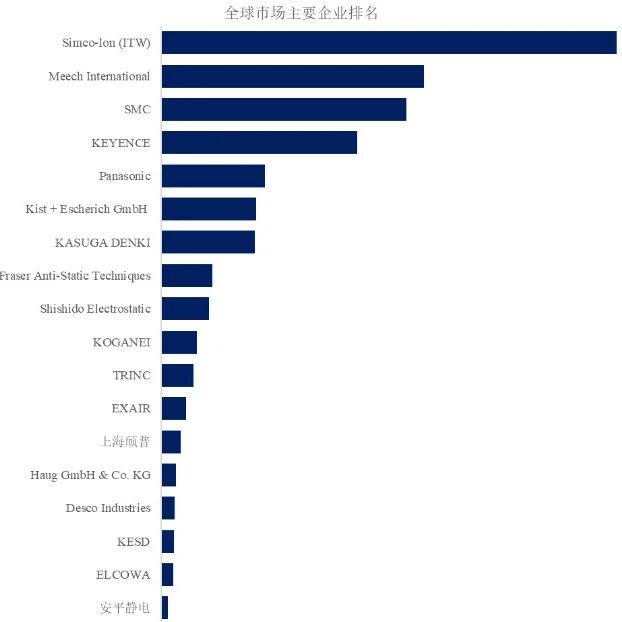
Core Viewpoint - The global market for electrostatic cleaning equipment in the automotive and medical device industries is projected to reach $130 million by 2031, with a compound annual growth rate (CAGR) of 5.5% over the coming years [1]. Market Overview - The global market size for electrostatic cleaning equipment in the automotive and medical device sectors is significant, with the automotive sector being the largest downstream market, accounting for approximately 63.8% of the demand [7][10]. - The leading product type in this market is the air gun, which holds about 44.4% of the market share [7]. Key Manufacturers - Major manufacturers in the global electrostatic cleaning equipment market include Simco-Ion (ITW), Meech International, SMC, KEYENCE, Panasonic, and others [6][7]. Market Dynamics Driving Factors - Strict cleanliness standards in the automotive and medical device industries necessitate the use of electrostatic cleaning equipment to ensure product safety and compatibility [10]. - The increasing miniaturization and complexity of components in both sectors require non-contact, residue-free cleaning solutions [10]. - The rise of electric vehicles (EVs) and electronic products demands precise cleaning to prevent electrical failures [12]. - Automation in manufacturing allows for seamless integration of electrostatic cleaning systems, enhancing productivity and maintaining quality [13]. Restraining Factors - High initial investment and ownership costs for electrostatic cleaning systems may deter small and medium-sized manufacturers from adoption [14]. - The complexity of integrating these systems into existing production lines poses challenges [15]. - Sensitivity of components to electrostatic discharge (ESD) can lead to potential risks if systems are not properly configured [16]. - Limited standardization and certification guidelines for electrostatic cleaning methods create challenges in validation and compliance [18]. - A shortage of skilled operators and technical support can affect the performance of electrostatic cleaning systems [19]. - Competing cleaning technologies, such as ultrasonic and plasma cleaning, may be preferred by buyers due to familiarity [20].
NOVONIX Announces Entry into Funding Agreement for up to US$100Million of Convertible Debentures
GlobeNewswire News Room· 2025-07-23 23:13
Core Viewpoint - NOVONIX Limited has entered into a definitive Funding Agreement to secure up to US$95,000,000 for the expansion of its Riverside facility in Chattanooga, Tennessee, through the issuance of unsecured convertible debentures [1][9]. Funding Agreement Details - The Funding Agreement allows NOVONIX to issue up to US$100,000,000 in convertible debentures to Yorkville Advisors Global, LP [1][9]. - The first tranche consists of US$24,500,000, which will raise US$23,275,000 and does not require shareholder approval [9]. - The second tranche is US$35,500,000, which may raise up to an additional US$33,725,000, subject to shareholder approval at an Extraordinary General Meeting scheduled for September 9, 2025 [9]. - An additional tranche of up to US$40,000,000 is also available, contingent on mutual agreement and shareholder approval [9]. Production and Capacity Expansion - NOVONIX plans to begin shipping commercial-grade synthetic graphite from its Riverside facility later this year, with mass production set to start next year for its lead customer, Panasonic [2]. - The Riverside facility is expected to become the first large-scale production site for high-performance synthetic graphite in North America, with an initial capacity scaling up to 20,000 tonnes per annum (tpa) [5]. - Combined with the new Enterprise South location, NOVONIX will achieve a total production capacity of over 50,000 tpa in Chattanooga [5]. Company Overview - NOVONIX is recognized as a leading battery technology company focused on revolutionizing the lithium-ion battery industry through innovative and sustainable technologies [7]. - The company is expanding its high-performance synthetic graphite material manufacturing operations and has developed a patented all-dry, zero-waste cathode synthesis process [7].


X @Bloomberg
Bloomberg· 2025-07-23 14:32
Tesla and Panasonic are on the losing side of a fight over where US manufacturers source graphite for electric-vehicle batteries https://t.co/uzUQ9DPQiq ...

松下集团中国东北亚总代表本间哲朗:中国供应链是松下全球布局不可缺少的力量
Jing Ji Guan Cha Bao· 2025-07-21 07:06
松下创始人松下幸之助在其《实践经营哲学》中曾明确提出,"要和所有的相关方保持共存共赢的关 系,这是非常重要的。可以说这是企业自身持久发展的唯一道路。"如今,以"合作"促进产业链升级仍 是松下的经营理念的核心。 但本间哲朗相信,"差异化"的创新将是松下在中国获得发展的核心能力。"作为世界第二大经济体,中 国市场的成长速度很快,所以很多日本企业才有机会和中国企业一起推动市场发展,享受中国市场的成 长和机遇。但是如果我们提供给中国市场的价值和本土企业的价值是一样的话,我们的发展空间就会越 来越小,所以我们一定要寻找我们的价值。"他说。 (原标题:松下集团中国东北亚总代表本间哲朗:中国供应链是松下全球布局不可缺少的力量) 7月16日-20日,第三届中国国际供应链促进博览会(以下简称:链博会)期间,松下以"美好生活从家 延伸到城市"为主题第二次参展,展示其在中国的供应链本土化创新与产业链协同的发展成果。 松下控股株式会社全球副总裁、集团中国东北亚总代表本间哲朗在采访中表示:"中国不仅是制造大 国、市场大国,更是创新大国和工程师大国,我们非常看重和中国创新企业的合作,也会继续重视和中 国供应商的合作。" 2024财年,松 ...
Lucid Flags Tariff-Driven Price Surge, Localizes Battery Sourcing
ZACKS· 2025-07-16 16:36
Industry Overview - The U.S. automotive industry is expected to see a rise in vehicle costs due to tariff policies implemented by the Trump administration, particularly a 25% duty on non-American content, which will affect pricing across the board [1][7] - Automakers heavily rely on global imports of key materials such as graphite, lithium, and semiconductors, making the industry vulnerable to disruptions caused by tariffs [2][7] Company Specifics - Lucid Group is actively working to localize its supply chain to mitigate costs, particularly focusing on battery material sourcing through a new deal with Graphite One for U.S.-processed graphite [3][7] - The partnership with Panasonic for battery production will be delayed until at least 2026, impacting Lucid's ability to offset tariff burdens in the short term [3][7] - Over the past year, Lucid's shares have declined by 38.6%, significantly underperforming the industry average decline of 2.3% [5]


Trump Threatens Russia with 100% Tariffs | Bloomberg Markets 7/14/2025
Bloomberg Television· 2025-07-14 19:10
Market Trends & Dynamics - S&P 500 is fluctuating around flat territory, attempting to break into the green [1] - Bitcoin is elevated, trading under $120,000, with anticipation for "Crypto Week" in Washington [2][29] - Lower is down about 1.5%, slightly impacting the S&P [2] Geopolitical & Economic Impact - Potential for 100% secondary tariffs on Russia if a deal to end the war in Ukraine isn't reached in 50 days [3][6] - Discussion of secondary tariffs on countries buying Russian oil and gas, like China and India [7] - Legislation proposed with a potential 500% secondary tariff on countries aiding Russia [8] Defense & Technology Spending - NATO countries have agreed to spend 5% of their GDP on defense [11][15] - Increased defense spending is driving growth for defense tech companies [15] - A private investment firm sees private defense tech companies achieving meaningful revenue scale and potentially going public [17] Electric Vehicle (EV) & Battery Industry - Panasonic's new $4 billion battery plant is expected to reach full production this year [33] - The battery industry faces potential headwinds for battery demand due to a new bill [40] - Despite potential demand pushback, new battery supply is expected to drive battery prices down [41][42]