
Samsung Electronics

Search documents
Tech Stocks May Lead Early Rebound On Wall Street
RTTNews· 2026-01-15 13:58
Group 1: Market Overview - Major U.S. index futures are indicating a higher open, with technology stocks expected to lead the rebound, as shown by a 1.0 percent increase in Nasdaq 100 futures [1] - The tech-heavy Nasdaq fell 238.12 points or 1.0 percent to 23,471.75, while the S&P 500 and Dow also experienced declines [5] - Concerns about rising geopolitical tensions contributed to the weakness on Wall Street [5] Group 2: Taiwan Semiconductor (TSMC) - Shares of Taiwan Semiconductor are up more than 5 percent in pre-market trading following a significant increase in fourth-quarter profits [2] - TSMC's capital expenditure levels indicate strong confidence in the ongoing AI boom, with guidance suggesting 30% growth by 2026 [3] Group 3: U.S. Economic Indicators - Initial jobless claims unexpectedly fell to 198,000, a decrease of 9,000 from the previous week's revised level of 207,000, contrary to economists' expectations of an increase [24][25] - Retail sales in the U.S. rose by 0.6 percent in November, exceeding expectations of a 0.4 percent increase [8][9] Group 4: Sector Performance - Software stocks saw a significant decline, dragging the Dow Jones U.S. Software Index down by 2.4 percent to its lowest level in eight months [10] - Airline and retail stocks also experienced notable weakness, while energy stocks showed significant strength [10] Group 5: International Markets - Asian stocks ended mixed, with Japan's Nikkei 225 Index dropping 0.4 percent and South Korea's Kospi surging 1.6 percent to a record high [12][15] - European stocks displayed mixed performance, with the U.K. GDP growing by 0.3 percent in November, surpassing expectations [18][19]


SK Hynix to invest $13 billion in new plant amid memory chip shortage
CNBC· 2026-01-13 02:36
Core Viewpoint - SK Hynix is investing 19 trillion Korean won ($12.9 billion) to build a new advanced packaging plant to meet rising demand driven by the artificial intelligence boom [1][2]. Company Summary - The new fabrication facility will be located in Cheongju, South Korea, with construction starting in April and completion targeted for the end of 2027 [2]. - SK Hynix is a leading global producer of memory chips and is at the forefront of high-bandwidth memory (HBM) technology, which is essential for AI processors, including those from Nvidia [2][3]. Industry Summary - The HBM market is projected to grow at a compound annual growth rate of 33% from 2025 to 2030, driven by increasing global AI competition [3]. - The shift towards AI demand has strained supplies of conventional memory chips, raising concerns about potential shortages affecting the broader electronics industry [3]. - In response to rising demand, memory chip manufacturers, including SK Hynix and Samsung Electronics, are expanding production capacity [4].
把握全球增长机遇-AI 在亚洲供应链的更广泛深度渗透_ Seizing the Global Growth Opportunity_ A broader and deeper AI presence in the Asian supply chain
2026-01-13 02:11
Summary of Key Points from the Conference Call Industry Overview - Focus on the Asia technology (hardware) sector, particularly the AI supply chain, as a priority investment area for 1H26 due to its significant influence on earnings growth amid concerns over smartphone/PC demand and auto production recovery [2][12] Core Themes and Stock Recommendations 1. **AI Supply Chain Investment**: - Emphasis on investing in the AI supply chain, which is expected to drive earnings growth despite potential slowdowns in other sectors [2][12] - Anticipation of clearer benefits from AI for earnings in 2026, with no signs of slowdown heading into 2027 [12] 2. **Under-the-Radar AI Themes**: - Five notable themes identified: 1. **Power Consumption**: Opportunities in power supply, power rack products, capacitors, and power semiconductors. Companies to watch include Delta Electronics, Panasonic HD, Murata Mfg., Taiyo Yuden, and Renesas Electronics [6][25] 2. **Data Transmission**: Advancements in large-scale data transmission technologies, with companies like Fujikura and Mitsubishi Electric highlighted [6][25] 3. **Niche Components**: Price stabilization and increases in demand for components like MLCCs and substrates, with key players including Murata Mfg. and SEMCO [6][25] 4. **Physical AI Integration**: Companies like Hitachi and Mitsubishi Electric are leading in embedding AI into industrial applications [6][27] 5. **Software/Services Disruption**: Generative AI's potential to improve productivity in Japan's software industry, with Fujitsu and NEC as key players [6][27] 3. **High-Profile Sub-Sectors**: - Continued growth in foundry, memory, semiconductor production equipment, AI servers, and edge AI, with recommended stocks including TSMC, Samsung Electronics, and Hon Hai [30][31] Market Dynamics and Risks - **Top-Down Risks**: - Concerns regarding valuations, implementation risks, over-investment, monetization challenges, and funding sources, particularly with emerging players in the market [13] - **Bottom-Up Perspective**: - Fundamentals differ from the IT bubble of 2000, with a larger scale and longer timeline for AI infrastructure development, and sound supply chain management in Asian hardware [14][16] Technological Advancements - **Power Consumption Trends**: - Significant rise in power consumption for AI servers, with expectations for voltage increases to 800V and beyond, creating business opportunities for power-related products [33][38] - **Data Transmission Innovations**: - Transition to higher communication speeds (800-1.6Tbps) and co-packaged optics (CPO) expected to enhance industry value [58][59] Conclusion - The Asia technology sector, particularly the AI supply chain, presents substantial investment opportunities driven by technological advancements and evolving market dynamics. Key players and themes are positioned to benefit from these trends, while investors should remain cautious of potential risks associated with rapid market changes.
全球半导体:英伟达采用推理上下文内存存储,NAND 供应短缺预计进一步加剧-Global Semiconductors NAND Supply Shortage Expected to Deepen Further as Nvidia Adopts Inference Context Memory Storage
2026-01-12 02:27
Summary of Key Points from the Conference Call Industry Overview - **Industry**: Global Semiconductors - **Focus**: NAND Supply and AI Storage Solutions Core Insights 1. **Nvidia's Adoption of ICMS**: Nvidia announced the adoption of Inference Context Memory Storage (ICMS) for its Vera Rubin platform to address memory bottlenecks in large-scale inference computations. This new architecture will utilize 16TB TLC SSDs and offload Key-Value (KV) Cache to more scalable storage solutions to enhance AI capabilities [1][2] 2. **Projected NAND Demand Increase**: The implementation of ICMS is expected to require an additional 1,162TB SSD NAND per Vera Rubin server. The projected demand for NAND in 2026 and 2027 is estimated to reach 34.6 million TB and 115.2 million TB respectively, which represents 2.8% and 9.3% of global NAND demand for those years [1][5] 3. **NAND Supply Shortage**: The demand increase due to ICMS adoption is anticipated to exacerbate the existing NAND supply shortage, indicating a significant upward pressure on NAND prices and availability in the market [1][6] 4. **Performance Improvements**: By offloading KV Cache, Nvidia aims to achieve up to 5x higher tokens per second, 5x better power efficiency, and reduced latency, which are critical for enhancing AI performance [2] 5. **New Architectural Layer**: ICMS introduces a new layer between local SSDs and shared enterprise storage, facilitating faster data processing and improved coordination with High Bandwidth Memory (HBM) to boost overall AI performance [4] Beneficiaries - **Key Beneficiaries**: The companies expected to benefit from the increased NAND demand include Samsung Electronics, SK Hynix, SanDisk, Kioxia, and Micron, as they are major suppliers in the NAND market [6] Additional Insights - **KV Cache Explanation**: KV Cache is a memory optimization mechanism in transformer models that stores previously computed key-value pairs to avoid redundant calculations, which is essential for efficient AI processing [3] - **Market Implications**: The announcement of Nvidia's ICMS adoption is viewed as a positive catalyst for NAND suppliers, indicating a robust growth opportunity in the semiconductor sector driven by AI advancements [6] This summary encapsulates the critical points discussed in the conference call regarding the semiconductor industry, particularly focusing on the implications of Nvidia's new storage architecture and its impact on NAND supply and demand dynamics.

AI memory is sold out, causing an unprecedented surge in prices
CNBC· 2026-01-10 12:00
Core Insights - The global demand for RAM is exceeding supply due to the high requirements from companies like Nvidia, AMD, and Google for their AI chips [1][2] - Major memory vendors Micron, SK Hynix, and Samsung are experiencing significant business growth due to this surge in demand [2][3] Company Performance - Micron's stock has increased by 247% over the past year, with net income nearly tripling in the latest quarter [3] - Samsung anticipates its operating profit for the December quarter to nearly triple, while SK Hynix is considering a U.S. listing due to rising stock prices [3] Price Trends - TrendForce predicts that average DRAM memory prices will rise by 50% to 55% in the current quarter compared to Q4 2025, marking an unprecedented increase [4] - The price of RAM for consumers has surged dramatically, with examples of costs rising from approximately $300 to around $3,000 within months [9] Memory Technology - HBM (high-bandwidth memory) is essential for AI chips and is produced through a complex process that limits the production of conventional memory [6][7] - The demand for HBM is prioritized over other memory types due to higher growth potential in server and AI applications [7] Industry Challenges - Micron has decided to discontinue certain consumer memory products to allocate more supply for AI chips and servers [8] - The memory shortage is expected to impact consumer electronics companies, with memory costs now accounting for about 20% of laptop hardware costs, up from 10%-18% in early 2025 [15] Future Outlook - Nvidia's CEO highlighted the need for more memory factories to meet the high demand driven by AI applications [18] - Micron is building new factories in Idaho and New York, expected to come online in 2027, 2028, and 2030, respectively, but currently, they are "sold out for 2026" [19][20]

Analysts Are Bullish on Taiwan Semiconductor Manufacturing (TSM) – Here’s Why
Yahoo Finance· 2026-01-09 09:21
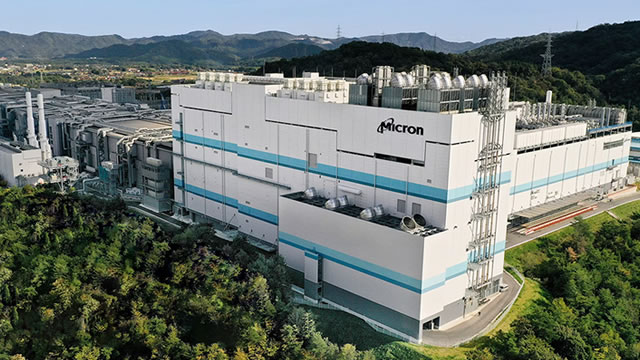
Taiwan Semiconductor Manufacturing Company Limited (NYSE:TSM) is one of the best major stocks to invest in right now. Taiwan Semiconductor Manufacturing Company Limited (NYSE:TSM) received a rating update from Mizuho Securities on January 5, with the firm reiterating a Buy rating on the stock with a NT$2,000 price target. The same day, Goldman Sachs also lifted the price target on the stock to NT$2,330 from NT$1,720 and maintained a Buy rating on the shares. The firm told investors that Taiwan Semiconducto ...
三星电子_25 年第四季度初步营业利润略超预期,或由存储、显示业务带动;传统存储价格强劲将持续推高盈利;买入评级
2026-01-09 05:13
Summary of Samsung Electronics (005930.KS) Earnings Call Company Overview - **Company**: Samsung Electronics (005930.KS) - **Market Cap**: W946.8 trillion / $654.7 billion - **Enterprise Value**: W858.8 trillion / $593.8 billion - **Current Price**: W141,000 - **12-Month Price Target**: W180,000 (up from W140,000) [2][21] Key Financial Highlights - **4Q25 Operating Profit (OP)**: W20.0 trillion, slightly above estimates (GSe: W19.0 trillion, Bloomberg consensus: W19.6 trillion) [2] - **Earnings Growth**: Expected OP to triple year-over-year in 2026 to over W150 trillion, with ROE exceeding 25% [3] - **Valuation Metrics**: Shares trading at 7.6X P/E and 1.8X P/B on 2026E numbers, indicating attractive valuation [3][35] Segment Performance Semiconductors - **DRAM Pricing**: Estimated to have risen by nearly 50% quarter-over-quarter (qoq), with NAND pricing up more than 30% qoq, exceeding previous expectations [4] - **Future Pricing Forecast**: - DRAM: Revised to +56% in 1Q26, +10% in 2Q26, +7% in 3Q26, +2% in 4Q26 [17] - NAND: Revised to +35% in 1Q26, +15% in 2Q26, +5% in 3Q26, +3% in 4Q26 [17] - **Market Dynamics**: Strong demand for AI inferencing continues, leading to higher pricing for both DRAM and NAND due to limited supply [16] Display - **Performance**: Operating profit higher than prior guidance due to strong orders for OLED displays, particularly for new iPhones [19] Smartphone and Consumer Electronics - **Challenges**: Operating profit missed expectations due to higher component costs, particularly memory [19] Risks and Considerations - **Key Risks**: - Major deterioration in memory supply/demand - Sharp contraction in smartphone margins - Loss of market share in mobile OLED [23] Future Outlook - **Earnings Call Focus Points**: - Magnitude and duration of the conventional memory cycle - Progress on HBM4 qualification - Memory capital expenditures and capacity intentions - Demand destruction due to rising memory pricing - Updates on capital allocation strategies [20] Conclusion - **Investment Recommendation**: Reiterated Buy rating based on strong earnings outlook and revised price targets [21]
亚洲股票与主题策略:适应范式重塑的稳健投资组合-Asia Equity & Thematic Strategy Robust Portfolios for Reshaping Paradigms
2026-01-09 05:13
Summary of Key Points from the Investor Presentation Industry Overview - The Asia Pacific region is undergoing significant changes in growth and corporate strategies, as well as reforms in capital markets to enhance competitiveness in emerging technologies and multipolar supply chains [1][4]. Core Views and Recommendations - **Market Positioning**: The company recommends maintaining tight market-risk positions relative to benchmarks, with a slight preference for Japan over emerging markets (EM) in 2026 [7]. - **Country Allocations**: - Small Overweights (OWs) are suggested for India, Brazil, UAE, and Singapore. - Underweights (UWs) are recommended for Saudi Arabia, Indonesia, and Taiwan [7]. - **China Outlook**: The company holds a moderately constructive view on China with an Equal Weight (EW) recommendation, but does not anticipate significant reflation until 2027 [7]. Thematic Insights - The top thematic focus areas identified include: - AI Path in China - Diabesity Ecosystem - AI & Healthcare [7]. Earnings and Valuations - **Earnings Projections**: - The base-case earnings for the TOPIX index are projected to be ¥185 (+9%) for F3/25, ¥198 (+7%) for F3/26, and ¥225 (+14%) for F3/27 [8][12]. - The consensus EPS for the same periods is ¥188 (+10%), ¥201 (+7%), and ¥223 (+11%) [12]. - **Valuation Targets**: - The TOPIX index is currently at 3,538 with a target of 3,600 for December 2026, reflecting a 2% increase [8]. - The MSCI EM index is at 1,467 with a target of 1,400, indicating a -5% outlook [8]. Market Performance Rankings - The performance rankings for various countries from 2016 to 2026 show Japan consistently leading, followed by Hong Kong and India, with significant fluctuations in other markets like Brazil and South Africa [9]. Forward P/E Ratios - The forecasted 12-month forward P/E ratios are: - Japan: 15.0x - Emerging Markets: 13.0x - China: 12.7x [17]. Additional Insights - The company emphasizes the importance of considering potential conflicts of interest in its research, as it engages in business with covered companies [5]. - The earnings estimate revisions for various markets indicate a mixed outlook, with Japan showing positive growth while other regions like India and Australia face downward revisions [19]. This summary encapsulates the critical insights and recommendations from the investor presentation, highlighting the strategic focus on Asia Pacific markets and the anticipated trends in earnings and valuations.
三星电子- 2025 年第四季度初步业绩符合预期,超级周期已开启
2026-01-09 05:13
Samsung Electronics | Asia Pacific 4Q25 Prelim In-Line, Super Cycle Underway | What's Changed | | | | --- | --- | --- | | Samsung Electronics (005930.KS) | From | To | | Price Target | W144,000 | W170,000 | | Samsung Electronics (005935.KS) | | | | Price Target | W125,280 | W147,900 | Samsung is in the midst of a sharp profit recovery cycle. We raise our 2026–27 EPS estimates and price target, supported by 6.2x 2026e P/E and a potential re-rating toward 2.0x P/B. Advanced DRAM nodes, HBM strength, and new p ...
Factbox-Countries and industries most exposed to Trump's IEEPA-based tariffs
Yahoo Finance· 2026-01-08 23:32
Group 1: Legal Context and Implications - The U.S. Supreme Court is expected to rule on the legality of tariffs imposed by President Trump under the International Emergency Economic Powers Act (IEEPA), which could result in nearly $150 billion in refunds to importers if deemed illegal [1][2] Group 2: Companies Challenging Tariffs - Major corporations such as Costco, Revlon, EssilorLuxottica, Bumble Bee Foods, Yokohama Tire, and Kawasaki Motors have filed lawsuits against the U.S. government, contesting the IEEPA-based tariffs and seeking refunds [2] Group 3: Tariff Categories - The tariffs under the IEEPA fall into three categories: 1. Fentanyl-linked tariffs on China, Mexico, and Canada 2. Broad "reciprocal" tariffs aimed at reducing trade deficits 3. Punitive levies against countries for non-trade political reasons [2] Group 4: Industries Exempt from Tariffs - Pharmaceuticals, energy, agricultural commodities, services, and aircraft/aerospace industries are largely exempt from U.S. tariffs due to their critical nature and potential impact on public health and international commerce [3] Group 5: Countries and Industries Affected by Tariffs - **China and Hong Kong**: Consumer electronics, machinery, medical devices, chemicals, toys with a tariff rate of 10% [4] - **Taiwan**: Semiconductors and chipmakers with a tariff rate of 20% [4] - **Mexico**: Autos and auto parts with no tariff for USMCA-compliant goods, but 25% for non-USMCA goods [4] - **Canada**: Metals and energy products with no tariff for USMCA-compliant goods, but 25% for non-USMCA goods [4] - **European Union and UK**: Autos and machinery with a tariff rate of 15% on most EU goods, and 10%-25% on UK goods depending on the product [4] - **Japan and South Korea**: Autos and machinery with reduced tariffs to about 15% [4] - **Southeast Asia**: Apparel and footwear with tariffs ranging from 19% to 20% [4]