
TSMC

Search documents
Cadence & Microsoft Redefine Data Center Memory With Advanced Solutions
ZACKS· 2026-01-14 15:01
Core Insights - Cadence Design Systems Inc. (CDNS) has launched the first LPDDR5X 9600Mbps memory IP system for enterprise and data center applications, in partnership with Microsoft, marking a significant advancement in memory architecture [2][9] - The new solution integrates Cadence's LPDDR5X IP with Microsoft's RAIDDR error correction code (ECC) technology, providing high performance, low power consumption, and enhanced reliability [2][3] Product Development - The LPDDR5X system supports 40-bit channels and delivers 9600 Mbps performance while maintaining low power usage and enterprise-grade reliability features similar to DDR5 [5] - Microsoft's RAIDDR ECC technology enhances the reliability of the LPDDR5X system, enabling data center architects to deploy this memory solution at scale without compromising performance or power efficiency [4][3] Market Trends - The demand for LPDDR5X is increasing in data centers due to its energy efficiency and performance in AI and high-performance computing (HPC) workloads [3][8] - Long-term trends such as 5G, hyperscale computing, and autonomous driving are driving design wins for Cadence, while the rise of Generative, Agentic, and Physical AI is increasing computing needs [8] Competitive Landscape - Cadence faces competitive pressure from rivals like Synopsys and Siemens, which may impact pricing power and margins [11] - The company's focus on AI solutions increases exposure to competition and the cyclical nature of AI infrastructure spending [11] Strategic Initiatives - Cadence is expanding its portfolio with next-generation memory IP, including LPDDR6 memory IP expected to operate at 14.4Gbps by July 2025, positioning itself as a key player in future memory subsystems [7] - Collaborations with major players like Qualcomm and NVIDIA are aimed at developing next-generation AI chips for training and inference [8][10]




晶圆厂规划更新-台积电 2027 年资本支出;中介层外包给 Vanguard-The Foundry Floorplan Update on TSMC's 2027 capex; interposer outsourcing to Vanguard
2026-01-14 05:05
Summary of TSMC's 2027 Capex Update and Foundry Dynamics Company and Industry Overview - **Company**: Taiwan Semiconductor Manufacturing Company (TSMC) - **Industry**: Semiconductor Foundry - **Date of Report**: January 13, 2026 Key Points and Arguments TSMC's Capital Expenditure (Capex) - TSMC's estimated capex for 2027 has been raised to **US$54 billion**, up from **US$49 billion** in 2026, driven by strong demand for **2nm and AI semiconductors** [1][8][19] - The company is expected to see **EUV (Extreme Ultraviolet) orders increase by approximately 40-50%** from 2026 levels [1][8] Capacity and Production Plans - TSMC plans to convert part of its **Fab 12 and Fab 14** capacity for **interposer production** and may outsource **CoWoS (Chip on Wafer on Substrate) interposer production** to **Vanguard** in 2027 [1][8][9] - The company added **~20kwpm** of its **55nm/65nm capacity** for interposer production in 2025, indicating strong demand for AI semiconductors [9] Market Dynamics and Competitors - **Data center-related PMIC (Power Management Integrated Circuit)** faces shortages, with **SMIC and Vanguard** expected to benefit and potentially increase their **8-inch wafer prices** [1][8] - **Samsung Foundry** is gradually reducing its **8-inch engineering resources** to support leading-edge demand, which may lead to a shift of some display driver IC orders to **UMC** in the second half of 2027 [1][8] Financial Projections and Stock Ratings - TSMC's revenue growth is projected at **30% year-over-year in 2026**, exceeding the Street consensus of **24%** [1][23] - Price targets for TSMC have been raised to **NT$1,988** from **NT$1,888** [1][48] - **UMC** has been downgraded to **Underweight** due to potential investor disappointment regarding wafer price hikes and interposer production [1][8] Foundry 2.0 Concept - TSMC introduced the **Foundry 2.0** concept, expanding its business definition to include both front-end and back-end operations, with advanced packaging revenue approaching **10% of total revenue by 2025** [32][33] Long-term Outlook - TSMC is expected to outgrow the foundry industry due to its leadership position and heavy capex investments compared to peers [1][24] - The company aims to expand its **2nm capacity to 140kwpm by 2027**, with further growth anticipated beyond that [1][24] Additional Important Insights - TSMC's **EUV layer count** for future nodes is not significantly increasing, but the installed base of EUV scanners is expected to accelerate, particularly in 2027 [11] - The report highlights the importance of TSMC's capacity expansion as a key driver for the entire foundry industry's growth and revenue trajectory [19][23] This summary encapsulates the critical insights from the conference call regarding TSMC's strategic direction, financial outlook, and the broader semiconductor foundry landscape.
Top Wall Street Forecasters Revamp Taiwan Semiconductor Manufacturing Price Expectations Ahead Of Q4 Earnings
Benzinga· 2026-01-13 19:31
Core Viewpoint - Taiwan Semiconductor Manufacturing Company (TSMC) is expected to report strong earnings for the fourth quarter, with analysts projecting earnings of $2.71 per share and revenue of $32.62 billion, indicating a positive outlook for the company [1]. Group 1: Earnings Expectations - TSMC will release its fourth-quarter earnings results on January 15, before the market opens [1]. - Analysts anticipate quarterly earnings of $2.71 per share and revenue of $32.62 billion, reflecting a robust performance [1]. Group 2: Recent Performance - TSMC reported stronger-than-expected results for December, with revenue exceeding market forecasts on both a monthly and quarterly basis [1]. Group 3: Stock Performance - TSMC shares experienced a slight decline of 0.1%, trading at $331.65 [2]. Group 4: Analyst Ratings - Bernstein analyst Mark Li maintained an Outperform rating and raised the price target from $290 to $330 [3]. - Needham analyst Charles Shi maintained a Buy rating with a price target of $360 [3]. - Barclays analyst Simon Coles maintained an Overweight rating and increased the price target from $330 to $355 [3]. - Susquehanna analyst Mehdi Hosseini maintained a Positive rating and raised the price target from $300 to $400 [3].

Ultra Clean (NasdaqGS:UCTT) FY Conference Transcript
2026-01-13 18:47
Summary of Ultra Clean (NasdaqGS: UCTT) FY Conference Call Company Overview - **Company**: Ultra Clean Technology (UCT) - **Industry**: Semiconductor Equipment and Services - **Conference Date**: January 13, 2026 Key Points Long-term Vision and Growth Strategy - UCT aims to grow into a **$4 billion company** within the next **three to five years** with a target of achieving a **20%+ gross margin** and over **10% OEM** [5][6] - Focus on high-margin service and engineering product portfolio to enhance both top-line and bottom-line growth [5][6] - Emphasis on **digital transformation** and operational efficiency to prepare for an anticipated industry super cycle in the next **two to three years** [6][7] Industry Dynamics and Market Outlook - The **Wafer Fabrication Equipment (WFE)** market is projected to grow in the **low- to mid-teen range** from **2025 to 2026**, with expectations of stronger performance in the second half of 2026 [13][15] - Key drivers for growth include: - Increased demand from **AI data centers** and leading-edge foundry logic customers [15][16] - Memory customers committing to **CapEx expansion** due to a surge in DRAM prices and demand [16][17] - Easing geopolitical tensions between the US and China, leading to increased demand for equipment [17][18] Product and Service Portfolio - UCT participates in nearly all product portfolios of its top customers, including **etching and deposition** technologies [23][24] - Significant growth in the **laser segment**, targeting **10% revenue contribution** from laser products by 2026 [30][31] - The service business, focusing on cleaning and coating, is expected to grow at a **double-digit rate** in 2026, driven by increased wafer starts and the need for zero defects in leading-edge fabs [36][37] Competitive Landscape - UCT has diversified its product offerings beyond gas boxes, reducing direct competition with peers like **Ichor** [41][42] - Focus on strategic partnerships and vertical integration to enhance product offerings without conflicting with major suppliers [46][60] China Market Exposure - UCT continues to support key customers in China while navigating complex compliance requirements [49][50] - Anticipated growth in direct China business as part of the overall WFE market expansion [52] Financial Performance and Margin Improvement - UCT aims to improve gross margins through increased scale and a higher percentage of service and engineering products [58][59] - Current capacity can support revenues of **$2.5-$3 billion**, with plans to expand to **$4 billion** as demand signals become clear [67] Inorganic Growth Strategy - UCT's M&A strategy focuses on deepening customer engagement, acquiring critical technologies, and expanding beyond top customers [60][61] Talent Acquisition and Industry Challenges - The semiconductor industry faces talent acquisition challenges, but UCT's positive culture and employee development focus help attract talent [65][66] Additional Insights - UCT's proactive approach to market dynamics and strategic positioning aims to capitalize on growth opportunities while managing risks associated with geopolitical and market fluctuations [49][50][52]

AI-Driven Demand for Advanced Chips Likely to Boost TSM's Q4 Revenues
ZACKS· 2026-01-13 14:05
Core Insights - Taiwan Semiconductor Manufacturing Company Ltd. (TSM) is set to report its fourth-quarter 2025 earnings on January 15, with strong expectations driven by high demand for AI chips and its leadership in advanced semiconductor technologies [1] Revenue Projections - TSM projects fourth-quarter revenues between $32.2 billion and $33.4 billion, indicating a year-over-year increase of approximately 22% at the midpoint, with the Zacks Consensus Estimate at $32.63 billion, reflecting a growth of 21.4% year-over-year [2][10] AI Demand and Technology Leadership - The increasing adoption of AI in various sectors, including cloud services and consumer devices, is driving the demand for energy-efficient chips, with TSMC benefiting significantly from this trend due to its dominance in 3-nanometer and 5-nanometer manufacturing nodes [3] - TSM has seen strong demand for its AI-focused products, particularly in advanced packaging solutions, which have consistently exceeded supply, highlighting the company's critical role in AI and high-performance computing applications [4] Operational Challenges - Despite strong revenue momentum, TSM faces near-term challenges, including geopolitical tensions between the United States and China, which may impact overall revenue growth in the upcoming quarter [5] - Rising operational costs from TSM's global expansion efforts, including new fabs in Arizona, Japan, and Germany, are expected to negatively affect gross margins by 2-3% annually over the next few years as production ramps up [6] Earnings Outlook - Analysts remain optimistic about TSM's bottom-line growth, with the Zacks Consensus Estimate for fourth-quarter earnings revised upward to $2.76 per share, indicating a year-over-year growth of 21.4% [7]
CES 展会及科技行业更新-Greater China Semi and Tech - Nomura CES conference and tech industry update
2026-01-13 11:56
Summary of Key Points from the Conference Call Industry Overview - The conference focused on the technology sector, particularly the semiconductor and memory markets, highlighting the ongoing supply tightness and its implications for various applications, especially in AI and cloud computing [1][2]. Core Insights - **Memory Supply and Pricing**: There is a significant surge in memory prices, with Sandisk's NAND for enterprise SSDs expected to increase by over 100% quarter-on-quarter in the March quarter [2]. This price increase is driven by strong demand and supply constraints in the memory market [5]. - **AI Demand Divergence**: The demand for cloud AI applications is anticipated to grow significantly, while non-cloud AI applications may experience a decline. This divergence is attributed to uneven supply distribution favoring cloud AI [1]. - **Context Storage as a Bottleneck**: Jensen Huang from nVidia emphasized that as AI models grow, the retention and movement of context data will become critical, shifting the focus from just computing performance (FLOPS) to how context data is managed [3]. - **Incremental NAND Demand**: The introduction of the Inference Context Memory Storage Platform (ICMSP) by nVidia could lead to an incremental NAND demand of approximately 60EB in 2026, representing 10-20% of enterprise SSD demand [4]. Market Sentiment - Investor sentiment is increasingly optimistic regarding the memory upcycle, with a bullish outlook not only on DRAM but also on NAND, which was previously viewed with skepticism [5]. - The semiconductor wafer spot prices are recovering, with expectations of a 5-10% rebound in prices for certain memory makers in the first half of 2026 [14]. Supply Chain Dynamics - **CPO Demand**: The demand for CPO (Chip-on-Panel) version Spectrum-X switches is expected to be strong, with estimates suggesting 2-6 switches per Vera Rubin rack, indicating a positive outlook for the supply chain, particularly for companies like Himax and its partners [8]. - **Competitive Landscape**: Largan is partnering with TSMC to provide future CPO solutions, potentially positioning itself as a competitor to Himax and FOCI in the next generation of CPO technology [9]. Concerns and Risks - There are concerns regarding inventory restocking in non-cloud AI applications, particularly in the smartphone and PC markets, which may lead to weaker demand than previously expected. Global smartphone shipments are projected to decline by 2% year-on-year, with some companies forecasting declines of 10-15% [18]. Conclusion - The technology sector, particularly in semiconductors and memory, is experiencing significant changes driven by AI demand and supply chain dynamics. While there is optimism regarding memory pricing and demand, potential risks in non-cloud AI applications and inventory management could impact overall market performance [1][5][18].

台积电:2030 年营收有望达 3000 亿美元
2026-01-13 11:56
TSMC (2330.TW) Earnings Call Summary Company Overview - **Company**: TSMC (Taiwan Semiconductor Manufacturing Company) - **Market Cap**: NT$43,566,640 million (approximately US$1,380,482 million) [6][8] Key Industry Insights - **Revenue Growth**: TSMC is expected to achieve revenue growth of 20-25% in 2026, driven by strong demand from AI datacenters and edge AI applications [1][2] - **Long-term Revenue Target**: TSMC's revenue is projected to reach US$300 billion by 2030, aligning with a long-term CAGR of 20% [1][4] - **AI Revenue Growth**: TSMC anticipates a mid-40s% CAGR in AI revenue by 2029, with potential for upward revision during the upcoming earnings call [9][32] Financial Performance - **Recent Sales**: TSMC reported 4Q25 revenue of NT$1,046 billion, a 6% QoQ increase, surpassing guidance of a 1% decline [4] - **Earnings Projections**: - 2023A: Net Profit NT$838,498 million, EPS NT$32.33 - 2024A: Net Profit NT$1,173,268 million, EPS NT$45.24 - 2025E: Net Profit NT$1,670,190 million, EPS NT$64.40 - 2026E: Net Profit NT$2,200,192 million, EPS NT$84.84 - 2027E: Net Profit NT$2,805,252 million, EPS NT$108.17 [5][8] Capital Expenditure (Capex) - **Capex Guidance**: TSMC's capex for 2026 is expected to be around US$50 billion, with a focus on advanced nodes (N3/N2) and advanced packaging [3][11] - **Capacity Expansion**: TSMC plans to increase N3 capacity by 30% by early 2027 and aims for CoWoS capacity of 1.2-1.3 million wafers in 2026 and 1.8-2 million wafers in 2027 [3][11] Market Position and Competitive Landscape - **Customer Demand**: TSMC is expected to see strong demand from major customers like Nvidia and Google, particularly for AI chips and advanced packaging solutions [11][25] - **Pricing Strategy**: Anticipated price hikes of 5-10% due to technology mix and demand dynamics are expected to positively impact TSMC's gross margins [25][26] Valuation and Investment Outlook - **Target Price**: The target price for TSMC has been raised to NT$2,450 from NT$1,800, reflecting a 45.8% expected return [6][4] - **Investment Recommendation**: The recommendation remains a "Buy" based on strong growth prospects and favorable market conditions [1][4] Additional Insights - **Gross Margin Stability**: Despite potential impacts from foreign exchange and advanced node dilution, TSMC is expected to maintain a gross margin of around 60% throughout 2026 [4] - **Analyst Expectations**: Analysts expect TSMC to provide a positive outlook during the upcoming earnings call, with strong demand for its leading process nodes and advanced packaging business [32] This summary encapsulates the key points from TSMC's earnings call and provides a comprehensive overview of the company's financial health, market position, and future outlook.
Taiwan Semiconductor Manufacturing Company (NYSE: TSM) Quarterly Earnings Preview
Financial Modeling Prep· 2026-01-13 10:00
Core Viewpoint - Taiwan Semiconductor Manufacturing Company (TSM) is poised for significant earnings growth, with an expected EPS of $2.76 for the upcoming quarterly earnings release, reflecting strong demand in the semiconductor industry, particularly driven by artificial intelligence applications [1][2]. Financial Performance - TSM's expected EPS of $2.76 indicates a 23.2% increase compared to the same quarter last year, showcasing robust growth [2][6]. - Projected revenue for TSM is estimated to be between $32.2 billion and $33.4 billion, with a consensus estimate of $32.63 billion, representing a 21.4% year-over-year increase [2][6]. Market Position and Valuation - TSM's valuation metrics are attractive, with a forward price-to-earnings (P/E) ratio below 20 for fiscal year 2027 and a price/earnings to growth (PEG) ratio 30% below the sector median, suggesting potential for stock price appreciation [3][6]. - The company has a current P/E ratio of approximately 34.63, a price-to-sales ratio of about 14.99, and an enterprise value to sales ratio of around 14.57, reflecting its strong market value relative to earnings and sales [4]. Financial Health - TSM maintains a low debt-to-equity ratio of approximately 0.19, indicating a relatively low level of debt compared to equity, which supports its financial health [5]. - The company's current ratio of about 2.69 suggests strong liquidity, enabling it to cover short-term liabilities effectively [5].
TSMC to Expand $165 Billion U.S. Investment: Report. It's Part of a Trump Tariffs Deal.
Barrons· 2026-01-13 08:16
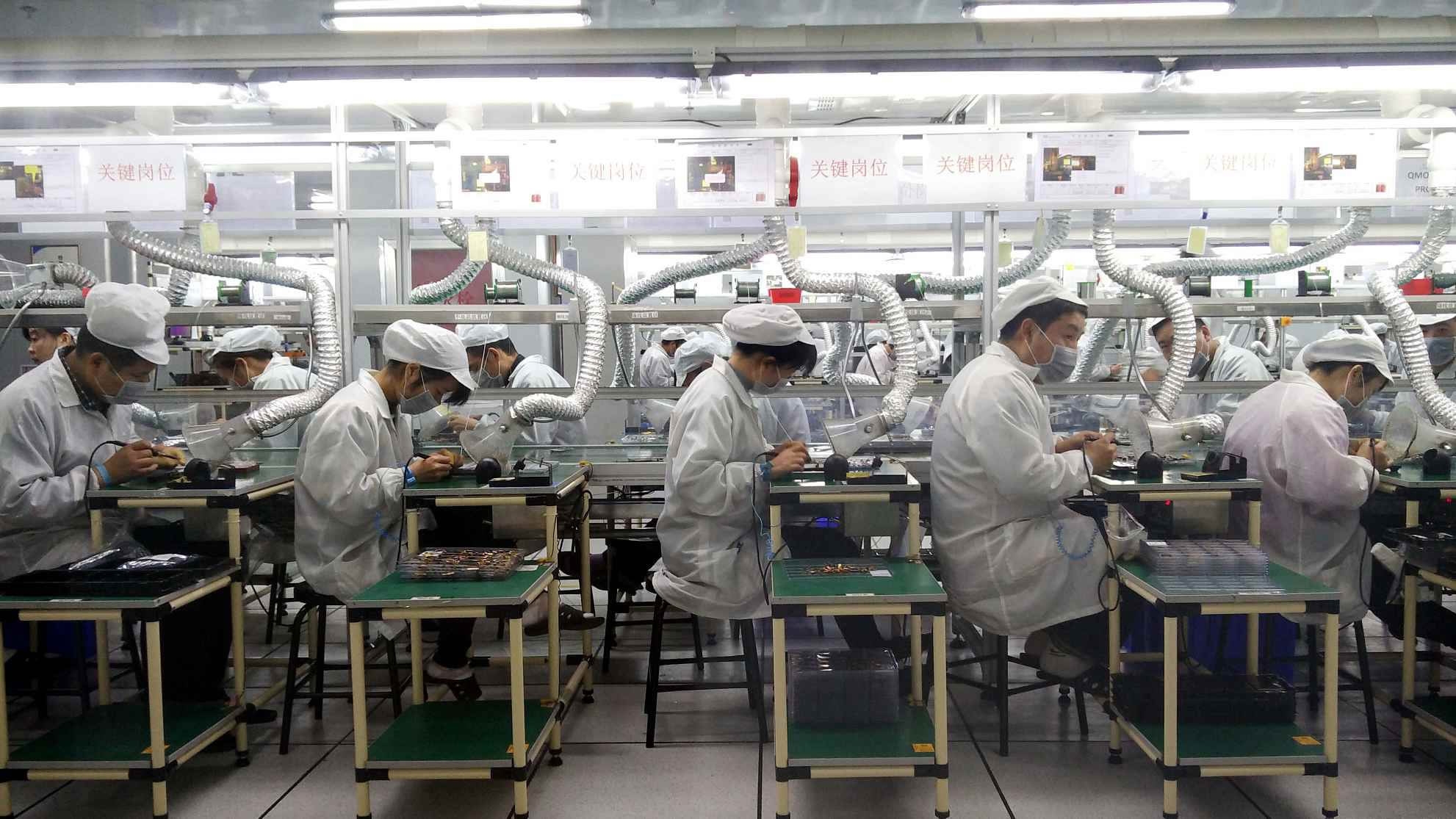
Taiwan Semiconductor Manufacturing could build as many as a dozen plants in Arizona, according to The Wall Street Journal. ...

把握全球增长机遇-AI 在亚洲供应链的更广泛深度渗透_ Seizing the Global Growth Opportunity_ A broader and deeper AI presence in the Asian supply chain
2026-01-13 02:11
Summary of Key Points from the Conference Call Industry Overview - Focus on the Asia technology (hardware) sector, particularly the AI supply chain, as a priority investment area for 1H26 due to its significant influence on earnings growth amid concerns over smartphone/PC demand and auto production recovery [2][12] Core Themes and Stock Recommendations 1. **AI Supply Chain Investment**: - Emphasis on investing in the AI supply chain, which is expected to drive earnings growth despite potential slowdowns in other sectors [2][12] - Anticipation of clearer benefits from AI for earnings in 2026, with no signs of slowdown heading into 2027 [12] 2. **Under-the-Radar AI Themes**: - Five notable themes identified: 1. **Power Consumption**: Opportunities in power supply, power rack products, capacitors, and power semiconductors. Companies to watch include Delta Electronics, Panasonic HD, Murata Mfg., Taiyo Yuden, and Renesas Electronics [6][25] 2. **Data Transmission**: Advancements in large-scale data transmission technologies, with companies like Fujikura and Mitsubishi Electric highlighted [6][25] 3. **Niche Components**: Price stabilization and increases in demand for components like MLCCs and substrates, with key players including Murata Mfg. and SEMCO [6][25] 4. **Physical AI Integration**: Companies like Hitachi and Mitsubishi Electric are leading in embedding AI into industrial applications [6][27] 5. **Software/Services Disruption**: Generative AI's potential to improve productivity in Japan's software industry, with Fujitsu and NEC as key players [6][27] 3. **High-Profile Sub-Sectors**: - Continued growth in foundry, memory, semiconductor production equipment, AI servers, and edge AI, with recommended stocks including TSMC, Samsung Electronics, and Hon Hai [30][31] Market Dynamics and Risks - **Top-Down Risks**: - Concerns regarding valuations, implementation risks, over-investment, monetization challenges, and funding sources, particularly with emerging players in the market [13] - **Bottom-Up Perspective**: - Fundamentals differ from the IT bubble of 2000, with a larger scale and longer timeline for AI infrastructure development, and sound supply chain management in Asian hardware [14][16] Technological Advancements - **Power Consumption Trends**: - Significant rise in power consumption for AI servers, with expectations for voltage increases to 800V and beyond, creating business opportunities for power-related products [33][38] - **Data Transmission Innovations**: - Transition to higher communication speeds (800-1.6Tbps) and co-packaged optics (CPO) expected to enhance industry value [58][59] Conclusion - The Asia technology sector, particularly the AI supply chain, presents substantial investment opportunities driven by technological advancements and evolving market dynamics. Key players and themes are positioned to benefit from these trends, while investors should remain cautious of potential risks associated with rapid market changes.