Twitter

Search documents
身家180亿美元!从Facebook辞职,37岁华裔天才打造240亿独角兽!
Sou Hu Cai Jing· 2025-10-07 23:33
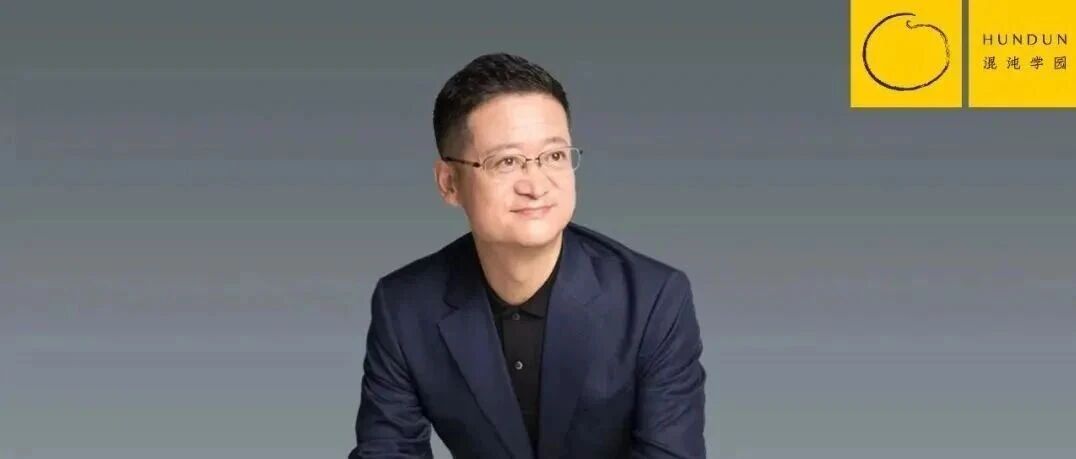
Core Insights - Edwin Chen, a 37-year-old Chinese entrepreneur, has become the youngest billionaire on the Forbes list with a net worth of $18 billion, primarily due to his company Surge AI, which is valued at $24 billion [1][3] - Surge AI generated $1.2 billion in revenue last year, focusing on providing high-quality data for AI models rather than competing in AI algorithms or chips [3][6] Company Overview - Surge AI specializes in complex data annotation tasks that require specialized knowledge, differentiating itself from competitors [6] - The company has collaborated with major AI model companies like OpenAI and Anthropic, participating in the training of several well-known large models [6] - Surge AI has never sought external funding yet has achieved over $1 billion in revenue, with a client list that includes nearly all major players in the AI sector [6] Entrepreneurial Journey - Edwin Chen founded Surge AI in 2020 after witnessing the shortcomings of existing data solutions while working at top tech companies [4][6] - The company started with a single project after a chance encounter with tech executives who expressed interest in Chen's vision [4] Industry Perspective - Chen views AI as a new industrial revolution, emphasizing that while algorithms are the engines, data serves as the fuel for machine learning [8] - He envisions a future where AI interacts in a rich, warm, and creative manner, akin to human interaction, rather than merely solving mathematical problems [8]

X @TechCrunch
TechCrunch· 2025-10-07 12:17
Armstrong, who advised Musk during his Twitter takeover, will oversee the finances of both xAI and X, which were merged in April, the report said. https://t.co/8ZycfbtQDW ...
X @Anthony Pompliano 🌪
Anthony Pompliano 🌪· 2025-10-06 12:19
The media has covered the recent run in $OPEN from a stock price standpoint, but the real story is how quickly the internal culture is changing.You can see it happening in real-time. Same thing happened at Twitter/X.Very good sign for shareholders. ...
X @Nick Szabo
Nick Szabo· 2025-10-05 04:05
Property Rights & Deplatforming - Nick Szabo argues deplatforming long-term users should be illegal based on property rights [1] - The argument centers on the user's labor invested in their online accounts, similar to prescriptive easements [1] - Users cultivate their accounts through effort, analogous to tilling soil and sowing seeds [1]
X @Elon Musk
Elon Musk· 2025-10-02 22:43
RT Grummz (@Grummz)Tesla won't workSpace X won't workMusk's Twitter won't workMusk's Wikipedia won't work <-- You are here.I hope these people aren't betting on polymarket. They must have lost a small fortune by now. https://t.co/Qe0TYSNFJq ...

Musk Loses Bid to Move SEC Suit Over Twitter Stake to Texas
MINT· 2025-10-02 16:26
A federal judge rejected Elon Musk’s bid to transfer to a court in Texas a US Securities and Exchange Commission lawsuit alleging he was late in disclosing his 2022 stake in Twitter Inc. “The Court takes Mr. Musk’s convenience seriously, but it also notes that Mr. Musk has considerable means and spends at least forty percent of his time outside his chosen forum,” US District Judge Sparkle Sooknanan wrote in an order Thursday in Washington. “Indeed, although Mr. Musk may have ‘rarely’ traveled to this Dist ...

X @Bloomberg
Bloomberg· 2025-10-02 16:14
A federal judge rejected Elon Musk’s bid to transfer to a court in Texas an SEC lawsuit alleging he was late in disclosing his 2022 stake in Twitter https://t.co/lWMEUoO0gi ...
硅谷顶级投资人,纳瓦尔最新分享:关于财富、幸福和欲望的44条真相
雪球· 2025-10-01 13:00
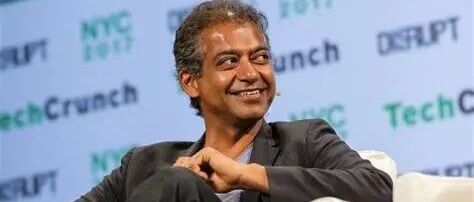
Group 1: Happiness, Success, and Desire - Happiness comes from satisfaction, while success stems from dissatisfaction, highlighting a core contradiction in life that needs to be understood and managed [5] - There are two paths to happiness: obtaining what one desires or not desiring what one does not have, with the latter providing freedom through reduced desire [5] - The ultimate goal of winning in life is to eventually free oneself from the game, suggesting that one should seek to become weary of the game rather than remain in a perpetual cycle [5] - Pursuing material success first and then seeking spiritual freedom is a more realistic path, as fulfilling material desires is often easier than suppressing them [5] - Desire is a self-imposed contract of unhappiness, where one commits to being unhappy until achieving their desires [5] - Enjoying the journey itself is crucial, as 99% of life is spent in pursuit rather than in the moment of achievement [5] Group 2: Mindset, Pain, and Self - Most of the emotional pain experienced in the past was optional and not necessary, suggesting that one could have approached tasks with less emotional turmoil [6] - Pain should be viewed as a tool for growth rather than a marker of progress, focusing on the outcomes pain brings rather than the pain itself [6] - Self-esteem is built on one's reputation with oneself, and adhering to personal moral standards is the best way to establish it [6] - The worst outcome in life is a lack of self-esteem, as self-dislike makes external challenges insurmountable [6] - Learning is fundamentally about correcting mistakes, and true understanding comes from first principles rather than rote memorization [6] Group 3: Decision-Making and Action - The most valuable resource in life is attention, and careful selection of what to focus on is essential, as what one pays attention to shapes their identity [7] - To escape competition, one should embrace their uniqueness and find what they enjoy that others view as work, then "productize" it [9] - In a world full of choices, the biggest mistake is making commitments too early without sufficient exploration [9] - If faced with indecision, the answer is often "no," as modern society offers numerous opportunities that should be pursued without hesitation [10] - The key to mastering any skill lies in the number of iterations rather than the number of hours spent [10] Group 4: Wealth, Status, and Society - Wealth creation is a positive-sum game that can create value for everyone, while status games are zero-sum and inherently competitive [22][23] - Fame should be an earned byproduct of creating value rather than a goal in itself, as pursuing fame for its own sake is hollow [24] - The decline in birth rates is a complex socio-economic phenomenon resulting from individual choices rather than a problem needing active intervention [40]
X @Mike Benz
Mike Benz· 2025-10-01 03:59
The NGOs in the US are trying to get this power back over the platforms by using a foreign law -- the EU Digital Censorship Act -- to force the "re-staffing" of the Trust & Safety teams, so the NGOs can wield their pressure on them again to force change.https://t.co/IWn473CxqHMike Benz (@MikeBenzCyber):IMPORTANT 🚨 Censorship industry insiders plot to leverage EU censorship laws to force 𝕏 to "re-staff" fired censorship workersFt: Rebekah Tromble (led "toxic convo research" for Twitter 1.0), Katie Harbath (A ...
李善友:“疯狂”的马斯克,为什么总是创造奇迹?
混沌学园· 2025-09-30 11:58
Core Viewpoint - Elon Musk is portrayed as a significant innovator and controversial dreamer whose journey encompasses various groundbreaking ventures, including SpaceX, Tesla, and Starlink, which have expanded human imagination regarding technology and the future [1][6]. Group 1: Musk's Entrepreneurial Journey - Musk's early entrepreneurial ventures include creating a game software at age 13, selling it for $500, and founding Zip2, which he sold for $22 million [7]. - He founded X.com in 1999, which later became PayPal, earning him $160 million [7]. - Musk's later ventures include SpaceX, founded in 2002 with an investment of $100 million, and Tesla, where he invested $70 million [7][8]. Group 2: Mission-Driven Approach - Musk's life can be divided into three stages: focusing on self, pursuing a great mission, and achieving spiritual evolution [8]. - His entrepreneurial motivation evolved from financial gain to a greater mission, emphasizing that true motivation transcends money [13][15]. - Musk's mission list includes internet innovation, sustainable energy, space exploration, and safe AI, which he prioritized over traditional career paths [15][17]. Group 3: First Principles Thinking - Musk employs first principles thinking, which involves breaking down complex problems into their fundamental components to innovate effectively [21][33]. - This approach led to the development of reusable rockets at SpaceX, challenging the traditional view of rockets as single-use [21][23]. - Musk's five-step methodology includes questioning assumptions, eliminating unnecessary elements, simplifying processes, accelerating development, and automating systems [34][41]. Group 4: SpaceX's Innovations - SpaceX's value model shifted from single-use rockets to reusable ones, significantly reducing costs and increasing accessibility to space [21][46]. - The company successfully completed its first rocket launch in 2008, marking a historic achievement for private space exploration [49]. - By 2024, SpaceX's Falcon 9 had completed 138 launches, surpassing the total launches of other countries combined [53]. Group 5: Future Aspirations - Musk's ultimate goal is to establish a human presence on Mars, with plans for a fleet of Starships capable of transporting people [69][74]. - The Starship is designed to be a fully reusable spacecraft, aiming to reduce the cost of space travel significantly [74]. - Musk envisions a future where interplanetary travel becomes as routine as current air travel, with a target of sending one million people to Mars in 40 years [69][74].