
中国交建

Search documents
中国交建:先后参与海南自贸港多个重点基建项目的规划与建设
Ge Long Hui· 2025-12-23 08:04
Group 1 - The company, China Communications Construction Company (CCCC), has a long-term commitment to the Hainan market, achieving significant results in infrastructure construction [1] - CCCC has participated in the planning and construction of multiple key infrastructure projects in the Hainan Free Trade Port, focusing on areas such as port channels, highways, bridges, and marine economy [1]

中国交建(601800.SH):先后参与海南自贸港多个重点基建项目的规划与建设
Ge Long Hui· 2025-12-23 07:52
Core Viewpoint - China Communications Construction Company (CCCC) has made significant achievements in infrastructure construction in Hainan, focusing on port channels, highways, bridges, and marine economy projects, and has participated in the planning and construction of several key infrastructure projects in the Hainan Free Trade Port [1] Group 1 - The company has a long-term commitment to the Hainan market [1] - CCCC has achieved notable performance in various infrastructure sectors [1] - The company has been involved in multiple key infrastructure projects in Hainan Free Trade Port [1]
中国交建:深度参与海南洋浦港等重要大型港口的设计与建设工作
Mei Ri Jing Ji Xin Wen· 2025-12-23 07:45
Group 1 - The company, China Communications Construction Company (CCCC), is deeply involved in the design and construction of significant large ports, including Yangpu Port in Hainan [1] - CCCC is also responsible for the construction of other key port infrastructure projects in Hainan, such as terminals and waterways, which provide essential support for the logistics system of Hainan's ports [1]
中国交建:深度参与海南洋浦港等重要大型港口的设计与建设与工作。
Xin Lang Cai Jing· 2025-12-23 07:44
Group 1 - The company, China Communications Construction Company (CCCC), is deeply involved in the design and construction of significant large ports, including Yangpu Port in Hainan [1]
中国交建:公司将积极向国际优秀企业学习,加快国际化业务发展进程
Zheng Quan Ri Bao Wang· 2025-12-22 12:12
证券日报网讯 12月22日,中国交建(601800)在互动平台回答投资者提问时表示,建筑企业的盈利模 式会因所在地区、国家的市场环境、业务结构、政策法规等因素存在显著差异,同时不同资本市场的估 值体系、投资者偏好也各不相同,因此不同国家的建筑企业股价无法直接进行简单对比。公司将积极向 国际优秀企业学习,加快国际化业务发展进程,改善自身业务结构,优化盈利模式,努力推动公司估值 向合理水平迈进。 ...
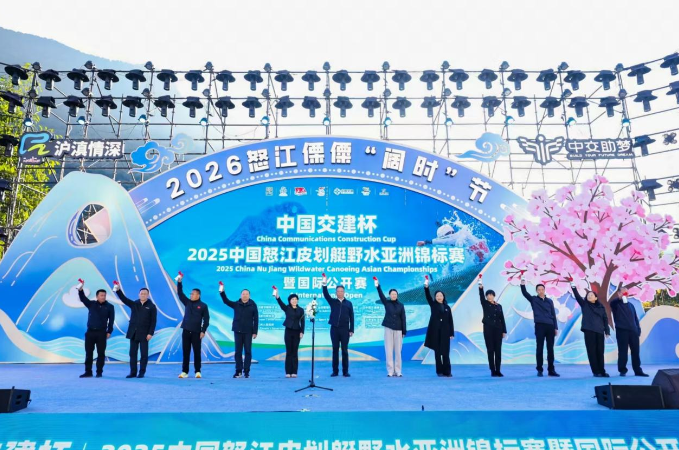
2025中国怒江皮划艇野水亚洲锦标赛启幕
Xin Lang Cai Jing· 2025-12-21 15:31
Group 1 - The "China Communications Construction Cup" 2025 China Nujiang Kayaking Wild Water Asian Championship and International Open has officially commenced in Lushui City, Yunnan, marking its first upgrade to an Asian Championship level event, attracting 43 foreign athletes from 15 countries and regions, 75 domestic competitors, and 35 amateur participants [1][3] - Nujiang has become a world-class wild water venue and an Olympic training base due to its unique natural advantages, and the event reflects the branding of Yunnan sports as a "high-altitude training base, outdoor sports paradise, and year-round event haven," promoting high-quality development of kayaking in the region [3] - The event is being live-streamed through over 60 national media platforms, utilizing AI and "virtual broadcasting" technology to enhance the viewing experience, with live viewership surpassing 32.64 million by December 20 at 17:00 [5] Group 2 - The first day of the competition showcased intense short-distance and pursuit races, highlighting the competitive level and unique charm of Asia's top wild water events, with further races scheduled from December 21 to 22, including long-distance races, four-person rubber boat races, and the challenging "Tiger Jump" extreme challenge [5]

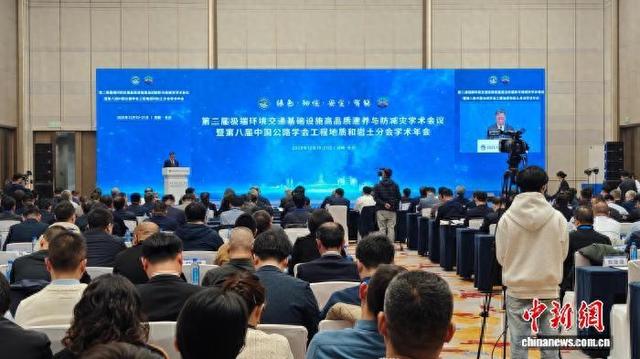
聚焦极端环境交通基础设施建养 业内人士长沙共商创新对策
Xin Lang Cai Jing· 2025-12-21 13:34
Core Insights - The conference focused on sustainable development in extreme environment transportation infrastructure, emphasizing green materials, resilient structures, intelligent construction, and disaster prevention [1][3] Group 1: Conference Overview - The second academic conference on high-quality construction and maintenance of transportation infrastructure in extreme environments was held in Changsha from December 19 to 21 [1] - The theme of the conference was "Green, Resilient, Safe, Intelligent: Sustainable Development of Extreme Environment Transportation Infrastructure" [3] - The event was initiated by the National Key Laboratory of Green Longevity Road Engineering and supported by various academic and industry organizations [3] Group 2: Key Discussions - Experts discussed the challenges of ensuring safety, sustainability, resilience, and longevity of critical infrastructure in extreme environments, particularly as major transportation projects extend into complex terrains [3] - Notable engineering cases were presented, highlighting the importance of scientific structure selection, reasonable structural systems, reliable connections, and overall integrity in achieving comprehensive goals of suitability, economy, greenness, and aesthetics [3] Group 3: Contributions and Future Directions - Changsha University of Science and Technology reported significant achievements in transportation infrastructure technology under extreme conditions, providing critical support for major national projects [4] - The conference included multiple specialized forums focusing on green materials, resilience enhancement, intelligent operation, and disaster prevention in transportation infrastructure [4]
建筑工程业:政策支持新型基础设施,推进新型城镇化和智能建造
GUOTAI HAITONG SECURITIES· 2025-12-21 09:47
Investment Rating - The report rates the industry as "Overweight" [7] Core Insights - The potential for investment growth in new infrastructure remains significant, with a focus on expanding effective investment space and enhancing private investment vitality [2][3] - Central enterprises are encouraged to identify new growth areas, particularly in renewable energy, aerospace, and low-altitude economy sectors [4] - The government is increasing support for capital in key infrastructure projects, including railways and smart construction initiatives [5] Summary by Relevant Sections Recent Key Reports - The report highlights the importance of strategically expanding investment in new infrastructure and emphasizes the need for a coordinated approach to urbanization and rural revitalization [3][4] Key Company Recommendations - Recommended companies include China Railway, China Communications Construction, and China State Construction, all of which are expected to benefit from high dividend yields and stable growth [8][11] - Specific sectors such as clean rooms, commercial aerospace, and controlled nuclear fusion are highlighted for their growth potential, with recommended stocks including Yaxiang Integration and Shanghai Port [6][10] Macro/Meso/Micro Data - The report indicates a projected increase in broad infrastructure funding by 7.3% in 2025, driven by enhanced fiscal policies and the issuance of special bonds [31][32] - It also notes that the construction industry is experiencing a decline in net profit margins, with a 10% year-on-year decrease in net profit reported [14][15]






11月狭义基建投资环比改善,2026年财政、投资定调积极
Guotou Securities· 2025-12-21 09:34
Investment Rating - The industry investment rating is "Leading the Market - A" [6] Core Insights - The report indicates that infrastructure investment in November showed a month-on-month improvement, with a positive fiscal and investment outlook for 2026 [3][17] - The report emphasizes the importance of expanding effective investment as a key task for building a strong domestic market and accelerating the construction of a new development pattern [2][18] - The construction industry is expected to see marginal improvements driven by policy and fundamental improvements, particularly in the context of new and old kinetic energy conversion in investment [3][19] Summary by Sections Industry Dynamics - From January to November, national fixed asset investment (excluding rural households) reached 44.40 trillion yuan, a year-on-year decrease of 2.6%. Excluding real estate development investment, project investment grew by 0.8%. In November, fixed asset investment (excluding rural households) fell by 1.03%. The narrow and broad infrastructure investment completion amounts from January to November showed year-on-year increases of 1.10% and 0.13%, respectively, with a month-on-month improvement in November [17][30] - In the three major infrastructure subcategories, investment in electricity, heat, gas, and water maintained double-digit growth, with a year-on-year increase of 10.70%. Investment in transportation, warehousing, and postal services slightly decreased by 0.10%, while investment in water conservancy, environment, and public facilities management fell by 6.30% [17][30] Market Performance - The construction industry experienced a slight decline of 0.10%, underperforming the Shanghai Composite Index, but the international engineering sector performed well with a 5.99% increase [20][21] - The report highlights that 57.93% of companies in the construction sector recorded gains, with notable performers including *ST Kexin and Zhongtian Precision [21][22] Key Investment Targets - Recommended stocks include low-valuation central enterprises in infrastructure such as China State Construction and China Communications Construction, which are expected to benefit from improved operational quality and increased dividends [12][13] - The report also suggests focusing on companies in the cleanroom engineering sector, such as Yaxiang Integration and Shenghui Integration, which are expected to benefit from the growing demand in the semiconductor and cloud service industries [12][13]
中国交建:公司股利分配兼顾经营发展与股东回报
Zheng Quan Ri Bao· 2025-12-19 15:45
Group 1 - The company emphasizes a balanced approach to dividend distribution, considering operational performance and cash flow [2] - The transportation infrastructure industry is characterized by significant project investments and long cycles, leading to retained earnings being primarily allocated for core business investments, industry chain expansion, and debt repayment [2] - The company has implemented an annual dividend plan based on performance and will prudently review the dividend payout ratio in light of operational realities, cash flow, and industry trends, with any adjustments subject to regulatory review and disclosure obligations [2]
