Cartier

Search documents
古法金爆火出圈的秘密:一场传统与时尚的完美“双向奔赴”
Sou Hu Cai Jing· 2025-10-11 03:55
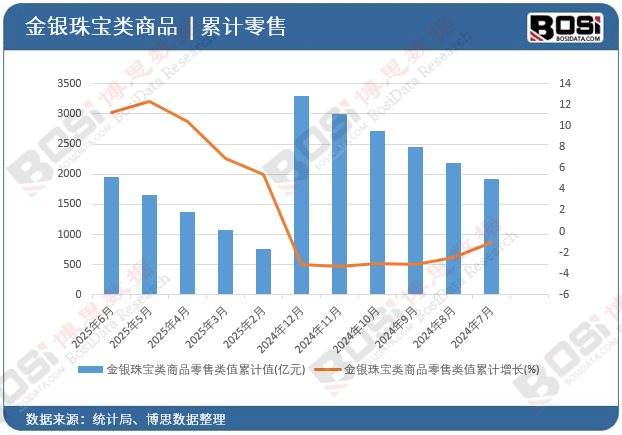
Industry Overview - The Chinese gold and jewelry industry primarily involves the production of jewelry and artifacts made from precious metals like gold, platinum, and silver, as well as gemstones like diamonds and jade [1] - This industry is a significant part of the consumer goods market, closely linked to disposable income, consumption upgrades, and traditional cultural sentiments [1] - China has become the world's largest consumer of gold and an important market for jewelry [1] Market Characteristics - The market has seen a strong rebound post-pandemic, with retail sales of jewelry surpassing 800 billion RMB in 2023, showing significant year-on-year growth [4] - The "ancient method gold" category has emerged as a key growth driver within the gold segment [4] - Market concentration is increasing, indicating a "stronger getting stronger" trend [5] Product Categories - Gold products include investment bars, coins, and gold jewelry, serving both investment and consumption purposes [6] - Diamond and gemstone products focus on fashion, emotional value, and collectability [6] - K-gold and platinum products target younger consumers with strong design elements [6] Consumer Behavior - Brand loyalty is highly concentrated among leading brands like Chow Tai Fook and Lao Feng Xiang, while dependency on specific materials or styles is relatively low [6] - Consumer sentiment is influenced by gold price fluctuations, leading to complex purchasing behaviors [6] - Seasonal demand, particularly around weddings and holidays, drives sales peaks [6] - Urban-rural consumption differences exist, with urban consumers favoring design and brand stories, while rural consumers prioritize gold's value retention [6] - Cultural significance of gold in China underpins stable demand [6] Competitive Landscape - Leading brands like Chow Tai Fook and China Gold continue to expand market share due to strong channel networks and brand reputation [7] - Foreign and Hong Kong brands like Tiffany and Cartier dominate the high-end market [7] - Regional and independent designer brands face competition from major brands [7] Future Trends - Product innovation and craftsmanship upgrades, such as the ongoing popularity of "ancient method gold," will continue [12] - Digitalization and omnichannel integration will become standard, enhancing user experience [12] - Sustainability and ethical sourcing will gain importance among younger consumers [12] - The lower-tier market and global expansion will be key areas of focus for leading brands [12] - Marketing strategies will shift towards emotional resonance and scenario-based marketing [12] Challenges and Opportunities - The offline retail model remains dominant, but innovative store formats are emerging [11] - Online penetration is increasing, with live-streaming and social e-commerce becoming growth drivers [11] - The younger generation (Gen Z) is becoming a significant consumer force, prioritizing design and emotional connections over material value [11] - Market risks include gold price volatility, homogenization of products, rising costs, and rapidly changing consumer preferences [12]




UBS Presents First-Ever Horology Exhibition Curated by Hodinkee Founder Ben Clymer
Businesswire· 2025-10-06 12:31
Core Insights - UBS has launched "Icons of Time," a unique exhibition celebrating the artistry and innovation of watchmaking, in partnership with Hodinkee, taking place on October 9-10 in New York City [1][2][5] - The exhibition features twelve landmark timepieces from iconic brands, representing nearly one hundred years of craftsmanship and design ingenuity [2][4] - UBS House of Craft aims to deepen cultural exchange and celebrate excellence across various disciplines, including horology [4][7][10] Company Overview - UBS is a leading global wealth manager and universal bank based in Switzerland, managing $6.1 trillion in invested assets as of Q4 2024 [6] - The firm operates in over 50 markets worldwide and is listed on the SIX Swiss Exchange and the New York Stock Exchange [6] Exhibition Details - "Icons of Time" will showcase watches from renowned brands such as A. Lange & Söhne, Audemars Piguet, Cartier, and Rolex, among others [2][4] - The exhibition includes on-site demonstrations of horological craftsmanship, such as the assembly of iconic timepieces [4] - Registration for the event is free and open to the public [5] Initiative Background - UBS House of Craft is a global initiative that celebrates excellence in various crafts, including horology and gastronomy, with events planned in the US and Asia [7][9] - The initiative reflects UBS's commitment to mastery and cultural exchange, connecting clients with the worlds of luxury and craft [8][10]

X @Bloomberg
Bloomberg· 2025-10-05 06:59
A Cartier watch, an expensive speaker system, or a trip to a wellness retreat - financial experts' less conventional take on how they’d spend 10 lakh rupees in India's volatile landscape https://t.co/0ylNYLjAai ...
Perfect Corp (NYSE:PERF) 2025 Conference Transcript
2025-09-30 19:02
Summary of Perfect Corp. Presentation at Lithium Partners Fall 2025 Investor Conference Company Overview - **Company Name**: Perfect Corp. - **Ticker Symbol**: PERF - **Founded**: 2015 - **Employees**: Over 400, primarily in engineering roles - **Headquarters**: Taipei, Taiwan - **Market Focus**: Beauty and fashion industries, leveraging AI innovations for consumer shopping experiences [2][3] Financial Performance - **Revenue**: - Last year: $60 million - Current year projection: $68-70 million - First half of the current year: $32 million, with a growth rate of 14.8% [7][29] - **Gross Margin**: Approximately 78% [29] - **Net Adjusted Income**: - Last year: $8.3 million (13.8% margin) - First half of the current year: $2.4 million (7.5% margin) [31] - **Cash Position**: $167.8 million in cash and cash equivalents at the end of Q2 [30] Business Models - **B2C Model**: - Contributes 60-70% of total annual revenue - Six mobile apps and one online service on a freemium model [5][6] - Key apps: YouCam Makeup and YouCam Perfect, generating 80% of B2C revenues [7][8] - **B2B Model**: - Traditional enterprise SaaS model with 15 solutions across various beauty and fashion sectors [5][6] Market Presence - **Geographic Revenue Distribution**: - 50% from the U.S., followed by France and Tokyo [3] - **Client Base**: Over 800 brands, including major names like Estée Lauder and Dior [12][28] Technological Innovations - **AI and AR Solutions**: - Pioneered AI in beauty tech since 2015, with continuous updates every two years [6][7] - Generative AI for photo and video expected to grow 30-40% over the next decade [10] - **Product Features**: - Virtual try-on technology for makeup and skincare, enhancing consumer engagement and conversion rates [11][16][17] - New generative AI solutions for fashion, allowing users to visualize clothing on themselves with a single photo [21][23] Growth Opportunities - **Expansion in Generative AI**: Strong momentum in subscriber growth for YouCam Makeup apps [32] - **Cross-Selling Opportunities**: Potential to upsell to sister brands within top beauty groups [32] - **New Market Penetration**: Focus on skincare and fashion, including jewelry and accessories [33][34] - **Strategic Acquisitions**: Completed acquisition of WANNA to enhance fashion solutions [28] Conclusion - Perfect Corp. is positioned for continued growth through innovative AI solutions in the beauty and fashion sectors, with a strong financial foundation and expanding market presence [30][34]

无聊的潮人们,又开始往自己脖子上拴绳了
Hu Xiu· 2025-09-28 08:30
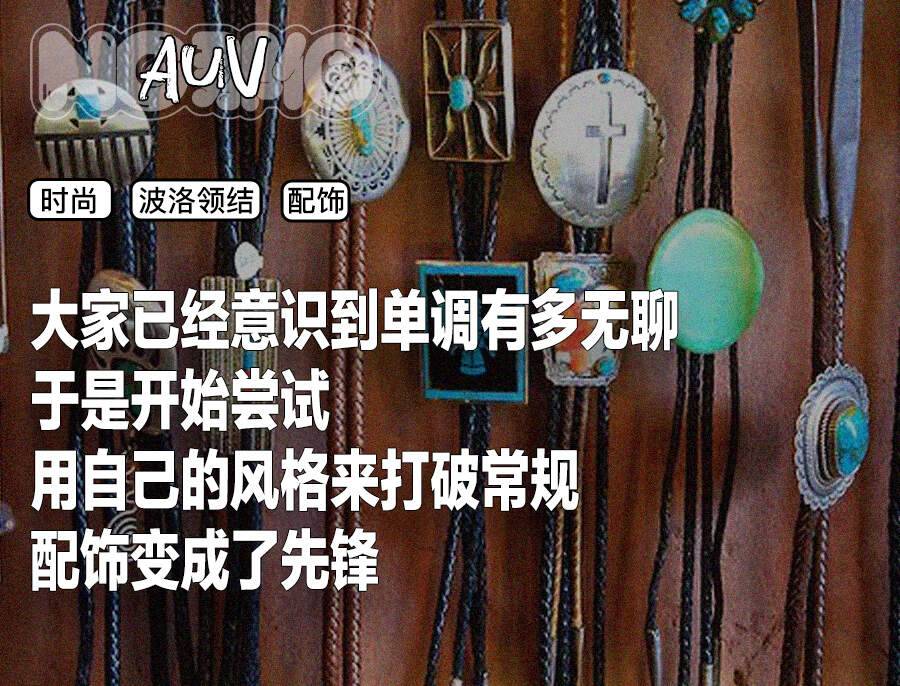
Core Insights - The article discusses the resurgence of the bolo tie as a fashion accessory, highlighting its growing popularity during the 2026 New York Fashion Week and its cultural significance [3][4][20]. Group 1: Fashion Trends - The bolo tie is emerging as a new trend, with fashion experts suggesting that it will be widely seen in upcoming seasons [3]. - Google search trends indicate a significant increase in interest in bolo ties since May 2023, correlating with recent fashion events [4]. - The bolo tie, originally a part of Native American culture, is characterized by a simple design of a cord with a movable clasp, often adorned with turquoise or silver [6]. Group 2: Historical Context - The bolo tie has experienced two notable revivals in the past: first in the 1950s with the Teddy Boys in the UK, and again in the 1980s during the rock revival [11][15]. - These revivals were driven by social sentiments of the times, with youth seeking identity and self-expression through fashion [15]. Group 3: Celebrity Influence - Celebrity endorsements have played a crucial role in the bolo tie's resurgence, with figures like Timothée Chalamet and Beyoncé wearing them, thus increasing their visibility and desirability [17][20]. - The influence of celebrities has led to a surge in sales of related fashion items, such as western boots, following high-profile appearances [22]. Group 4: Cultural Significance - The bolo tie embodies a sense of freedom and adventure, reflecting the cowboy spirit of the American West [31]. - The current revival of retro fashion, including the bolo tie, is seen as a nostalgic response to the economic and cultural climate, resonating with a collective yearning for the past [33][38]. Group 5: Criticism and Market Dynamics - There are criticisms regarding the authenticity of the bolo tie's revival, with some viewing it as a mere trend rather than a genuine fashion statement [22]. - The fashion industry is facing challenges of monotony and lack of innovation, prompting a search for unique accessories like the bolo tie to break the mold [24][28].
New Study Reveals Teads' CTV HomeScreen Drives Superior Attention and Brand Impact Across Premium Video Advertising
Globenewswire· 2025-09-25 12:00
Core Insights - Teads' CTV HomeScreen study indicates that HomeScreen placements significantly enhance viewer attention and engagement compared to traditional ad formats like skippable pre-roll [1][2] Group 1: Study Findings - The study utilized eye-tracking and brand recall surveys with 100 Smart TV viewers, revealing that Teads' CTV HomeScreen ads captured attention 29% faster and maintained it longer than traditional formats [2] - HomeScreen video ads achieved a 48% attention rate, surpassing YouTube skippable pre-roll by 16% [2] - Creative formats, such as 3D ads, resulted in even higher viewer focus and recall, with unaided recall reaching 50% and aided recall peaking at 84% [3] Group 2: Strategic Implications - HomeScreen ads are positioned as a new frontier for advertisers aiming to connect with audiences in a fragmented CTV landscape, transforming passive discovery into active engagement [3] - The research indicates that viewers not only noticed HomeScreen ads but also remembered them, with visual recognition averaging 55% and top executions reaching 86% [3] Group 3: Future Developments - Teads is developing a predictive attention model for CTV HomeScreen ads in collaboration with third-party measurement partners, with Phase 1 completed in June 2025 [4] - Phase 2 will enable attention measurement for live CTV HomeScreen campaigns, allowing advertisers to evaluate these placements alongside other CTV formats [4] Group 4: Company Milestones - Teads has successfully activated over 1,500 CTV HomeScreen campaigns since its launch in 2023, with notable brands like Cartier and Air France participating [6] - Cartier's first 3D CTV HomeScreen campaign generated over 12 million impressions, while Air France experienced a 22% increase in recommendation intent [6]
New Study Reveals Teads’ CTV HomeScreen Drives Superior Attention and Brand Impact Across Premium Video Advertising
Globenewswire· 2025-09-25 12:00
Core Insights - Teads' CTV HomeScreen ads significantly outperform traditional skippable formats, achieving a 48% attention rate, which is 16% higher than YouTube's skippable pre-roll ads [1][2][3] Performance Metrics - The study utilized eye-tracking and brand recall surveys with 100 Smart TV viewers, revealing that 3D ads captured attention 29% faster and sustained it longer than traditional formats [2] - Unaided recall for HomeScreen ads reached 50%, while aided recall peaked at 84%, indicating strong viewer memory retention [3] - Visual recognition averaged 55%, with top executions reaching 86%, surpassing typical short-form norms [3] Strategic Implications - HomeScreen ads are positioned as a new frontier for advertisers to connect meaningfully with audiences in a fragmented CTV landscape, transforming passive discovery into active engagement [3] - Teads is developing a predictive attention model for CTV HomeScreen ads in collaboration with third-party measurement partners, with Phase 1 already completed [4] Campaign Success - Since its launch in 2023, Teads has activated over 1,500 CTV HomeScreen campaigns globally, with notable brands like Cartier and Air France participating [6] - Cartier's first 3D CTV HomeScreen campaign generated over 12 million impressions, while Air France experienced a 22% increase in recommendation intent [6]

Gucci领跑闭店潮,奢侈品集体退守一线市场
3 6 Ke· 2025-09-18 01:10
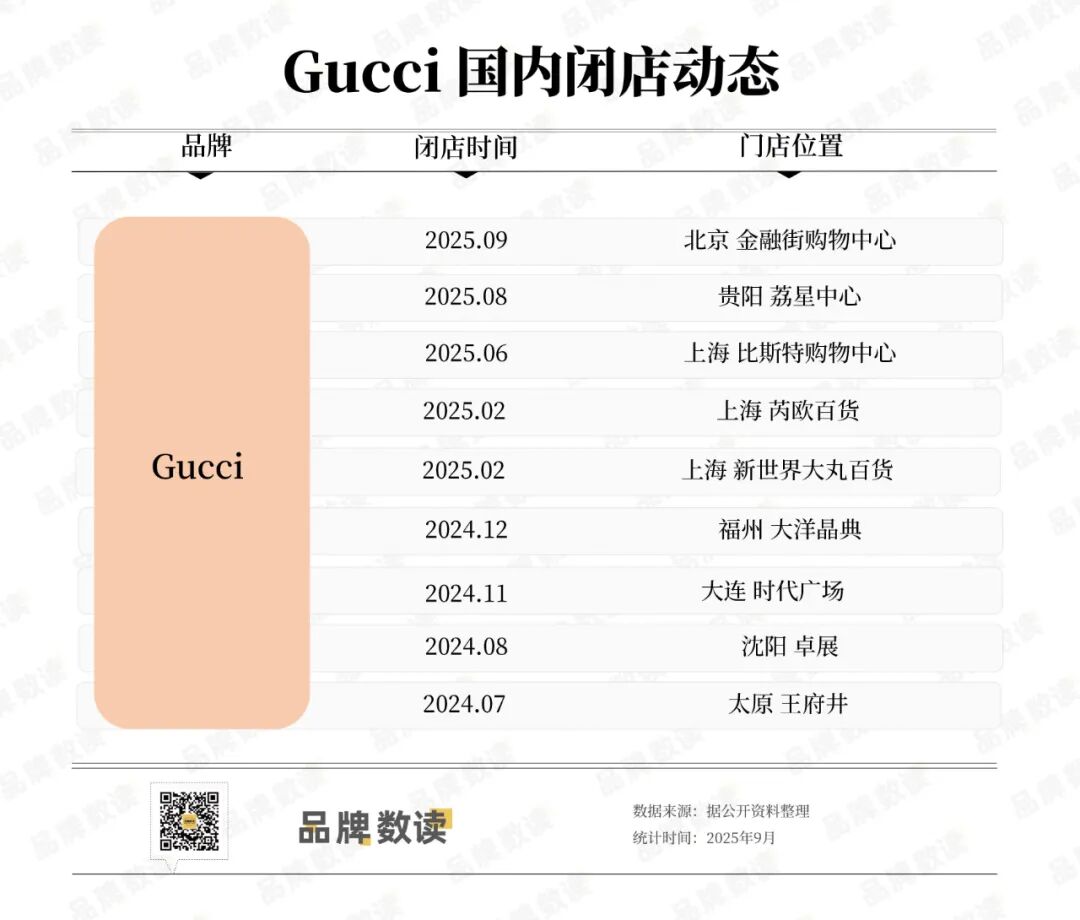
Core Insights - The new CEO of Kering, Luca de Meo, is prioritizing the resolution of issues surrounding Gucci, particularly following the imminent departure of Gucci's CEO, Stefano Cantino, after less than a year in office [1][2] - Gucci has faced significant challenges, with a 25% drop in revenue to €1.46 billion in Q2, marking a new low for the brand [1][2] - The luxury market is experiencing a downturn, with Kering's overall sales suffering due to Gucci's poor performance, leading to strategic and personnel changes within the company [9][10] Store Closures - Gucci has closed five stores in China this year, including locations in Beijing, Shanghai, and Guiyang, reflecting a broader trend of luxury brands retreating from lower-tier cities [1][4][13] - Kering's overall store count decreased by 41 stores in the first half of the year, with Gucci leading the closures, having shut down 18 stores [2][5] - The company plans to increase its store closure target for 2025 from 50 to 80, with Gucci expected to account for nearly half of these closures [5][10] Strategic Adjustments - Gucci's management is undergoing a strategic repositioning, focusing on reducing reliance on wholesale and outlet channels to restore its high-end brand image [5][15] - The brand's creative direction has been inconsistent since the departure of Alessandro Michele, with the new creative director, Demna, needing more time to redefine the brand's essence [8][9] - Kering is shifting its focus towards flagship stores in major cities, aiming to enhance brand exclusivity and consumer experience while reducing the number of smaller stores [17][18] Market Trends - The luxury market in China is contracting, with a 38% year-on-year decline in new store openings for luxury brands in the first half of 2025, particularly in non-first-tier cities [13] - Brands are increasingly concentrating their resources on flagship stores in major urban centers, as consumer behavior shifts towards experiential shopping [17][18] - The overall retail landscape is evolving, with luxury brands needing to adapt to changing consumer preferences and market conditions to maintain their appeal [17]