Tencent

Search documents
X @Bloomberg
Bloomberg· 2026-02-17 05:44
Moonshot is targeting a valuation of $10 billion in an expansion of a funding round already backed by Alibaba and Tencent https://t.co/rlF1qt7wnU ...
US Briefly Names Alibaba, Baidu as Firms Aiding China’s Military
Bloomberg Television· 2026-02-15 15:43
It feels a little odd to have something like this happen. What do we know. Well, it sure does.And I wish, Carol, that I could somehow pull something out of my sleeve while saying exactly what happened. But we are still trying to get to the bottom of this mystery. We have, in fact, gone to the Pentagon and even to the Federal Register, which is where these kinds of notices are posted an archive to find out what exactly happened.And we haven't gotten a clear picture. The Pentagon simply said we have nothing f ...


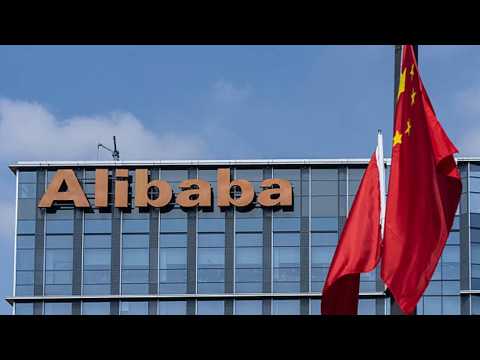
US Briefly Names Alibaba, Baidu as Firms Aiding China's Military
Youtube· 2026-02-15 15:43
Core Viewpoint - The Pentagon's potential listing of Chinese companies, including Alibaba and Baidu, raises significant implications for these firms and their industries, particularly concerning national security and investor sentiment [3][6][7]. Group 1: Pentagon's Actions and Implications - The Pentagon has not provided clarity on the withdrawal of a notice related to the listing of certain Chinese companies, which has left many questions unanswered [2][4]. - The administration's decision to proceed with these listings could have major implications for China's technology sector, particularly for leading companies like Alibaba and Baidu [3][6]. - The Pentagon previously warned lawmakers about the impending designation of these companies, accusing them of providing support to China's military, which is viewed as a national security risk [6][7]. Group 2: Market Reactions and Future Monitoring - The designation of companies like Tencent has previously led to significant declines in their stock prices, indicating potential market volatility if similar actions are taken against Alibaba and Baidu [4][6]. - The 1260 list does not impose legal repercussions but serves as a warning to investors, suggesting that these companies are under scrutiny and may face further sanctions from other government agencies [7]. - The reaction from the Chinese government is anticipated, as they have previously condemned similar actions by the U.S., indicating a potential for heightened tensions in the market [8].

China's Baidu adds OpenClaw AI into search app for 700 million users ahead of Lunar New Year
CNBC· 2026-02-13 08:03
Group 1 - Baidu plans to integrate the AI tool OpenClaw into its main smartphone app, allowing users to perform tasks like scheduling and organizing files directly through the app [1] - OpenClaw has gained popularity for its task automation capabilities, previously accessible only via chat apps like WhatsApp and Telegram [2] - Baidu reports 700 million monthly active users for its search app and is expanding OpenClaw's functionalities to its e-commerce and other services [3] Group 2 - The rollout of OpenClaw's capabilities coincides with the upcoming Lunar New Year holiday, as Chinese tech companies aim to attract new users and monetize their AI investments [3]

Chinese Stocks Can't Wait for Holiday Break, Except Zhipu | The China Show 2/13/2026
Bloomberg Television· 2026-02-13 07:12
It's 9 a. m. in Shanghai, Shenzhen, and here in Hong Kong, you're watching the China show.I'm Annabel Trawlers with David Inglis. Good morning. We're counting down to the open at markets in Greater China.Let's get to your top stories today. Stocks across the Asia-Pacific tracking the the drop that we had a sharp drop. Let me just underscore that point here on Wall Street as the scare trade takes hold.But three in tech stocks are cushioning the blow here amid warnings of a supply shortage in memory chips mad ...
中国互联网:AI 赢家的轮动格局-腾讯与阿里对比分析-China Internet The AI winners merry-go-round - comparing Tencent and Alibaba
2026-02-13 02:18
Summary of China Internet Sector Conference Call Industry Overview - The China Internet sector has had a lackluster start to 2026, with KWEB remaining flat year-to-date. AI advancements continue to influence investor preferences within the sector, particularly with Alibaba outperforming due to its Qwen agentic services, while Tencent has lagged behind [1][2]. Key Companies Discussed Tencent - Tencent's share price reflects investor concerns regarding its AI model and chatbot development. The company has shown solid returns on investment (ROI) from AI in its advertising and gaming sectors, trading at a projected 14-15x PE for 2027, indicating a favorable risk-reward scenario as earnings compound [3][8]. - Recent issues with the Yuanbao Party highlight challenges in AI development within WeChat, which faces higher quality standards compared to other platforms. Despite this, Tencent's advertising business remains robust, with strong growth in Video Accounts and digital ads [3][85]. - The company is perceived to be behind in AI model development, which has negatively impacted its valuation multiples. However, the potential for recovery exists as the company continues to innovate and improve its AI capabilities [57][59]. Alibaba - Alibaba's sentiment peaked during the launch of Qwen agentic services, which positions the company favorably in the domestic market. The use of red packet promotions to stimulate online shopping behavior is seen as a more logical strategy compared to incentivizing information retrieval [4][9]. - Concerns remain regarding Alibaba's ability to demonstrate that its AI initiatives can drive significant growth in gross merchandise volume (GMV) and customer retention. The combination of a top-tier AI model, strong growth in Alicloud revenues (30-40%), and a solid GPU development program makes Alibaba an attractive investment [4][9]. - The regulatory environment remains a concern, with ongoing investigations into other companies in the sector contributing to cautious sentiment among investors [4][55]. AI and Chatbot Wars - The competition among major Chinese internet platforms, including Tencent, Alibaba, Bytedance, and Baidu, has intensified with the introduction of red packet promotions aimed at boosting AI chatbot adoption. This strategy indicates that AI capabilities alone are insufficient for consumer-facing applications [2][19]. - Recent data suggests that while user acquisition for AI chatbots has increased due to promotional efforts, daily engagement metrics have not shown significant improvement, raising questions about long-term user retention and behavior change [17][24]. - The effectiveness of cash incentives in driving user engagement with AI chatbots is debated, with comparisons drawn to past successes in online payment adoption [20][21]. Regulatory Environment - The regulatory landscape for the China Internet sector has shifted, with increased scrutiny and investigations affecting investor sentiment. The potential for stricter enforcement of e-commerce taxes and other regulations has raised concerns about future growth prospects [4][55]. - Despite these challenges, recent stock pullbacks may improve the risk-reward profile for investors in the sector, particularly for Tencent and Alibaba [56]. Investment Implications - Both Tencent and Alibaba present distinct investment opportunities, with Tencent focusing on steady earnings and AI ROI, while Alibaba emphasizes faster model development and long-term AI optionality. The current market environment favors companies that can demonstrate tangible AI success and consumer engagement [7][28]. - The ongoing debate among investors regarding the costs and benefits of AI investments will likely influence stock performance in the near term, with a shift towards favoring companies that can deliver visible earnings impacts [28][100].
全球 IO 硬件:存储对云资本开支的通胀效应;对 ODM 品牌商利润的通缩效应-Global IO Hardware-Memory's inflationary impact on cloud capex; deflationary impact on ODMbrand margins
2026-02-11 05:56
Summary of Key Points from the Conference Call Industry Overview - The conference call focuses on the **Global I/O Hardware** industry, particularly the **memory market** and its implications for **hyperscale capital expenditures (capex)** and **hardware margins** due to rising demand from AI applications and server requirements [2][8]. Core Insights and Arguments 1. **Memory Pricing Forecasts**: - UBS forecasts a **289% increase** in DRAM pricing per Gb from 2025 to 2027, surpassing the previous cycle's 89% rise [2][13]. - NAND pricing is expected to rise **144%**, exceeding the 92% rebound seen in 2024 [2][13]. 2. **Hyperscale Capex Growth**: - Hyperscale capex is projected to reach **US$827 billion** in 2026 and **US$915 billion** in 2027, reflecting increases of **43%** and **28%** respectively [3][27]. - Memory costs are estimated to add approximately **US$100 billion** annually to hyperscale capex, increasing from **US$53 billion** in 2025 to **US$155 billion** in 2026 and **US$252 billion** in 2027 [3][25]. 3. **Impact on PC and Smartphone Markets**: - PC unit forecasts for 2026 have been revised down from **267 million** to **255 million**, indicating a **4% decline** year-over-year [4]. - Smartphone unit sell-in estimates have also been reduced from **1.28 billion** to **1.20 billion**, reflecting a **5% decline** in 2026 [4]. 4. **Brand and ODM Margin Pressures**: - The rising memory costs are squeezing margins for brands and ODMs, with DRAM now accounting for **18%** of PC BOM costs and potentially **24%** for high-end smartphones by H226 [4][9]. - ODMs are forced to pass through memory costs, which boosts sales but does not enhance gross or operating profits, leading to lower margins [4][9]. 5. **Investment Preferences**: - Analysts recommend favoring AI hardware and components over traditional PC and branded companies due to the higher memory costs impacting margins [5]. Additional Important Insights 1. **Server Demand and Memory Costs**: - The demand for AI and traditional servers is strong, with server unit forecasts for 2025-26 revised up from **+6%** to **+13%** year-over-year [2][14]. - A typical data center server's memory cost is expected to rise from **46%** to **67%** of total server costs due to increased memory pricing [15]. 2. **Long-term Memory Cycle**: - The memory pricing cycle is described as the strongest in decades, with expectations of sustained under-supply into 2027 [10][13]. 3. **Capex and Cash Flow Dynamics**: - The capital intensity for internet companies is projected to rise from **10%** of capex/sales pre-AI to approximately **35%** in 2026, with a significant portion of capex financed through operating cash flow [28]. 4. **Future Outlook**: - The aggressive push for compute resources to meet growing cloud workloads and AI demands is expected to continue, although future growth rates may slow as spending becomes increasingly financed by debt and equity [28]. This summary encapsulates the critical insights and projections discussed during the conference call, highlighting the significant impact of memory pricing on the hardware industry and the strategic shifts in investment focus towards AI-related technologies.

HK's Top Court Sentences Jimmy Lai to 20 Years In Prison | The China Show 2/9/2025
Bloomberg Television· 2026-02-09 05:37
9 a. m. in Shanghai, Shenzhen, and here in Hong Kong, you're watching the China show.I'm Yvonne Man with David Ingles. Good morning. We're counting down to the open at markets in Greater China.Our top stories today. Asian stocks rebounding to start the week off. Investors taking cues from Friday's strong close on Wall Street.Tech in focus at the open after sinking into bear market territory. Japanese stocks getting a lift from prime minister. So now target is landslide election victory, giving her party a s ...
X @Bloomberg
Bloomberg· 2026-02-09 02:28
Chinese revenue from digital services sold abroad is soaring as tech champions from ByteDance to Tencent ramp up their overseas push in live streaming, e-commerce and AI https://t.co/7EFrmvQH6I ...
Alibaba Group Holding Limited (NYSE:BABA): A Strong Contender in the E-Commerce Space
Financial Modeling Prep· 2026-02-07 02:00
Core Insights - Alibaba Group Holding Limited (NYSE:BABA) is a leading e-commerce company in China, with diverse operations in cloud computing, digital media, and entertainment, competing with major players like JD.com and Tencent [1] Performance Summary - BABA has shown a monthly gain of approximately 5.24%, indicating strong investor confidence and positive market sentiment [2] - In the last 10 days, BABA experienced a slight decline of about 5.14%, which may present a buying opportunity for investors [2][6] Growth Potential - BABA's projected stock price growth is 16.03%, suggesting significant upside for investors based on market analysis and future earnings projections [3] - The company's strategic initiatives and expansion plans contribute to its favorable position for future growth [3] Financial Health - BABA has a Piotroski Score of 8, reflecting strong financial health, solid fundamentals, efficient operations, and a healthy balance sheet [4] - This financial strength reassures investors of the company's ability to sustain and grow its operations [4] Valuation - The target price for BABA is set at $188.62, reflecting the stock's intrinsic value based on current market conditions and future growth prospects [5] - This valuation underscores the potential for investors to benefit from BABA's long-term growth trajectory [5]