
越疆科技

Search documents
方兴未艾的仿生机器人,如何颠覆未来战场格局?
机器人圈· 2025-09-01 10:13
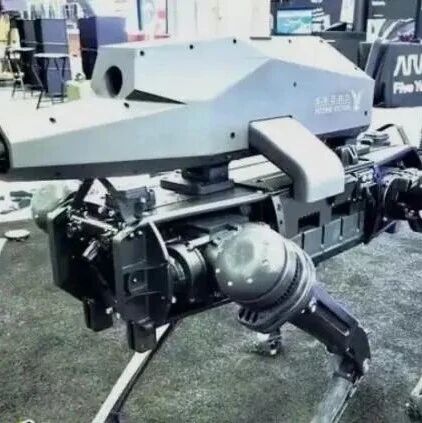
Core Viewpoint - Bionic robots are emerging as a new type of military technology, with various applications in reconnaissance, transportation, and explosive ordnance disposal, showcasing their potential in modern warfare [1][2][4]. Classification of Bionic Robots - Bionic robots can be categorized based on their tasks into logistics, intelligence reconnaissance, and mine clearance, and can be further divided into underwater, aerial, and ground types [1]. - Aerial bionic robots are primarily used for reconnaissance due to their agility and ability to operate without terrain constraints, making them effective for surveillance and disruption tasks [1]. - Underwater bionic robots, such as Robosea's BIKI, are capable of multiple tasks including reconnaissance and mine clearance, benefiting from their realistic appearance and maneuverability [1][2]. - Ground bionic robots, often referred to as "robot dogs," have been developed by the U.S. military for various tasks including patrol and reconnaissance, with models like Vision 60 capable of carrying weapons for frontline operations [2]. Future Development of Bionic Robots - The future of bionic robots is promising, with potential advancements in miniaturization, increased similarity to biological counterparts, and the development of swarm capabilities [4][5]. - Miniaturization will enhance the stealth and deployment flexibility of bionic robots, allowing them to perform reconnaissance in confined spaces [4]. - Increasing the resemblance of bionic robots to real animals will improve their effectiveness in military reconnaissance and espionage tasks [4]. - The concept of swarm behavior in bionic robots could lead to enhanced operational efficiency in large-scale reconnaissance and attack missions, providing strategic advantages [5]. - As military bionic technology continues to evolve, these robots are expected to play a significant role in future unmanned warfare, taking on high-risk tasks traditionally performed by humans [5].

机器人成联通中外新纽带 广东“智”造军团走向世界|机器人新视界
Zheng Quan Shi Bao· 2025-09-01 00:50
Core Viewpoint - The article highlights the rapid development and internationalization of the robotics industry in Guangdong, China, showcasing its potential to become a global leader in robot production and application [1][4][7]. Group 1: Industry Development - The Guangdong robotics industry is experiencing significant growth, with exports of related products reaching 45.74 billion yuan in 2024, a year-on-year increase of 19.6% [4]. - The Greater Bay Area accounted for 32.3% of the national industrial robot exports in the first half of this year, indicating its dominance in the market [4]. - Guangdong is recognized as the largest application market for robots globally, with a concentration of numerous robotics companies [4][5]. Group 2: Company Innovations - Anno Robotics, established in 2017, specializes in AI robotics for smart retail, holding over 70 national patents and selling products in more than 70 countries [2]. - Yujian Technology has shipped over 100,000 collaborative robots globally, demonstrating its strong international presence and market share [4]. - The article mentions that the first-generation product from Yujian received over a thousand overseas orders at its inception, indicating early international demand [4]. Group 3: Global Perception - International experts, such as the president of the Korean Robotics Association, predict that Guangdong will become a hub for advanced industrial robots within the next decade [7]. - Alex Dantas from the Silicon Valley Robotics Association emphasizes that China is currently the most suitable place for large-scale robot production, which is crucial for reducing costs and increasing market accessibility [7]. Group 4: Challenges and Opportunities - Despite the growth, there are still critical technological challenges in the robotics supply chain that need to be addressed, particularly in key components [5]. - The industry faces challenges related to processing capabilities, battery energy, and material engineering, which are common across the global robotics sector [7].

机器人成联通中外新纽带 广东“智”造军团走向世界|机器人新视界
证券时报· 2025-09-01 00:22
Core Viewpoint - The article highlights the rapid development and internationalization of the robotics industry in Guangdong, China, showcasing its potential to become a global leader in robotics manufacturing and innovation [1][4][6]. Group 1: Robotics Industry Development - The 2025 AGIC Shenzhen conference showcased various robotics innovations, with robots attracting significant attention from international exhibitors [1][2]. - Guangdong's robotics exports reached 45.74 billion yuan in 2024, marking a 19.6% year-on-year increase [4]. - The region accounts for 32.3% of China's industrial robot exports, indicating its dominance in the national market [4]. Group 2: Company Innovations and Achievements - Anno Robotics, established in 2017, has developed AI robots for various applications and holds over 70 national patents, selling products in over 70 countries [2]. - Yuejiang Technology's first product received over a thousand overseas orders at launch, and the company has since shipped over 100,000 collaborative robots globally [4]. Group 3: Competitive Advantages - Guangdong's robotics industry benefits from a complete ecosystem, with lower production costs—approximately 30% cheaper than overseas competitors—due to modularization and localization of key components [4][7]. - The region's diverse application scenarios in sectors like hospitality and healthcare allow for rapid product iteration and innovation [4]. Group 4: Challenges and Future Outlook - Despite its strengths, Guangdong's robotics industry faces challenges in key component technologies and talent acquisition, necessitating targeted government support [5]. - Experts predict that Guangdong will become a global hub for advanced industrial robotics within the next decade [7].

机器人成联通中外新纽带 广东“智”造军团走向世界
Zheng Quan Shi Bao· 2025-08-31 18:50
Core Insights - The 2025 AGIC Shenzhen International General Artificial Intelligence Conference showcased the rapid development of robotics in China, particularly in Guangdong, which is becoming a hub for global robotics production and innovation [1][2][5] - Guangdong's robotics industry is experiencing significant growth, with exports of related products reaching 45.74 billion yuan in 2024, a year-on-year increase of 19.6% [3][4] - The region is recognized for its competitive advantages, including lower costs and a complete industrial ecosystem, positioning it as a leader in the global robotics market [5][6] Industry Overview - The conference attracted over 1,001 AI companies from 20 countries, highlighting the international interest in China's robotics capabilities [2] - Guangdong has become the main force in China's robotics exports, with the Greater Bay Area accounting for 32.3% of the national industrial robot exports [3][4] - The region's robotics companies, such as Anno AI and Yujian Technology, are actively expanding their international presence, with products sold in over 70 countries [1][3] Competitive Landscape - Guangdong's robotics industry benefits from a complete supply chain, allowing for a 30% reduction in overall costs compared to overseas manufacturers [3][5] - The industry is characterized by rapid product iteration and innovation, driven by diverse applications in sectors like dining, hospitality, and healthcare [4][5] - Despite its strengths, the industry faces challenges in key component technologies and the need for top talent, necessitating targeted government support [4][5]
人形机器人成为家庭助手还有多远
证券时报· 2025-08-30 00:28
Core Viewpoint - The article discusses the rapid evolution and commercialization of humanoid robots, emphasizing their transition from industrial applications to commercial and household uses, with a long-term goal of becoming household assistants [1][3]. Commercialization Path - There is a consensus among companies that humanoid robots will first penetrate industrial scenarios to refine technology and optimize costs before expanding into commercial services and home environments [1][4]. - The success of humanoid robots in commercial applications depends on identifying high-value scenarios that can generate quantifiable returns, similar to how facial recognition technology opened doors for AI [3][4]. Current Applications - Humanoid robots have already been deployed in various industrial applications, with companies like 越疆科技 securing orders from major industrial players [4]. - 奇瑞's墨甲 robots have been commercialized in multiple countries, enhancing operational efficiency and user experience in retail environments [4]. Challenges in Generalization and Cost - Despite initial applications, widespread adoption faces challenges such as limited versatility and high costs, with humanoid robots typically priced between 300,000 to 400,000 yuan [6][7]. - The lack of a mature general-purpose model restricts robots to specific tasks, making it difficult to adapt to unstructured environments like homes [6][7]. - Cost control is critical for large-scale deployment, with industry experts suggesting that modular design and localized supply chains could help reduce costs over the next 3-5 years [6][7]. Policy and Funding Support - The development of humanoid robots requires sustained policy and capital support, as many companies remain skeptical about the return on investment from replacing human labor with robots [9][10]. - Current global economic policies are providing unprecedented support for the humanoid robot industry, but a more systematic support framework is needed for large-scale commercialization [9][10]. Capital Requirements - The transition from commercial validation to large-scale deployment is capital-intensive, similar to the electric vehicle industry, necessitating significant funding for long-term development [10]. - Equity financing is seen as a crucial driver for humanoid robot companies, providing necessary resources for technology development and market expansion [10].

人形机器人成为家庭助手还有多远
Zheng Quan Shi Bao· 2025-08-29 19:49
Core Insights - The rapid evolution of humanoid robots is generating significant attention, with a consensus among companies to initially target industrial applications before expanding into commercial and household sectors [1][2][3] - The future vision is that every household will have a robot, similar to common household appliances [1] Commercialization Pathway - The performance of humanoid robots has improved significantly, as evidenced by their participation in events like the 2025 World Humanoid Robot Games, showcasing advancements in movement stability and adaptability [2] - Successful commercialization hinges on identifying high-value application scenarios that can deliver quantifiable returns, emphasizing the need to address real-world pain points [2][3] Transition Strategy - Companies are focusing on transitioning humanoid robots from industrial applications to commercial and household uses, with existing examples of industrial applications already in place [3] - Notable companies like 越疆科技 and 奇瑞 have secured orders and implemented humanoid robots in various operational roles, enhancing efficiency and user experience [3] Challenges in Versatility and Cost - The lack of versatility in humanoid robots limits their application to specific scenarios, necessitating algorithmic innovations to enhance their adaptability in unstructured environments [4] - High costs remain a significant barrier to widespread adoption, with current prices for humanoid robots ranging from 300,000 to 400,000 yuan, making them inaccessible for the average household [5][6] Market Trends - There is a trend of decreasing prices for humanoid robots, with recent products being introduced at significantly lower price points, indicating a shift towards consumer markets [6] Policy and Funding Support - The development of humanoid robots requires sustained policy and financial support, as the industry is capital and technology-intensive [7][8] - There is a need for a more systematic support framework to facilitate the transition from commercial validation to large-scale deployment, including targeted application projects and funding mechanisms [8]
云深处科技朱秋国:人形机器人核心价值在于融入人类生活与工作场景
机器人圈· 2025-08-29 10:48
Core Viewpoint - The article emphasizes the growing importance and potential of humanoid robots in addressing future labor shortages and enhancing productivity across various sectors, driven by advancements in technology and supportive government policies [1][4][5]. Industry Overview - The 2025 Data Expo in Guizhou highlighted the latest advancements in humanoid and foot robots, showcasing the industry's focus on integrating these technologies into everyday life and work environments [1]. - The global expectation for humanoid robots has surged, with predictions of their numbers reaching 200-300 billion units, reflecting optimism about market potential and rapid technological advancements [3]. Technological Challenges and Progress - The humanoid robot industry has faced three main challenges: reliance on imported core components, issues with movement stability, and a weak theoretical foundation. However, significant progress has been made in achieving component localization, improving movement stability through AI, and enhancing computational capabilities [4][5]. - The focus of humanoid robot development has shifted from basic mobility to achieving embodied intelligence, which requires interdisciplinary collaboration and advancements in various technologies [5]. Practical Applications - Humanoid robots have already been deployed in practical applications such as patrol and emergency firefighting in Guizhou, indicating their growing role in real-world scenarios [6]. - The company plans to leverage Guizhou's big data industry to further integrate humanoid robots with data technologies, exploring additional application scenarios [6].
商业领域收入激增165.5%,越疆加速奔跑
2 1 Shi Ji Jing Ji Bao Dao· 2025-08-29 05:51
Core Viewpoint - The financial performance of Yujiang Technology (2432.HK) for the first half of 2025 shows a revenue increase of 27.08% year-on-year, reaching 153 million yuan, while net profit decreased by 31.75% to 40.87 million yuan, indicating a mixed financial outlook amid expanding business segments and challenges in overseas markets [1][2][3] Financial Performance - Revenue for the first half of 2025 was 153 million yuan, a year-on-year increase of 27.08% [1] - Net profit for the same period was 40.87 million yuan, a decrease of 31.75% year-on-year [1] - The gross profit margin improved by 3.1 percentage points to 47.0%, stabilizing at 49.4% after excluding inventory impairment [3] Business Segments - Revenue from the commercial sector reached 13.77 million yuan, a significant increase of 165.5% year-on-year, although it only accounts for about 9% of total revenue [1] - The industrial sector remains the core, contributing 55.1% to total revenue, with a substantial portion coming from overseas [1] - The six-axis collaborative robots accounted for 61.2% of total revenue, primarily used in industrial applications [2] Market Expansion - Yujiang is intensifying its domestic business development due to uncertainties in overseas markets, forming strategic partnerships with Tencent and Yaoshibang to enhance the application of embodied intelligent technology [2] - The company is expanding its global sales channels, increasing marketing expenses by 31.5% to 82.2 million yuan in the first half of the year [1] Product Development - Yujiang launched the world's first bipedal robot, DOBOT Atom, and completed mass production verification in June, with initial deliveries to Japanese clients [2] - The introduction of a six-legged bionic robot in July complements the product matrix of "arm + humanoid + multi-legged" robots [2][3] Technological Advancements - The company has developed its own software, including the Neural Drive System (NDS) and the Anthropomorphic Knee Walking System (AWS), to optimize supply chain costs and enhance technical capabilities in commercial applications [3] Strategic Vision - Yujiang aims to become a platform company through business expansion and cost optimization, establishing a dual-engine growth model by deepening domestic markets and expanding overseas channels [3] - The company has become a global ecosystem partner of NVIDIA to advance simulation platforms and generative models [3] - Yujiang's global collaborative robot production base recently celebrated the successful rollout of its 100,000th robot, highlighting its commitment to scaling technology commercialization [3]
国务院发布关于深入实施“人工智能+”行动的意见|2025安防“人工智能+”行动大会顺势开启
机器人圈· 2025-08-28 10:17
Core Viewpoint - The article discusses the implementation of the "Artificial Intelligence +" initiative by the State Council, emphasizing the importance of AI in driving technological innovation and enhancing various sectors in China, ultimately aiming for shared benefits in modernization efforts [1][2]. Group 1: Key Actions Proposed - The initiative outlines six key actions: 1. "Artificial Intelligence + Science and Technology" to accelerate scientific discoveries and innovate research methodologies [2]. 2. "Artificial Intelligence + Industry Development" to foster new business models and promote smart transformation in agriculture and industry [2]. 3. "Artificial Intelligence + Consumer Quality" to expand new service consumption scenarios and cultivate new product consumption models [2]. 4. "Artificial Intelligence + Welfare" to create smarter work and learning methods, enhancing quality of life [2]. 5. "Artificial Intelligence + Governance" to establish a new paradigm of human-machine coexistence in social governance [2]. 6. "Artificial Intelligence + Global Cooperation" to promote inclusive AI and build a global governance framework [2]. Group 2: Industry Events and Forums - The China Security Prevention Products Industry Association is organizing the "Artificial Intelligence +" Action Conference on September 26, 2025, in Beijing, focusing on the integration of AI in the security industry [3]. - The conference will address topics such as policy direction, industry transformation, and technological innovation, aiming to foster collaboration and explore new growth avenues [3].

双向叩门觅新机,“中欧企业对接交流会”在深圳南山举行
Nan Fang Du Shi Bao· 2025-08-28 07:55
Group 1 - The "China-Europe Enterprise Exchange Conference" was successfully held, focusing on advanced fields such as integrated circuits, healthcare, smart logistics, and artificial intelligence [1][2] - European representatives shared innovations and cooperation intentions in high-end medical devices, medical consulting, and new energy sectors [2] - The conference highlighted the role of Nanshan District as a key hub for China-Europe cooperation, with local companies actively seeking to expand into European markets [2][3] Group 2 - Nanshan District has deepened economic and trade cooperation with Germany, forming a multi-layered and wide-ranging cooperation pattern [3] - Local companies have been investing in Germany, focusing on specialized equipment manufacturing and pharmaceutical manufacturing, while German companies view Nanshan as an important hub for development in China [3][4] - The collaboration in the healthcare sector includes joint technology research and development, enhancing product recognition in the European market [3][4] Group 3 - Nanshan companies are expanding into the European market through projects in renewable energy, such as operating photovoltaic power stations and promoting energy storage microgrid projects [4] - Companies like Yujian Technology and Hainengda are providing customized solutions through their German subsidiaries, deepening market penetration [4] - The Global Service Center serves as a crucial hub for cross-continental cooperation, facilitating resource conversion and strengthening economic and trade cooperation [4][5][6] Group 4 - The Global Service Center has organized various international exchanges, reducing communication costs and institutional barriers for cross-border cooperation [5][6] - The center provides comprehensive services, including policy consultation and technical matchmaking, to support local and German enterprises [6] - Nanshan aims to enhance its international service level and become a preferred destination for global investment, focusing on win-win cooperation in advanced fields [6]