BioNTech SE

Search documents
Zoetis Gears Up to Report Q2 Earnings: Here's What to Expect
ZACKS· 2025-08-01 16:26
Core Viewpoint - Zoetis, Inc. (ZTS) is anticipated to exceed expectations in its second-quarter 2025 earnings report, with projected revenues of $2.4 billion and earnings of $1.61 per share [1][5]. Revenue Sources - The company generates most of its revenue from a diverse portfolio of veterinary medicines and vaccines for livestock and companion animals, with additional income from non-pharmaceutical categories such as nutritional products and precision animal health services [2]. Geographical Performance - Revenues from the United States segment are expected to rise, driven by increased sales of companion animal products, with estimates at $1.33 billion [3]. - The International segment is also projected to see revenue growth, with estimates around $1.05 billion, attributed to higher sales of companion animal products [4]. Product Performance - Strong demand for products like Simparica Trio, Librela, and Apoquel is likely to boost sales in the companion animal segment, while livestock product revenues may decline due to divestitures [5][6]. - Key products contributing to growth include monoclonal antibodies for osteoarthritis pain and flea, tick, and heartworm combination products [6]. Regulatory Approvals - The FDA's recent approval of Simparica Trio for preventing flea tapeworm infections is expected to enhance sales further [8]. Historical Performance - Zoetis has a strong earnings surprise history, surpassing estimates in the last four quarters with an average surprise of 5.21% [12]. Earnings Prediction - The company has an Earnings ESP of +0.42%, indicating a likelihood of beating the consensus estimate of $1.61 per share [14].



Buy, Sell or Hold Pfizer Stock? Key Tips Ahead of Q2 Earnings
ZACKS· 2025-08-01 15:05
Core Viewpoint - Pfizer is set to report its second-quarter 2025 earnings on August 5, with sales and earnings estimates of $13.78 billion and $0.58 per share, respectively. Recent estimates for 2025 earnings have increased slightly from $3.06 to $3.07 per share over the past month [1][7]. Earnings Performance - Pfizer has consistently exceeded earnings expectations in the last four quarters, achieving an average earnings surprise of 43.49%. The most recent quarter saw an earnings surprise of 43.75% [3][7]. Earnings Surprise Prediction - Pfizer has an Earnings ESP of +1.43% and holds a Zacks Rank 3 (Hold), suggesting a potential positive surprise in the upcoming earnings report [4][5]. Sales Expectations - Strong sales from products like Vyndaqel and Padcev are anticipated to counterbalance declines in sales from Eliquis, Ibrance, and Prevnar. The Zacks Consensus Estimate for Eliquis alliance revenues is $1.95 billion, while the estimate for Prevnar family vaccine sales is $1.36 billion [7][9][10]. Impact of Legislation - The redesign of Medicare Part D under the Inflation Reduction Act (IRA) is expected to negatively affect U.S. revenues, particularly for higher-priced drugs such as Vyndaqel and Ibrance [8]. Segment Analysis - In the Primary Care segment, alliance revenues from Eliquis are projected to decline due to IRA-driven lower pricing. In Oncology, Ibrance sales are likely to be impacted by competitive pressures and generic entries, while sales of Xtandi and Lorbrena are expected to rise [9][14]. Product Performance - Sales of the COVID-19 vaccine Comirnaty are expected to have increased, while sales of the antiviral pill Paxlovid are likely to have declined due to lower infection rates. The Zacks Consensus Estimate for Comirnaty revenues is $193 million, while for Paxlovid it is $299 million [11][12]. Valuation and Stock Performance - Pfizer's stock has decreased by 7.5% this year, compared to a 2.9% decline in the industry. The stock is currently trading at a price/earnings ratio of 7.61, which is lower than the industry average of 14.30 and its own 5-year mean of 10.82 [18][21]. Investment Outlook - Despite challenges such as declining COVID-19 product sales and upcoming loss of exclusivity, Pfizer is expected to see growth from key products and cost-cutting measures. The company anticipates savings of $7.7 billion by the end of 2027, and its dividend yield exceeds 7%, making it attractive for value and income investors [24][26][27].

Moderna(MRNA) - 2025 Q2 - Earnings Call Transcript
2025-08-01 13:00
Financial Data and Key Metrics Changes - In Q2 2025, the company reported revenues of $100 million and a net loss of $800 million, reflecting the seasonal nature of its respiratory vaccine business [6] - Cash and investments at the end of the quarter stood at $7.5 billion, down from $8.4 billion at the end of Q1 2025 [15] - The company achieved a 35% reduction in combined cost of sales, R&D, and SG&A compared to 2024, with cash operating expenses reduced by $581 million year-over-year, representing a 40% reduction [7][10] Business Line Data and Key Metrics Changes - Net product sales for the quarter were $114 million, primarily driven by COVID vaccine sales, with a 38% decline compared to 2024 [12] - R&D expenses were $700 million, down 43% year-over-year, attributed to the wind down of respiratory trials and lower clinical manufacturing costs [13] - SG&A expenses were $230 million, reflecting a 14% year-over-year decrease due to broad-based cost reductions [14] Market Data and Key Metrics Changes - The U.S. accounted for approximately 80% of total sales, with international markets contributing the remainder [12] - The company updated its 2025 projected revenue range to $1.5 billion to $2.2 billion, reflecting a $300 million reduction at the high end due to a timing shift of UK COVID shipments [16][17] Company Strategy and Development Direction - The company is focused on three strategic priorities: driving use of commercial products, advancing its pipeline, and executing with financial discipline [9][41] - The company aims to secure up to 10 product approvals targeting an addressable market exceeding $30 billion [41] - A workforce reduction of approximately 10% was announced to align the cost structure with current business conditions while sustaining investments in the mRNA pipeline [10][11] Management's Comments on Operating Environment and Future Outlook - Management expressed confidence in achieving cash breakeven by 2028, supported by ongoing cost reduction initiatives [28][43] - The company is optimistic about the upcoming approvals for seasonal flu and flu plus COVID combination vaccines, as well as the readout of CMV Phase III efficacy data later this year [45][46] Other Important Information - The UK Court of Appeal upheld the validity of Moderna's EP949 patent, which is infringed by Pfizer and BioNTech, reinforcing the company's commitment to enforce its patent rights globally [11] - The company is leveraging AI tools to enhance operational efficiency, with 100% of knowledge workers actively using ChatGPT [43] Q&A Session Summary Question: Context for CMV changes and data cadence for neoantigen therapy - Management explained the rationale for adding secondary endpoints to the CMV study to enhance the analysis and protect the study's integrity, with results expected in the fall [50][51][87] - The cadence of results for the individualized neoantigen therapy is anticipated to be consistent over the next year, with several studies expected to read out [54] Question: Pricing expectations for COVID vaccine - Management indicated that pricing discussions are complete, with a revenue range of $1 billion to $1.5 billion for U.S. product sales, factoring in competitive pressures and vaccination rates [57][60] Question: Balancing R&D investments and cost-cutting - Management emphasized the importance of investing in the late-stage pipeline while also reducing costs, with a focus on diversifying the product portfolio beyond seasonal products [79][83] Question: Employee headcount reduction context - The company clarified that the headcount reduction is part of a broader strategy to enhance efficiency while continuing to invest in key areas [90]

新冠疫苗巨头莫德纳大幅裁员!千亿美元市值如今仅剩百亿
Di Yi Cai Jing· 2025-08-01 08:54
Group 1 - The core viewpoint of the article indicates skepticism from the capital market regarding Moderna's business strategy, particularly concerning the rebound in sales of COVID-19 and RSV vaccines [1][2] - Moderna announced a global workforce reduction of 10%, cutting nearly 1,000 employees to approximately 5,000 by the end of the year due to declining sales of COVID-19 vaccines, leading to an over 8% drop in stock price after hours on July 31 [1] - The company's financial crisis has worsened, with its stock price falling over 75% in the past year, and its market capitalization plummeting from nearly $200 billion at the peak of the pandemic to about $11 billion currently [1] Group 2 - In contrast to Moderna, BioNTech has successfully adjusted its strategy post-pandemic, resulting in a nearly 25% increase in stock price over the past year and a market capitalization exceeding $25 billion, more than double that of Moderna [2][3] - BioNTech has focused on diversifying its portfolio and entering new markets, such as the emerging ADC (antibody-drug conjugate) field, while also securing a potential $11 billion deal with Bristol-Myers Squibb for developing dual antibody drugs [3] - A biopharmaceutical investor noted that Moderna missed the opportunity to diversify its product offerings using the substantial revenue generated from COVID-19 vaccines, suggesting that more product licensing could have led to a more favorable perception in the capital market [3]
新冠疫苗巨头大幅裁员!千亿美元市值如今仅剩百亿
Di Yi Cai Jing· 2025-08-01 08:47
Group 1 - The capital market's reaction indicates skepticism towards Moderna's business strategy, with investors lacking confidence in the rebound of sales for COVID-19 and RSV vaccines [1][2] - Moderna announced a 10% global workforce reduction, cutting nearly 1,000 employees due to declining COVID-19 vaccine sales, leading to an over 8% drop in stock price [1] - The company's stock has fallen over 75% in the past year, with its market capitalization plummeting from nearly $200 billion at the pandemic peak to approximately $11 billion currently [1] Group 2 - In contrast, BioNTech has adjusted its strategy post-pandemic, resulting in a nearly 25% increase in stock price over the past year and a market capitalization exceeding $25 billion, more than double that of Moderna [2][3] - BioNTech has diversified its investments, focusing on licensing deals and entering the emerging ADC (antibody-drug conjugate) market, while Moderna has heavily invested in mRNA vaccine development [3] - BioNTech recently secured a potential $11 billion deal with Bristol-Myers Squibb for a dual antibody drug, which was acquired from a Chinese biotech company for less than $1 billion [3]
Bristol Myers Beats on Q2 Earnings and Sales, Raises '25 Sales View
ZACKS· 2025-07-31 16:46
Core Insights - Bristol-Myers Squibb Company (BMY) reported Q2 2025 adjusted EPS of $1.46, exceeding the Zacks Consensus Estimate of $1.07, but down from $2.07 in the same quarter last year [1][7] - Total revenues reached $12.3 billion, surpassing the Zacks Consensus Estimate of $11.4 billion, with a 1% increase from the previous year [1][7] Revenue Breakdown - U.S. revenues decreased by 3% to $8.5 billion, while international revenues increased by 10% to $3.8 billion [4] - The Growth Portfolio generated $6.6 billion in revenues, an 18% increase year-over-year, driven by demand for Opdivo, Reblozyl, Breyanzi, Camzyos, and others [5][21] - Opdivo sales rose 7% to $2.6 billion, exceeding estimates, while Yervoy contributed $728 million, up 16% [6][8] - Legacy Portfolio revenues fell 14% to $5.67 billion, primarily due to generic competition affecting Revlimid and others, although Eliquis sales increased by 8% to $3.7 billion [10][12] Cost and Margin Analysis - Gross margin decreased to 72.6% from 75.6% year-over-year due to product mix changes [13] - Adjusted R&D expenses decreased by 1% to $2.3 billion, while marketing and administrative expenses fell by 12% to $1.7 billion due to cost-cutting initiatives [13] Guidance and Future Outlook - BMY raised its 2025 revenue guidance to $46.5-$47.5 billion, up from $45.8-$46.8 billion, citing strong Growth Portfolio performance and favorable foreign exchange impacts [19] - Adjusted EPS guidance was lowered to $6.35-$6.65 due to IPRD charges from the BNTX partnership [20] Pipeline and Strategic Developments - The FDA accepted a supplemental new drug application for Sotyktu, with a target action date of March 6, 2026 [14] - BMY entered a collaboration with BioNTech for the co-development of a bispecific antibody and announced the formation of a new biopharmaceutical company focused on autoimmune diseases [16][18]


Bristol-Myers Squibb(BMY) - 2025 Q2 - Earnings Call Transcript
2025-07-31 13:00
Financial Data and Key Metrics Changes - Total company revenues for Q2 2025 were approximately $12.3 billion, reflecting strong demand across the business [19] - The growth portfolio saw a 17% year-over-year increase in sales, primarily driven by demand for key brands [5][19] - Gross margin was approximately 73%, primarily due to product mix, with operating expenses down by approximately $260 million compared to the same period last year [29][30] - Diluted earnings per share was $1.46, which includes a $1.5 billion charge related to the BioNTech strategic partnership [30][34] Business Line Data and Key Metrics Changes - Opdivo global sales were approximately $2.6 billion, up 7%, driven by demand in the U.S. and international markets [20] - REBLOZYL global sales were $568 million in the quarter, with U.S. revenue growth up 30% year-over-year [22] - BRYANZI revenues were $344 million, reflecting a 122% increase due to strong demand across all indications [25] - Kamsiyos global sales were $260 million, growing 86% due to robust demand [26] - Eliquis global sales were $3.7 billion, growing 6% primarily due to strong demand [27] Market Data and Key Metrics Changes - In the U.S., Opdivo revenues were approximately $1.5 billion, largely driven by a strong launch in MSI high colorectal cancer [20] - Outside the U.S., Opdivo revenues grew 7%, driven by volume growth and one-time favorable adjustments [20] - REBLOZYL sales outside the U.S. grew 46%, reflecting continued demand across newly launched markets [23] Company Strategy and Development Direction - The company is focused on reshaping for long-term sustainable growth, optimizing its cost structure, and enhancing its growth portfolio [5][19] - Strategic partnerships with BioNTech and Philochem aim to strengthen immuno-oncology and radiopharmaceutical capabilities [6][11] - The company is prioritizing investments in areas with the strongest potential for high-value assets [16] Management's Comments on Operating Environment and Future Outlook - Management expressed confidence in the growth potential despite some studies not meeting expectations, emphasizing the importance of upcoming data readouts [39] - The company is entering a data-rich period with seven registration assets and seven lifecycle management opportunities expected in the next 12 to 24 months [13] - Management raised full-year revenue guidance by $700 million, reflecting strong performance and better-than-expected legacy sales [32][34] Other Important Information - The company announced a direct-to-consumer offering for Eliquis in partnership with Pfizer, aimed at increasing patient access and affordability [45][49] - A new Executive Vice President, Chief Medical Officer, and Head of Development will join the company, indicating a focus on pipeline advancements [17] Q&A Session Summary Question: Upcoming data-heavy period and Phase III results - Management acknowledged the importance of upcoming studies and their limited impact on long-term growth, emphasizing confidence in future opportunities [39] Question: Macro pressures and direct-to-consumer offering - The direct-to-consumer offering was implemented to cut out middlemen and provide patients with lower costs and increased transparency [46][49] Question: Launch dynamics for COBENFI - COBENFI is performing in line with expectations, with steady growth anticipated as the company expands its prescriber base [56] Question: Competitive dynamics for Kamsiyos - Management remains confident in Kamsiyos' growth despite upcoming competition, citing strong real-world data and positive feedback on label changes [86] Question: Differentiation of MILVEXIAN - Management believes there is an underappreciation of MILVEXIAN's differentiated dosing and its potential in multiple indications [90][92]
Pandemic darlings Moderna, BioNTech are now on two different paths
CNBC· 2025-07-31 11:00
Core Insights - The Covid-19 pandemic significantly elevated the profiles of Moderna and BioNTech, but the two companies have since diverged in their strategic directions and stock performances [3][5]. Company Strategies - Moderna has focused on expanding its mRNA pipeline, investing in vaccines for flu, RSV, and other viruses, while BioNTech has diversified into cancer technologies and other areas [4][6][13]. - BioNTech's strategy includes acquiring promising cancer technologies, such as a bispecific antibody targeting PD-L1 and VEG-F, which could rival existing successful cancer drugs like Merck's Keytruda [14][15]. Financial Performance - Both companies generated approximately $45 billion in sales from Covid vaccines, with each earning around $20 billion since late 2020 [3]. - Moderna currently holds about $8.4 billion in cash, while BioNTech has €15.9 billion (approximately $18.2 billion) [4]. Stock Performance - Over the past year, Moderna's stock has decreased by about 72%, whereas BioNTech's shares have increased by nearly 29% [5]. Future Outlook - Moderna is seeking FDA approval for an mRNA flu shot and is focused on a Phase 3 trial for a personalized cancer treatment for melanoma, with potential data release as early as next year [17][18]. - BioNTech is awaiting results from its own studies and ongoing Phase 3 trials, which could impact its stock performance significantly [16][18].


Where Will Pfizer (PFE) Be in 5 Years?
The Motley Fool· 2025-07-31 08:51
Core Viewpoint - Pfizer is expected to grow significantly over the next five years despite facing a patent cliff and declining sales from its COVID-19 vaccine [2] Group 1: Drug Portfolio Changes - Pfizer's current top-selling drugs include Eliquis, Prevnar, Vyndaqel/Vyndamax, and Ibrance, but this list will likely change by 2030 [3] - Eliquis and Prevnar 13 will lose U.S. patent protection next year, followed by Ibrance in 2027, with other drugs like Inlyta, Xeljanz, and Xtandi also going off-patent within the next two years [4] - Pfizer has already launched Prevnar 20 as a successor to Prevnar 13 and is expanding its portfolio through acquisitions and internal R&D [5] Group 2: Oncology Focus - Pfizer is expected to become a larger player in oncology, with rapid sales growth in drugs like Padcev, Lorbrena, Elrexfio, and Talzenna [6] - Of the 30 late-stage programs in Pfizer's pipeline, 20 are targeting cancer indications, including new target indications for existing drugs and promising new candidates [7] Group 3: Operational Efficiency - Pfizer aims to be more efficient by optimizing operations, expecting to save around $1.5 billion from the first phase of this effort, with a total goal of $4.5 billion in savings [9] - The company anticipates that operational efficiencies will also enhance its R&D efforts, focusing on potential blockbuster therapies [10] Group 4: Company Growth and Market Cap - Pfizer is predicted to be a larger company in five years, with modest growth expected beyond that [11] - The company's market cap could approach $200 billion by 2030, up from around $137 billion today, if negative sentiment around its prospects diminishes [12] Group 5: Dividend Commitment - Pfizer is expected to continue paying a strong dividend in 2030, as management views the dividend as a critical component of its capital allocation strategy [13] - The company is unlikely to jeopardize its dividend program, which remains a key reason for investor interest [14]
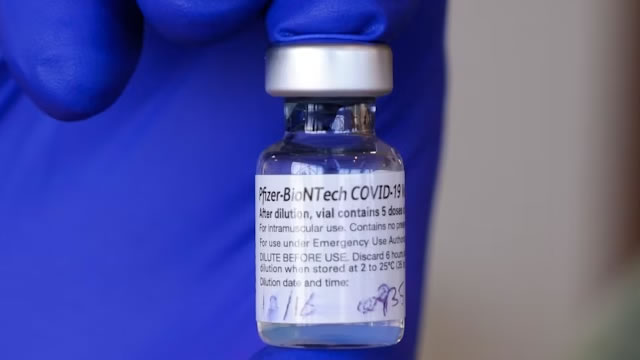
BioNTech SE Sponsored ADR (BNTX) Is Up 4.81% in One Week: What You Should Know
ZACKS· 2025-07-30 17:00
Core Viewpoint - Momentum investing focuses on following a stock's recent price trends, aiming to buy high and sell higher, with the expectation that established trends will continue [1] Group 1: Company Overview - BioNTech SE Sponsored ADR (BNTX) currently holds a Momentum Style Score of A, indicating strong momentum characteristics [3] - The company has a Zacks Rank of 1 (Strong Buy), suggesting a favorable outlook based on historical performance metrics [4] Group 2: Performance Metrics - Over the past week, BNTX shares increased by 4.81%, outperforming the Zacks Medical - Biomedical and Genetics industry, which rose by 1.8% [6] - In the last quarter, BNTX shares rose by 17.67%, and over the past year, they increased by 28.52%, while the S&P 500 saw gains of 14.96% and 18.01%, respectively [7] Group 3: Trading Volume - BNTX's average 20-day trading volume is 603,221 shares, which serves as a bullish indicator when combined with rising stock prices [8] Group 4: Earnings Outlook - In the past two months, five earnings estimates for BNTX have been revised upwards, with no downward revisions, leading to an increase in the consensus estimate from -$6.68 to -$3.91 [10] - For the next fiscal year, four estimates have also moved higher, indicating positive sentiment regarding future earnings [10] Group 5: Conclusion - Given the strong performance metrics and positive earnings outlook, BNTX is positioned as a promising investment opportunity with a Momentum Score of A [12]