众擎机器人

Search documents
人形机器人逼近产业化关口,谁在买?
3 6 Ke· 2025-11-05 12:11
Core Viewpoint - The humanoid robot industry is transitioning from showcasing demos to securing substantial orders, marking a significant step towards industrialization with several companies achieving orders of over a thousand units, indicating a shift in focus towards real-world applications and sales [2][3][4]. Group 1: Market Dynamics - In the past two months, multiple companies have entered the "thousand-unit club," with eight firms reporting significant orders, reflecting a growing demand in the humanoid robot sector [2][3]. - The price range for humanoid robots varies, with educational and performance models priced between 20,000 to 100,000 yuan, while industrial models start at 200,000 yuan, suggesting that large orders often correspond to contracts worth hundreds of millions [3][4]. - The recent surge in orders is attributed to increased public awareness following high-profile appearances and the emergence of actual demand in sectors like manufacturing and education [3][4]. Group 2: Industrialization and Challenges - The shift to thousand-unit orders signifies a pivotal moment for the humanoid robot industry, moving from experimental models to real-world deployment, akin to the early days of electric vehicles [4][5]. - Key questions arise regarding the buyers and their intended applications, as the industry transitions from a focus on demos to a competitive landscape centered on delivery capabilities [5][6]. - Major clients in manufacturing and education are driving demand, with manufacturing firms facing challenges such as labor shortages and rising costs, making humanoid robots a viable solution for automation [6][7]. Group 3: Product Development and Feedback - Manufacturers are increasingly acting as "invisible product managers," providing feedback that drives product iterations and adaptations to meet diverse operational needs [10][12]. - Companies like Star Dust Intelligent are adjusting their product offerings based on client feedback, leading to modular solutions that enhance flexibility and adaptability in various industrial scenarios [10][12]. Group 4: Sales and Market Strategy - The sales landscape is evolving, with companies focusing on building robust sales teams and distribution networks to effectively market humanoid robots across different sectors [24][25]. - Competitive pricing strategies are emerging, with companies like Songyan Power introducing models priced below 10,000 yuan to explore new market segments and drive adoption [25][26]. - The industry is witnessing a shift towards a more sustainable business model, emphasizing delivery capabilities and customer satisfaction over merely securing large orders [18][21]. Group 5: Future Outlook - The humanoid robot industry is expected to accelerate in 2026, driven by ongoing projects and increased focus on delivery and customer engagement [27][28]. - Companies are also looking to expand their international presence, with expectations of significant revenue contributions from overseas markets in the near future [27].



众擎机器人联合京东、深业打造全球首家零售店
Mei Ri Jing Ji Xin Wen· 2025-11-05 11:52
每经AI快讯,11月5日,众擎机器人在其官方微信公众号上宣布,将联合京东、深业打造全球首家赛博 店员潮品零售店。届时首店位置将位于深圳市福田区深业上城。 ...

经观头条|人形机器人站在产业化门口
Jing Ji Guan Cha Wang· 2025-11-05 11:38
Core Insights - The humanoid robot industry is transitioning from showcasing demos to focusing on actual orders, with several companies entering the "thousand-unit club" in recent months [3][4] - The surge in orders is attributed to increased public awareness and real demand in sectors like manufacturing and education, creating viable deployment scenarios [4][5] - The shift to "thousand-unit orders" marks a significant milestone in the industrialization of humanoid robots, indicating their movement from experimental models to real-world applications [5][6] Industry Demand - Major clients for humanoid robots are primarily from the manufacturing and education sectors, with manufacturing showing a more rigid demand due to labor shortages and rising costs [7][8] - The flexibility of humanoid robots allows for easier adaptation to changing production needs compared to traditional automation solutions [7][8] - Educational institutions are adopting humanoid robots through small pilot programs, focusing on their integration into teaching and learning environments [14][15] Sales and Delivery Challenges - The industry is experiencing a shift from securing orders to ensuring successful delivery, with companies facing challenges in product design and supply chain management [18][19] - Companies are increasingly focusing on building robust sales teams and distribution channels to effectively market humanoid robots [23][24] - Pricing strategies are evolving, with some companies introducing lower-priced models to stimulate demand and explore new market segments [24][25] Future Outlook - The humanoid robot industry is expected to accelerate in 2026, driven by ongoing projects and increased attention from potential investors [25][27] - Companies are also looking to expand their presence in international markets, with expectations of significant revenue contributions from overseas operations [25][27]
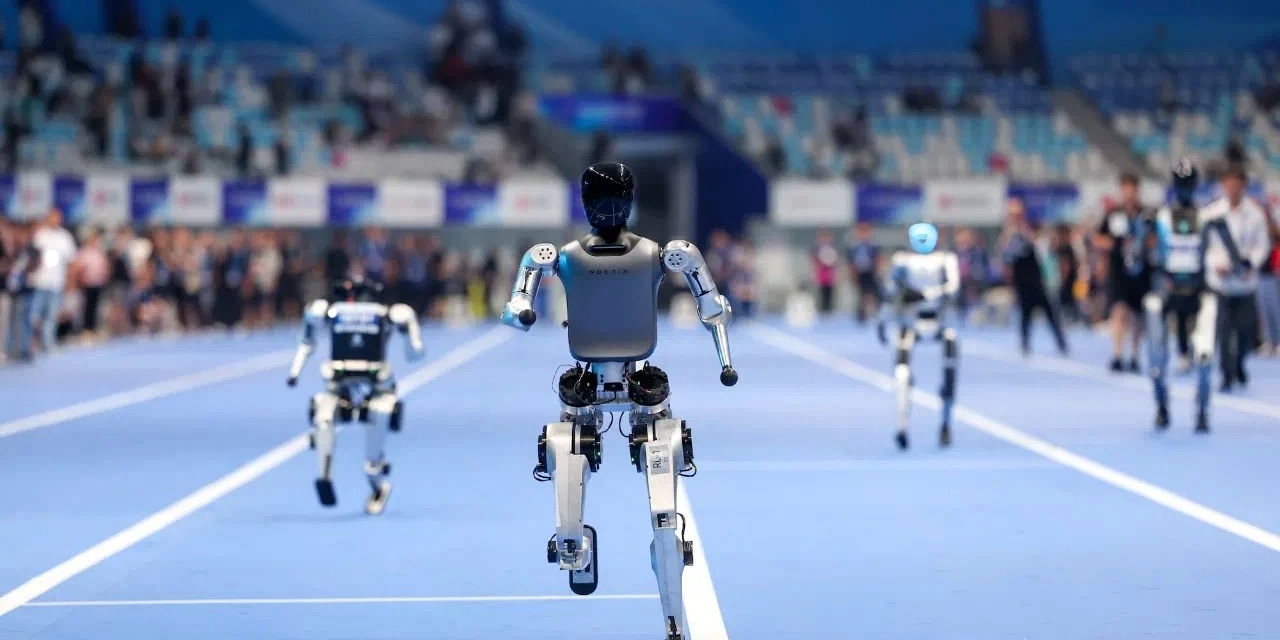
人形机器人逼近产业化关口,谁在买?
经济观察报· 2025-11-05 10:49
Core Insights - The humanoid robot industry is transitioning from showcasing demos to securing substantial orders, marking a significant step towards commercialization [3][4] - Recent months have seen multiple companies entering the "thousand-unit club," indicating a shift towards real sales and contracts worth billions [3][4] - The demand for humanoid robots is primarily driven by the manufacturing and education sectors, with specific needs emerging that robots can fulfill [6][11] Group 1: Market Dynamics - The recent surge in orders is attributed to increased public awareness and the emergence of practical applications in various industries [4][6] - Humanoid robots are no longer just prototypes; they are beginning to be deployed in real-world scenarios, similar to the early days of electric vehicles [4][6] - The industry is witnessing a shift from "demo-driven" sales to "delivery-driven" sales, altering the commercial logic of humanoid robots [4][27] Group 2: Customer Segments - Manufacturing clients are the largest orderers, driven by challenges such as labor shortages and rising costs, making robots a viable solution for repetitive tasks [6][10] - The education sector is adopting humanoid robots through small pilot programs, focusing on their adaptability for teaching and engagement [11][13] - Some orders are being placed by companies for promotional purposes, indicating a diverse range of applications for humanoid robots [13] Group 3: Delivery and Production Challenges - Successful delivery is becoming a critical measure of success, with companies needing to demonstrate their ability to fulfill orders [15][16] - Companies are facing challenges in production and supply chain management as order volumes increase, necessitating robust operational strategies [15][16] - The focus is shifting from merely securing orders to ensuring a complete delivery cycle, including customer engagement and cash flow management [16][17] Group 4: Pricing Strategies and Competition - Companies are exploring aggressive pricing strategies to capture new market segments, with some introducing robots at significantly lower price points [25][26] - The competition is intensifying, with firms investing in sales teams and channel development to effectively market humanoid robots [22][24] - Differentiation in product offerings is becoming essential, with companies developing various models to cater to different market needs [26] Group 5: Future Outlook - The humanoid robot industry is expected to accelerate in 2026, driven by ongoing projects and increased market attention [26][27] - Companies are also focusing on international markets, with plans to expand their distribution networks globally [26]

没人想成为“北宇树”了
3 6 Ke· 2025-11-05 10:35
工业派VS商用派,各执一词拼可行性 几十年后,人们习惯人形机器人存在时,大概率会对一个历史细节感到错愕,原来人们曾为人形机器人到底该用在哪而吵过架。 虽然现阶段人形机器人落地场景已经十分多元化,人类想干的不想干的都干过一遍。但粗略来看,总共只有两大类:工业、商用。(至于家庭现阶段还是 后话) 上半年都想成为宇树的竞争对手,下半年只想成为各细分领域的"宇树科技"。 2025年上半年,具身研习社在人形机器人产业一线调研中,被行业人士问及最多的问题莫过于:与宇树形成直接抗衡的北方头部企业究竟是谁?彼时,围 绕这一产业关切点,我们曾发布《南宇树北xx,市场在寻找北方代表选手》一文,聚焦南北产业力量对比的核心议题。 短短数月,人形机器人赛道的竞争格局已发生剧烈迭代。尽管"公认的北方代表选手"尚未出现,但市场的关注点已悄然跳出"南北对标"的单一框架。伴随 竞争进入白热化阶段,赛道已衍生出多维度分化的多元派系。 与之对应,市场评价标准也从"谁能与宇树直接对标"转向对企业细分维度卡位能力的深度考量。 有趣的是,所谓"细分维度"并没有统一的说法,仅是从不同视角出发来评判一家企业的价值。最常见的为:从布局方式来看,分为本体派、大 ...
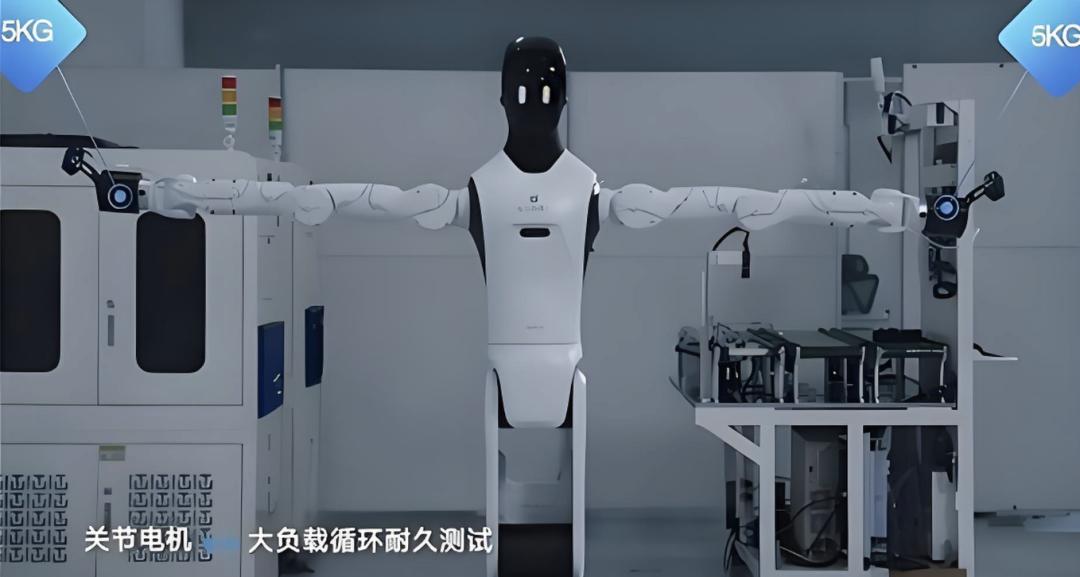
每周都在迭代!人形机器人为啥进步“神速”?
Shang Hai Zheng Quan Bao· 2025-11-02 17:53
Group 1 - The humanoid robot industry in Shenzhen is experiencing rapid advancements, with companies like Zhongqing Robotics showcasing robots capable of complex movements and tasks [1][2] - Zhongqing Robotics attributes its progress to an open-source strategy, allowing global developers to contribute to the application ecosystem, with product iterations occurring weekly [1][3] - The presence of a robust supply chain and industrial ecosystem in Shenzhen supports rapid prototyping and product development, as highlighted by companies like Yujian Technology [3] Group 2 - Yujian Technology has developed a humanoid robot that can autonomously prepare complex dishes, demonstrating the evolution of algorithms and the importance of real-world data feedback [3] - Local government initiatives are creating new application scenarios for robots, facilitating market exploration and commercial opportunities for robotic companies [3][4] - The Longgang District is establishing a comprehensive ecosystem for the robotics industry, including safety management regulations and industry standards to ensure healthy development [4]
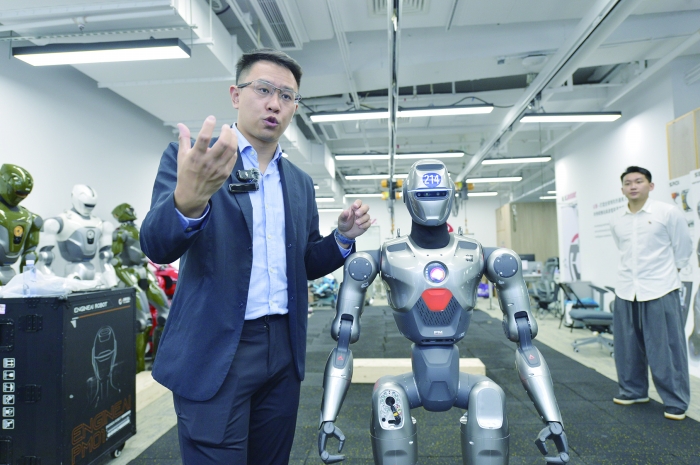
记者手记:每周都在迭代!人形机器人为啥进步“神速”?
Xin Hua She· 2025-11-02 07:35
Group 1 - The humanoid robot industry in Shenzhen is rapidly evolving, showcasing advanced capabilities such as dancing and overcoming obstacles, indicating significant technological progress within a year [1] - The open-source strategy employed by companies like Zhongqing Robotics is a key factor in their continuous innovation, allowing global developers to contribute to the application ecosystem [1] - The Shenzhen Nanshan District is home to a robust "Robot Valley," housing numerous robotics companies and research institutions, fostering a collaborative environment for development [1] Group 2 - Companies like Yujian Technology are leveraging Shenzhen's complete supply chain and industrial chain to quickly prototype and produce products, enhancing their market responsiveness [2] - The evolution of algorithms and the feedback from real-world applications are crucial for the development of intelligent robots, as demonstrated by Yujian Technology's cooking robot [2] - The Longgang District government is actively creating new application scenarios for robots, facilitating their integration into urban management and social governance [2] Group 3 - The Longgang District is focused on building a comprehensive ecosystem for the robotics industry, covering software, core components, integration, and application scenarios [3] - Regulatory measures and industry standards are being developed to ensure the safe operation and application of intelligent robots, promoting healthy industry growth [3]
四中全会精神在基层丨记者手记:每周都在迭代!人形机器人为啥进步“神速”?
Xin Hua Wang· 2025-11-02 07:30
Core Insights - The humanoid robot industry is experiencing rapid advancements, with companies like Zongqing Robotics showcasing significant improvements in capabilities within a year [1] - Open-source strategies and collaborative efforts are key to the continuous evolution of humanoid robots, allowing for faster iteration and development cycles [1] - The Shenzhen Nanshan District, known as "Robot Valley," hosts numerous robotics companies and research institutions, fostering a robust ecosystem for innovation and product development [2] Group 1 - The humanoid robot "Xiaozhong" can perform complex movements such as dancing and overcoming obstacles, demonstrating significant progress in its capabilities [1] - Zongqing Robotics has achieved a product iteration cycle of approximately six months from design to prototype, emphasizing the importance of open-source collaboration [1] - The local government is actively creating new application scenarios for robots, facilitating market exploration and commercial opportunities for robotics companies [2] Group 2 - The Longgang District is establishing a comprehensive ecosystem for the robotics industry, covering intelligent software, core components, and application scenarios [3] - Regulatory frameworks and safety management systems are being developed to ensure the healthy growth of the robotics sector [3] - The Longgang District has launched various initiatives, including a robotics 6S store and a robotics theater, to capture new opportunities in the market [2]
四中全会精神在基层|记者手记:每周都在迭代!人形机器人为啥进步“神速”?
Xin Hua She· 2025-11-02 07:17
Group 1 - The humanoid robot industry is experiencing rapid advancements, with iterations occurring weekly, showcasing capabilities such as dancing and overcoming obstacles [1] - The open-source strategy is a key factor in the continuous evolution of robots, allowing global developers to participate in the application ecosystem [1] - The development cycle for new robot prototypes has been significantly shortened to approximately six months from design to prototype [1] Group 2 - Shenzhen's Nanshan District is home to a robust "Robot Valley," housing numerous robotics companies and research institutions, facilitating a complete supply chain and rapid product development [2] - Companies like Yujian Technology are advancing from simple tasks to complex culinary tasks, highlighting the importance of algorithm evolution and data feedback from diverse application scenarios [2] - Local government initiatives are creating new application scenarios for robots, enhancing their market opportunities and accelerating iteration through practical use [2] Group 3 - The local government is focused on building a comprehensive ecosystem for the robotics industry, including intelligent software, core components, and application scenarios [3] - Regulatory measures and industry standards are being developed to ensure the safe operation and application of intelligent robots, promoting healthy industry growth [3]
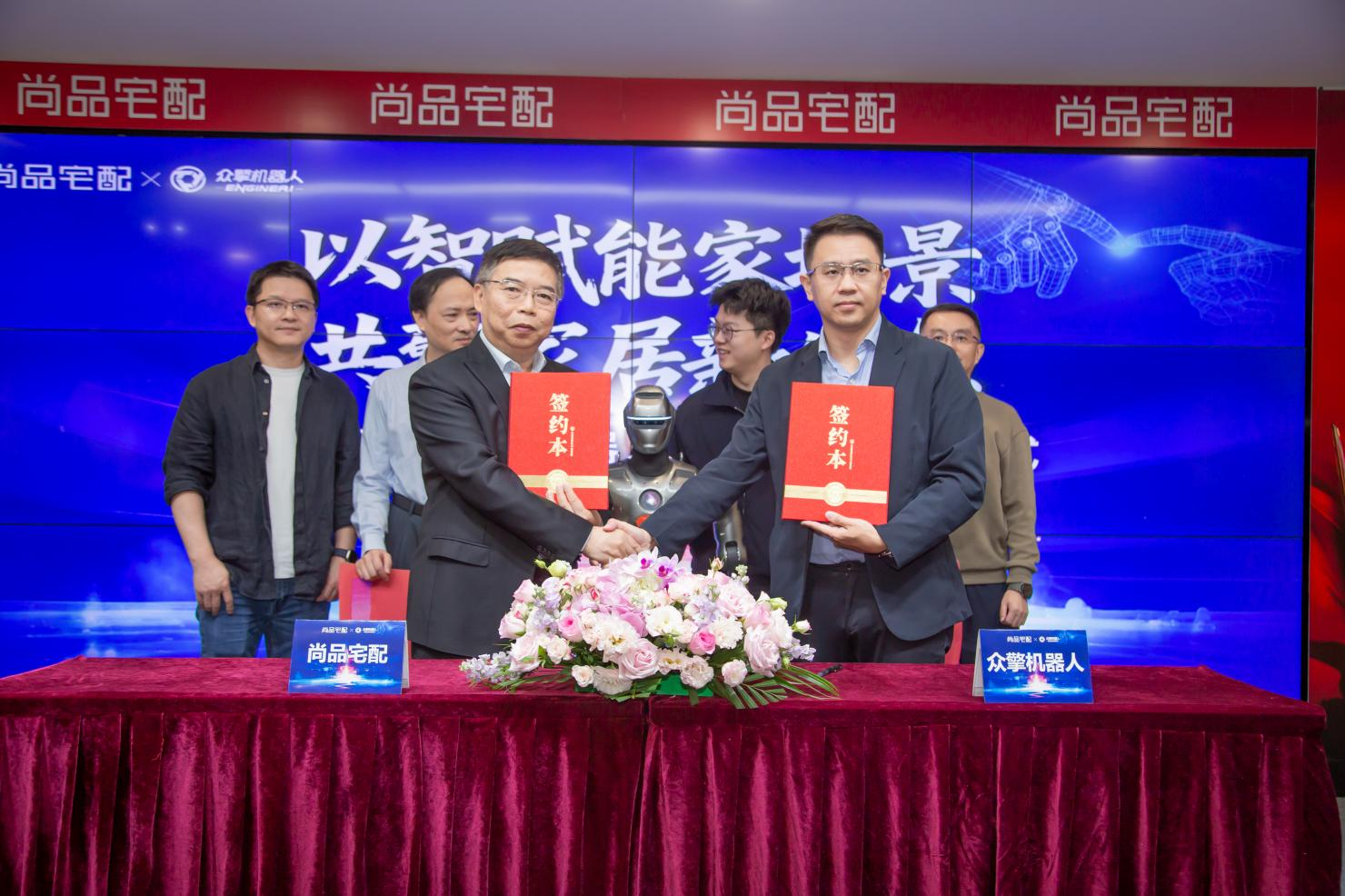
尚品宅配与众擎机器人达成战略合作 共建智能家居新生态
Shang Hai Zheng Quan Bao· 2025-10-30 10:17
Core Insights - The company has entered into a deep strategic partnership with Zhongqing Robotics to create a new ecosystem for smart home robotics [1][3] Group 1: Strategic Cooperation - The collaboration will leverage the strengths of both parties, focusing on home and commercial scenarios to enhance user experience through robotics [3] - The aim is to integrate robots as "new family members" that understand needs and provide services, covering basic functions like cleaning, moving, and organizing, as well as emotional and safety roles [3][4] Group 2: Implementation and Development - The partnership will begin with pilot stores to collect user feedback and scene data, addressing practical issues such as autonomous movement and human-robot interaction [4] - Both companies will work on key challenges in training simulation, data collection, and secondary development to ensure technology fits the scene requirements and achieves productization [4]