
华测导航

Search documents
11月车市基本符合预期,英伟达开源VLA模型
CAITONG SECURITIES· 2025-12-11 13:00
Group 1: Automotive Market Overview - In November, the national retail sales of passenger cars reached 2.225 million units, a year-on-year decrease of 8.1% and a month-on-month decrease of 1.1%, aligning with the initial forecast of a "low start, medium growth, and stable end" trend for the year [5][11][20] - Cumulative retail sales for the year reached 21.483 million units, reflecting a year-on-year growth of 6.1%. The growth rate fluctuated throughout the year, with a notable slowdown in the fourth quarter due to high base effects from the previous year [5][11][20] - The "old-for-new" subsidy policy has been a significant driver for growth, with over 11.2 million applications for subsidies by the end of October, although the average daily subsidy scale dropped to 30,000 units in November due to the suspension of subsidies in various regions [5][11][20] Group 2: Intelligent Driving Developments - NVIDIA has officially open-sourced its new Vision-Language-Action (VLA) model, Alpamayo-R1, marking a significant shift in autonomous driving technology from mere behavior imitation to deeper causal reasoning [6][33] - The model's dataset, approximately 100TB in size, has been uploaded to the open-source community, indicating a move towards more accessible high-end autonomous driving models [6][33] Group 3: Investment Recommendations - The report suggests focusing on companies with strong positions in automotive intelligence and leading software capabilities, including Rui Ming Technology, Dao Tong Technology, Hei Zhi Ma Intelligent, Horizon Robotics, and others [8][39]

华测导航今日大宗交易折价成交21.69万股,成交额538.56万元
Xin Lang Cai Jing· 2025-12-11 08:57
Group 1 - The core transaction involved Huace Navigation, with a total of 216,900 shares traded on December 11, resulting in a transaction amount of 5.3856 million yuan, which accounted for 1.7% of the total trading volume for that day [1][2] - The transaction price was 24.83 yuan per share, representing a discount of 19.12% compared to the market closing price of 30.7 yuan [1][2]



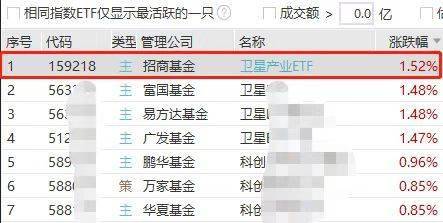
资金加速涌入太空赛道!卫星产业ETF(159218)大涨超1.5%直逼历史高点
Sou Hu Cai Jing· 2025-12-11 06:51
12月11日,卫星板块全天强势。截至14时26分,卫星产业ETF(159218)涨1.52%,盘中价格直逼历史高 点。前几大权重股方面,航天电子涨1.40%,中国卫星涨4.89%,中科星图涨1.42%,中国卫通涨 1.52%,华测导航跌0.64%;交投持续升温,换手率达18.40%,成交额约1.4亿,资金持续活跃,该基金 年内份额扩容426.85%迭创历史新高! 分析称,当前相关催化因素明确:全球方面,SpaceX超大规模IPO计划正在推进;国内方面,广东国资 成立商业航天公司,地方布局全面加速。同时,中国星网已启动核心设备招标,标志着应用落地进入实 质性阶段。在此背景下,卫星产业ETF成为资金分享产业红利的核心配置工具。 风险提示:基金有风险,投资需谨慎。 ...

Slay全场!卫星产业ETF(159218)强势领涨两市ETF,“太空新基建”持续发酵
Sou Hu Cai Jing· 2025-12-11 06:51
Group 1 - The satellite industry ETF (159218) has shown strong performance, rising by 1.52% and leading the market, with significant trading activity and a turnover rate of 18.40% [1] - Major stocks in the satellite sector, such as China Satellite and Aerospace Electronics, have also experienced notable gains, with increases of 4.89% and 1.40% respectively [1] - The ETF has expanded its shares by 426.85% this year, reaching a historical high, indicating robust investor interest and capital inflow into the sector [1] Group 2 - The domestic commercialization of space is accelerating, with provinces like Shandong and Guangdong actively integrating space economy into their core development strategies [2] - The China Satellite Network Group has initiated the bidding process for key equipment, marking a significant step in the deployment and operational preparation of satellite internet in China [2] - The satellite industry ETF (159218) is positioned as a crucial investment tool for investors looking to capitalize on the commercial space economy, supported by clear industry trends and intensive capital stimulation [2]
中国农业:粮食安全-向宏伟目标迈进的卓越进展-China Agriculture_ China's food security - remarkable progress towards an ambitious goal
2025-12-10 02:49
Summary of Key Points from the Conference Call on China's Food Security Industry Overview - The focus is on China's agricultural sector, specifically addressing food security and self-sufficiency amidst challenges such as limited arable land, rising protein consumption, and climate change impacts [3][15][16]. Core Insights and Arguments 1. **Progress in Food Security**: China has made significant strides in reducing import dependence, with the arable land gap decreasing from an estimated 90 million hectares to 84 million hectares, with a target of narrowing it to 5 million hectares by 2035 [4][16]. 2. **Investment Opportunities**: Eight investment themes have been identified, including seeds, advanced feed additives, fertilizers, agricultural machinery, and precision farming technologies, with 24 companies highlighted for their exposure to these sectors [4][53][61]. 3. **Self-Sufficiency Goals**: The Chinese government aims for 95% self-sufficiency in staple foods by 2035, with current projections indicating a decline from 94% in 2000 to 61% in 2024, potentially improving to 80-95% by 2035 depending on technological advancements and regulatory support [10][37][41]. 4. **Technological Integration**: The integration of biotech, big data, AI, and precision technology is transforming agricultural practices, enhancing crop yields, and improving protein conversion efficiency [17][45]. 5. **Soybean Demand Management**: Efforts to manage soybean demand have led to a reduction in consumption by 15 million tons from 2021 to 2024, which is crucial for mitigating trade risks [38][43]. Additional Important Content 1. **Government Policies**: Numerous policies have been enacted to support food security, including initiatives for seed self-reliance, land quality improvement, and precision farming [23][25]. 2. **Rural Workforce Challenges**: The rural working-age population in China has halved over the past two decades, which poses a significant challenge to agricultural productivity [29]. 3. **Climate Resilience**: The need for a more resilient food supply system is emphasized, with projections indicating that an additional 8-9% food supply will be necessary to counteract yield losses due to climate change [40]. 4. **Public Sector Investment**: China's public sector spending on agricultural R&D has reached $6.6 billion annually, significantly higher than two decades ago, indicating a strong commitment to improving agricultural efficiency [50][51]. Conclusion - The conference call highlighted China's ambitious goals for food security and self-sufficiency, the progress made in reducing import dependence, and the investment opportunities arising from technological advancements in agriculture. The challenges posed by a shrinking rural workforce and climate change were also acknowledged, underscoring the need for continued innovation and policy support in the agricultural sector [4][15][37].
“未来20·中国A股上市公司成长力调研”圆满收官,汇正财经以专业锚定上市公司成长价值
Di Yi Cai Jing· 2025-12-08 11:01
Core Insights - The "Next 20 China A-share Listed Companies Growth Power Research" focuses on identifying high-potential small and medium-sized enterprises (SMEs) in the A-share market, emphasizing their growth value and contribution to the real economy [3][6] - The event "Future 20·2025 A-share Listed Companies Growth Power Annual Conference" aims to provide insights into the growth dynamics of quality SMEs, facilitating high-quality development in the capital market [1][3] Group 1: Event Overview - The conference successfully highlighted the growth potential of SMEs, serving as a bridge for value discovery in the capital market [1] - The research project is a collaboration involving Huizheng Finance, Yicai, Ernst & Young (China), and Xiya Asset Management, focusing on deep industry insights and professional investment perspectives [1][3] Group 2: Research Focus - The research aims to break the traditional valuation logic of "size matters" and instead focuses on the essence of growth, targeting SMEs with technological innovation potential and resilient business models [3][6] - The research team conducted extensive investigations across various emerging industries, including biomedicine and high-end manufacturing, to align with industry development trends [3] Group 3: Recognized Companies - A list of 20 companies recognized for their growth potential was published, including Huaming Equipment, Jack Technology, and Haitai New Light, among others [5] - These companies were selected based on rigorous criteria, acknowledging their past growth trajectories and future growth expectations [5] Group 4: Research Methodology - The research process involved not only analyzing financial data but also examining factors such as R&D investment, core patent layout, and management execution capabilities [5][6] - Huizheng Finance provided targeted growth path optimization suggestions to the surveyed companies, helping them clarify strategic directions and strengthen core advantages [6] Group 5: Market Implications - The resilience of business models is highlighted as crucial for sustained profitability amid complex external pressures, with strong growth potential during economic recovery [6] - The research aims to guide market resources towards high-quality SMEs characterized by high technological content, growth potential, and sound governance, addressing issues of undervaluation and financing challenges faced by some SMEs [6]

从“发射一颗星”迈向“运营一张网”
Zheng Quan Ri Bao· 2025-12-08 01:20
Core Viewpoint - The Chinese commercial satellite industry is transitioning from "launching a satellite" to "operating a network," driven by policy support, technological advancements, and capital investment, aiming to create a comprehensive industrial chain that enhances global competitiveness [1][9]. Industry Development - The commercial satellite industry in China is experiencing rapid growth, with a significant increase in the number of commercial satellite companies and advancements in satellite constellation construction and technology innovation [2][4]. - The industry is entering a phase focused on large-scale development, emphasizing satellite constellation networking, mass production, and application integration across various sectors [2][4]. Challenges - The industry faces challenges such as high costs, difficulty in achieving profitability, competition for orbital resources, and the complexities of space debris management [2][3]. - The overall production capacity in the domestic commercial satellite sector is still insufficient, particularly in cost control and mass production capabilities [2][3]. Investment Landscape - National and private investment funds are increasingly focusing on the commercial satellite sector, recognizing its long-term potential despite high capital requirements and lengthy return cycles [4][5]. - Investment institutions are prioritizing companies with advanced technology, sustainable R&D systems, and verifiable products, while also tracking metrics like launch frequency and satellite count [5][6]. International Expansion - Chinese commercial satellite companies are expanding their international presence, with increasing international orders and diverse methods of "going global," including exporting satellites and establishing local production facilities [7][8]. - The integration of the BeiDou system into international standards is enhancing the global competitiveness of China's commercial satellite industry [8]. Future Outlook - The commercial satellite industry is expected to mature rapidly, with new business models such as satellite internet services and data applications emerging, supported by favorable policies and capital investments [9].
从“发射一颗星”迈向“运营一张网”——商业卫星产业规模化国际化进程加速
Zheng Quan Ri Bao· 2025-12-07 15:37
Group 1 - The core viewpoint of the articles emphasizes the rapid expansion of the commercial satellite industry in China, driven by government policies and increasing market interest in commercial space ventures [1][6] - The National Space Administration of China has introduced a plan to support the high-quality and safe development of commercial space, including the establishment of a national commercial space development fund [1][6] - The commercial satellite industry is entering a phase of large-scale development, focusing on satellite constellation networking, mass production, and application integration [2][3] Group 2 - The commercial satellite industry faces challenges such as high costs, difficulty in profitability, competition for orbital resources, and space debris management [3] - The industry is currently in a "golden window period," requiring both proactive enterprise actions and effective financial support to overcome challenges [4][5] - Investment institutions are increasingly focusing on the technological advancement, sustainable R&D systems, and verifiable products of commercial satellite companies [5][6] Group 3 - There is a growing trend of international cooperation among Chinese commercial satellite companies, with increasing international orders and diverse methods of "going global" [7][8] - The Beidou system has gained international recognition, enhancing the competitiveness of China's commercial satellite industry [8] - The industry is transitioning from merely launching satellites to operating comprehensive networks, creating a closed-loop industrial chain that includes manufacturing, launching, control, data services, and terminal applications [8]
华测导航:截至2025年11月28日公司股东户数为45597户
Zheng Quan Ri Bao Wang· 2025-12-05 11:21
Core Viewpoint - As of November 28, 2025, the number of shareholders for Huace Navigation (300627) is projected to be 45,597 [1] Group 1 - The company responded to investor inquiries on an interactive platform [1] - The specified date for the shareholder count is November 28, 2025, with November 30, 2025, being a non-trading day [1]
华测导航:截至2025年11月20日公司股东户数为43477户
Zheng Quan Ri Bao Wang· 2025-12-05 11:12
Group 1 - The core point of the article is that Huace Navigation (300627) reported a total of 43,477 shareholders as of November 20, 2025 [1]