商业卫星

Search documents
星海逐鹿——商业卫星赛道在资本与技术双轮驱动下的爆发前夜 头豹词条报告系列
Tou Bao Yan Jiu Yuan· 2026-03-25 12:24
Investment Rating - The report rates the commercial satellite industry as a strong investment opportunity, with significant growth potential projected from 2025 to 2030 [3][38]. Core Insights - The commercial satellite industry is expected to grow from a market size of 180.70 billion RMB in 2020 to 592.92 billion RMB in 2024, and further to 7,344.88 billion RMB by 2030, driven by decreasing manufacturing and launch costs and increased private capital participation [3][38]. - The industry is characterized by high macro-strategic significance, strong military-civilian collaborative effects, and high capital barriers [9][12][13]. - The development of satellite internet is becoming a national strategy, with significant demand expected to drive market expansion [44]. Industry Definition - Commercial satellites are unmanned spacecraft designed and operated by private enterprises for commercial purposes, typically consisting of small or micro-satellites [4]. Industry Classification - The commercial satellite industry is classified based on orbital height into Low Earth Orbit (LEO), Medium Earth Orbit (MEO), and Geostationary Orbit (GEO) satellites [5]. Industry Characteristics - The industry has a strong macro-strategic significance, with satellite communications playing a crucial role in emergency communications and national defense [11]. - Military-civilian collaboration is reshaping military capabilities, as seen with the U.S. Starlink system providing critical support during conflicts [12]. - High capital barriers exist due to the substantial investment required for research, production, and operational phases [13]. Development History - The commercial space concept emerged globally in 2008 with SpaceX's involvement in NASA's commercial transport project, leading to a rapid acceleration in the U.S. commercial satellite sector [14]. - China has made significant technological advancements in commercial satellites since 2022, challenging U.S. dominance in the industry [14][16]. Industry Chain Analysis - The commercial satellite industry chain consists of upstream components and software supply, midstream satellite and ground equipment manufacturing, and downstream satellite launch and application services [17]. - Core components and service expenditures are the primary costs in the industry chain, with significant cost contributions from power management and attitude control systems [18][19]. Market Size and Growth - The commercial satellite market is projected to grow significantly, with a compound annual growth rate (CAGR) of 54.71% expected from 2025 to 2030 [38]. - The decline in satellite manufacturing and launch costs is a key driver of market expansion, with average launch costs in China decreasing from 115,000 RMB per kilogram in 2020 to 75,000 RMB in 2024 [39]. Future Market Drivers - The satellite internet sector is recognized as a national strategic priority, with substantial government support expected to drive demand for commercial satellites [44]. - The expansion of satellite constellations will enhance service revenue, with significant growth anticipated in satellite internet applications [45]. Competitive Landscape - The commercial satellite industry features a tiered competitive structure, with leading companies including China Eastern Red Satellite Co., China Aerospace Science and Technology Corporation, and Long光卫星技术股份有限公司 [53]. - The U.S. leads in commercial satellite deployment, particularly in low Earth orbit, while China focuses on remote sensing satellites [29][54].

头豹词条报告系列:星海逐鹿:商业卫星赛道在资本与技术双轮驱动下的爆发前夜,
Tou Bao Yan Jiu Yuan· 2026-03-25 12:15
Investment Rating - The report rates the commercial satellite industry as a high-growth sector with significant investment potential, projecting a market size increase from 180.70 billion RMB in 2020 to 7,344.88 billion RMB by 2030, reflecting a compound annual growth rate (CAGR) of 54.71% [3][33]. Core Insights - The commercial satellite industry is characterized by strong macro-strategic significance, high military-civilian synergy, and substantial capital barriers. The market is expected to expand due to decreasing satellite manufacturing and launch costs, along with increased private capital participation [3][6][8]. - The industry has evolved from a nascent stage in 2008 to a high-growth phase by 2022, with significant advancements in technology and policy support driving its development [9][11]. Industry Definition - Commercial satellites are unmanned spacecraft designed and operated by private enterprises for commercial purposes, typically consisting of small or micro-satellites. They are launched into various orbits depending on their intended use [4][5]. Market Size and Growth - The market size of the commercial satellite industry grew from 180.70 billion RMB in 2020 to 592.92 billion RMB in 2024, with a CAGR of 34.59%. It is projected to reach 7,344.88 billion RMB by 2030 [33][34]. Development History - The commercial satellite industry began to take shape in 2008 with the initiation of NASA's commercial cargo transport program. By 2015, China started to encourage private sector participation in commercial space endeavors, marking the beginning of its growth phase [9][10]. Industry Characteristics - The industry features high strategic importance, strong military-civilian collaboration, and significant capital barriers. The capital requirements for entry are substantial, with companies needing to invest billions in research and development [6][8]. Industry Chain Analysis - The commercial satellite industry chain consists of upstream components and software supply, midstream satellite and ground equipment manufacturing, and downstream satellite launch and application services [12][13]. Upstream Analysis - The upstream segment is dominated by core components such as the comprehensive electrical unit and attitude control unit, which account for a significant portion of satellite costs [20][21]. Midstream Analysis - The midstream segment is led by China and the United States, with both countries producing a large number of commercial satellites. The U.S. has a strong focus on communication satellites, while China emphasizes remote sensing satellites [23][24]. Downstream Analysis - The downstream segment is characterized by a high frequency of rocket launches in China, with a significant increase in launch success rates and a downward trend in launch costs [29][30]. Competitive Landscape - The competitive landscape of the commercial satellite industry is tiered, with leading companies including China Aerospace Science and Technology Corporation and Long光卫星技术股份有限公司, while emerging players are also gaining traction [48][49].
钧达股份(002865):控股巡天千河,布局商业卫星制造
GUOTAI HAITONG SECURITIES· 2026-03-01 13:41
Investment Rating - The investment rating for the company is "Accumulate" with a target price of 110.12 CNY [5][12]. Core Insights - The company has gained control over a satellite manufacturing enterprise, establishing a comprehensive space energy and satellite manufacturing industry chain [2]. - The company is positioned to capitalize on the space energy sector and is actively developing satellite manufacturing capabilities, aiming for an annual production capacity of 100 satellites [12]. - The financial projections indicate a significant fluctuation in net profit, with estimates of -1.36 billion CNY in 2025, followed by a recovery to 686 million CNY in 2026 and 1.05 billion CNY in 2027 [4][12]. - The company is investing in the development of CPI films for space photovoltaic applications, which are critical for solar panels in extreme space environments [12]. - Recent fundraising through H-share placement is expected to accelerate the company's strategic investments in space photovoltaic technology and expand its business in commercial aerospace [12]. Financial Summary - Total revenue is projected to decline from 18.66 billion CNY in 2023 to 9.02 billion CNY in 2025, before recovering to 11.77 billion CNY in 2026 and 12.81 billion CNY in 2027, reflecting a 60.9% increase in 2023 followed by a 46.7% decrease in 2024 [4][12]. - The net profit attributable to the parent company is expected to be 816 million CNY in 2023, dropping to -591 million CNY in 2024 and -1.36 billion CNY in 2025, before rebounding to 686 million CNY in 2026 and 1.05 billion CNY in 2027 [4][12]. - The company's earnings per share (EPS) is forecasted to be 2.62 CNY in 2023, -1.90 CNY in 2024, -4.36 CNY in 2025, 2.20 CNY in 2026, and 3.36 CNY in 2027 [4][12]. - The return on equity (ROE) is projected to be 17.3% in 2023, dropping to -15.2% in 2024 and -36.0% in 2025, before recovering to 15.4% in 2026 and 19.0% in 2027 [4][12]. Market Data - The company's current market capitalization is approximately 28.93 billion CNY, with a total share capital of 311 million shares [6]. - The stock has a 52-week price range of 36.08 CNY to 114.29 CNY [6]. - The price-to-earnings (P/E) ratio is 35.47 based on the current price and diluted share capital, with projections of 42.20 in 2026 and 27.69 in 2027 [4][12].

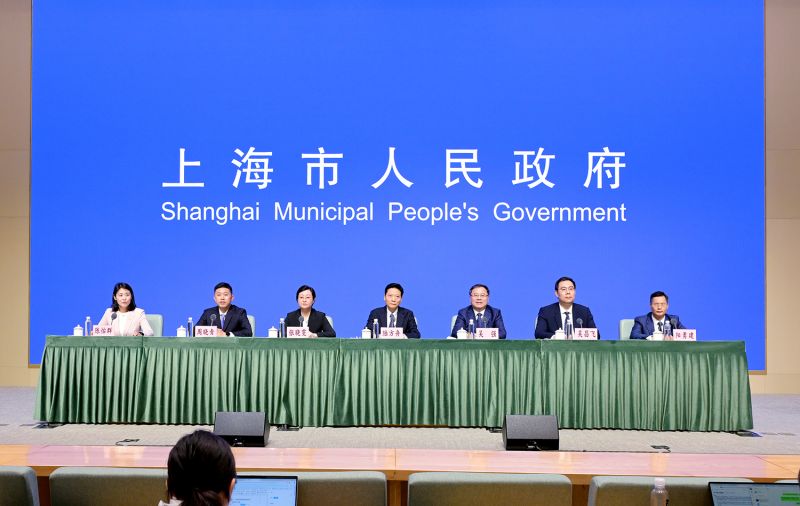
上海闵行“十四五”答卷:GDP突破4000亿元,打造有“高度”有“温度”之城
Zhong Guo Fa Zhan Wang· 2026-02-24 09:18
Core Insights - The article highlights the achievements of Minhang District during the "14th Five-Year Plan" period, showcasing its high-quality development and improved living standards [4][16]. Economic Performance - Minhang District's GDP surpassed 400 billion yuan, with total fiscal revenue exceeding 90 billion yuan, ranking second in Shanghai [4]. - By 2024, the GDP is projected to reach 411.9 billion yuan, reflecting a 60.6% increase from the end of the "13th Five-Year Plan" [7]. Industrial Upgrading - The district is focusing on upgrading its traditional manufacturing sector and building a modern industrial system [6]. - The tertiary sector's contribution to GDP is expected to rise to 73.5%, with strategic emerging industries accounting for 52.6% of the total industrial output [7]. Open Economy - Minhang is leveraging the national strategy of the Hongqiao International Open Hub, with nearly 28,000 enterprises established in the area [8]. - Tax revenue is projected to reach 10.9 billion yuan in 2024, a 120% increase from the end of the "13th Five-Year Plan" [8]. Innovation and Technology - The district is enhancing its innovation capabilities, with 39 national-level research platforms established [12]. - Minhang has produced 13 national science and technology awards and 210 municipal awards since the beginning of the "14th Five-Year Plan" [12]. Quality of Life - Minhang is committed to improving livability, having completed 550,000 square meters of housing renovations and built 240,000 square meters of "Beautiful Home" projects [13]. - The district has established 17,552 elderly care beds and 110 community service centers [14]. Future Outlook - The district aims to become an international open hub, a technology innovation center, and a model for urban living in the "15th Five-Year Plan" [15].

未知机构:钧达股份要点更新商业航天的拓展者太平洋新能源前言商业航-20260210
未知机构· 2026-02-10 02:25
Summary of Key Points from the Conference Call Company Overview - **Company**: JunDa Co., Ltd. (钧达股份) - **Industry**: Commercial Aerospace Core Insights and Arguments 1. **Expansion into Commercial Aerospace**: JunDa is positioned as a key player in the commercial aerospace sector, with expectations for significant growth through mergers and acquisitions, particularly in satellite technology [1][3] 2. **Acquisition of Shanghai Fuyao Xinghe**: JunDa has acquired a 60% stake in Shanghai Fuyao Xinghe, becoming its controlling shareholder, which allows JunDa to indirectly control its wholly-owned subsidiary, Xuntian Qianhe. This positions Xuntian Qianhe as a rare publicly listed entity in the commercial satellite sector within both A-share and H-share markets [2][4] 3. **Strategic Goals for Xuntian Qianhe**: Xuntian Qianhe is set to be the core of JunDa's space technology ecosystem, with plans to leverage capital market advantages for comprehensive support, aiming to establish it as one of the top three commercial satellite companies in China [4] Development Outlook for Xuntian Qianhe 1. **Team and Technical Background**: - The core team consists of members from the Aerospace Science and Technology Corporation, with experience in developing 62 satellites. - The founder, Wei Ran, holds a PhD from Harbin Institute of Technology and has a strong background in significant projects like the lunar exploration program [5] 2. **Business Capabilities and Performance**: - Xuntian Qianhe is positioned as a comprehensive commercial satellite enterprise, capable of designing, developing, assembling, and testing satellites under 1 ton, covering various applications such as communication, remote sensing, and IoT. - The company achieved profitability in its first year after its establishment in August 2024, successfully launching 7 commercial satellites and currently has over 20 satellites in development with 54 orders on hand. It has the capacity to produce 50 satellites annually, with plans to scale to 100 [5] 3. **Core Technologies and Products**: - Xuntian Qianhe has developed China's first computational hyperspectral and all-metal remote sensing satellites. - It has become a qualified supplier for satellite networks, undertaking the development of two technology verification satellites [5] Additional Insights 1. **Computational Satellite Plans**: JunDa is involved in the Shanghai Space Computing Alliance, with plans to deploy 4,000 computational satellites [6] 2. **Space Energy Initiatives**: JunDa is collaborating with the Chinese Academy of Sciences on space photovoltaic battery technology, achieving efficiencies exceeding 30%, which is expected to set a standard solution for space energy [7] 3. **Integrated Industry Chain**: The strategy includes creating a closed-loop industry chain from space photovoltaic components to complete satellite systems, with Xuntian Qianhe serving as a platform for on-orbit verification of JunDa's photovoltaic products, with plans to validate these products on over 10 satellites by 2026 [7]
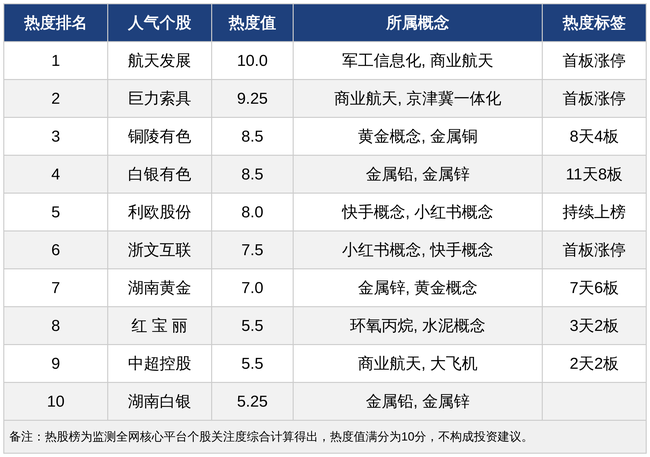
今日十大热股:航天发展、巨力索具领衔商业航天板块,白银有色11天8板、铜陵有色8天4板有色金属持续爆炒
Jin Rong Jie· 2026-02-04 02:17
Market Overview - A-shares experienced a collective rise on February 3, with the Shanghai Composite Index increasing by 1.29% to 4067.74 points, the Shenzhen Component Index rising by 2.19% to 14127.1 points, and the ChiNext Index up by 1.86% to 3324.89 points [1] - The total trading volume in the Shanghai and Shenzhen markets was 2.54 trillion yuan, a decrease of approximately 40.5 billion yuan compared to the previous trading day [1] - A total of 4583 stocks rose while 514 stocks fell, indicating a significant market profit effect [1] Hot Stocks - The top ten popular stocks included Aerospace Development, Jieli Sockets, Tongling Nonferrous Metals, Silver (core stock) Nonferrous Metals, Lioh Co., Zhejiang Wenlian, Hunan Gold, Hongbaoli, Zhongchao Holdings, and Hunan Silver [1][2] Aerospace Development - Aerospace Development benefits from strong policy support in the commercial aerospace sector, having completed the development and launch of multiple commercial satellites and achieved constellation networking operations [3] Jieli Sockets - Jieli Sockets' stock performance is driven by its deep involvement in commercial aerospace and deep-sea mooring sectors, receiving official certification from the Aerospace Science and Technology Institute as the exclusive supplier of key components for the recovery capture system [3] Tongling Nonferrous Metals - Tongling Nonferrous Metals is positively impacted by rising copper prices and a tight supply-demand balance, with LME copper inventories at a low level. The company is one of the largest copper smelting enterprises in China, producing over 400,000 tons annually [3] Silver Nonferrous Metals - The performance of Silver Nonferrous Metals is influenced by international silver price trends, driven by explosive growth in industrial demand, particularly in the photovoltaic and electronics sectors. The company has established a 1.5 billion yuan gold subsidiary, aligning with market interest in precious metals [3] Lioh Co. - Lioh Co. has a solid foundation in its dual business layout of "smart pumps and systems" and "digital marketing," with forward-looking applications in AI marketing and related fields [4][5] Zhejiang Wenlian - Zhejiang Wenlian benefits from optimized governance structure and precise business positioning, having completed rectification of related issues and received legal confirmation of governance compliance [5] Hunan Gold - Hunan Gold's stock performance is supported by improvements in its fundamentals and industry conditions, with recent announcements of major asset restructuring and performance forecasts amid rising international gold prices [5] Hongbaoli - Hongbaoli's core drivers stem from substantial improvements in its main business, focusing on the research and production of epoxy propylene derivatives, with recent projects entering trial production [5]


“国家队”资本入局构建“央地基金矩阵”,成都“产投28计划”迎来六位“重磅队友”
Sou Hu Cai Jing· 2026-01-29 02:46
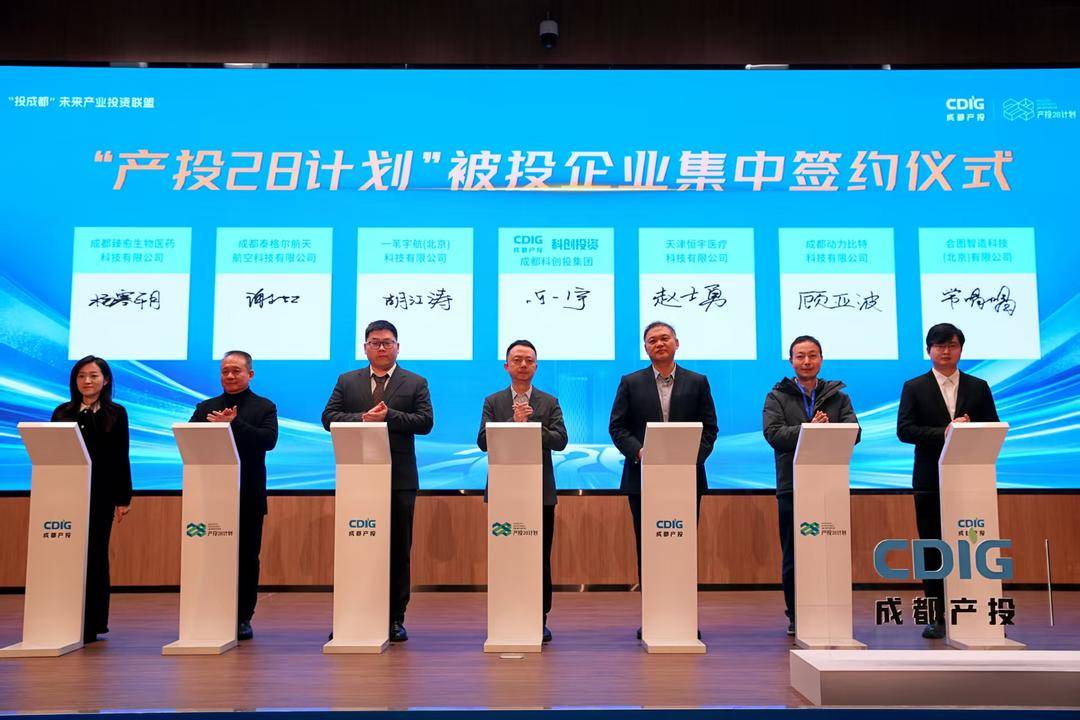
Core Insights - Chengdu's future industry receives significant support from "national team" capital, enhancing the "Invest in Chengdu, Invest in the Future" initiative [1][3] - The "Industrial Investment 28 Plan" aims to establish a long-term industrial cultivation ecosystem by integrating national and local capital [3][9] Investment and Collaboration - The recent signing event resulted in a total contract amount of approximately 675 million yuan, with 12 companies participating [5][1] - Chengdu Future Industry Fund has partnered with six central enterprise investment platforms to create a "central-local fund matrix" [1][9] Project Focus and Quality - The "Industrial Investment 28 Plan" has attracted over 300 projects nationwide, with more than 50% from innovation hubs like Beijing, Shanghai, Guangzhou, and Shenzhen [4] - The signed projects cover key future industry sectors, including aerospace composite materials, commercial satellite manufacturing, and embodied intelligent robotics [5][4] Ecosystem Development - The initiative emphasizes a "patient capital" model, focusing on value discovery, enterprise growth, and industrial ecosystem cultivation [4][3] - The plan aims to transform traditional investment models into comprehensive services that support the entire lifecycle of innovation [10] Strategic Focus Areas - Quantum technology has been identified as a strategic focus area, with discussions on its development trends and investment opportunities [11] - The initiative continues to refine its approach by organizing specialized sessions on sectors like biomedicine, electronic information, and artificial intelligence [11] Resource Integration - The "Industrial Investment 28 Plan" serves as a comprehensive industrial service platform, linking resources and policies to address the needs of tech enterprises [10] - The collaboration with central enterprises is expected to enhance the depth of industrial capital and strategic resource connectivity in Chengdu [9]
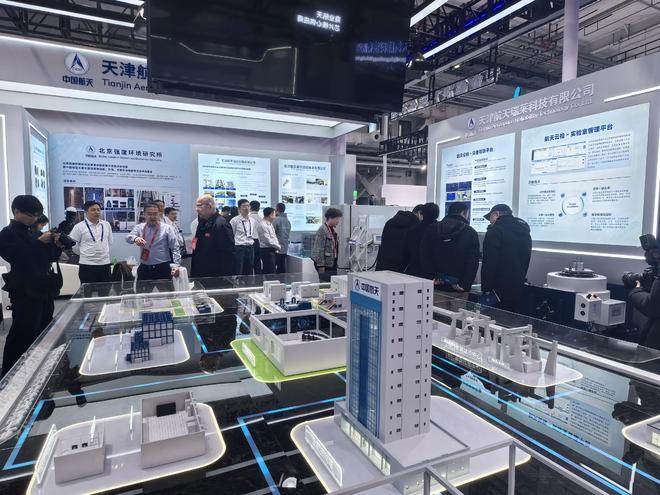
聚焦复用火箭 我国正在建设首个商业航天共性试验平台
Huan Qiu Wang Zi Xun· 2026-01-29 01:35
Core Viewpoint - The China Aerospace Science and Technology Corporation's first commercial aerospace common testing platform is under construction, focusing on reusable rockets and new aerospace products [1][3] Group 1: Platform Overview - The commercial aerospace common testing platform is located on Rocket Street in Beijing and will support testing for commercial rockets with a diameter of 5 meters and a takeoff weight of up to 1,000 tons, as well as commercial satellites under 2 tons [1] - The platform includes nearly 50 sets of equipment, such as a 10,000-level clean environment, a 200 cubic meter reverberation chamber, and a 70-ton vibration table, capable of full-scale testing from small components to large rocket bodies [1][3] Group 2: Testing Capabilities - The platform can provide various testing environments, including vibration shock, thermal vacuum, large comprehensive environment, noise, and electromagnetic compatibility, covering the entire testing and inspection needs of the commercial aerospace sector [1][3] - Key equipment like all-weather environmental test chambers and large vibration tables can accurately simulate extreme environmental conditions such as temperature, humidity, and dust for performance verification of commercial rockets and satellites [3] Group 3: Industry Challenges and Solutions - The current commercial aerospace testing faces challenges such as a lack of large equipment and non-standardized testing, leading most companies to rely on outsourcing for critical tests, which results in long wait times and safety risks [3] - The establishment of this testing platform aims to effectively address these challenges, with plans to develop a comprehensive testing and evaluation system covering the entire lifecycle of aerospace products and to create a set of safety assessment standards for commercial aerospace testing [3]
“十五五”开局 西湖区要从五个方面发力
Mei Ri Shang Bao· 2026-01-28 23:32
Core Insights - The West Lake District aims for a GDP growth of 5.5% to 5.8% in 2026, with a focus on high-quality development and enhancing the overall effectiveness of its science and education sector [1][2] Economic Goals - The district's public budget revenue is expected to achieve positive growth, maintaining a scale similar to the previous year [1] - Per capita disposable income for residents is targeted to grow in line with economic growth [1] Industrial Development - The district is accelerating the construction of a modern industrial system integrating cloud innovation, scientific innovation, and cultural innovation, with a focus on advancing platform economy projects and digital economy growth [2] - Five new platform economy projects with over 100 million yuan are planned, with a target of 6.5% growth in the core digital economy sector [2] Science and Technology Initiatives - Over 30 major national, provincial, and municipal technology projects will be implemented, aiming for more than 200 project outcomes and a technology transaction volume exceeding 30 billion yuan [2] - The district plans to enhance its robotics industry service hub and establish a ten-meter EMC laboratory [2] Cultural and Creative Industry - The district is focused on branding its cultural and creative highland, with initiatives to upgrade consumption carriers and innovate business formats [3] - Key projects include the expansion of the Black Myth IP influence, the creation of a "3A game highland," and the introduction of new retail and cultural formats in various districts [3]
1.21犀牛财经晚报:ETF总规模回到6万亿元以下
Xi Niu Cai Jing· 2026-01-21 10:30
Group 1: ETF Market - The total market size of ETFs has decreased to 5.93 trillion yuan, down from 6.24 trillion yuan [1] - The scale of the CSI A500 ETF has dropped below 300 billion yuan, currently at 285.98 billion yuan, with 8 out of 40 ETFs having a scale of over 10 billion yuan [1] Group 2: Investment Outlook - Bridgewater Associates remains optimistic about the Chinese stock market, projecting a 45% return for its onshore hedge fund in 2025, marking the best performance in five years [1] - The All Weather Plus fund of Bridgewater saw a 9.1% increase in Q4, with an annual return of 44.5%, compared to an 18% rise in the benchmark CSI 300 index [1] Group 3: Energy Storage Market - GGII forecasts that global household energy storage system shipments will reach approximately 35 GWh in 2025, representing a nearly 50% year-on-year growth [2] - The market concentration for household storage systems is significant, with Germany, the US, Australia, and Japan accounting for 57% of the total global installation [2] Group 4: Film Industry - China's film industry chain is projected to reach a value of 817.26 billion yuan in 2025, with a box office multiplier of approximately 1:15.77, ranking among the top globally [3] Group 5: Commercial Aerospace - In 2025, China's commercial aerospace sector is expected to complete 50 launches, accounting for 54% of the total national space launches, with 311 commercial satellites successfully placed into orbit [3] Group 6: Strategic Partnerships - Lianlong has signed a strategic framework agreement with Runyinglian to enhance the reliability and efficiency of the lubricating oil additive supply chain in China and the Asia-Pacific region [8] Group 7: Financial Performance Forecasts - Limin Co. anticipates a net profit of 465 million to 500 million yuan for 2025, representing a year-on-year increase of 471.55% to 514.57% [11] - Guanghui Energy expects a net profit of 1.32 billion to 1.47 billion yuan for 2025, indicating a decline of 50.03% to 55.13% year-on-year [12] - Jiajiayue forecasts a net profit of 198 million to 228 million yuan for 2025, reflecting a growth of 50.06% to 72.79% year-on-year [13] - Xianghe Industrial projects a net profit of 120 million to 148 million yuan for 2025, showing an increase of 59.17% to 96.31% year-on-year [14] - Baiao Intelligent expects a net profit of 90 million to 120 million yuan for 2025, indicating a growth of 228.34% to 337.79% year-on-year [15] - Hekang New Energy anticipates a net profit of 50 million to 75 million yuan for 2025, representing a year-on-year increase of 385.62% to 628.43% [16]