
BP

Search documents
BP p.l.c. - Special Call
Seeking Alpha· 2025-09-25 19:57
Group 1 - The energy system is essential for modern society, fulfilling the everyday needs of individuals and businesses globally while adapting to evolving political, technological, and environmental priorities [3] - The past year has seen significant geopolitical tensions, notably due to the war in Ukraine, conflicts in the Middle East, and the increasing use of sanctions and tariffs, which have shifted focus onto energy [4] Group 2 - The team responsible for this year's Energy Outlook worked diligently over the summer to compile the report, highlighting their commitment and effort in producing valuable insights for the energy sector [2] - The launch of this year's Energy Outlook attracted a large audience, both in-person and virtually, indicating strong interest in the current state and future of the energy industry [1]



BP (NYSE:BP) Update / Briefing Transcript
2025-09-25 13:02
Summary of BP Energy Outlook Conference Call Company and Industry - **Company**: BP (NYSE: BP) - **Industry**: Energy Core Points and Arguments 1. **Energy System's Central Role**: The energy system is critical for modern society, influenced by geopolitical tensions, technological advancements, and environmental priorities [2][3][4] 2. **Geopolitical Tensions**: Recent conflicts, including the war in Ukraine and tensions in the Middle East, have heightened focus on energy security [2][3] 3. **Energy Transition Scenarios**: The Outlook presents two scenarios: - **Current Trajectory**: Slow decarbonization, with carbon emissions stabilizing through the decade and only 25% lower by 2050 [4][5] - **Below Two Degrees**: Rapid decarbonization, achieving a 90% reduction in carbon emissions by 2050 [5][6] 4. **Oil Demand Trends**: - Oil demand continues to play a central role for the next 10-15 years, with a shift from transportation to petrochemical feedstock use [12][15] - By 2050, oil demand could fall to around 35 million barrels per day in the below two scenario [12][15] 5. **Electrification of Energy Systems**: Electricity demand is expected to double by 2050, primarily driven by emerging economies [17][18] 6. **Wind and Solar Power Growth**: Wind and solar will account for over 50% of global power generation by 2050 in the current trajectory and over 70% in the below two scenario [20][21] 7. **Natural Gas Demand Outlook**: - Strong demand in the current trajectory, with a 20% increase by 2050, while the below two scenario sees a decline starting in the early 2030s [26][27] 8. **Low-Carbon Technologies**: Limited growth in low-carbon hydrogen and carbon capture technologies in the current trajectory, with significant growth in the below two scenario [28][29] 9. **Geopolitical Fragmentation Impact**: Increased geopolitical fragmentation could dampen international trade, leading to lower energy demand and a shift towards domestic energy sources [34][36] 10. **Energy Efficiency Concerns**: Recent weakness in energy efficiency could lead to a stronger outlook for energy demand, with potential increases in fossil fuel consumption [47][50][52] Other Important but Possibly Overlooked Content 1. **Sensitivity Analyses**: The Outlook includes sensitivity analyses to explore the implications of geopolitical fragmentation and energy efficiency on the energy system [33][34] 2. **Impact of AI on Energy Demand**: The influence of artificial intelligence on energy demand could be significant, potentially leading to increases far beyond data center power needs [19] 3. **Energy Addition vs. Substitution Phases**: The transition from energy addition to substitution is crucial, with many regions already moving towards substitution [22][24] 4. **Differentiated Energy Pathways**: Geopolitical fragmentation may lead to differentiated energy pathways based on countries' resources and energy structures [46] 5. **Poll Results and Audience Engagement**: The session included an interactive poll to gauge audience opinions on key energy issues [55][57] This summary encapsulates the key insights from BP's Energy Outlook conference call, highlighting the evolving dynamics of the energy sector and the implications for future investment and policy decisions.
BP postpones oil demand peak prediction to 2030 from 2025
Reuters· 2025-09-25 12:01
Core Viewpoint - BP expects global oil demand to grow until 2030, which is five years later than its previous forecast, highlighting a slowdown in efforts to enhance energy efficiency [1] Group 1 - BP's revised forecast indicates a longer timeline for growth in global oil demand, now projected to extend to 2030 [1] - The company emphasizes that the delay in the forecast is due to slowed efforts in increasing energy efficiency [1]

Got $1,000? 3 Giant High-Yield Energy Stocks to Buy and Hold Forever
The Motley Fool· 2025-09-25 11:00
Core Viewpoint - The energy sector is volatile, but integrated energy companies like Chevron, ExxonMobil, and TotalEnergies offer a combination of yield, safety, and diversification for income investors [1][2]. Group 1: Integrated Energy Companies - The primary integrated energy companies include Chevron, Exxon, TotalEnergies, BP, and Shell, with BP and Shell having cut dividends in 2020, making them less reliable for dividend-focused investors [3][6]. - The integrated model of these companies helps to stabilize financial performance across the volatile energy sector by providing exposure to upstream, midstream, and downstream operations [4][3]. Group 2: Financial Strength - Exxon and Chevron are highlighted as the most financially conservative integrated energy companies, with Exxon's debt-to-equity ratio at approximately 0.15 and Chevron's at 0.20, allowing them to manage debt effectively during downturns [6][8]. - Both companies have a strong history of dividend payments, with Exxon maintaining a 43-year annual dividend streak and Chevron at 38 years, offering yields of nearly 3.5% and 4.4% respectively, significantly higher than the S&P 500's 1.2% yield [9][10]. Group 3: Clean Energy Transition - TotalEnergies is noted for its commitment to clean energy, having increased its capital investments in this area while maintaining its dividend, making it a better option than BP and Shell [11][12]. - In 2024, TotalEnergies' integrated power division contributed approximately 10% to its segment adjusted net operating income, reflecting a 17% year-over-year increase [13]. - Despite a high yield of 6.6%, U.S. investors face French taxes on dividends, which may reduce the effective yield [14]. Group 4: Investment Timing - The best time to invest in these integrated energy giants is during significant downturns in the energy market, although this is often the most challenging time to make such investments [15]. - Current relatively weak energy prices present a favorable opportunity for income-focused investors to consider these companies due to their high yields [16].


X @Bloomberg
Bloomberg· 2025-09-22 15:43
Business Strategy - BP will abandon plans for a Dutch biofuels plant [1] - The company will remain focused on its core oil and gas business [1]
BP abandons plans to build Rotterdam biofuels plant
Reuters· 2025-09-22 13:33
Group 1 - BP has halted work on its Rotterdam biofuels plant due to weak demand for biofuels [1] - This decision is part of a broader trend where oil companies like BP and Shell are abandoning biofuels projects [1]

Chevron: Buffett’s Largest Energy Holding Looks Inexpensive (NYSE:CVX)
Seeking Alpha· 2025-09-19 12:45
Group 1 - The focus is on growth and dividend income as a strategy for retirement planning [1] - The portfolio is structured to generate monthly dividend income that grows through reinvestment and annual increases [1] Group 2 - The article expresses personal opinions and is not intended as investment advice [2] - It emphasizes the importance of conducting personal research before making investment decisions [2]

全球业务知识笔记系列:清洁氢能共享基础设施
Shi Jie Yin Hang· 2025-09-17 07:58
Investment Rating - The report does not explicitly provide an investment rating for the clean hydrogen industry Core Insights - The report emphasizes the importance of shared infrastructure for the development of clean hydrogen and ammonia production, highlighting the potential for significant investment in hydrogen infrastructure globally, estimated between $1.5 trillion to $5 trillion by 2050 [2][3][25] - The report discusses the uncertainty surrounding the overall investment demand for hydrogen by 2050, which is influenced by various factors including the cost of electrolyzers, renewable energy projects, and the growth of global production and demand [3][4] - The report identifies several case studies from countries like Brazil, South Africa, Egypt, and Mauritania, showcasing the critical role of infrastructure in establishing hydrogen hubs and the collaborative efforts required among governments, private investors, and international stakeholders [19][21][25][30] Summary by Sections Infrastructure Importance - Infrastructure planning is crucial for the growth of renewable hydrogen and ammonia, involving components such as power plants, electrolyzers, hydrogen storage facilities, and port facilities [7][10] - The report outlines various configurations for hydrogen production facilities, emphasizing the need for optimal system design to balance production and demand [8][9] Case Studies - Case Study 1: PECEM Hydrogen Hub in Brazil highlights the advantages of shared infrastructure, including storage and unloading facilities, and the potential for significant private capital investment [19][21] - Case Study 2: Freeport Saldanha in South Africa showcases the region's strong solar and wind resources, existing port infrastructure, and local demand for hydrogen and ammonia [21][25] - Case Study 3: SCZONE in Egypt focuses on the strategic location for renewable hydrogen projects and the need for extensive infrastructure development to support large-scale production [25][26] - Case Study 4: Mauritania's hydrogen hub plans involve significant upgrades to ports and transportation networks to facilitate hydrogen production and export [26][27] - Case Study 5: Chile's renewable hydrogen centers aim to leverage its solar and wind resources to become a low-cost exporter of hydrogen and ammonia [30][31] Shared Infrastructure Benefits - The report discusses the benefits of shared infrastructure, including reduced costs, improved asset utilization, and the potential for collaborative investment among multiple stakeholders [45][51] - It emphasizes the importance of public-private partnerships in developing shared hydrogen port terminals and other infrastructure to facilitate ammonia production and export [41][42][43]
用二十年迎接一场阳谋,中国炼油反内卷开始行动
Sou Hu Cai Jing· 2025-09-16 14:20
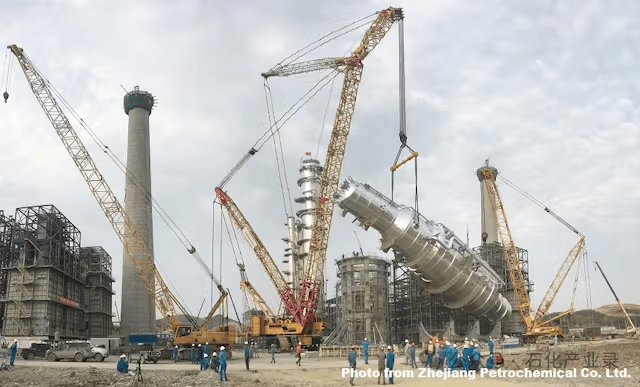
Core Insights - The Chinese refining industry is undergoing a significant transformation driven by government policies aimed at addressing overcapacity and outdated facilities, marking a shift from expansion to consolidation and upgrading [4][19] Group 1: Industry Background - The Zhoushan Green Petrochemical Base project was launched in June 2015, marking the beginning of a new era for private refining in China, supported by the government's decision to allow private refineries to use imported crude oil [2] - The refining capacity in China expanded rapidly from 2005 to 2015, with an increase of 420 million tons per year, leading to a significant rise in the number of local refineries [8] - The industry faced a crisis in 2014 when international oil prices plummeted, resulting in a drastic reduction in refining margins and exacerbating overcapacity issues [8] Group 2: Current Regulatory Environment - A recent notice from five ministries in China calls for a comprehensive assessment of aging petrochemical facilities, particularly those over 20 years old, as part of a strategy to address overcapacity and declining profitability [4][10] - The focus is on outdated equipment that consumes more energy and has lower yields, with many facilities facing resistance to closure due to their economic impact on local communities [10] Group 3: Industry Trends and Shifts - The refining sector is experiencing a shift towards high-end chemical products, with major companies like Rongsheng Petrochemical and Hengli Petrochemical investing in new materials and technologies [17] - The industry is moving towards a more concentrated market structure as state-owned enterprises plan to shut down outdated capacities while investing in new materials [19] - Foreign companies are also recognizing opportunities in China's high-end chemical market, with BASF investing significantly in integrated facilities [19] Group 4: Future Outlook - The transformation of the refining industry is expected to reshape the value chain, with a focus on high-performance polymers and advanced materials becoming the new industry keywords [19] - The government's push for industrial upgrading is seen as a critical step in moving away from traditional refining towards more sustainable and innovative chemical production [19]




What's Next For BP Stock?
Forbes· 2025-09-16 11:15
Core Insights - BP plc stock has increased approximately 15% year-to-date, outperforming the S&P 500's 12% rise, driven by a significant oil discovery offshore Brazil estimated at 2–2.5 billion barrels and a preliminary agreement for gas wells in Egypt [2][3] Financial Performance - BP reported a Q2 underlying profit of $2.4 billion, which is a decrease year-on-year but above expectations, with mixed segment results: Gas & Low Carbon Energy benefited from enhanced trading, while Oil Production & Operations faced lower realizations [5] - Upstream production is expected to decline slightly, while downstream operations will benefit from seasonal demand [6] Valuation Metrics - BP is trading at approximately 0.5x price-to-sales (P/S), below its historical average range of 0.24x to 0.80x, indicating it is less expensive compared to peers like Exxon Mobil and Chevron, which trade at P/S multiples of 0.7x to 1.5x [6][7] Strategic Direction - BP is pivoting back to oil and gas, scaling back renewable initiatives in response to shareholder demands for higher cash returns, including divesting U.S. onshore wind assets and cutting $5 billion from the clean-energy pipeline [8][9] - The company aims for 2.5 million barrels of oil equivalent per day by 2030, reflecting a shift from its previous goal of reducing oil output by 40% [9] Clean Energy Aspirations - Despite reducing its renewable focus, BP continues to pursue hydrogen projects, planning to develop 5–7 hydrogen and carbon capture projects globally, including collaborations for green hydrogen initiatives in Spain and Germany [10]