
石油需求峰值

Search documents
高盛闭门会-对话-从历次重大能源冲击中汲取的经验教训
Goldman Sachs· 2026-03-30 05:15
Investment Rating - The report indicates that the energy sector is currently at a bottoming stage, with an expected absolute free cash flow yield outperforming the market by approximately 4% in 2026 [1]. Core Insights - The report argues against the "peak oil demand" theory, suggesting that consumption upgrades in Asia and strategic stockpiling will support oil price expectations for 2027 [1][7]. - The shale oil outlook is seen as overly pessimistic, with potential for production increases in the Permian Basin, despite challenges at the $70 per barrel price level [1][10]. - The report highlights a shift towards energy independence driven by de-globalization, with coal becoming a primary alternative to intermittent renewable energy sources [1][9]. - The energy sector's representation in the S&P 500 is currently low at 4%, but it is expected to rise to double digits in the future [1][12]. Summary by Sections Energy Market Dynamics - The closure of the Strait of Hormuz has led to a daily production loss of 12-13 million barrels, causing a "super volatility" market rather than a stable "super cycle" [1][2]. - Historical comparisons indicate that the current market turmoil resembles the 1970s oil crisis, but with significant differences, particularly in demand dynamics [2][3]. Supply and Demand Outlook - The report notes that the energy industry is at a bottoming phase, with previous overproduction concerns being overstated [3][4]. - If the Strait remains closed, correcting the daily demand gap of 10-12 million barrels will be challenging, and price adjustments will be critical [4][5]. Regional Trends and Strategic Moves - The report discusses the potential for regionalization in the oil market but concludes that the global oil market is unlikely to end, despite some countries possibly implementing temporary export bans [8][9]. - The report emphasizes the importance of strategic reserves and redundancy in energy supply chains, which may enhance energy intensity and economic growth [9][12]. Investment Strategies - Companies are advised to maintain liquidity and prioritize cash reserves during downturns, as the industry may be entering a super cycle of capital returns [11][12]. - The report suggests that the energy sector, including renewables and new technologies, should be a focal point for investors, especially in light of ongoing market changes [16].
中石油经济技术研究院:石油需求峰值预计将出现在2040年
Ge Long Hui A P P· 2025-12-11 04:24
Core Insights - The demand for fossil energy is projected to reach 1.27 billion tons of standard oil equivalent by 2035, an increase of 40 million tons compared to 2025 [1] - The peak demand for oil is expected to occur in 2040, which is later than the previous forecast of 2030, and the peak level is anticipated to be higher than earlier predictions [1] Industry Summary - Fossil energy demand growth indicates a continued reliance on traditional energy sources despite the push for renewable alternatives [1] - The revised timeline for oil demand peak suggests a potential shift in market dynamics and investment strategies within the energy sector [1]
高盛跟随IEA步伐:推迟石油需求见顶预测至2040年
智通财经网· 2025-11-14 04:08
Group 1 - Goldman Sachs believes that global oil demand growth will last longer than previously expected due to strong energy demand [1] - Oil demand is projected to increase from 103.5 million barrels per day in 2024 to 113 million barrels per day by 2040, contrary to last year's peak forecast of 2034 [1] - The bank has adjusted its economic growth peak forecast due to bottlenecks in low-carbon technology and infrastructure, with petrochemical products becoming the main driver of oil consumption [1] Group 2 - The International Energy Agency (IEA) has revised its outlook, predicting that oil and gas demand may continue to grow until 2050, differing from earlier expectations of a peak by the end of this decade [2] - The IEA's latest report introduces a "current policy scenario" (CPS), projecting a 13% increase in oil consumption to 113 million barrels per day by 2050 compared to 2024, contingent on a slowdown in electric vehicle adoption [2] - Goldman Sachs analysts express skepticism about significant breakthroughs in low-carbon technology, expecting oil demand to remain stable beyond 2030 [2]

BP postpones oil demand peak prediction to 2030 from 2025
Reuters· 2025-09-25 12:01
Core Viewpoint - BP expects global oil demand to grow until 2030, which is five years later than its previous forecast, highlighting a slowdown in efforts to enhance energy efficiency [1] Group 1 - BP's revised forecast indicates a longer timeline for growth in global oil demand, now projected to extend to 2030 [1] - The company emphasizes that the delay in the forecast is due to slowed efforts in increasing energy efficiency [1]



石油时代未见终章!欧佩克预计全球需求将持续攀升
Zhi Tong Cai Jing· 2025-07-11 06:57
Group 1 - OPEC's annual report indicates a long-term view of increasing global oil demand, projecting an increase from 103.7 million barrels per day last year to 113.3 million barrels per day by 2030, and approaching 123 million barrels per day by 2050 [1] - Oil is expected to remain a key player in meeting energy needs, with OPEC forecasting that it will account for about 30% of the global energy mix by 2050, and combined with natural gas, this figure will exceed 50% [1] - OPEC Secretary General Haitham Al Ghais stated that there are currently no signs of peak oil demand, contrasting with more conservative forecasts from other organizations like the IEA and S&P Global [1] Group 2 - OPEC+ representatives are considering pausing production adjustments in October after an increase in September, with concerns that further increases could lead to lower oil prices [2] - Morgan Stanley and Citigroup predict that oil prices may drop to around $60 per barrel due to increasing supply surplus [2]
OPEC+要收手了?10月起或暂停增产!
Jin Shi Shu Ju· 2025-07-10 12:54
Group 1 - OPEC+ is discussing a pause in further production increases after the next monthly increase, with a preliminary plan to complete a supply recovery of approximately 2.2 million barrels per day by September, expecting an increase of 550,000 barrels per day in September [2] - OPEC+ has been gradually increasing production since April, with a total increase of 1.38 million barrels per day in April and subsequent monthly increases of 411,000 barrels per day from May to August [2] - Despite the increase in production, oil prices have shown signs of rising, indicating a tight supply situation, with U.S. crude oil inventories at their lowest level for the same period since 2014 [2] Group 2 - Goldman Sachs expresses concerns that current supply tightness may lead to a slowdown in demand growth from non-OPEC producers in regions like Guyana, Brazil, Canada, and the U.S., predicting surpluses in the coming years [3] - OPEC has lowered its global oil demand forecast for the next four years but maintains that peak demand has not yet been reached, with expectations of demand growth driven by developing countries [4] - OPEC's report indicates that global oil demand is expected to average 100.5 million barrels per day this year, increasing to 106.3 million barrels per day by 2026 and 111.6 million barrels per day by 2029 [4] Group 3 - OPEC Secretary-General Haitham Al Ghais states that there is currently no indication of peak oil demand, emphasizing the importance of oil in the global economy and daily life [5] - The report highlights that oil demand has recovered from the COVID-19 pandemic, but growth rates in major consuming countries are slowing due to economic factors and the rise of electric vehicles [5] - OPEC maintains its long-term demand forecast for 2030 at 113.3 million barrels per day, contrasting with IEA's prediction of peak demand in 2029 [5] Group 4 - OPEC predicts that global oil demand will reach 122.9 million barrels per day by 2050, an increase from last year's estimate of 120.1 million barrels per day, significantly higher than forecasts from BP and other agencies [6] - OPEC calls for increased investment in the oil industry, estimating that $18.2 trillion will be needed by 2050, up from last year's estimate of $17.4 trillion [6]
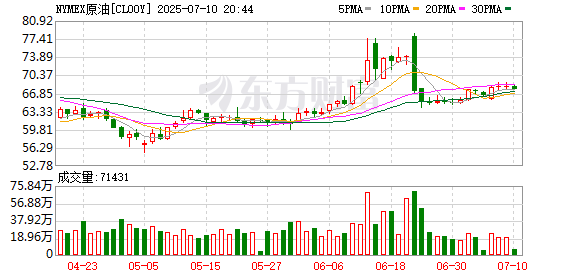
IEA预警全球石油需求2029年触顶 与欧佩克预测尖锐对立
news flash· 2025-06-17 08:14
Core Viewpoint - The International Energy Agency (IEA) warns that global oil demand will peak in 2029, contrasting sharply with OPEC's predictions of continued growth without a forecast for peak demand [1] Group 1: Oil Demand Forecast - Global oil demand is projected to reach a peak of 105.6 million barrels per day by 2029, followed by a slight decline in 2030 [1] - The IEA attributes the growth in demand to lower gasoline prices in the U.S. and a slowdown in electric vehicle adoption [1] Group 2: Supply Projections - Global oil production capacity is expected to increase by over 5 million barrels per day by 2030, reaching 114.7 million barrels per day [1] - The IEA indicates that supply will remain adequate before 2030, provided there are no significant supply disruptions [1] Group 3: Geopolitical Risks - Recent conflicts, such as those between Israel and Iran, highlight significant geopolitical risks to oil supply security [1] - The IEA's Executive Director emphasizes that while the oil market is expected to be well-supplied in the coming years, geopolitical events pose major risks to supply security [1]
6月17日电,国际能源署 (IEA) 新的中期展望显示,电动汽车的加速销售——2024年达到创纪录的1700万辆,并有望在2025年超过2000万辆,使全球石油需求达到峰值。
news flash· 2025-06-17 08:12
Core Viewpoint - The International Energy Agency (IEA) projects that electric vehicle sales will accelerate, reaching a record 17 million units in 2024 and expected to exceed 20 million units in 2025, leading to a peak in global oil demand [1] Group 1 - The IEA's mid-term outlook indicates significant growth in electric vehicle sales [1] - The forecasted sales figures for electric vehicles represent a substantial increase in the market [1] - The anticipated peak in global oil demand is a critical development for the energy sector [1]
IEA月报:对可燃化石燃料(不包括石化原料和生物燃料)的石油需求现在可能最早在2027年达到峰值。
news flash· 2025-06-17 08:08
Core Insights - The International Energy Agency (IEA) reports that the demand for combustible fossil fuels, excluding petrochemical feedstocks and biofuels, is expected to peak as early as 2027 [1] Group 1 - The IEA's monthly report indicates a significant shift in the timeline for fossil fuel demand, suggesting a peak in oil demand could occur sooner than previously anticipated [1] - The report emphasizes the exclusion of petrochemical feedstocks and biofuels from the fossil fuel demand analysis, focusing solely on combustible fossil fuels [1]