Rokid

Search documents
世界人工智能大会挤满了想买单的普通人丨一线
吴晓波频道· 2025-07-30 00:29
Core Viewpoint - The article emphasizes that artificial intelligence (AI) has transitioned from being an abstract concept to a tangible force that is increasingly penetrating everyday life, showcasing a significant shift towards practical applications and user engagement in the AI sector [21][23][70]. Group 1: Event Overview - The World Artificial Intelligence Conference (WAIC) attracted a record number of attendees, with an estimated 350,000 visitors, including 156 purchasing groups from over ten countries [4][12]. - The event implemented strict entry protocols, requiring advance ticket purchases and identity verification, reflecting the high demand and interest in AI technologies [5][6]. Group 2: AI Applications and Trends - The focus of AI development has shifted from merely enhancing computational power to applying AI in real-world scenarios, with companies competing to convert technology into productivity [10][21]. - The exhibition featured a wide array of robots capable of performing various tasks, indicating a growing interest in practical applications of robotics in everyday life [10][11][12]. Group 3: User Engagement and Market Response - Ordinary visitors showed significant interest in AI technologies, with many expressing a desire for more affordable robotic solutions after witnessing their capabilities [8][11]. - The popularity of AI products, such as smart glasses, highlights a trend where consumers are eager to engage with and utilize advanced technologies in practical settings [17][19][68]. Group 4: Industrial AI and Future Prospects - Industrial AI is gaining traction, with a focus on enhancing efficiency and flexibility in manufacturing processes, as evidenced by the introduction of systems like the Industrial Copilot, which can improve production efficiency by up to 50% [39][41][36]. - The article suggests that the future of AI will involve deeper integration into various industries, emphasizing the importance of collaboration and open-source initiatives to bridge the technological divide [28][30][31]. Group 5: Global Collaboration and Governance - The Chinese government proposed the establishment of a global AI cooperation organization, aiming to foster international collaboration and address ethical and governance challenges in AI development [30][31]. - The conference underscored the need for a unified approach to AI governance, promoting standards and ethical guidelines to ensure responsible AI deployment [47][48].


重构人机交互新生态,“AI+硬件”破壁日常生活圈
Xin Hua Ri Bao· 2025-07-29 23:27
Group 1: AI Hardware Trends - The integration of AI technology into daily life is accelerating, with consumer-grade AI hardware emerging as the first carriers of this integration [1] - Various companies are launching diverse smart hardware products, including smart glasses, AI toys, and smart office devices, targeting specific verticals like elderly care and emotional companionship [1] Group 2: Smart Glasses Market - Smart glasses have become a focal point at the World Artificial Intelligence Conference (WAIC), with brands like XREAL showcasing their flagship product, XREAL One Pro, which features a wide field of view and low latency [2][3] - Other notable players include Rokid, which introduced Rokid Glasses with a teleprompter function, and Halliday, which launched Halliday Glasses that support prescription lenses and offer long battery life [3] Group 3: AI Companion Products - AI companion products are evolving beyond traditional toys, with offerings like the Fuzozo robot from SenseTime, which features realistic digital avatars and enhanced interaction capabilities [4] - Looi, a desktop robot, allows users to engage with it through emotional recognition and interactive games, while also providing development tools for customization [5] Group 4: Focus on Office and Education - AI hardware is increasingly being applied in office and educational settings, with companies like Outermost introducing products like TicNote, which combines hardware and software for various practical applications [6] - NetEase Youdao showcased the AI-powered learning tool SpaceOne, designed to enhance students' problem-solving skills and reduce dependency on standard answers [6] Group 5: Industry Challenges - Despite the excitement surrounding AI hardware, challenges remain, such as limitations in computational power and energy consumption, which hinder the full potential of AI functionalities [7] - The industry faces the core challenge of promoting deep integration between AI technology and hardware to create next-generation smart devices with continuous evolution capabilities [7]
杭州“天团”亮相世界人工智能大会
Mei Ri Shang Bao· 2025-07-29 23:20
Group 1 - The 2025 World Artificial Intelligence Conference in Shanghai showcased the innovative strength of Hangzhou companies, highlighting their advancements in various AI sectors including large models, intelligent robots, brain-machine interfaces, and AI terminals [1][2] - The event featured a record scale with over 70,000 square meters of exhibition space, more than 800 top global tech companies, and over 3,000 cutting-edge exhibits [1] - Hangzhou companies, including Alibaba, Yushun Technology, and Qiangnao Technology, formed a "Hangzhou Alliance" that demonstrated China's AI innovation capabilities on a global stage [1][2] Group 2 - In the field of large models, Alibaba Cloud's "Bailian" was recognized as a key exhibit, offering over 200 mainstream models for application development [2] - Ant Financial introduced the AI financial model "Agentar-Fin-R1," designed to assist users in stock trading and financial management [2] - The focus of the conference shifted from model development to application depth, with significant presentations in brain-machine interface technology from companies like Qiangnao Technology and Jialiang Medical [2] Group 3 - Alibaba's AI terminal product, Quark AI glasses, gained attention for its integration with Alibaba and Alipay ecosystems, supporting navigation and payment functions [3] - Other notable exhibitors from Hangzhou included Geely Auto and Xinhua San, contributing to a strong representation of the city's AI industry [3] - Hangzhou's continuous technological innovation solidifies its important position in the global AI landscape, showcasing the city's collective innovation strength and China's international competitiveness in AI [3]

AI眼镜火出圈,实测翻译、支付、拍照、导航
2 1 Shi Ji Jing Ji Bao Dao· 2025-07-29 13:38
除了明星创企,大厂也在纷纷下场。 21世纪经济报道记者孔海丽 上海报道 在本届世界人工智能大会(WAIC)上,AI眼镜无疑是全场瞩目的焦点之一,其火爆程度超乎预期,排 队体验的观众甚至超出展位接待能力。21世纪经济报道记者在现场排队许久,对这些备受追捧的智能眼 镜进行了一手实测,一探究竟其背后的科技魅力。 实测过程中,AI眼镜的智能交互功能让人眼前一亮。它已经能够精准识别佩戴者的语音指令,无论是 提词还是支付,都能迅速响应并执行,带屏显的AI眼镜,也具备拍照、录像功能,拍摄效果清晰度也 挺高。 同时,AI 眼镜在实时翻译方面的表现也出色。它能实时将对方的外语转化为中文并显示在镜片上,打 破了语言沟通的障碍,这对于跨国交流来说,无疑是一项实用且高效的功能。 除了此前已经推出AI眼镜的小米,WAIC期间,阿里宣布入局AI眼镜,其自研的夸克AI眼镜已完成研 发,预计将于年内正式发布,将融合阿里及支付宝生态,支持高德导航、支付宝看一下支付、淘宝比 价、飞猪商旅提醒等。 不过值得注意的是,AI眼镜依然处在早期阶段,亮眼的功能不一定能保证100%稳定发挥,行业内也尚 未出现销量达到百万的单品(除了Meta,其有补贴因素) ...
2025WAIC全景观察: 算力筑基 模型进阶 AI应用实干突围
Zhong Guo Zheng Quan Bao - Zhong Zheng Wang· 2025-07-29 12:23
Group 1: AI Industry Development - The 2025 World Artificial Intelligence Conference (WAIC) showcased significant advancements in AI applications, marking the transition into a "practical era" of AI technology [1][5] - The demand for computing power is expected to increase dramatically, with predictions of a hundredfold to thousandfold growth in training computing power requirements due to the rapid evolution of AI applications [1][3] - AI models are shifting from a focus on "data + scale" to "self-optimization + multi-modal native integration," facilitating their transition from laboratories to real-world applications [5][6] Group 2: Computing Infrastructure - Companies like Huawei and ZTE presented innovative supernode solutions, with Huawei's "computing power bomb" showcasing a system where 384 cards work collaboratively, significantly enhancing resource utilization [2][3] - The introduction of the LightSphere X supernode by Shanghai Yidian and partners utilizes optical interconnect technology to overcome traditional physical limitations, allowing for dynamic scaling based on computing needs [2][3] - Companies are adapting their computing infrastructure to better meet AI demands, focusing on hardware, data centers, and intelligent scheduling of heterogeneous computing resources [3][4] Group 3: AI Applications and Agents - AI agents are becoming pivotal in various sectors, evolving from tools to "digital employees" capable of performing analysis, execution, and optimization tasks [6][7] - Personal AI applications are emerging, with products like Rokid Glasses enabling users to perform tasks through voice commands, showcasing the integration of AI into everyday life [7][8] - The Galbot robot, developed by Galaxy General, demonstrates advanced capabilities in retail and industrial settings, utilizing a combination of real and synthetic data for training to enhance operational efficiency [8]
阿里蚂蚁AI眼镜重构“感官中枢” 支付革命引爆硬件新战局
2 1 Shi Ji Jing Ji Bao Dao· 2025-07-29 12:22
Core Insights - The article highlights the emergence of AI glasses as a significant player in the smart hardware market, showcasing advancements in payment technology and user interaction [1][4][8] - Companies like Alibaba and Rokid are leading the charge in integrating AI capabilities into consumer products, aiming to enhance user experience and streamline payment processes [4][5][8] Group 1: Product Development and Features - Rokid Glasses enable users to make payments simply by looking at a payment code and issuing a voice command, significantly simplifying the payment process [1][4] - Alibaba's Quark AI glasses integrate various services such as navigation and payment, marking a shift from software to hardware in their AI strategy [1][4] - The AI glasses are designed to address common issues such as comfort, battery life, and AI interaction, aiming to make them more appealing to the general consumer market [4][5] Group 2: Market Trends and Projections - The global market for smart glasses is expected to reach 12.05 million units by 2025, with AR glasses featuring payment capabilities projected to have a penetration rate exceeding 30% [8] - The market for related consumer scenarios is anticipated to surpass 50 billion yuan by 2025, driven by the increasing adoption of payment-enabled smart glasses [8] - Companies are competing to establish themselves in the AI hardware space, with significant investments from major players like Alibaba, Ant Group, and Xiaomi [8] Group 3: Security and User Experience - The implementation of voice payment raises concerns about privacy and security, necessitating advancements in biometric verification and authentication technologies [6] - Alipay's voiceprint verification and "stolen compensation" promise are initial steps to address security concerns, but further innovations are required [6] - The collaboration between Rokid and Alipay extends beyond payment functionalities, exploring innovations in digital identity verification and virtual currency transactions [8]
大厂争相布局,“百镜大战”为何出现?AI眼镜将取代手机?
Nan Fang Du Shi Bao· 2025-07-29 11:41
Core Insights - The World Artificial Intelligence Conference (WAIC) showcased AI glasses and embodied intelligent robots as the most popular tech products this year [1] - The AI glasses market is rapidly heating up, with major companies like Huawei, Xiaomi, and Alibaba entering the space, leading to a phenomenon referred to as the "Battle of Hundreds of Glasses" [3][10] - Rokid, an early player in the AR space, views the influx of competitors positively, believing it will help popularize the market [10][11] Company Overview - Rokid Glasses weigh 49 grams and offer a "no-feel" wearing experience with a battery life of approximately 4 hours [3][4] - The glasses utilize diffraction waveguide imaging technology to present a clear virtual interface while maintaining real-world visibility [3] - Key features include multi-language translation, payment capabilities, object recognition, and navigation assistance, powered by various large models [4][10] Product Features - Rokid Glasses are equipped with a 12-megapixel professional camera for high-definition photo and video capture, along with a privacy protection indicator [4] - The payment feature allows users to complete transactions by issuing voice commands, enhancing convenience [8] - A lightweight magnetic capsule battery is planned to extend the glasses' battery life, addressing user concerns about charging [8] Market Dynamics - The global smart glasses market is projected to reach 14.518 million units by 2025, with China expected to account for 2.907 million units, reflecting year-on-year growth of 42.5% and 121.1% respectively [10] - The competition is characterized by diverse product offerings, with companies targeting different functionalities and user needs [11] - The market is expected to experience significant growth in the next 3 to 5 years, with increased collaboration among brands leading to diverse product iterations [11] User Experience - Users have reported satisfaction with the photo-taking feature, which allows for quick access without needing to unlock a phone [8] - However, some limitations exist, such as compatibility issues with certain smartphone models for payment functions [8][9] - The glasses have experienced occasional delays in response time in noisy environments, indicating room for improvement in user interaction [9]
大厂争相布局,“百镜大战”为何出现?AI眼镜将取代手机
Nan Fang Du Shi Bao· 2025-07-29 11:39
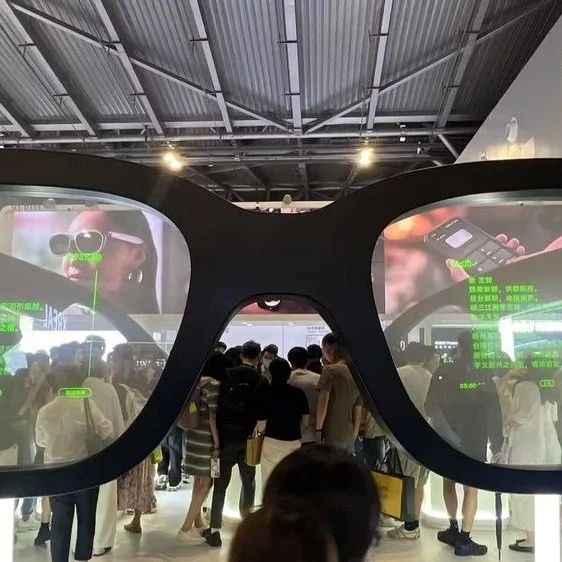
Rokid Glasses。 今年以来,AI眼镜赛道极速升温,随着华为、小米、阿里等大厂入局,逐渐出现了"百镜大战"的说法。 作为最早布局AR赛道的企业之一,Rokid如何看待即将到来的挑战?该公司全球开发者生态负责人赵维 奇告诉 今年世界人工智能大会(WAIC)上,什么科技产品最火爆?答案一定少不了AI眼镜和具身智能机器人。 展览馆内,被等比例放大的一副AI眼镜Rokid Glasses巨型模型被悬挂在Rokid展台前,吸引了大量观众 驻足观看和排队体验。 ...

Rokid副总裁蔡国祥:智能眼镜行业仍处早期阶段 科技巨头入局对行业是好事
Zheng Quan Shi Bao· 2025-07-29 11:01
Core Viewpoint - The smart glasses industry is in its early development stage, with the potential to become the "best carrier of artificial intelligence" as it integrates with AI technology, impacting various aspects of life, work, and learning [1][3] Group 1: Product Features and Innovations - Rokid's new AR+AI glasses, Rokid Glasses, feature two global first applications: smart navigation in collaboration with Gaode and a payment system with Alipay that allows users to complete transactions without taking out their phones [1] - The product is equipped with Qualcomm's flagship chip and optimizes power consumption to support all-day use under low-density scenarios, with a quick charge feature that reaches 80% in 20 minutes [2] - Rokid Glasses address the "impossible triangle" challenge of weight, performance, and battery life, which has historically hindered the widespread adoption of smart glasses [1][2] Group 2: Market Landscape and Competition - The market for AI glasses is viewed as a blue ocean, with major tech companies like Xiaomi and Alibaba entering the space, leading to what is termed the "hundred glasses battle" [2] - According to Northeast Securities, the estimated sales of AI glasses in China for 2024 will be around 50,000 units, representing only 3% of the global market [2] Group 3: Future Trends and Industry Outlook - The integration of AI with AR in smart glasses is expected to evolve from basic question-answering capabilities to executing tasks such as ordering food and hailing rides, enhancing efficiency beyond that of smartphones [3] - The industry is anticipated to see advancements in full-color displays, high resolution, domestic chips, and high-density batteries, which are essential for overcoming current technological limitations [2][3] - The future of AI glasses is projected to replace smartphones as the primary device for personal intelligence, offering hands-free interaction that aligns with the demand for portable smart technology [3]
百镜大战,终于不再乱打了
虎嗅APP· 2025-07-29 09:23
Core Viewpoint - The article discusses the current state and future prospects of the AI and AR glasses industry, highlighting the mixed consumer reactions and the competitive landscape shaped by major tech companies entering the market [5][15]. Group 1: Industry Trends - The AI glasses market is experiencing a surge in interest, particularly during events like the World Artificial Intelligence Conference (WAIC), where products are available for hands-on experience [3]. - There is a notable emotional divide among consumers regarding AI glasses, with some expressing disappointment and others being pleasantly surprised by the technology [5][7]. - The industry is expected to face a challenge in aligning hardware capabilities with software advancements over the next decade, as consumer expectations evolve [7]. Group 2: Product Development - The success of Ray-Ban Meta glasses has significantly influenced the development of AI glasses, with a reported global shipment of 1.5 million units, setting a benchmark for other manufacturers [8]. - Many new AI glasses products lack logical positioning, with some focusing excessively on features like photography without a clear integration with social media platforms [9]. - Companies are beginning to refine their product positioning, with some like Halliday focusing on display capabilities rather than traditional features [10][12]. Group 3: Major Players and Competition - Xiaomi and Alibaba have recently entered the AI glasses market, showcasing the competitive pressure on smaller startups [16][18]. - Alibaba's Quark AI glasses are expected to leverage the company's extensive software ecosystem, offering features like real-time translation and integration with various services [18]. - The industry is likely to see a convergence of hardware specifications and core functionalities, leading to a more stratified competitive landscape where smaller firms focus on niche markets while larger companies dominate the mainstream [18].