UPS

Search documents
United Parcel Service Stock Looks Cheap, But Can Its 7%+ Yielding Dividend Survive?
Seeking Alpha· 2025-08-26 11:05
Group 1 - Samuel Smith has extensive experience in dividend stock research and investment, having served as lead analyst and Vice President at notable firms [1] - He is a Professional Engineer and Project Management Professional with degrees in Civil Engineering & Mathematics and a Master's in Engineering focused on applied mathematics and machine learning [1] - Samuel leads the High Yield Investor investing group, collaborating with Jussi Askola and Paul R. Drake to balance safety, growth, yield, and value in investment strategies [2] Group 2 - High Yield Investor provides real-money core, retirement, and international portfolios, along with regular trade alerts and educational content for investors [2] - The service includes an active chat room for like-minded investors to share insights and strategies [2]


1 Magnificent Industrial Stock Down 60% to Buy and Hold Forever
The Motley Fool· 2025-08-23 08:35
Core Viewpoint - The company, United Parcel Service (UPS), is undergoing a significant business transformation while providing essential services to modern society [1]. Group 1: Business Performance and Market Conditions - During the pandemic, UPS experienced a temporary surge in demand for its package delivery services, leading to a spike in stock prices, which later fell as demand normalized [2][5]. - UPS stock is currently trading approximately 60% lower than its peak during the pandemic, returning to pre-pandemic levels despite a broader market recovery [5]. - The company is now viewed as a turnaround story, with ongoing updates to its operations causing investor concerns about future performance [6]. Group 2: Operational Changes and Financial Impact - UPS is in the process of updating its operating systems and streamlining operations, focusing on more profitable business segments, which incurs significant costs [8]. - In Q2, UPS reported after-tax transformation strategy costs of $57 million, impacting earnings by $0.04 per share, while revenue fell 2.7% year over year [9]. - Despite lower revenue, revenue per piece in the U.S. market increased by 5.5%, indicating a positive shift in customer and product mix [10]. Group 3: Long-term Outlook and Dividend Concerns - The package delivery business is expected to grow in importance, and UPS is making strides to enhance profitability through operational updates [11]. - The dividend yield of 7.4% is becoming less sustainable, with a payout ratio exceeding 100% in Q2, raising concerns about potential dividend cuts [12]. - For long-term investors, UPS presents a compelling turnaround opportunity, supported by a critical delivery business that is difficult to replicate [12].
第八届中国国际进口博览会展前供需对接活动(青岛)成功举办
Qi Lu Wan Bao Wang· 2025-08-22 11:45
Core Insights - The eighth China International Import Expo (CIIE) will be held from November 5 to 10 in Shanghai, with ongoing preparations being conducted efficiently [1][3] - The event serves as a platform for high-level opening up and aims to attract global quality goods and services to the Qingdao market [1][3] Group 1: Event Overview - The CIIE pre-event supply and demand matching activity in Qingdao successfully took place, co-hosted by multiple organizations including the China International Import Expo Bureau and the Qingdao Municipal Government [1] - Six key buyers, including companies like Zhongde Ecological Park Industrial Development Co., signed cooperation memorandums with the CIIE Bureau [2] - Over 150 buyers from various sectors established initial business contacts with exhibitors during the event [2] Group 2: Participation and Engagement - The CIIE Bureau introduced various services for professional audience participation and highlighted the unique features of the business exhibition areas [2] - Notable exhibitors included companies from the food and agricultural products sector, technical equipment, medical devices, and service trade, with a total of 30 participating exhibitors [2] - Qingdao's government organized site visits for some exhibitors to local companies, promoting the transformation of exhibitors into investors and traders [2] Group 3: Economic Impact and Future Plans - Since its inception in 2018, Qingdao has organized high-profile delegations for the CIIE, involving over 8,000 enterprises and 17,000 professional attendees [3] - The city aims to ensure stable procurement transaction volumes and high-quality preparations for the upcoming CIIE [3]
UPS: Robots Can't Strike
Seeking Alpha· 2025-08-20 18:44
Core Insights - United Parcel Service (UPS) continues to face significant challenges, with Q2 earnings leading to a sharp decline in stock price, reaching $84.28, following a weak recovery from April lows [1] Group 1: Company Performance - UPS experienced a weak bounce from its April low, contrasting with a strong rebound in the majority of other stocks [1] - The company's Q2 earnings report resulted in a further plunge in stock value, indicating ongoing struggles in performance [1] Group 2: Investment Perspective - The approach to investing in UPS is characterized by a long-term focus, emphasizing macro ideas through low-risk ETFs and CEFs [1]

1 Reason I'm Keeping My Eye on UPS Stock Right Now
The Motley Fool· 2025-08-20 00:14
Core Viewpoint - A conflict exists between income-focused and growth-focused investors regarding UPS stock, highlighting differing priorities in capital allocation and growth strategies [2][10][12]. Group 1: Dividend and Financial Metrics - UPS offers a 7.4% dividend yield, which is appealing to passive income investors, but the current free cash flow (FCF) is insufficient to support this dividend, which will consume $5.5 billion in cash this year [3][6]. - The company aims to distribute 50% of earnings as dividends, but current earnings per share (EPS) estimates indicate that UPS needs to reach $13.12 EPS to meet this target [5][6]. - Analyst estimates for UPS's EPS are $6.59 for 2025 and $7.33 for 2026, with the dividend per share remaining at $6.56, resulting in a dividend-to-earnings ratio of 99.5% in 2025 [6][7]. Group 2: Capital Allocation Policy - There are concerns regarding UPS's capital allocation policy, questioning the decision to prioritize dividends over reinvestment in business growth, which could yield better long-term returns [8][16]. - UPS has already spent $1 billion on share buybacks in 2025, raising questions about management's strategy in a volatile market [9]. - Management is focusing on growth in higher-margin markets like healthcare and small and medium-sized businesses (SMBs), while also planning to invest in technology to enhance operational efficiency [12][13]. Group 3: Investor Sentiment and Future Outlook - The investor base for UPS is divided, with income-seeking investors satisfied with the current dividend strategy, while growth-oriented investors prefer a focus on expansion and innovation [10][14]. - Optimists believe UPS can maintain its dividend while growing the business, whereas pessimists argue that the current capital allocation does not align with market realities and could hinder growth [16][17]. - If management adjusts its capital allocation strategy, there is potential for UPS stock to appreciate significantly as the market recognizes its long-term growth prospects [17].
UPS vs. EXPD: Which Dividend-Paying Transportation Stock Has an Edge?
ZACKS· 2025-08-19 16:21
Core Insights - United Parcel Service (UPS) and Expeditors International of Washington (EXPD) have both increased their dividends this year, demonstrating a commitment to shareholder returns despite economic uncertainties [1][3]. Dividend Analysis - UPS raised its quarterly cash dividend to $1.64 per share ($6.56 annualized) from $1.63 ($6.52 annualized) in February, while EXPD increased its quarterly semi-annual cash dividend by 5.5% from 73 cents to 77 cents in May, with a payout ratio of 25% and a five-year dividend growth rate of 8.4% [3][4]. - Concerns about the sustainability of UPS' dividends arise due to its elevated payout ratio, which indicates potential challenges in maintaining long-term dividend payments [4][6]. Financial Performance - UPS' free cash flow has declined from a peak of $9 billion in 2022, with projections indicating free cash flow of $6.3 billion at the end of 2024, barely covering its dividend payments of $5.4 billion [5][6]. - In contrast, EXPD's lower dividend payout ratio suggests a more sustainable dividend policy, alleviating concerns about its ability to maintain dividend payouts [6]. Price Performance Comparison - EXPD has shown resilience in the stock market, achieving an 8.3% year-to-date gain, while UPS has experienced a significant decline in stock price [8][10]. - UPS' poor performance is attributed to revenue weakness due to geopolitical uncertainties and high inflation affecting consumer sentiment [12]. Operational Metrics - EXPD's recent strength is linked to a 7% year-over-year increase in airfreight tonnage and ocean container volume, alongside effective cost-cutting measures [13]. - The Zacks Consensus Estimate for EXPD's 2025 sales indicates a slight increase of 0.3%, while UPS' 2025 sales estimate suggests a decrease of 3.9% [14][15]. Valuation Insights - EXPD is trading at a forward sales multiple of 1.54X, while UPS has a forward sales multiple of 0.84X, indicating that EXPD is perceived as more expensive [17]. - Despite both companies focusing on dividends, EXPD's lower payout ratio and better price performance suggest it may be a more attractive investment compared to UPS [18][19].


UPS vs. Whirlpool: 2 High-Yield Stocks That Crashed, but Only one Is a Buy
The Motley Fool· 2025-08-17 08:55
Group 1: Company Overview - UPS and Whirlpool are currently experiencing significant declines in their stock prices, with both down over 60% from their all-time highs [2] - Both companies have a history of paying and increasing dividends, with their yields now exceeding 7% due to share price slumps [4] Group 2: Dividend Analysis - UPS is committed to maintaining a stable and growing dividend, with expected payouts of at least $5.5 billion this year, likely exceeding its free cash flow [5] - Whirlpool has cut its annual dividend from $7 to $3.50 per share, resulting in a more sustainable yield of 4% compared to UPS's 7.5% [6] Group 3: Impact of Tariffs - UPS faces risks from tariffs that may lead to decreased shipping volumes and negatively impact consumer spending, especially during the holiday season [8] - Conversely, Whirlpool may benefit from tariffs on foreign competitors, as it manufactures over 80% of its products in the U.S., giving it a pricing advantage [9] Group 4: Investment Outlook - Despite UPS's higher yield, its future prospects appear dim due to external economic factors, while Whirlpool offers a decent yield and compelling valuation even after its dividend cut [10]


UPS Avoids Strike in Multiple States: What's Ahead on the Labor Front?
ZACKS· 2025-08-14 15:41
Group 1 - UPS has resolved several grievances and a local contract dispute, avoiding a major labor crisis and halting strikes in Kentucky and six other states [1][10] - The relationship between Teamsters and UPS remains strained, with allegations of UPS violating the National Master Agreement [2][4] - Teamsters are dissatisfied with UPS for not hiring the promised number of full-time employees and for offering buyout packages to reduce labor costs [3][4] Group 2 - UPS is lagging in delivering air-conditioned vehicles and creating new full-time jobs as per contractual obligations [4][10] - The company is streamlining its delivery network in response to lower parcel volumes and has decided to cut its business with Amazon by 50% by 2026 [5][10] - UPS shares have declined over 31% in the past year, underperforming its industry, and currently trades at a forward price-to-earnings ratio of 12.4X, which is considered expensive [8][9] Group 3 - The Zacks Consensus Estimate for UPS' earnings for 2025 and 2026 has been revised downward over the past 30 days [12] - Current earnings estimates for UPS are $6.58 for 2025 and $7.44 for 2026, down from previous estimates of $7.05 and $7.96 respectively [12] - UPS currently holds a Zacks Rank 4 (Sell) [12]
Is UPS Stock Stuck Back at Pre-Pandemic Levels, or Is There Room for Recovery in 2025?
The Motley Fool· 2025-08-12 09:52
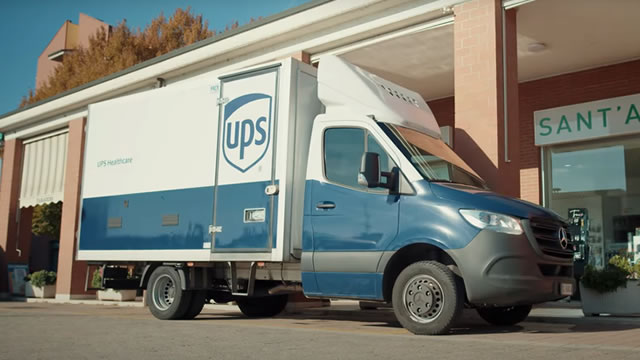
Core Viewpoint - UPS's stock price experienced significant fluctuations during and after the pandemic, raising questions about its future performance and potential recovery [1][4]. Group 1: Stock Performance - UPS's stock rose during the pandemic due to increased demand for e-commerce delivery services but has since fallen back to pre-pandemic levels [1][4]. - The stock's journey reflects a full cycle from bull to bear, with a notable price advance in 2020 and 2021 followed by a crash in 2022 [2][4]. Group 2: Business Adjustments - In response to changing market conditions post-pandemic, UPS has initiated a business overhaul, including downsizing and adopting more technology [5][6]. - The company has also faced increased costs due to a new union contract while strategically reducing its low-margin business with Amazon, its largest customer [5][7]. Group 3: Financial Outlook - The near-term outlook for UPS is expected to be challenging due to the costs associated with restructuring, although these changes may yield long-term benefits [6][8]. - The focus on more profitable business segments may lead to improved margins but could also result in reduced overall revenue [7][8]. Group 4: Investment Considerations - UPS presents a high-yield turnaround opportunity with a 7.5% dividend yield, but the high payout ratio of over 90% raises concerns for dividend investors [9]. - The company is likely to attract aggressive investors who are willing to adopt a long-term perspective rather than those seeking short-term gains [9].
Could Buying UPS Stock Today Set You Up for Life?
The Motley Fool· 2025-08-10 22:32
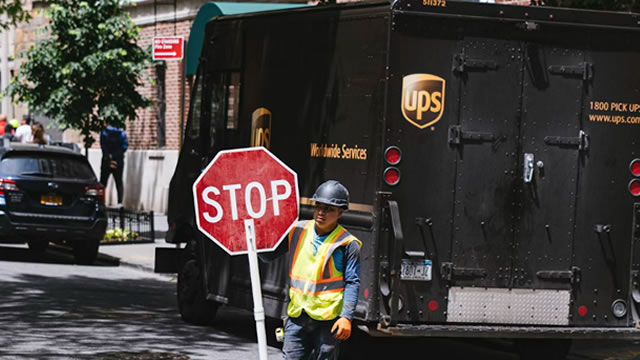
The shipping giant still faces difficult long-term challenges. UPS (UPS 0.18%), one of the world's largest shipping couriers, might seem like a reliable long-term investment. But over the past five years, its stock declined 40%. Even after including its reinvested dividends, it delivered a negative total return of 28%. In 2024, its daily package volume and revenue increased again as the macro environment stabilized and it negotiated a new labor contract with the Teamsters. But those higher labor and pension ...