
越疆科技

Search documents
对话越疆科技首席科学家:未来10年 每个家庭都会有台机器人
Zheng Quan Shi Bao Wang· 2025-08-11 10:40
从工业机器人到人形机器人 证券时报:越疆大概什么时候开始研发人形机器人?为什么考虑做人形机器人?越疆人形机器人的特色 和亮点在哪儿? 在2025世界机器人大会(下称"WRC2025")上,越疆科技发布具身智能人形机器人DOBOTAtom第二代 产品。越疆早期凭借创新的四轴机械臂迅速占领市场,此后随着市场需求的变化,越疆将战略重心转向 更高附加值的六轴协作机器人领域,2023年起正式启动人形机器人研发。 越疆做人形机器人是基于哪些考量?人形机器人的生态未来会如何发展?带着这些问题,证券时报记者 在WRC2025期间专访了越疆首席科学家郎需林。 郎需林:我们开始的不算早,但我们选对了路径。越疆从2023年起正式启动人形机器人研发,但我们更 早就在做底层准备——从控制器、驱动器到关节模组的自研能力,为人形机器人铺设了底层"脊椎"。 之所以进场,是因为我们看到AI模型涌现带来的控制、认知、交互能力突破,让"人形"不再是外形模 仿,而是"人类行为的具身再现"。 我们的Atmo系列强调"可量产、可部署",具备闭环控制系统、轻量化关节模组,以及适配VLA等大模 型的多模态感知与任务泛化能力,这让它不仅能走路,还能工作。 郎 ...



对话越疆科技首席科学家:未来10年,每个家庭都会有台机器人
证券时报· 2025-08-11 10:13
Core Viewpoint - The article discusses the strategic shift of the company from industrial robots to humanoid robots, highlighting the launch of the second-generation humanoid robot DOBOT Atom at the WRC2025 and the underlying technological advancements that support this transition [1][2]. Group 1: Development and Features of Humanoid Robots - The company officially started developing humanoid robots in 2023, building on prior foundational work in control systems, drivers, and joint modules [4]. - The humanoid robots are designed to embody human-like behaviors rather than merely mimic human appearance, emphasizing capabilities such as closed-loop control systems and multi-modal perception [5]. - The transition from industrial to humanoid robots is seen as an evolution towards more complex systems, with a focus on higher-level tasks involving perception and cognition [6]. Group 2: Advantages and Challenges - The company leverages its long-term accumulation of foundational technologies, providing cost advantages and controllability, while also having a deep understanding of industrial scenarios [7]. - Challenges include the need to shift from rigid constraints typical of industrial robots to the flexibility required for humanoid robots, necessitating upgrades in algorithms, perception models, and motion planning [7]. Group 3: Future Ecosystem and Market Strategy - The company envisions humanoid robots evolving into a platform-level ecosystem, similar to the development of the smartphone industry, with hardware manufacturers initially driving industry interest [8]. - The strategy focuses on integrating hardware with mainstream AI "brains" and collaborating with real-world customers to refine solutions, aiming to create a robust ecosystem of humanoid robots across various industries [8]. Group 4: Societal Impact and Long-term Goals - The company believes that robotic technology will amplify human capabilities rather than replace them, addressing societal issues such as aging populations and labor shortages [10]. - The long-term goal is to establish a leading global platform for embodied intelligence, making robotic technology a fundamental infrastructure in society, akin to electricity and the internet [10]. Group 5: Path to Household Integration - The company anticipates that within the next decade, every household will have a robot, similar to common household appliances, with a focus on making robots user-friendly and affordable [11]. - Initial applications will target commercial settings before expanding into household environments, with a focus on addressing aging and caregiving needs [11][12]. - The first scalable applications are expected in low-speed, high-frequency commercial scenarios, such as pharmacy logistics and retail guidance, where tasks are clear and environments are controlled [11][12].
WRC越疆“人形+机械臂+多足”多形态具身机器人亮眼,率先赢得全球客户订单
Zhong Jin Zai Xian· 2025-08-11 09:18
Core Insights - The 2025 World Robot Conference (WRC) is held in Beijing from August 8 to 12, focusing on making robots smarter and enhancing physical intelligence [1] - The conference features the launch of DOBOT Atom II, the first domestic humanoid robot capable of millimeter-level multi-scenario operations, showcasing advanced capabilities in collaborative control and rapid response [1][2] Product Launch - DOBOT Atom II demonstrates its precision by tightening mechanical components to within 0.1 mm tolerance and sorting parts into designated boxes, redefining flexible production standards in industrial assembly lines [2] - The robot exhibits agile movement and precise control, successfully performing tasks such as pouring popcorn and interacting with the audience through gestures and conversation [5][7] Market Validation - The application of DOBOT Atom II has received validation from numerous global clients across various scenarios, indicating its scalability and replicability in industrial, commercial, and household services [10] - Collaborations with leading institutions and companies, such as Tencent Robotics X and Mazak, further validate the feasibility of its technology in real-world applications [10] Platform Development - The company is building an open platform for developers to create their own intelligent agents, featuring a unified algorithm base that supports various robotic forms [11] - The platform encourages data sharing and collaborative training, enhancing the adaptability and application of intelligent agents [11] Future Vision - The company aims to create a comprehensive ecosystem for embodied intelligence, transitioning from independent operations to collaborative ecosystems, thereby enhancing productivity and quality of life [12][14] - The focus is on leveraging its extensive experience in deploying over 90,000 collaborative robots globally to lead advancements in robotic technology and applications [12]
订单与产能齐涨!厂商集体跟进,人形机器人加速进化|聚焦2025WRC
Hua Xia Shi Bao· 2025-08-11 05:41
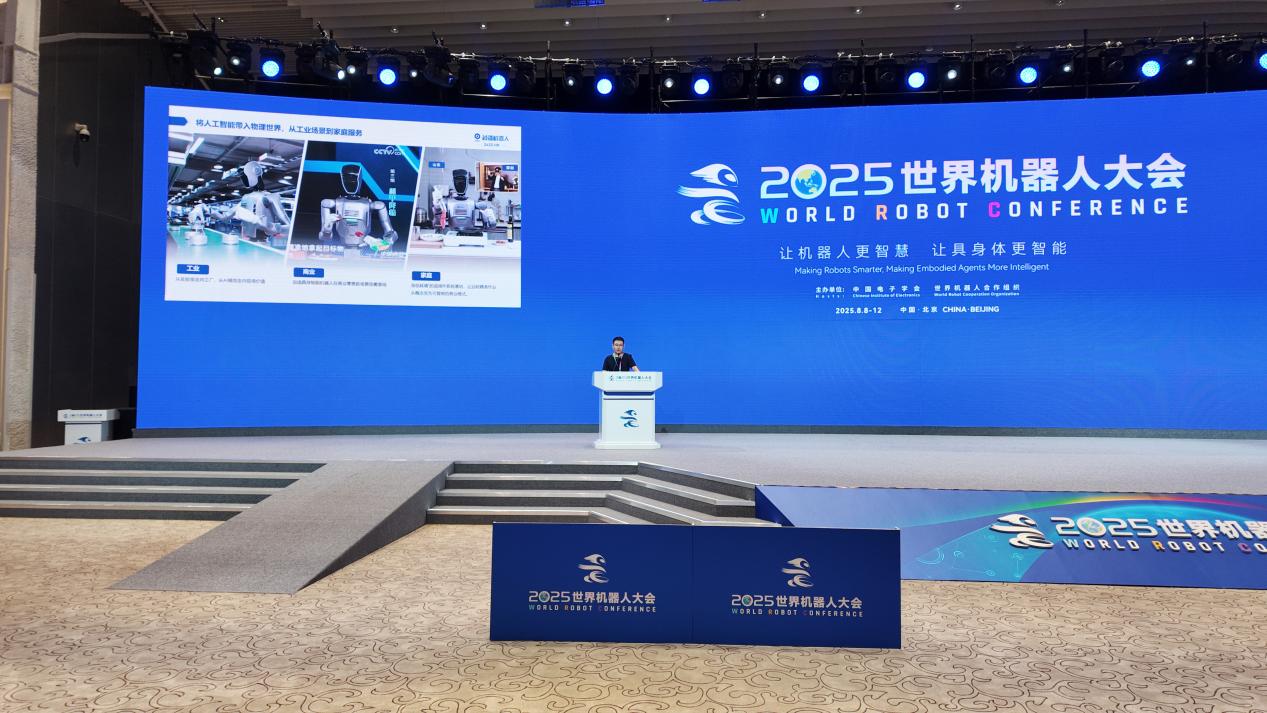
Core Viewpoint - The 2025 World Robot Conference showcased significant advancements in humanoid robots, highlighting their applications across various industries and the increasing commercial orders received by manufacturers [1][2]. Group 1: Industry Developments - The humanoid robot industry is experiencing rapid growth, with manufacturers like UBTECH and Zhiyuan Robotics reporting substantial order volumes and delivery targets for the coming years [4][7]. - Major applications for humanoid robots include industrial manufacturing, commercial services, research, and healthcare, with companies actively pursuing orders in these sectors [7][8]. Group 2: Order and Production Growth - Zhiyuan Robotics secured a multi-million yuan order from Fulian Precision, marking a significant milestone in the commercialization of humanoid robots in the industrial sector [2]. - UBTECH anticipates delivering approximately 500 industrial humanoid robots this year, with projections of over 1,000 units next year and potentially reaching 10,000 units by 2027 [4]. Group 3: Price Reduction and Cost Management - The continuous growth in orders is partly attributed to the decreasing prices of humanoid robots, with several companies launching models priced below 30,000 yuan [5][6]. - Cost reductions are driven by advancements in technology, increased production scale, and a higher domestic production rate of components, which collectively contribute to lower manufacturing costs [6]. Group 4: Commercialization Across Multiple Scenarios - The commercialization of humanoid robots is accelerating, with significant orders reported across various fields, including industrial applications and educational settings [7][8]. - Companies are focusing on deploying humanoid robots in environments with clear tasks and controlled settings, such as pharmacies and retail, to facilitate early-stage technology adoption [8].
WRC 现场:“从制造现场走出来”的具身智能公司,越疆发布二代人形机器人
机器人圈· 2025-08-11 03:13
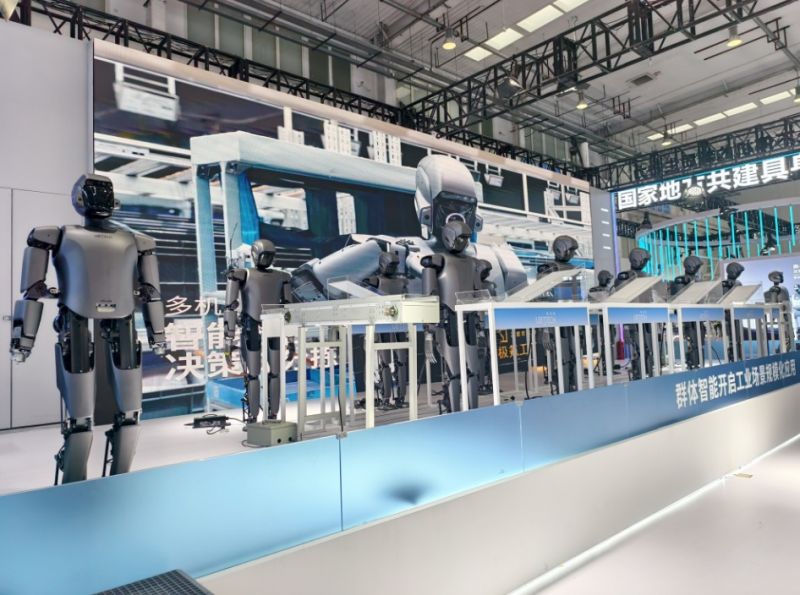
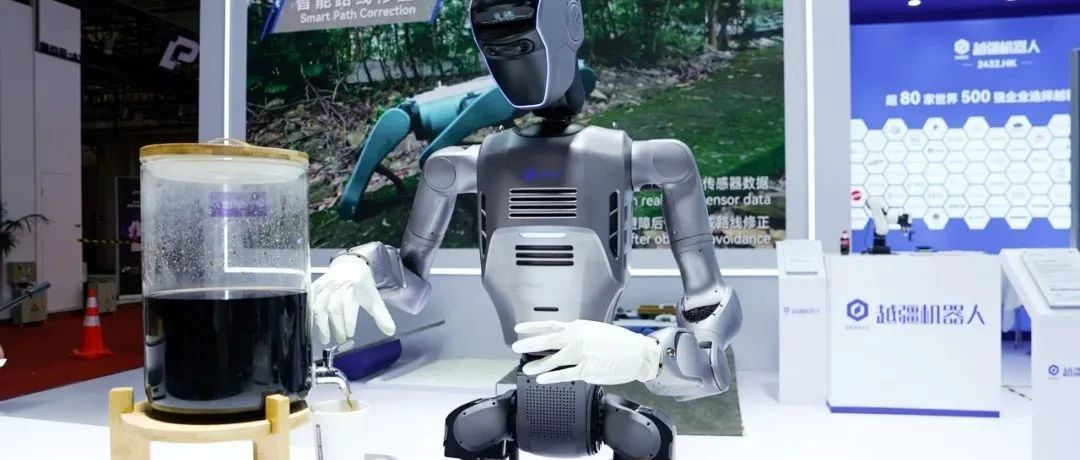
Core Viewpoint - The article highlights the launch of DOBOT Atom II, a humanoid robot by Yuejiang Technology, which is the first in China to achieve millimeter-level multi-scenario operational capabilities, showcasing advanced coordination and response speed in various applications [1][3][25]. Group 1: Product Features and Demonstrations - DOBOT Atom II demonstrated its capabilities by performing tasks such as sorting materials, serving popcorn, and cooking clay pot rice, indicating its potential applications in industrial, commercial, and home settings [3][7][13]. - The robot's ability to sort components with precision, achieving a tolerance of 0.1 millimeters, and its dual-arm coordination were highlighted during the material sorting demonstration [3][5]. - In a dynamic task of serving popcorn, DOBOT Atom II showcased its agility and precision, responding to audience interactions with gestures and conversation [7][9]. - The robot's cooking demonstration involved synchronizing actions to pour oil and operate a rice cooker, illustrating its autonomous decision-making capabilities based on cooking progress [13][30]. Group 2: Product Line and Technological Integration - Yuejiang Technology introduced a diverse range of robots, including bionic multi-legged robots and collaborative robotic arms, aimed at various applications across industries, commerce, and education [1][25][31]. - The multi-legged bionic robot demonstrated its ability to maintain balance and move through complex terrains, showcasing its load capacity and stability [15][18]. - The collaborative robotic arms are designed to learn and perform tasks such as serving ice cream and AI painting, indicating a focus on integrating advanced skills into everyday applications [18][23]. Group 3: Market Position and Client Base - Yuejiang Technology is positioned as the only company that has emerged directly from manufacturing, with a strong industrial foundation, having shipped 90,000 collaborative robotic arms and serving over 80 Fortune 500 companies [25][29][33]. - The company has established partnerships with leading global clients and research institutions, validating the applicability of its technology across various scenarios [29][30]. - The company aims to leverage its extensive sales network, covering over 100 countries, to accelerate the global deployment of its humanoid robots [29][33]. Group 4: Future Vision and Ecosystem Development - Yuejiang Technology is committed to building a comprehensive ecosystem for humanoid robots, focusing on an open platform that allows developers to create customized intelligent agents [30][31]. - The integration of various robotic forms and a unified algorithm base aims to break down hardware barriers and facilitate seamless task development [30][31]. - The company envisions a future where humanoid robots enhance productivity and quality of life, with the goal of having a reliable robotic partner for everyone [33].
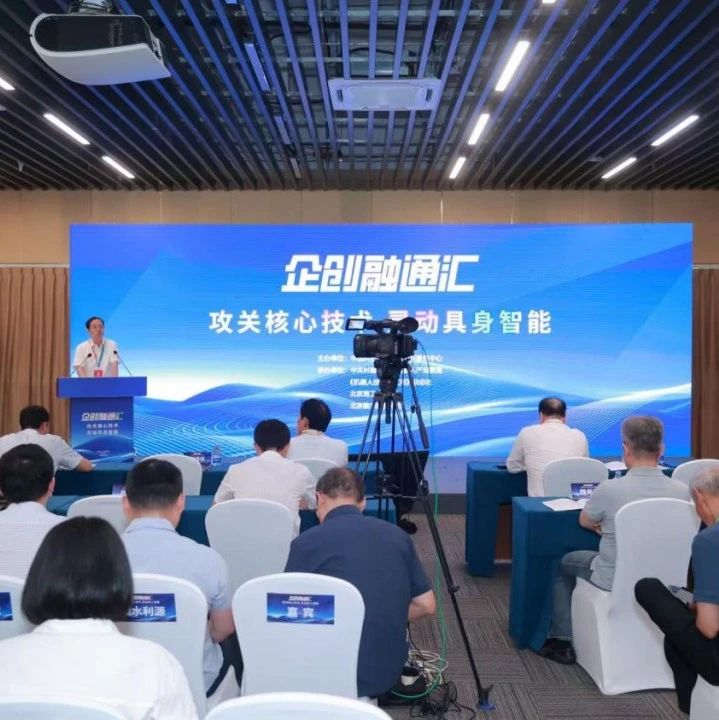
2025企创融通汇具身智能机器人核心部件专场活动在京举办
机器人圈· 2025-08-11 03:13
Core Insights - The event held on August 10, 2025, focused on the theme "Tackling Core Technologies for Agile Embodied Intelligence," highlighting the transition of embodied intelligence from laboratories to real-world applications, emphasizing its significant market potential for innovation and transformation across various industries [3][4] - Key components of embodied intelligent robots, including high-precision sensors, bionic actuators, edge computing chips, and flexible materials, are crucial for enhancing overall performance and expanding application scenarios [3][4] - The event featured discussions on technological innovations in robot actuators and high-power density motors, providing insights into the current state and future trends of core components in the embodied intelligence robot sector [3][4] Event Highlights - The event was attended by over 300 participants from 29 universities and 99 companies, with an additional 1.35 million viewers online [5] - A total of 18 outstanding solutions in the field of core components for embodied intelligent robots were showcased, categorized into five major industry issues: multimodal technology breakthroughs, domestic core component production, algorithm and model upgrades, innovative application scenarios, and ecosystem and talent development [4][5] - Seven outstanding technological achievements were successfully signed for implementation during the event [4]
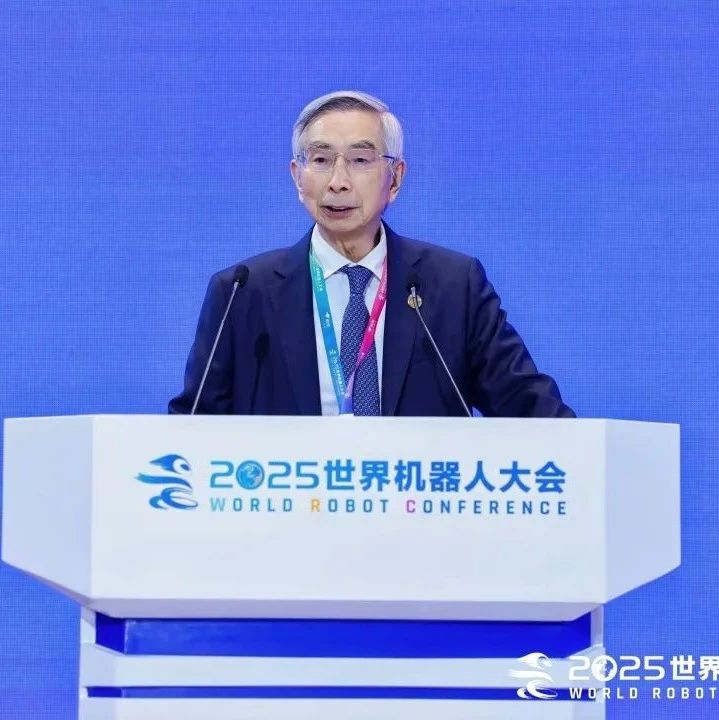
2025世界机器人大会主论坛大咖观点(二)
机器人圈· 2025-08-11 03:13
Core Viewpoint - The World Robot Conference emphasizes the importance of innovation and application in robotics, showcasing advancements in technology and the need for interdisciplinary collaboration in the field [1][3]. Group 1: Key Presentations - Ni Guangnan, an academician from the Chinese Academy of Engineering, highlighted the significance of "AI + spatial computing" as a new paradigm that bridges the physical and digital worlds, essential for enhancing robot intelligence [3]. - Vašek Hlaváč from Czech Technical University discussed the development of a unique visual guidance method for industrial robots, which improves precision in flexible assembly tasks through custom datasets and machine learning [5]. - Seng Chuan Tan, the incoming president of the World Federation of Engineering Organizations, emphasized the need for engineers to evolve from traditional roles to innovative problem solvers with interdisciplinary skills [7]. Group 2: Challenges and Opportunities - Gao Feng from Shanghai Jiao Tong University identified four key challenges in robot invention: functional-driven design, performance integration, behavioral intelligence, and specific engineering applications [9]. - Alexander Verl, chair of the International Federation of Robotics Technical Committee, discussed the limitations of current robots and the potential of digital twins and AI to enhance their capabilities [11]. - Sergej Fatikow from the University of Oldenburg presented innovations in micro-robotics for precision manufacturing, emphasizing the importance of nanotechnology in driving breakthroughs [13]. Group 3: Industry Applications - Zhang Jiafan from ABB Robotics highlighted that industrial robots currently cover only 20%-30% of industrial needs, indicating significant untapped potential for AI applications in decision-making and control [15]. - Zeng Guang from Zoomlion discussed the integration of humanoid robots into manufacturing systems, emphasizing the need for comprehensive knowledge and AI-driven platforms for effective deployment [17]. - Hu Luhui from Zhicheng AI pointed out the core pain points in the industry, including high costs and safety issues, and advocated for deep collaboration between physical and intelligent systems to overcome these challenges [19]. Group 4: Medical and Agricultural Innovations - Bradley Nelson from ETH Zurich presented the application of micro-robots in medicine, particularly for targeted drug delivery and remote surgeries, showcasing their potential to address significant healthcare challenges [21]. - Jens Kober from Delft University of Technology discussed the automation of agriculture in the Netherlands, emphasizing the need for cost-effective solutions to labor shortages and the importance of addressing real pain points in the industry [29]. - Yaniv Maor from Tevel highlighted the challenges in automating fruit picking, focusing on the need for flexible robotic systems that can adapt to diverse environments and fruit varieties [31]. Group 5: Future Directions and Market Trends - Dennis Gutowsky from FESTO introduced bio-inspired robotics, showcasing innovations that mimic natural mechanisms to enhance robotic design and functionality [33]. - The dialogue on embodied intelligence emphasized the need for reliable and transparent AI systems to foster trust and collaboration between humans and robots [34][36]. - The discussions highlighted the importance of open-source models to build user trust and the necessity for predictable AI systems to ensure effective human-robot interaction [42][44].
预告︱机器人及人工智能领域近期相关活动预告
机器人圈· 2025-08-11 03:13
Core Insights - The robotics industry is experiencing significant growth, transforming production and lifestyle, and injecting strong momentum into economic and social development [1] - The Ministry of Industry and Information Technology, along with 16 other ministries, has set a target for manufacturing robot density to double by 2025 compared to 2020, with a notable increase in the application of service and special robots [1] - The recent issuance of guidelines for humanoid robot innovation indicates that humanoid robots are expected to become a disruptive product following computers, smartphones, and electric vehicles, with mass production aimed for 2025 [1] Industry Events - The 2025 World Robot Conference will take place from August 8 to August 12, 2025, in Beijing, organized by the China Electronics Society and the World Robot Cooperation Organization [2] - The 2025 China Embodied Intelligent Robot Industry Conference and Exhibition is scheduled for August 13 to August 15, 2025, in Shanghai, hosted by various organizations including the China Electrical Engineering Society [2] - The 2025 World Humanoid Robot Sports Competition will occur from August 14 to August 17, 2025, in Beijing, organized by the Beijing Municipal Government and other entities [2] - A seminar on humanoid robots and low-altitude economic motor systems will be held from August 15 to August 17, 2025, in Ningbo [2] - The first "Low-altitude Aircraft - Intelligent Connected Vehicles - Humanoid Robots" Collaborative Innovation Development Conference is set for August 16, 2025, in Beijing [3] - The second Advanced Sensing Technology and Application Exchange Conference will take place from August 22 to August 24, 2025, in Taiyuan [3] - The sixth International Academic Conference on IoT, AI, and Mechanical Automation (IoTAIMA 2025) will be held from August 22 to August 24, 2025, at Dalian Jiaotong University [3] Company Highlights - The 2024 annual reports of 75 listed robotics companies have been released, showcasing key highlights and trends in the industry [4] - The 2023 annual reports of 55 listed robotics companies indicate mixed results, with increasing market consolidation [4] - Notable advancements in bionic robot technology have been reported, including learning from squirrels to navigate complex terrains [5] - The market for humanoid robots is heating up, with price wars emerging as mass production approaches [5] - The performance of robotics concept stocks in the first half of 2024 has generally faced pressure, but opportunities arise from the integration of robotics and AI [5]
越疆发布全新一代具身智能人形机器人
Mei Ri Jing Ji Xin Wen· 2025-08-11 00:28
Core Insights - The 2025 World Robot Conference (WRC) was grandly opened in Beijing on August 8 [1] - At the WRC product launch event, the Chief Scientist of Yujian Technology, Lang Xulin, introduced the new generation of embodied intelligent humanoid robot, DOBOT Atom II [1] - The Atom II features advanced upper and lower limb coordination control capabilities and instantaneous response speed, with comprehensive upgrades in operational capabilities [1] - The launch aims to promote the application of leading embodied intelligence technology across multiple scenarios in the industry [1]
越疆发布二代人形机器人平台
Zheng Quan Shi Bao Wang· 2025-08-11 00:17
Core Viewpoint - The 2025 World Robot Conference (WRC) was grandly opened in Beijing on August 8, showcasing advancements in robotics technology, particularly through the launch of the DOBOT Atom II by Yujian Technology [1] Company Summary - Yujian Technology's chief scientist, Lang Xulin, introduced the new generation of embodied intelligent humanoid robot, DOBOT Atom II, at the WRC product launch [1] - The DOBOT Atom II features advanced upper and lower limb coordination control capabilities and instantaneous response speed, indicating a significant upgrade in operational capabilities [1] Industry Summary - The event highlights the ongoing advancements in embodied intelligence technology within the robotics industry, emphasizing multi-scenario applications [1]