NIO

Search documents
Why Nio Stock Has Been Soaring This Week
The Motley Fool· 2025-04-24 18:32
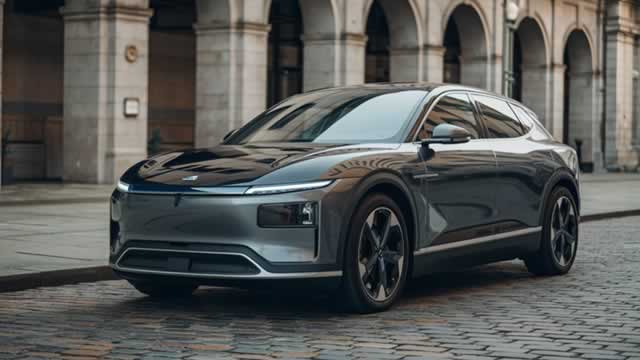
Group 1: Industry Overview - Tariff news is significantly impacting the global automotive sector, particularly in the context of the ongoing trade conflict between the United States and China [1] - The trade situation has led to a halt in trade between the U.S. and China, providing an advantage to Chinese domestic automakers in their home market [3] Group 2: Company Performance - Shares of Chinese electric vehicle maker Nio have surged approximately 16% this week and have increased by 35% since April 8 [2] - Nio is showcasing its new brands, Onvo and Firefly, at the Shanghai Auto Show, marking the first time all three of its brands are represented together [4] - The debut of the Onvo L90 SUV at the show highlights Nio's focus on better-performing EVs at competitive prices [5] Group 3: Market Expansion - Nio's Firefly brand is set to be sold in at least 16 overseas markets, which could significantly expand its market presence for "small smart electric high-end cars" [5]


NIO Stock Reverses Course, Rises 6% in Two Days: What's Next?
ZACKS· 2025-04-23 14:25
Core Viewpoint - NIO Inc. has experienced significant stock volatility, with a recent rally following a steep decline, but it remains far from its all-time high and faces intense competition in the EV market [1][2]. Group 1: Deliveries and Product Lineup - In Q1 2025, NIO delivered 42,094 units, marking a 40.1% year-over-year increase, but this performance lags behind competitors XPeng and Li Auto, which delivered 94,008 and 92,864 units respectively [3][4]. - NIO's vehicle lineup includes multiple models such as ES6, ET5T, and EC7, with new models like the ET9 and products from its ONVO and Firefly brands expected to boost sales volumes [4]. Group 2: Financial Performance and Profitability Outlook - NIO reported a net loss exceeding $3 billion last year but anticipates narrowing losses in 2025, aiming to break even by Q4 2025 [5]. - Vehicle margins improved to 12.3% in 2024 from 9.5% in 2023, with expectations of reaching 20% for the NIO brand and 15% for ONVO in 2025, although achieving these targets is uncertain due to competitive pressures [6]. Group 3: Market Position and Competitive Landscape - NIO's stock has declined 25% over the past six months, contrasting with XPeng's 82% increase, highlighting the competitive dynamics in the EV sector [10]. - NIO's forward sales multiple stands at 0.52, which is lower than that of Li Auto and XPeng, indicating potential undervaluation relative to peers [14]. Group 4: Strategic Initiatives - NIO's battery swap technology is a significant advantage, with over 3,200 power swap stations deployed globally, and a partnership with CATL to develop an advanced battery swap network [9]. - The company's ambitious growth roadmap, including the launch of new brands and models, is seen as a strategy to enhance market presence and delivery volumes [18].
NIO(NIO) - 2024 Q4 - Annual Report
2025-04-08 21:01
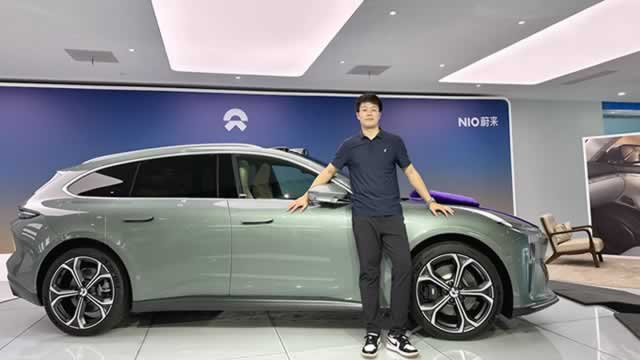
VIEs and Subsidiaries - NIO Inc. operates primarily through its PRC subsidiaries and VIEs, with insignificant contributions to total revenues from VIEs, accounting for nil, RMB13.8 million, and RMB31.3 million (US$4.3 million) for the years ended December 31, 2022, 2023, and 2024, respectively [33]. - The services provided by VIEs to subsidiaries amounted to RMB89.2 million, RMB110.5 million, and RMB126.3 million (US$17.3 million) for the years ended December 31, 2022, 2023, and 2024, respectively [33]. - As of December 31, 2022, 2023, and 2024, the net assets of the VIEs and their subsidiary that are restricted totaled RMB50.0 million, RMB54.7 million, and RMB74.4 million (US$10.2 million), respectively [37]. - NIO Inc. has outstanding loans to the nominee shareholders of the VIEs with a principal amount of RMB50.1 million (US$6.9 million) as of December 31, 2022, 2023, and 2024 [42]. - The company has extended loans to the VIEs for operations, with outstanding principal amounts of RMB32.8 million, RMB86.9 million, and RMB34.7 million (US$4.8 million) as of December 31, 2022, 2023, and 2024, respectively [42]. Regulatory and Compliance Risks - NIO Inc. has obtained requisite licenses and permits from PRC government authorities, including an ICP license and an insurance brokerage license, which are material for its main business operations [35]. - The company is included in the Ministry of Industry and Information Technology's catalogue of approved manufacturers for its electric passenger vehicle investment project [35]. - NIO Inc. may face restrictions on repatriation of proceeds from offshore offerings into China, which could materially affect its business and financial condition [35]. - The company is subject to the Holding Foreign Companies Accountable Act, which could impact the trading of its shares if audit reports are not issued by a PCAOB-inspected firm for two consecutive years [36]. Financial Performance - NIO Inc. incurred net losses of RMB14,437.1 million, RMB20,719.8 million, and RMB22,401.7 million (US$3,069.0 million) for the years ended December 31, 2022, 2023, and 2024, respectively [63]. - The company generated negative operating cash flows of RMB3,866.0 million, RMB1,381.5 million, and RMB7,849.2 million (US$1,075.3 million) in 2022, 2023, and 2024, respectively [63]. - The company has not declared or paid any cash dividends and intends to retain most of its available funds for business operations and expansion [47]. Market Competition and Challenges - The automotive market is highly competitive, with significant challenges in competing against companies with greater resources [52]. - Increased competition in the China automotive market may lead to lower vehicle unit sales and downward price pressure [53]. - The company has limited experience in independent manufacturing, which could lead to delays in product launches and ramping up production capacity [50]. - The company may continue to record net losses and negative operating cash flows in the near future, which could adversely affect its cash flow position [64]. Operational Risks - The company relies on Battery Asset Company for its Battery as a Service, which poses operational risks [51]. - The transition to independent manufacturing introduces new risks, including potential delays in product launch and delivery due to limited experience [70]. - The company faces risks related to obtaining sufficient external equity or debt financing, particularly as it expands into international markets [68]. - The company is dependent on single-source suppliers for many components, exposing it to risks of delivery failures and production delays [90]. Supply Chain and Production - The global semiconductor chip supply constraint has previously impacted production, leading to temporary suspensions and negatively affecting operational results [92]. - The company introduced Battery as a Service (BaaS) in August 2020, allowing users to purchase vehicles and subscribe to battery usage separately, but relies on the Battery Asset Company for stable operations [93][94]. - The company faces challenges in expanding internationally, including adapting to local market conditions and potential financial strains from capital investments [104]. Financial and Investment Risks - The company has significant investments in research and development, manufacturing facilities, and marketing activities, but these may not result in timely revenue increases or positive cash flow [66]. - The company faces significant inventory risks that may adversely affect operating results due to increased competition and changes in consumer demand [154]. - The company may be compelled to undertake product recalls, which could adversely affect brand image and financial performance [161]. Intellectual Property and Legal Risks - The company may face risks related to patent or trademark infringement claims, which could incur substantial costs and affect operations [182]. - The company’s ability to maintain or protect its intellectual property rights is critical to its success, with ongoing challenges in enforcement and monitoring unauthorized use [188]. - The company has faced trademark infringement claims, resulting in precautionary measures such as renaming certain car models to mitigate potential sales impacts in Europe [183]. Data Security and Privacy - The company is subject to evolving data security and privacy regulations in China, which may increase compliance costs and expose it to legal risks [136]. - In December 2022, a data leakage incident occurred, with user information being sold online, prompting the company to follow legal requirements for settlement and issue public statements [134]. - The company expects increased scrutiny from regulators regarding data security and protection, which could lead to higher compliance costs and operational challenges [135]. Economic and Geopolitical Factors - Economic slowdowns in China and globally could significantly reduce domestic commerce, impacting the company's revenues and financial results [223]. - Future geopolitical tensions and economic conditions may disrupt global markets and adversely affect the company's business expansion efforts [223]. - Sales of electric vehicles are highly dependent on discretionary consumer spending, which may decline in adverse economic conditions [224].
Tesla: Q1 Delivery Miss Means Nothing, Stock Remains A Strong Buy
Seeking Alpha· 2025-04-02 18:15
Core Insights - Tesla, Inc. reported its quarterly delivery achievements for the first quarter of FY 2025, which were highly anticipated due to the recent media focus on CEO Elon Musk and the company [1] Delivery Performance - In the first quarter, Tesla delivered a significant number of vehicles, reflecting strong demand and operational efficiency [1]


NIO: Don't Expect Positive Free Cash Flows Any Time Soon - Rating Downgrade
Seeking Alpha· 2025-03-24 20:07
Core Viewpoint - The individual investor adopts a contrarian investment style, focusing on deep value opportunities, particularly in stocks that have recently experienced sell-offs due to non-recurrent events, while also considering insider buying as a positive signal [1] Investment Strategy - The investment portfolio is split approximately 50%-50% between shares and call options, indicating a balanced approach to risk and potential returns [1] - The investor's timeframe for holding positions typically ranges from 3 to 24 months, suggesting a medium-term investment horizon [1] - Fundamental analysis is employed to assess the health of companies, including their leverage and financial ratios compared to sector and industry averages [1] Stock Selection Criteria - The investor screens for stocks that have undergone recent sell-offs, particularly those with insider buying at lower prices, which may indicate potential recovery [1] - Professional background checks are conducted on insiders who purchase shares post-sell-off, adding a layer of due diligence to the investment process [1] Technical Analysis - Technical analysis is utilized to optimize entry and exit points, with a focus on support and resistance levels on weekly charts, employing multicolor lines for clarity [1] - Trend lines are drawn in multicolor patterns to assist in visualizing market movements and potential price actions [1]
Investor Presentation_ 中国汽车行业概览
2025-03-23 15:39
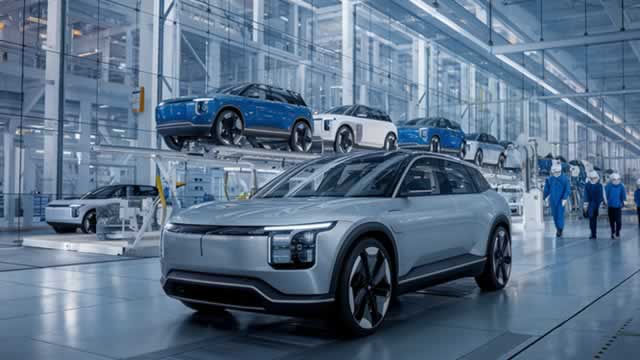
Summary of China Autos Overview Industry Overview - The report focuses on the **China automotive industry**, particularly the **passenger vehicle (PV)** and **new energy vehicle (NEV)** segments [11][15]. - The overall industry view is categorized as **In-Line** by Morgan Stanley [3]. Key Forecasts - **Passenger Vehicle Sales**: Estimated at **28.3 million units** in 2025, reflecting a **3% year-over-year (YoY)** growth [11][15]. - **New Energy Vehicle Sales**: Projected at **14.9 million units** in 2025, indicating a **21% YoY** increase [11][15]. - **Wholesale NEV penetration** is expected to recover to **46%** in February 2025 [22]. Market Dynamics - The **NEV market** is expected to see a significant increase in penetration, with **PHEVs (including EREVs)** accounting for approximately **40%** of NEV sales [28]. - The **L2+ autonomous driving penetration** forecast has been raised to **25%** in 2025, up from a previous estimate of **15%** [17][19]. Competitive Landscape - The report highlights **intensifying competition** in the China EV market, with local brands gaining market share from foreign brands [37][43]. - **Tech heavyweights** are entering the market, partnering with local OEMs to develop smart EVs and autonomous driving solutions [40][39]. Export and Trade Barriers - **Asia and Europe** accounted for over **70%** of China's vehicle exports in 2024 [48]. - Recent trade barriers have been raised, including a **102.5% tariff on Chinese EVs** in the USA and increased tariffs in the EU [50]. Company Insights - **BYD** is expanding its offshore production capacity with plans for new facilities in **Thailand, Brazil, Uzbekistan, Hungary, Indonesia, and Turkey** [54]. - The report indicates that **local brands** continue to gain share from foreign brands, with **BYD** leading in NEV market share [34][43]. Pricing and Discounts - Retail discounts and price cuts in the automotive sector have stabilized but remain steep, indicating ongoing competitive pressures [25]. Conclusion - The China automotive industry is poised for growth, particularly in the NEV segment, despite challenges from trade barriers and increasing competition. Local brands are expected to continue gaining market share, supported by strategic partnerships and technological advancements.

比亚迪 - 关于最新 10C 超快充技术的六大关键问题
2025-03-23 15:39
Summary of BYD Co Ltd Conference Call Company Overview - **Company**: BYD Co Ltd - **Industry**: Electric Vehicles (EVs) - **Rating**: Outperform - **Price Targets**: - 1211.HK: HK$460.00 - 002594.CH: RMB 420.00 - **Analysts**: Eunice Lee, Neil Beveridge, Brian Ho, Mika Fu Key Points 1. Introduction of 10C Ultra-Fast Charging Technology - BYD announced its 10C fast-charging technology, capable of delivering 1,000kW power output, extending driving range by 400km with a 5-minute charge, comparable to refueling at a gas station [1][2] 2. Core Questions Addressed - **How was 10C ultra-fast charging achieved?** - Achieved through advancements in materials, engineering, and system integration [10] - **Battery Chemistry and Degradation Concerns** - Utilizes high-speed Li-ion channel technology and redesigned blade battery architecture, reducing internal resistance by 50% [12] - LFP batteries have a longer lifecycle, with BYD's redesigned blade battery boasting a lifecycle 35% longer than previous generations [14] - **Competitive Positioning** - BYD leads with 10C charging, while competitors like CATL are at 6C technology [17][18] 3. Charging Infrastructure Plans - BYD plans to build 4,000 1MW charging stations, targeting long-distance travel needs [20] - Estimated cost for a 1,000kW charger is around US$200/kW, with a total station cost of approximately US$950k [20][23] - Timeline for rollout is estimated at 2 years, leveraging existing infrastructure [21] 4. Industry Implications - BYD's advancements may alleviate driving range anxiety, a significant concern for EV buyers [27][30] - Other battery manufacturers are expected to accelerate fast-charging technology deployment in response [28] 5. Implications for BYD - The new technology will debut in the Han L sedan and Tang L SUV in April 2025, laying a foundation for future model launches [33] - Shift in competitive focus from price to advanced technologies, enhancing BYD's market position [34] 6. Financial Projections - **Revenue Growth**: Projected CAGR of 29.6% from 2023 to 2025, with revenues expected to reach CNY 1,012 billion by 2025 [4] - **Earnings Growth**: Net earnings projected to grow at a CAGR of 40.1%, reaching CNY 61,496 million by 2025 [4] 7. Performance Metrics - **Current Price**: 1211.HK at HK$417.00, with a 10% upside to the target price [5] - **Market Cap**: HKD 1,284.87 billion [5] 8. Valuation Metrics - Reported P/E for 2025E is 19.2x, with EV/Sales at 1.1x [8] Additional Insights - The introduction of ultra-fast charging technology may reduce the appeal of battery swapping for individual consumers, favoring fast charging solutions instead [29] - BYD's strong R&D capabilities are highlighted, indicating a strategic shift towards advanced technology in the EV market [34]
NIO(NIO) - 2024 Q4 - Earnings Call Transcript
2025-03-21 12:00
Financial Data and Key Metrics Changes - Total revenues reached RMB 19.7 billion, an increase of 15.2% year over year and 5.5% quarter over quarter [20] - Vehicle sales were RMB 17.5 billion, up 13.2% year over year and 4.7% quarter over quarter, driven by higher deliveries but offset by a lower average selling price [20] - Overall gross margin improved to 11.7%, up from 7.5% in Q4 last year and 10.7% last quarter [22] - Net loss was RMB 7.1 billion, an increase of 32.5% year over year and 40.6% quarter over quarter [24] Business Line Data and Key Metrics Changes - The premium brand NIO delivered 201,209 vehicles, securing a 40% market share in China's BV segment priced above RMB 300,000 [7] - The Envoy brand delivered 20,761 vehicles, with the onboard L60 ranking among the top three in China's BV SUV market priced between RMB 200,000 and RMB 300,000 [8] - Vehicle margin improved to 14.9% for NIO and overall vehicle margin reached 13.1% in Q4 [10][20] Market Data and Key Metrics Changes - NIO's total deliveries for 2024 reached 221,970, marking a 38.7% increase year over year [7] - The company expects total deliveries in Q1 to reach 41,000 to 43,000 units, reflecting a year over year growth of 36% to 43% [9] Company Strategy and Development Direction - NIO is entering a new product cycle with the launch of nine new models across three brands in 2025 [18] - The company is focusing on cost reduction initiatives and operational efficiency to support new product launches and improve profitability [30][54] - NIO aims to achieve breakeven in Q4 2025, with a roadmap to improve vehicle margins through new model launches and cost control measures [50][56] Management Comments on Operating Environment and Future Outlook - Management highlighted the importance of brand awareness for the Envoy brand and ongoing efforts to improve its market presence [33] - The company is optimistic about achieving its sales volume targets, driven by new product launches and improvements in brand awareness and sales networks [58] - Management emphasized the strategic advantage of the BatterySwap network in enhancing user experience and driving sales growth [17][61] Other Important Information - NIO's cash position at the end of 2024 was RMB 41.9 billion, with a focus on prudent cash flow management [24][78] - The company has been recognized for its sustainability efforts, ranking as the number one car company in the 2025 Global 100 Most Sustainable Companies [18] Q&A Session Summary Question: Cost reduction efforts and expected savings - Management confirmed ongoing cost reduction initiatives and expects vehicle margins to continue growing starting Q2, with a focus on supply chain and R&D [28][30] Question: Actions for Envoy to regain growth momentum - Management acknowledged Envoy's sales performance challenges and outlined strategies to improve brand awareness, sales coverage, and team maturity [33][42] Question: Guidance on gross margin and sales volume - Management indicated that Q1 vehicle margins would be under pressure but aims for breakeven in Q4, with a full-year target to double sales volume from last year [50][56] Question: Autonomous driving technology plans - Management confirmed the rollout of end-to-end solutions for active safety features and plans to use in-house developed chips for future models [84][85] Question: Operating expenses guidance - Management expects R&D expenses to remain around RMB 3 billion per quarter, with efforts to optimize project initiation and approval processes [87][90] Question: Other sales and revenues - Management noted that the positive gross margin in other sales was driven by improved efficiency in after-sales services and technology services provided to partners [92][94] Question: Long-term outlook for sales volume and margins - Management reiterated the goal of achieving breakeven in Q4 and outlined a long-term target of 2 million units sold annually with a 20% gross margin [99]
How NVIDIA is Powering the Future of Smart Mobility
ZACKS· 2025-03-19 16:30
Core Insights - The auto industry is transitioning into the autonomous driving era, with NVIDIA positioned as a leader in AI and computing technologies for automakers [1] - General Motors has deepened its partnership with NVIDIA to integrate advanced computing and AI technologies across vehicle design, production, and driver-assistance systems [2][3] NVIDIA's Technology and Platforms - NVIDIA provides three key platforms: DGX Systems for AI model training, Omniverse for digital simulations, and DRIVE AGX for real-time data processing in vehicles [4][5] - The integration of NVIDIA's DRIVE AGX into GM's next-generation vehicles enhances safety and driver-assistance capabilities, marking a significant advancement from previous GPU usage [3] Collaborations with Other Automakers - Toyota is utilizing NVIDIA's DRIVE AGX Orin platform and DriveOS to enhance its advanced driving assistance technologies [7] - Volvo Cars integrates NVIDIA's DRIVE AGX into electric vehicle models, while Zenseact uses NVIDIA DGX for sensor data analysis [8] - Other automakers like Lucid Motors, Polestar, and Rivian are also aligning with NVIDIA to improve vehicle intelligence [9] Expansion in China - BYD has expanded its collaboration with NVIDIA, now utilizing cloud infrastructure for AI application development and factory planning [10] - Li Auto employs NVIDIA DRIVE processors to enhance its autonomous driving capabilities, moving towards fully autonomous vehicles [11] - XPeng has developed its advanced driving assistance system, XNGP, using NVIDIA's DRIVE platform [12] - NIO has integrated NVIDIA technology since 2014, evolving from basic infotainment to advanced autonomous driving solutions [13] Industry Trends - The partnerships indicate a growing recognition among automakers of the need to integrate advanced computing platforms to remain competitive in a rapidly evolving market [14] - NVIDIA is driving the next wave of mobility by transforming in-car experiences and manufacturing processes, leading to safer and smarter vehicles [15]

NIO: With China Bullishness, A Good Earnings Report Could Be Great
Seeking Alpha· 2025-03-18 19:26
NIO (NYSE: NIO ) will report earnings on March 21st, and I think these earnings will be one of the most important earnings over the last few years for NIO. NIO has had quite a rough year, dropping 10% over theMMMT Wealth is run by Oliver, a CPA working in the financial services sector mainly in private equity, hedge funds, and asset management. MMMT Wealth began in 2023 when Oliver started writing online mainly on X and Substack about investment strategies and stocks. His main aim is to gather insights from ...