Boston Dynamics

Search documents
CES之后,重新审视机器人站位——优理奇如何在中美对照中,用“交付能力”打开新局
机器人大讲堂· 2026-01-14 13:32
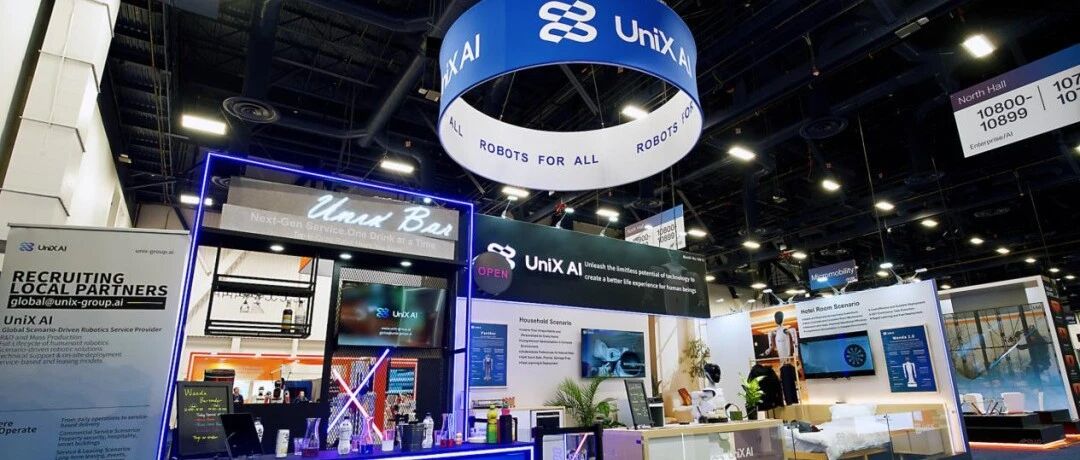
Core Viewpoint - The CES 2026 highlighted the contrasting narratives of the US and Chinese robotics industries, with US companies focusing on future possibilities while Chinese companies emphasize practical applications and market readiness [2][7]. Group 1: Narrative Differences - US companies, exemplified by Boston Dynamics, dominate the "future narrative," showcasing robots as potential future industrial and societal solutions, emphasizing capabilities and transformative potential [3]. - In contrast, Chinese companies like Yuliqi Robotics focus on practicality, asking whether their robots can be used, sold, and effectively deployed in real-world scenarios [5][7]. Group 2: Performance and Practicality - Chinese companies are pursuing two distinct paths: one led by Yushun Technology, which aims for high dynamic performance in humanoid robots, and another by Yuliqi Robotics, which prioritizes practical applications in specific commercial settings [8][12]. - Yuliqi's robots demonstrate real-world capabilities, such as bartending and cleaning, emphasizing reliability and continuous operation rather than flashy demonstrations [10][12]. Group 3: Market Validation and Delivery - Yuliqi has achieved significant milestones, including delivering 100 robots in a month, marking a transition from prototypes to scalable production [13]. - The company has secured substantial interest from international clients, with potential orders reaching hundreds of millions, reflecting market validation of its technology and business model [12][13]. Group 4: Strategic Focus - Yuliqi's approach is characterized by a focus on specific high-value commercial scenarios, such as hospitality and property management, rather than pursuing broad general-purpose platforms [17][18]. - The design philosophy of Yuliqi's Wanda robot emphasizes efficiency and reliability in indoor environments, avoiding direct competition with high-performance humanoid robots [20]. Group 5: Conclusion and Industry Evolution - The CES 2026 serves as a turning point, indicating that Chinese robotics companies are transitioning from being mere technology demonstrators to serious commercial partners [21]. - The coexistence of performance-driven and practical-focused companies reflects the maturation of the robotics industry, with Yuliqi's success highlighting the importance of delivery capabilities in gaining market trust [21].

Hyundai and Boston Dynamics Push Humanoid Robots Forward
The Motley Fool· 2026-01-14 02:33
Core Viewpoint - The introduction of Boston Dynamics' Atlas humanoid robot by Hyundai at CES 2026 is generating excitement among investors, with potential implications for the automotive industry and factory productivity [2][3][5]. Group 1: Product Announcement and Capabilities - Boston Dynamics unveiled the Atlas humanoid robot, which is fully electric and set to begin production immediately, with plans to deploy it across Hyundai's global network starting in 2028 [2][6]. - Hyundai aims to produce 30,000 Atlas robots annually at a U.S. factory, anticipating that humanoids will become the largest segment of the Physical AI market [6]. - The Atlas robot features human-scale hands with tactile sensing, advanced rotational joints, the ability to lift up to 110 pounds, and can learn tasks in under a day [6]. Group 2: Market Potential and Strategic Partnerships - Hyundai plans to introduce Atlas in processes with proven safety and quality benefits, expanding its applications to component assembly and complex operations over time [7]. - Successful deployment of humanoid robots could benefit not only Hyundai but also partners like Toyota, as well as companies like Nvidia and Google DeepMind involved in robotics research [7]. Group 3: Investor Sentiment and Caution - Investor enthusiasm is high regarding the potential for humanoid robots to enhance factory productivity, but historical failures in the humanoid robot market warrant caution [3][8]. - Previous attempts to introduce humanoid robots, such as SoftBank's Pepper and 1X's NEO, faced significant challenges and ultimately did not succeed in the market [9][10]. - Research from Morgan Stanley suggests that while the humanoid robot market could reach $5 trillion by 2050, adoption may be slow until the mid-2030s, indicating that investors should be patient [13].

Humanoid robots take over CES in Las Vegas as tech industry touts future of AI
CNBC· 2026-01-09 13:00
Core Insights - The CES trade show in Las Vegas showcased advancements in humanoid robots, indicating a significant year for physical artificial intelligence [3][4] - Nvidia announced new vision language models for humanoid robots, highlighting the potential for robots to achieve human-level capabilities [4][5] - The market for general-purpose robotics is projected to reach $370 billion by 2040, with applications in various sectors [7] Company Developments - Nvidia introduced Gr00t, a vision language model for humanoid robots, and emphasized partnerships with companies like Boston Dynamics and Caterpillar [4][5] - AMD showcased the GENE.01 robot, which utilizes its chips and AI technology, and plans to deploy it in industrial settings [10] - Qualcomm presented a new line of robot chips called Dragonwing, aimed at enhancing robot capabilities through vision language models [14] Industry Trends - The humanoid robotics sector is experiencing rapid growth, with 40 companies mentioning humanoid robots at CES [9] - Generative AI technologies, such as those used in ChatGPT, are being leveraged to enhance robot functionalities [6][13] - Experts caution that while humanoid robots are gaining attention, practical commercial implementation remains a significant challenge [8][12]


Hyundai Mobis Forms Strategic Collaboration Framework with Boston Dynamics!
Prnewswire· 2026-01-08 04:50
Core Insights - Hyundai Mobis has formed a strategic collaboration with Boston Dynamics to supply actuators for the next-generation humanoid robot, Atlas, as part of a $26 billion U.S. investment plan [2][11] - This partnership marks Hyundai Mobis's entry into the global robot components market, securing its first official customer in the robotics sector [3][11] - The collaboration is expected to enhance both companies' positions in the emerging robotics components industry, which currently lacks a dominant global player [8] Company Strategy - Hyundai Mobis is expanding beyond the automotive industry into high-value-added fields such as robotics, aligning with its mid- to long-term strategy to adapt to the evolving mobility landscape [4] - The company aims to establish a large-scale actuator manufacturing system and strengthen its design capabilities for high-performance robotics components [7] Market Potential - Actuators are a critical subsystem for humanoid robots, representing over 60% of their material cost, and Hyundai Mobis plans to leverage its automotive component development expertise to enter this market [5] - Hyundai Motor Group announced plans to build a robot factory capable of producing 30,000 units annually, positioning Hyundai Mobis to play a significant role in the robotics ecosystem [9]

Exclusive-Arm launches 'Physical AI' unit, joining rush to robotics by tech and automakers
Yahoo Finance· 2026-01-07 19:35
Core Insights - Arm Holdings has reorganized to create a Physical AI unit aimed at expanding its presence in the robotics market, coinciding with a significant focus on robotics at CES [1][2] Business Structure - Arm will now operate three main lines of business: Cloud and AI, Edge (including mobile devices and PCs), and Physical AI, which will encompass its automotive business [3] - The Physical AI unit combines robotics and automotive sectors due to similar customer requirements such as power constraints, safety, and reliability [7] Market Potential - The company views robotics as a market with immense long-term growth potential, with expectations that physical AI solutions could significantly enhance labor efficiency and impact GDP [6] - Arm's strategy includes increasing licensing fees and considering full chip design to boost its business [5] Partnerships and Collaborations - Arm collaborates with various automakers globally, including Tesla, and robotics companies like Boston Dynamics, which is owned by Hyundai [7] - A production-ready Atlas humanoid robot was unveiled by Hyundai and Boston Dynamics, set to be deployed in U.S. factories by 2028 [8]

Robots with human-type capabilities are coming this year, says Nvidia CEO
Sky News· 2026-01-07 11:02
Core Insights - The CEO of Nvidia, Jensen Huang, believes that robots will achieve human-level capabilities this year due to rapid technological advancements [1] - There is a growing sentiment in the tech industry that artificial intelligence is ready to transition from digital to physical applications [1] Industry Trends - The Consumer Electronics Show (CES) showcases a variety of robots, including vacuum cleaners, lawnmowers, and humanoid robots, indicating a significant trend in robotics [2] - Many robots at CES are not fully autonomous and often require human intervention, limiting their effectiveness [3] Technological Advancements - Self-driving cars are cited as a successful example of robotics that have passed the physical Turing Test, indicating that robots can handle complex environments [4] - The development of generative AI is seen as a key factor in enhancing robotic capabilities, with the potential to integrate AI models into robotic systems [6][7] Future Projections - Experts believe that the core technological challenges in robotics have been addressed, paving the way for the development of advanced robots [8] - Companies like Boston Dynamics focus on industrial applications for robots, with expectations of deployment in factories by 2028 to 2030 [11][12] Job Market Implications - There is a consensus that robots will create jobs rather than eliminate them, particularly in manufacturing, where there is a significant labor shortage [12][13] - The deployment of robots is expected to allow workers to transition to more skilled roles, as seen in examples where workers move from manual tasks to operating robots [14]
Boston Dynamics' Atlas Robot Gets Ready for Real Work
Barrons· 2026-01-06 19:02
Core Insights - The company has announced the launch of its first commercial version of the Atlas humanoid robot, which is specifically designed for industrial applications [1] Group 1 - The Atlas humanoid robot is aimed at enhancing efficiency in industrial work environments [1] - This launch marks a significant milestone in the company's robotics development, indicating a shift towards commercializing advanced robotic technologies [1] - The introduction of the Atlas robot may open new market opportunities within the industrial sector, potentially leading to increased revenue streams for the company [1]


Top Robotics Stocks That Could Drive Impressive Returns in 2026
ZACKS· 2026-01-06 16:16
Industry Overview - The American robotics industry is experiencing significant growth, driven by commercial breakthroughs, venture capital, and FDA approvals, positioning the U.S. as a leader in global automation [1] - The humanoid robotics market is projected to reach $15.26 billion by 2023, with a compound annual growth rate (CAGR) of 39.2% [2] - The global robotics market is expected to grow to $124.37 billion, with the surgical robotics market alone projected to reach $14.45 billion by 2026 [3] Investment Landscape - Global robotics funding surpassed $10.3 billion in 2025, the highest since 2021, with U.S. companies capturing the majority of this investment [3] - Notable funding rounds include Figure AI raising over $1 billion at a valuation of $39 billion and Physical Intelligence securing $400 million from investors [3] - SoftBank's acquisition of ABB's robotics division for $5.375 billion indicates a consolidation trend in the robotics sector [3] Healthcare Robotics - Recent FDA approvals for robotic surgery systems, including Medtronic's Hugo and CMR Surgical's Versius Plus, are expected to accelerate the adoption of healthcare robotics [4] - Johnson & Johnson's Ottava system is advancing through clinical trials, with FDA submission anticipated in early 2026 [4] Defense and Space Applications - The Pentagon allocated $13.4 billion for autonomous systems in its fiscal 2026 budget, with $5.3 billion specifically for unmanned vessels [5] - Upcoming missions, such as NASA's Artemis II and Astrobotic's Griffin lunar mission, will further validate U.S. capabilities in space robotics [5] Collaborative Robotics - The collaborative robotics segment is experiencing over 20% annual growth, with nearly half of small and medium manufacturers now integrating collaborative robots (cobots) [6] - Universal Robots is expanding its manufacturing capabilities, creating over 200 jobs in Michigan [6] Company Highlights - UiPath has transitioned from traditional robotic process automation to AI orchestration, achieving its first GAAP profitable quarter in Q3 of fiscal 2026, with revenues increasing 16% year over year to $411 million [9][10] - NVIDIA unveiled a comprehensive robotics ecosystem at CES 2026, including the Isaac GR00T N1.6 model and the Blackwell-powered Jetson T4000 module, enhancing its position in physical AI [11] - Cadence Design Systems is acquiring Hexagon's Design & Engineering business for $3.18 billion, enhancing its capabilities in robotics simulation [12] - Intuitive Surgical expanded its market presence with FDA clearance for the da Vinci Single Port system for various surgical procedures, supported by over 500 peer-reviewed publications [13]




34家机器人“霸屏”CES2026 !谁将定义未来的新材料
DT新材料· 2026-01-06 16:04
Core Insights - The article highlights the significant advancements in the robotics industry, particularly focusing on humanoid robots and the materials that support their development [4][7][16]. - The upcoming FINE 2026 expo in Shanghai is positioned as a strategic platform for showcasing innovations in new materials that will drive future industries [2][25]. Humanoid Robots - Humanoid robots rely on three core technology modules: environmental perception, motion control, and human-computer interaction [8]. - China has made substantial progress in the production of core components for humanoid robots, achieving breakthroughs in domestic manufacturing capabilities [12]. Key Exhibitors at CES 2026 - The article lists 20 Chinese companies showcasing their humanoid robots at CES 2026, with notable mentions including Unitree, AgiBot, and UBTECH, highlighting their unique features and market positions [13]. - The presence of 34 humanoid robot companies at CES 2026 indicates a strong competitive landscape, with Chinese firms accounting for 58.8% of the exhibitors [4][7]. Material Innovations - Key materials driving the evolution of humanoid robots include titanium alloys, PEEK, flexible electronics, and advanced battery technologies, each contributing to weight reduction, durability, and performance [18]. - The use of titanium alloys and magnesium-aluminum alloys addresses the challenges of weight and load capacity, with titanium achieving a 40% weight reduction and a threefold increase in lifespan through advanced manufacturing techniques [18]. Future Industry Landscape - The FINE 2026 expo is set to feature various exhibitions focused on advanced semiconductors, lightweight materials, and energy solutions, emphasizing China's role in global material innovation [19][25]. - The article suggests that the advancements in materials are crucial for the commercialization of robotics and the broader transformation of future industries [16][18].

Vegas Jackpot: AI And Humanoids At CES 2026
Seeking Alpha· 2026-01-06 12:30
Group 1: Market Trends and Economic Indicators - Bitcoin vault Strategy (MSTR) reported a significant unrealized loss of $17.4 billion in the fourth quarter [3] - The Atlanta Fed has revised its GDP growth estimate lower due to a deteriorating manufacturing outlook [3] - The U.S. consumer technology industry is projected to grow by 3.7% year-over-year, reaching $565 billion in revenue by 2026, according to the Consumer Technology Association [7] Group 2: Technology Developments at CES - The Consumer Electronics Show (CES) is showcasing over 4,000 exhibitors, with more than 130,000 attendees, highlighting optimism for future technology innovations [4] - Notable advancements include Nvidia's Alpamayo for autonomous driving, Caterpillar's focus on industrial AI, and AMD's Zen 5-powered Ryzen AI Embedded processors [5] - LG's CLOiD robot, capable of folding laundry and unloading dishwashers, and Boston Dynamics' Atlas humanoid, which can lift up to 110 lbs, are among the standout innovations [6] Group 3: Company-Specific News - AT&T is relocating its headquarters from Dallas to a suburb in Texas [8] - Hawaiian Airlines has announced a comprehensive investment plan aimed at modernization [9] - Zillow's CEO anticipates another slow year for the U.S. housing market [9]