Nikon

Search documents
X @Bloomberg
Bloomberg· 2025-10-06 04:38
Nikon’s stock rose its most in more than two weeks after disclosing that EssilorLuxottica has increased its holding, suggesting the Ray-Bans maker is placing a bigger bet on a pivotal supplier of chipmaking equipment https://t.co/a5yXTexer0 ...
中国区- 人工智能数据中心的新动态-Greater China Technology Hardware- What’s New in AI Data Centers
2025-09-30 02:22
Summary of Key Points from the Conference Call Industry Overview - **Industry Focus**: Greater China Technology Hardware, specifically in the context of AI Data Centers [1][3] - **Market Outlook**: The industry view is rated as "In-Line" by Morgan Stanley, indicating expected performance in line with the broader market [3][61] Core Insights - **Data Center Infrastructure Growth**: The Data Center Power and Cooling Infrastructure is projected to grow at a CAGR of 30% from 2026 to 2030 [6][8] - **Comparative Analysis of Companies**: - **Delta Electronics vs. Vertiv**: - Delta's market cap is approximately $75.461 billion, with a projected revenue of $16.341 billion for 2025, and a revenue CAGR of 23% from 2024 to 2027 [11] - Vertiv's market cap is around $53.374 billion, with a projected revenue of $10.024 billion for 2025, and a revenue CAGR of 19% from 2024 to 2027 [11] - Delta has a 40% exposure to data centers, while Vertiv has an 80% exposure [11] - Delta's operating margin is estimated at 14%, compared to Vertiv's 20% [11] - Delta's net profit for 2025 is projected at $1.709 billion, with a net profit CAGR of 40% from 2024 to 2027 [11] - Delta's return on equity (ROE) is estimated at 18%, while Vertiv's is significantly higher at 40% [11] Additional Insights - **Revenue Contribution from Services**: Vertiv differentiates itself with over 20% of its revenue coming from services, while Delta has a more diverse end-market exposure [14][12] - **Geographic Exposure**: Delta has a more balanced geographic exposure compared to Vertiv, which is heavily weighted towards the Americas [19][12] - **Dell's AI Contribution**: Dell's AI server contribution to Compal is estimated to be between 1-1.5% of its EPS for 2026, indicating a modest impact [30] Industry Drivers - **Semiconductor Production Equipment**: - Collaboration between Lam Research and JSR on EUVL resists is expected to impact the market significantly, with potential market shrinkage of over ¥30 billion in 2026 for coater/developer equipment [28] - **Investment Themes**: Advanced packaging, high bandwidth memory, and other emerging technologies are highlighted as key investment themes in the semiconductor space [27] Conclusion - The Greater China Technology Hardware sector, particularly in AI Data Centers, shows promising growth potential, with significant opportunities in power and cooling infrastructure. Companies like Delta and Vertiv are positioned differently within the market, with varying exposure and growth trajectories. The semiconductor production equipment sector is also evolving with new collaborations that could reshape market dynamics.

Constellation Software shares close week down 17 percent after founder and CEO steps down
BetaKit· 2025-09-26 22:40
Company Overview - Constellation Software was founded in 1995 by Mark Leonard, who has been instrumental in building the company into a significant player in the software industry, drawing comparisons to Warren Buffett for his investment strategies [6] - The company is one of Canada's largest public tech firms, with a market capitalization of approximately $82 billion and over 125,000 customers across more than 100 countries [7] Leadership Changes - Mark Leonard stepped down as CEO after 30 years due to health reasons but will remain on the board [1][2] - Mark Miller, who has been with the company since 2001 and previously led the acquisition-focused division Volaris Group, has been appointed as the new president [2][3] - Leonard expressed full confidence in Miller's ability to lead the company and execute its business plan [3] Financial Performance - Constellation's latest earnings report indicated a 15% year-over-year revenue growth, reaching $2.84 billion [7] - Following Leonard's resignation announcement, the company's stock price dropped by 10%, reaching its lowest point of the year at $3,660 on the Toronto Stock Exchange [5] Strategic Initiatives - The company launched a $200 million venture fund, VMS Ventures, in 2021 to identify potential acquisition targets, particularly focusing on tech firms struggling to achieve profitability [8] - Leonard recently hosted a conference call discussing the impact of artificial intelligence (AI) on the software industry, indicating that Constellation is closely monitoring AI developments [4]



半导体材料:亚洲投资者调研反馈-Semiconductor_Tech Materials_ Feedback from investor visits in Asia
2025-09-25 05:58
Summary of Key Points from J.P. Morgan's Semiconductor/Tech Materials Conference Call Industry Overview - **Industry Focus**: Semiconductor and Tech Materials - **Investor Interest**: Strong interest in Advantest (6857, OW) and Nittobo (3110, N) observed during investor visits in Asia [1][4] Core Themes Discussed 1. **Advanced Packaging**: - Companies benefiting from advanced packaging were a key topic, especially in light of SEMICON Taiwan [1] - Disco (6146, N) is highlighted as a key stock related to advanced packaging opportunities [5] 2. **WFE Investment Outlook**: - Potential increase in Wafer Fabrication Equipment (WFE) investment due to rising NAND and DRAM prices [1][6] - Memory makers are investing heavily in High Bandwidth Memory (HBM) driven by generative AI demand [6] - DRAM prices are rising due to strong demand and supply shortages, while NAND contract prices are also increasing [6] 3. **NVIDIA's Investment in Intel**: - NVIDIA announced a $5 billion investment in Intel, which is expected to impact the semiconductor market positively [1][6] - Key stocks affected include Lasertec (6920, N) and Nikon (7731, UW) [6] 4. **EssilorLuxottica's Stake in Nikon**: - EssilorLuxottica raised its stake in Nikon from 8.45% to 9.47%, which may influence Nikon's market position [1] Company-Specific Insights - **Advantest (6857, OW)**: - Investors are keen on the medium-term business plan update and operating profit projections for FY2026, estimated at ¥411.8 billion [4] - Potential for operating profit to reach ¥460–470 billion based on a more optimistic consensus [4] - **Nittobo (3110, N)**: - Plans to double T-glass production capacity by FY2026 and potentially triple T-glass cloth capacity by early 2027 [4] - Investors expect a price revision of around 30%, while current estimates factor in a 15% YoY increase [4] - **Disco (6146, N)**: - Anticipated increase in opportunities for grinders and dicers in PLP due to advancements in packaging technology [5] Additional Important Insights - **Market Dynamics**: - The competitive environment is expected to remain stable for Nittobo despite new entrants due to overall market growth [4] - NAND companies are focusing on developing nearline SSD products to reduce the price gap with HDDs [6] - **Investment Sentiment**: - Investors are optimistic about memory investment trends, although rapid increases in NAND investment are not expected in the near term [6] - **Price Performance**: - Various companies in the semiconductor sector are experiencing different levels of market performance, with Advantest showing strong growth potential [8][12] This summary encapsulates the key points discussed in the conference call, highlighting the semiconductor industry's current trends, company-specific insights, and overall market sentiment.
全球与中国倒置荧光显微镜市场现状及未来发展趋势-2025版
QYResearch· 2025-09-25 03:50
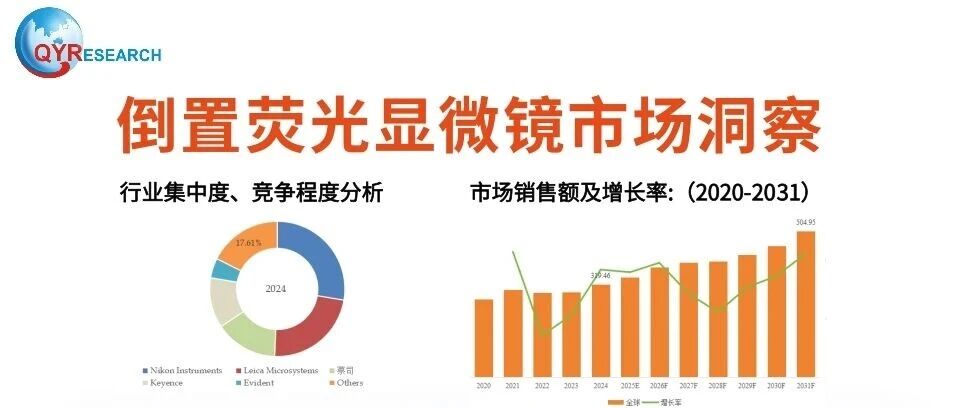
Core Viewpoint - The inverted fluorescence microscope industry is experiencing rapid development characterized by simultaneous technological upgrades and market expansion, with a projected global market sales of $319 million in 2024 and $505 million by 2031, reflecting a CAGR of 6.54% from 2025 to 2031 [2][7]. Industry Current Status - The current market is driven by technological innovations such as super-resolution technology, AI algorithms for automatic focusing and image analysis, and multi-modal imaging techniques that enhance dynamic observation of cells [2]. - The primary application areas are biomedical research, focusing on live cell observation, drug screening, and cancer mechanism studies, while the demand in materials science and industrial testing is declining due to a shift towards biomedical applications [2]. - The competitive landscape is dominated by international giants like Evident, Zeiss, Nikon, and Leica, but domestic brands are gaining market share due to policy support and cost advantages [2][10]. Industry Challenges - The industry faces challenges such as reliance on imported high-end optical components, lagging domestic super-resolution technology, and high pricing of advanced equipment, which restricts procurement by small and medium-sized institutions [3]. Development Trends - The development trends focus on five core areas: super-resolution imaging, intelligence and automation, multi-modal integration, domestic technology upgrades, and expansion of application scenarios [4]. - Super-resolution imaging is pushing the resolution to the nanoscale, enabling high-precision observation of cellular dynamics and molecular interactions [4]. - The integration of AI technology enhances automation in tasks like sample recognition and image analysis, significantly improving experimental efficiency [4]. - Domestic technology is advancing, with companies narrowing the gap with international brands and increasing market share through policy support [4]. Global Market Overview - The global inverted fluorescence microscope market is projected to reach $319 million in 2024, with China accounting for approximately 20% of the market share [7]. - North America is the largest consumer market, expected to maintain a leading position with a market share of 36.8% in 2024, followed by Europe and China [7]. - In terms of production, China and Japan are significant regions, each holding around 33.9% and 33.0% of the market share in 2024, respectively [7]. Product and Application Insights - The three-microscope type is expected to dominate the market, with a projected share of 79.6% by 2031 [8]. - Hospitals are anticipated to hold a market share of approximately 43.5% in 2024, with a CAGR of about 7.27% in the coming years [8]. - Major global manufacturers include Evident, Leica Microsystems, Nikon Instruments, and others, with the top tier holding around 82.39% of the market share [8]. Policy Analysis - China's policies are strongly driving domestic substitution and technological breakthroughs, with significant funding and tax incentives to support the development of biomedical imaging equipment [12]. - The "14th Five-Year Plan" emphasizes high-end scientific instruments as a strategic industry, aiming for a domestic production rate of over 60% by 2025 [12]. - Internationally, the industry faces challenges from regulatory barriers and trade protectionism, impacting market entry and competition [12][13].
投资者报告:半导体生产设备行业展望-Investor Presentation-Semiconductor Production Equipment Industry Outlook
2025-09-19 03:15
Summary of Semiconductor Production Equipment Industry Outlook Industry Overview - **Industry**: Semiconductor Production Equipment (SPE) - **Region**: Japan - **Outlook**: Attractive [1] Key Points Market Performance and Valuations - The stock price performance of major companies in the SPE industry shows varied results, with Disco outperforming the market significantly [3][60]. - Valuations for companies such as Disco, Advantest, and SCREEN Holdings indicate potential returns of 55.1%, -10.4%, and 18.5% respectively [5]. Company Ratings and Price Targets - **Disco**: Overweight, Price Target JPY 70,300, Current Price JPY 45,320 - **KOKUSAI ELECTRIC**: Equal-weight, Price Target JPY 3,600, Current Price JPY 3,755 - **Ulvac**: Equal-weight, Price Target JPY 6,400, Current Price JPY 6,456 - **Advantest**: Overweight, Price Target JPY 12,400, Current Price JPY 13,845 - **Lasertec**: Underweight, Price Target JPY 10,400, Current Price JPY 16,720 - **Ushio**: Equal-weight, Price Target JPY 2,200, Current Price JPY 2,239 - **Nikon**: Underweight, Price Target JPY 1,000, Current Price JPY 1,739 - **SCREEN Holdings**: Overweight, Price Target JPY 15,200, Current Price JPY 12,830 - **Tokyo Electron**: Equal-weight, Price Target JPY 23,700, Current Price JPY 24,250 [5]. Industry Drivers - The demand for advanced packaging and high bandwidth memory (HBM) is driving growth in the SPE sector. - Significant investments in semiconductor manufacturing are being made, particularly in response to AI-related demands [21][24]. - The introduction of new technologies such as Panel Level Packaging (PLP) is expected to enhance production efficiency [18]. Market Trends - The NAND market is projected to experience a shift into shortage by the second half of 2026 due to increased AI demand, despite current pricing reflecting weaker consumer demand [44]. - The adoption of eSSD (enterprise SSD) is accelerating, with projections indicating that AI-related NAND shipments will reach 431 exabytes by 2029 [44]. Risks and Challenges - Ongoing restrictions on semiconductor exports to China pose risks to the industry, necessitating a reduction in dependence on Chinese manufacturing capabilities [24]. - The semiconductor industry is facing challenges related to supply chain constraints and fluctuating demand across different segments [21]. Future Outlook - The SPE market is expected to continue growing, with revenue forecasts indicating an increase from $117.171 billion in 2025 to $130.989 billion by 2027 [42]. - Companies are expected to ramp up capital expenditures directed at advanced packaging and HBM technologies, which will be crucial for meeting the demands of AI applications [73]. Conclusion The Semiconductor Production Equipment industry in Japan is positioned for growth, driven by advancements in technology and increasing demand from AI applications. However, companies must navigate geopolitical risks and market fluctuations to capitalize on these opportunities.
Can Advantage2 Help Overcome D-Wave's Share Price Plateau?
MarketBeat· 2025-09-18 20:13
Core Insights - D-Wave Quantum Inc. has seen a significant year-to-date stock increase of 94%, but its momentum appears to be waning, with a trailing 12-month return of 1,800% not translating into sustained performance in 2025 [1][2] - The company faces increasing competition from major tech players like NVIDIA, and its recent mixed earnings report has contributed to a decline in stock price [2] - D-Wave's Advantage2 quantum system, released in May, is a strong product that may provide a competitive edge in the commercialization of quantum technology [3][4] Product and Technology - Advantage2 is designed for complex optimization problems, positioning D-Wave favorably in various applications [4] - Despite criticisms of annealing technology, D-Wave has shown that it can benefit multiple sectors, including logistics, manufacturing, and operations management [5][6] - The Advantage2 system boasts over 4,400 qubits, double coherence time, and a 40% increase in energy scale, enhancing its problem-solving capabilities [7] Financial Performance - D-Wave reported over 40% year-over-year revenue growth in its second-quarter earnings, driven by the popularity of the Advantage2 system, despite wider-than-expected losses per share [8] - Bookings nearly doubled during this period, indicating strong demand for the Advantage2 system [9] Market Position and Future Outlook - The current stock price forecast for D-Wave is $19.27, indicating a potential downside of 21.34% from the current price of $24.50, with a high forecast of $30.00 and a low of $9.00 [9] - A significant hurdle for D-Wave is the high cost of the Advantage2 system, which limits its appeal primarily to large businesses and governments [10] - The company is working on introducing additional products with lower costs and broader appeal to sustain revenue growth and profitability [11] Strategic Initiatives - D-Wave is focusing on balancing its core Advantage2 business with a diverse range of additional offerings to attract a wider customer base [11] - Investors are advised to monitor D-Wave's revenue growth in the upcoming third-quarter report for signs of breaking out of its current price plateau [12] Competitive Landscape - The rapid development in the quantum industry necessitates that D-Wave continues to innovate and launch more powerful products to maintain its competitive edge [13] - While D-Wave has thrived on investor optimism and hype, the sustainability of its business will depend on the continued success of the Advantage2 product [14]

光刻机概念集体大爆发
2 1 Shi Ji Jing Ji Bao Dao· 2025-09-17 12:56
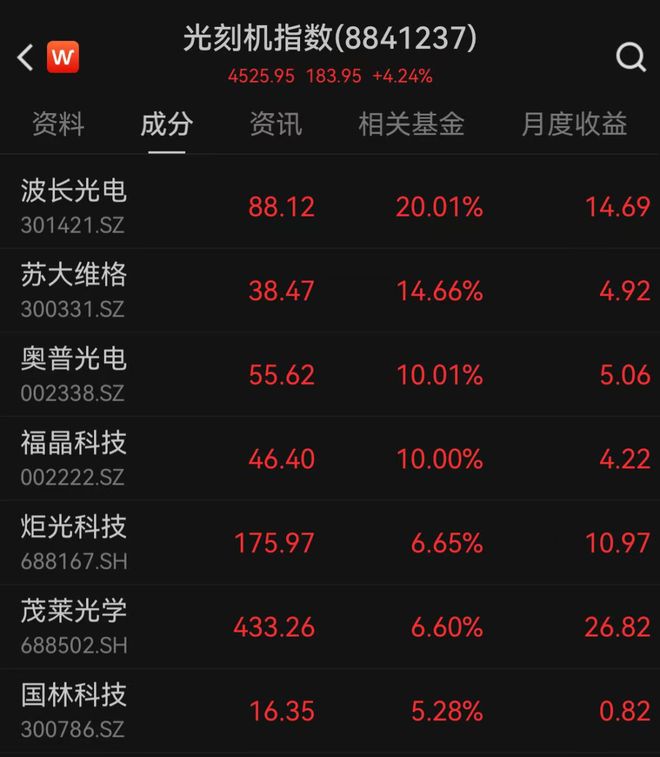
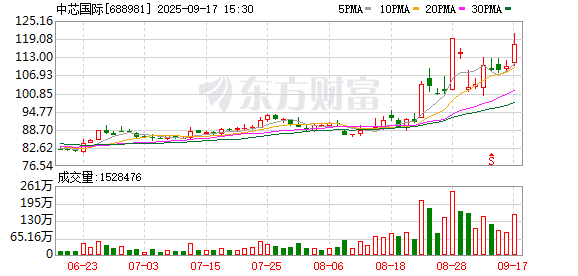
Core Viewpoint - The A-share market saw a strong rally in the photolithography machine sector, with the photolithography index rising by 4.24% and leading company SMIC reaching a historical high in stock price [1][2]. Group 1: Market Performance - The photolithography index closed at 4525.95, up by 183.95 points, reflecting a 4.24% increase [2]. - SMIC's stock price closed at 117.39 CNY per share, with a nearly 7% increase, leading to a total market capitalization of 605.8 billion CNY [1]. - Other companies in the sector, such as BOL, SuDa WeiGe, and FJ Technology, also experienced significant gains, with BOL rising by 20% [1][2]. Group 2: Industry Developments - Reports indicate that SMIC is testing a deep ultraviolet photolithography machine manufactured by the Shanghai startup Yuliangsheng, which utilizes immersion technology similar to that of ASML [2]. - The photolithography machine is a core device in wafer manufacturing, essential for continuing Moore's Law, with a promising market outlook [4]. - The advanced packaging market is projected to grow from 38 billion USD in 2024 to 79 billion USD by 2030, with high-end packaging expected to increase from 8 billion USD to over 28 billion USD in the same period [4]. Group 3: Market Dynamics - ASML, Nikon, and Canon dominate the global photolithography market, with ASML holding a 61.2% market share in 2024, being the sole supplier in the EUV segment [4]. - China is the largest customer for ASML's photolithography machines, with revenue from the region expected to surge to 41% in 2024 due to the expansion of wafer fabs and excess inventory [4]. - The domestic photolithography machine industry is anticipated to see growth opportunities driven by the increasing demand for AI computing and advancements in domestic chip technology [5].



大涨近7% 中芯国际创历史新高!光刻机概念集体爆发
2 1 Shi Ji Jing Ji Bao Dao· 2025-09-17 09:00
而中国光刻机需求量较大。目前中国是ASML光刻机最大的客户,2024年因晶圆厂扩产景气度及超额备 货的因素中国区收入占比爆发增长至41%。 9月17日,A股市场光刻机概念板块强势拉升。截至收盘,光刻机指数(8841237)涨幅达4.24%。其 中,行业龙头中芯国际(688981.SH)盘中股价创历史新高,收盘报117.39元/股,放量上涨近7%,总市 值攀升至6058亿元。波长光电(301421.SZ)涨幅达20%,苏大维格(300331.SZ)、福晶科技 (002222.SZ)等个股跟涨。 资料显示,光刻机是晶圆制造最核心设备之一,在半导体制造领域,光刻机是延续摩尔定律的核心装 备,其市场前景可观。Yole数据显示,先进封装市场规模预计从2024年380亿美元增长至2030年的790亿 美元。其中,高端封装2024年市场规模为80亿美元,预计到2030年将超过280亿美元。 从市场格局来看,ASML、Nikon和Canon三家国外公司长期占据全球光刻机市场的主导地位。国金证券 研报显示,ASML 2024年占据全球61.2%份额,是EUV领域为唯一供应商;尼康和佳能主攻中低端光刻 机市场。 不过,在AI算力 ...
中国几何量精密仪器市场现状研究分析与发展前景预测报告
QYResearch· 2025-09-10 06:15
Core Viewpoint - The Chinese geometric precision instrument market is experiencing steady growth, driven by the demand for high-end manufacturing, smart manufacturing, and quality control, with a projected market size of 10.53 billion yuan by 2031, growing at a CAGR of 7.3% from 2025 to 2031 [2][6]. Market Overview - The market for geometric precision instruments in China is expected to reach 6.67 billion yuan in sales by 2024, with a total sales volume of 12,541 units, including 4,548 coordinate measuring machines and 1,594 laser interferometers [2][5]. - The market share of coordinate measuring machines is projected to increase from 36.27% in 2024 to 39.69% by 2031 [5]. Key Players - Major manufacturers in the domestic market include Hexagon, ZEISS, Mitutoyo, AMETEK, Nikon, Topcon, and others, with the top ten companies holding approximately 56.37% of the market share in 2024 [5][6]. Application Areas - The industrial machinery sector dominates the application of geometric precision instruments, with sales expected to grow from 3,989 units in 2024 to 4,992 units by 2031, reflecting a CAGR of 3.32% from 2025 to 2031 [5]. Market Drivers - The upgrade and precision demand in manufacturing are driving the rigid demand for geometric precision instruments, particularly in sectors like new energy vehicles and semiconductor manufacturing, which require high precision measurements [8]. - AI-driven intelligent detection technologies are enhancing measurement efficiency and accuracy, with systems achieving error rates as low as 0.05% [8]. - Policy support, such as the "Made in China 2025" initiative, is accelerating the development of domestic alternatives to imported equipment, with significant government funding allocated for research and development [9]. Market Challenges - The reliance on imported key components remains a significant challenge, as core components are dominated by foreign companies, leading to a technology gap in high-end applications [10]. - Material and process bottlenecks, such as restrictions on critical materials, hinder the development of domestic instruments [10]. - The lack of a comprehensive talent training system for interdisciplinary skills in optical design, mechanical precision processing, and software algorithms poses a challenge for the industry [11].