九毛九

Search documents
九毛九10月14日耗资100.1万港元回购49.8万股
Zhi Tong Cai Jing· 2025-10-14 11:12
Group 1 - The company Jiumaojiu (09922) announced a share buyback plan, intending to repurchase 498,000 shares at a cost of HKD 1,001,000 on October 14, 2025 [1]
九毛九(09922)10月14日耗资100.1万港元回购49.8万股
智通财经网· 2025-10-14 11:05
Group 1 - The company, Jiumaojiu (09922), announced a share buyback plan, spending HKD 1.001 million to repurchase 498,000 shares on October 14, 2025 [1]
九毛九(09922) - 翌日披露报表
2025-10-14 11:02
FF305 公司名稱: 九毛九国际控股有限公司 (於開曼群島註冊成立的有限公司) 呈交日期: 2025年10月14日 如上市發行人的已發行股份或庫存股份出現變動而須根據《香港聯合交易所有限公司(「香港聯交所」)證券上市規則》(「《主板上市規則》」)第13.25A條 / 《香港聯合交易所有限公司GEM證券 上市規則》(「《GEM上市規則》」)第17.27A條作出披露,必須填妥第一章節 。 | 第一章節 | | | | | | | | | --- | --- | --- | --- | --- | --- | --- | --- | | 1. 股份分類 | 普通股 | 股份類別 | 不適用 | | 於香港聯交所上市 | 是 | | | 證券代號 (如上市) | 09922 | 說明 | | | | | | | A. 已發行股份或庫存股份變動 | | | | | | | | | | | | 已發行股份(不包括庫存股份)變動 | | 庫存股份變動 | | | | | 事件 | 已發行股份(不包括庫存股份)數 目 | 佔有關事件前的現有已發 行股份(不包括庫存股 份)數目百分比 (註3) | | 庫存股份數目 | 每股 ...
九毛九跌超4%
Mei Ri Jing Ji Xin Wen· 2025-10-14 07:02
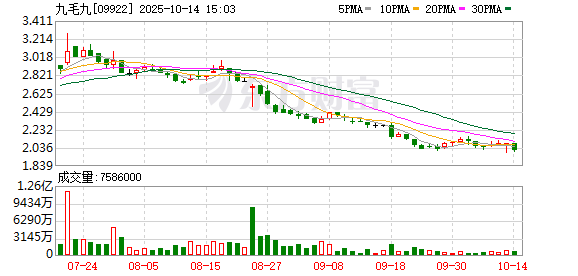
(文章来源:每日经济新闻) 每经AI快讯,10月14日,九毛九(09922.HK)跌超4%,盘中低见1.99港元,逼近历史前低1.98港元。截至 发稿,跌3.85%,报2港元,成交额1464.45万港元。 ...

九毛九再跌超4%逼近历史前低 机构称需求持续疲弱及经营层面仍面临挑战
Zhi Tong Cai Jing· 2025-10-14 06:52
Core Viewpoint - Jiumaojiu (09922) has seen a significant decline in stock price, dropping over 4% and nearing its historical low, indicating ongoing challenges in the restaurant industry and consumer demand [1] Company Performance - Jiumaojiu's stock price fell to 1.99 HKD, close to its historical low of 1.98 HKD, with a current trading price of 2 HKD and a trading volume of 14.64 million HKD [1] - The company reported a decline in both revenue and net profit for the first half of the year, reflecting weak demand and operational challenges [1] Industry Trends - The discussion around the use of pre-prepared dishes in restaurants has raised concerns, particularly regarding the "live fish" marketing claims of its brand, Taier [1] - Taier's parent company, Jiumaojiu Group, has introduced a new fresh store concept, which has been gradually rolled out nationwide since March, with 68 locations currently operational [1] Analyst Insights - According to a report from China Merchants Securities, despite signs of stabilization in profit margins and initial success in store reforms, same-store sales growth and table turnover rates for core brands like Taier and Jiumaojiu remain weak [1] - The ongoing challenges in consumer demand and operational performance are highlighted by the company's removal from the Hong Kong Stock Connect list on September 8 [1]
九毛九(09922.HK)10月13日耗资100.3万港元回购49.4万股
Ge Long Hui· 2025-10-13 11:18
格隆汇10月13日丨九毛九(09922.HK)公告,10月13日耗资100.3万港元回购49.4万股。 ...
九毛九(09922)10月13日斥资100.27万港元回购49.4万股
智通财经网· 2025-10-13 11:16
Core Viewpoint - Jiumaojiu (09922) announced a share buyback plan, indicating confidence in its stock value and future prospects [1] Summary by Relevant Sections Company Actions - The company plans to repurchase 494,000 shares at a total cost of HKD 1,002,700 [1] - The buyback price per share ranges from HKD 2.00 to HKD 2.05 [1] Financial Implications - The total expenditure for the buyback represents a strategic investment in the company's own equity, potentially enhancing shareholder value [1]
九毛九10月13日斥资100.27万港元回购49.4万股
Zhi Tong Cai Jing· 2025-10-13 11:16
Group 1 - The company, Jiumaojiu (09922), announced a share buyback plan on October 13, 2025, involving an expenditure of HKD 1.0027 million to repurchase 494,000 shares [1] - The buyback price per share is set between HKD 2.00 and HKD 2.05 [1]
九毛九(09922) - 翌日披露报表
2025-10-13 11:11
FF305 翌日披露報表 (股份發行人 ── 已發行股份或庫存股份變動、股份購回及/或在場内出售庫存股份) 表格類別: 股票 狀態: 新提交 呈交日期: 2025年10月13日 如上市發行人的已發行股份或庫存股份出現變動而須根據《香港聯合交易所有限公司(「香港聯交所」)證券上市規則》(「《主板上市規則》」)第13.25A條 / 《香港聯合交易所有限公司GEM證券 上市規則》(「《GEM上市規則》」)第17.27A條作出披露,必須填妥第一章節 。 | 第一章節 | | | | | | | | --- | --- | --- | --- | --- | --- | --- | | 1. 股份分類 | 普通股 | 股份類別 | 不適用 | 於香港聯交所上市 | 是 | | | 證券代號 (如上市) | 09922 | 說明 | | | | | | A. 已發行股份或庫存股份變動 | | | | | | | | | 事件 | | 已發行股份(不包括庫存股份)變動 佔有關事件前的現有已發 | 庫存股份變動 | 每股發行/出售價 (註4) | 已發行股份總數 | | | | 已發行股份(不包括庫存股份)數 目 | 行股份 ...
又一巨头倒下,中期销售狂降不涨,为什么大家都不愿意逛商场了?
Sou Hu Cai Jing· 2025-10-13 09:42
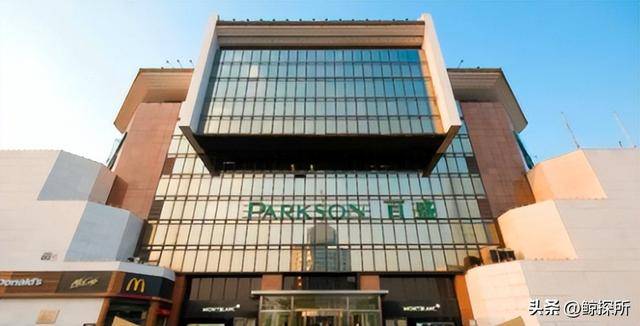
Core Viewpoint - The retail industry, particularly shopping malls, is facing a significant decline, with many well-known brands closing stores due to changing consumer preferences and market dynamics [1][5][23] Group 1: Store Closures - Beijing Baisheng, the first store of Baisheng Group in mainland China, will close by the end of the year, marking the end of an era [1] - A large number of stores are expected to close by mid-2025, including 227 stores from Yonghui, 88 from Jiumaojiu Group, and 4 from Bubugao, indicating a rapid increase in closure rates in the supermarket and restaurant sectors [3] - Major retailers like Walmart, Yonghui, and Starbucks have also been part of the store closure trend over the past two years, raising questions about the diminishing appeal of shopping malls [5] Group 2: Changing Consumer Behavior - Shopping malls, once central to consumer spending due to their ability to provide a one-stop shopping experience, are losing relevance due to the rise of instant retail, which offers quick delivery of fresh produce and daily necessities [7] - New shopping channels, such as specialty snack stores and discount brand stores, are expanding rapidly, further constraining the survival space of traditional malls [9] - Consumers are becoming more rational in their spending, focusing on value for money, which clashes with the traditional mall model that often lacks differentiation [9][11] Group 3: Operational Challenges - Many malls rely on a brand consignment model, limiting their control over products, inventory, and pricing, making it difficult to adapt to market changes [11] - Aging infrastructure in many malls, combined with high rental costs and maintenance expenses, is creating significant financial pressure as long-term leases expire [13][15] - Baisheng faces a penalty of 11.7 million yuan for closing its store, while Yonghui incurs losses of 827 million yuan from lease compensation and asset write-offs, forcing them to close underperforming stores to mitigate losses [15] Group 4: Opportunities for Transformation - Despite the challenges, there are opportunities for malls to transform, as exemplified by Nanjing's Deji Plaza, which has successfully integrated unique brands and experiential elements to attract diverse consumers [17][19] - The key to overcoming the current crisis lies in adopting an "experiential and differentiated" approach, moving beyond traditional retail models [19] - The current wave of store closures is seen as a necessary industry cleansing process, shifting focus from expansion to improving operational efficiency [21][23]