Roche

Search documents
Roche and Alnylam advance zilebesiran into global phase III cardiovascular outcomes trial for people with uncontrolled hypertension
Globenewswire· 2025-08-30 14:30
Core Viewpoint - Roche and Alnylam are initiating a Phase III cardiovascular outcomes trial (CVOT) for zilebesiran, an RNAi therapeutic aimed at reducing major adverse cardiovascular events in patients with uncontrolled hypertension [1][5]. Group 1: Clinical Trial Details - The Phase III trial, named ZENITH, will enroll approximately 11,000 patients and evaluate zilebesiran (300 mg) administered every six months compared to placebo [5][16]. - The KARDIA-3 study demonstrated a placebo-adjusted reduction in office systolic blood pressure (SBP) of -5.0 mmHg at month three and -3.9 mmHg at month six for the 300 mg dose [2][12]. - KARDIA-3 identified a patient population that could benefit most from zilebesiran, particularly those on diuretics with a baseline SBP greater than 140 mmHg, showing reductions of -9.2 mmHg at month three and -8.3 mmHg at month six [3][12]. Group 2: Safety and Efficacy - Zilebesiran exhibited an encouraging safety profile, with serious adverse events occurring in 3.8% of patients treated with zilebesiran compared to 4.5% in the placebo group, and no deaths reported during the six-month period [14]. - The drug demonstrated clinically meaningful reductions in blood pressure and sustained effects over six months, indicating its potential as a long-acting therapy for hypertension [8][12]. Group 3: Market Need and Potential - Hypertension affects over 1.2 billion people globally, with up to 80% of patients not achieving adequate blood pressure control, highlighting the need for new treatment options [6][20]. - Zilebesiran's biannual dosing could address adherence issues associated with daily oral therapies, potentially reducing the risk of serious health complications and cardiovascular events [4][17].


3 Vanguard ETFs to Buy With $1,000 and Hold Forever
The Motley Fool· 2025-08-30 09:34
Core Viewpoint - The article emphasizes the benefits of long-term investment in low-cost ETFs, highlighting their potential for wealth accumulation through dollar-cost averaging and compounding [2][5]. Group 1: Vanguard S&P 500 ETF - The Vanguard S&P 500 ETF (VOO) is recommended as a top choice for long-term investment, mirroring the performance of the S&P 500 and providing exposure to 500 major U.S. companies [3][4]. - The ETF has shown strong performance with average annual gains of 13.6% over the past decade, encompassing both bull and bear markets [4]. - It features a low expense ratio of 0.03%, making it an attractive core holding for investors [5]. Group 2: Vanguard Growth ETF - The Vanguard Growth ETF (VUG) is positioned as a suitable option for investors seeking growth stocks, focusing on large-cap companies with strong sales and earnings momentum [6][8]. - This ETF has outperformed the broader market with average annual returns of 16.3% over the past decade, benefiting from a higher weighting in growth-oriented companies like Nvidia [7]. - It maintains a low expense ratio of 0.04%, providing a cost-effective alternative to actively managed funds [8]. Group 3: Vanguard International High Dividend Yield ETF - The Vanguard International High Dividend Yield ETF (VYMI) offers international exposure and dividend income, tracking non-U.S. companies with above-average dividend yields [9][11]. - The ETF has performed well, with a nearly 27% increase this year and average annual returns of nearly 14% over the past five years [10]. - It has a higher expense ratio of 0.17% compared to domestic Vanguard ETFs, but remains competitive for international funds, adding diversification and yield to U.S.-focused portfolios [11].

AlzeCure Pharma (AC6) Update / Briefing Transcript
2025-08-27 13:02
Summary of AlzeCure Pharma (AC6) Update / Briefing Company Overview - **Company**: AlzeCure Pharma - **Focus**: Development of treatments for pain and Alzheimer's disease - **Background**: Spinout from AstraZeneca, based in Stockholm at Karolinska Institute - **Business Model**: Research and development company aiming to outlicense projects to finance pipeline [4][6] Key Product: ACD440 - **Type**: Novel non-opioid analgesic with orphan designation - **Indication**: Erythromelalgia, a rare chronic pain disorder characterized by burning pain, redness, and swelling [24][34] - **Mechanism**: TRPV1 antagonist, targeting pain signaling pathways [34][38] - **Clinical Development**: Positive Phase II readout in chronic neuropathic pain; preparing for registration trial for erythromelalgia [7][9][40] Orphan Drug Market Insights - **Market Size**: Orphan drug market reached $195.2 billion globally in 2024, accounting for 12% of all prescription sales [13] - **Growth Rate**: Orphan drugs growing at 10-12% annually, double the broader pharmaceutical market growth of 5-6% [13][14] - **Regulatory Support**: FDA reports over half of newly approved medicines are orphan drugs; strong incentives for development [12][15] - **Pricing**: Orphan drugs priced approximately 17 times higher than other medicines, reflecting their niche market [16] Erythromelalgia Overview - **Prevalence**: Estimated 43,000 to 70,000 individuals in the US affected, qualifying as an orphan disease [26][27] - **Symptoms**: Pain attacks triggered by heat or stress, with no effective medical treatments currently available [25][33] - **Socioeconomic Impact**: Significant burden on patients and caregivers due to chronic pain and lack of effective treatments [34] Development Strategy - **Next Steps**: Focus on optimizing the development program for ACD440 and pursuing business development activities for outlicensing [45][59] - **Market Exclusivity**: Seven years of market exclusivity in the US for orphan drugs, with additional exclusivity for pediatric indications [43][44] - **Global Strategy**: Initial focus on the US market, with plans to expand to Europe and Japan [66] Competitive Landscape - **Current Market**: No approved pain medications for erythromelalgia; ACD440 positioned as a first-in-class treatment [62][63] - **Potential Indications**: Exploration of additional orphan indications, such as diabetic polyneuropathy [64] Future Outlook - **Market Growth**: Orphan drug market expected to continue growing rapidly, driven by high unmet medical needs and advancements in precision medicine [70][72] - **Investment Opportunities**: Increasing interest from both big pharma and investors in orphan drug development [79] Conclusion - **Strategic Positioning**: ACD440 represents a significant opportunity for AlzeCure Pharma, addressing a major unmet medical need in erythromelalgia with strong regulatory support and a clear path to market [80]
Viking Therapeutics: What's Next?
The Motley Fool· 2025-08-26 10:15
Core Viewpoint - Viking Therapeutics experienced a significant 40% drop in stock price following the release of Phase 2 results for its oral obesity treatment VK2735, despite demonstrating a strong 12.2% weight loss signal over 13 weeks [1][2]. Company Developments - The Phase 3 VANQUISH program was launched on June 25, 2025, with two large trials enrolling: VANQUISH-1 for 4,500 adults with obesity and VANQUISH-2 for 1,100 adults with type 2 diabetes, both lasting 78 weeks [4]. - The injectable formulation previously showed a 14.7% weight loss at 13 weeks with mild to moderate side effects that decreased over time, indicating potential for transitioning from injectables to oral pills for long-term management [5]. Market Opportunity - Goldman Sachs revised its 2030 obesity market forecast to $95 billion, suggesting that even a 2% market share could yield approximately $1.9 billion in annual revenue for Viking, which has a market cap of $2.9 billion [7]. - The company is exploring monthly dosing options for its injectable treatment, positioning itself alongside Novo Nordisk as one of the few to demonstrate efficacy in both oral and injectable forms [8]. Financial Position - Viking has $808 million in cash as of June 30, 2025, but faces a $300 million expense for its registrational program, making partnerships increasingly likely after further data analysis and FDA feedback [9]. - Wall Street maintains an average price target of $87 to $90 per share, indicating a potential 200% upside from current levels, attributed to a misunderstanding of trial design and tolerability issues [11]. Industry Context - The CDC reports that 40% of U.S. adults have obesity, highlighting a vast addressable market for obesity treatments [12]. - Big Pharma remains interested in obesity assets, with companies like AbbVie, Roche, and Amgen actively pursuing deals, making Viking's late-stage opportunity attractive, especially after the recent stock decline [10].


Roche's US subsidiary Genentech breaks ground on state-of-the-art manufacturing facility in North Carolina, USA
GlobeNewswire News Room· 2025-08-25 18:30
Core Points - Genentech has commenced construction on its first manufacturing facility on the East Coast, located in Holly Springs, North Carolina, which will support the production of metabolic medicines, including obesity treatments [1][2] - The initial investment for this facility exceeds $700 million and is part of Roche's broader commitment of $50 billion towards US manufacturing infrastructure and R&D [2][8] - The facility is expected to create over 1,900 jobs and is strategically located in a growing biopharmaceutical hub with access to a skilled workforce and leading academic institutions [2][8] Facility Details - The new facility will cover an area of 65,000 m² and is designed to incorporate modern biomanufacturing technologies, advanced automation, and digital capabilities [3] - It is projected to be operational by 2029 and will enhance Roche's manufacturing capacity and supply chain resilience [3][4] - The facility will also allow for future expansion on the 400,000 m² lot [3] Company Background - Roche, founded in 1896, is the world's largest biotechnology company and a leader in in-vitro diagnostics, focusing on developing innovative medicines and diagnostics [5][6] - The company has a long-standing commitment to sustainability and aims to achieve net zero by 2045 [6]


24/7 Market News: LIXTE Targets Large, Unmet Oncology Markets
Globenewswire· 2025-08-25 12:05
Core Insights - LIXTE Biotechnology Holdings, Inc. is focusing on developing novel cancer therapies targeting key cellular pathways, with a particular emphasis on high-need cancer indications that currently have limited treatment options [1][10] - The company's lead compound, LB-100, is being evaluated in clinical studies aimed at enhancing the effectiveness of chemotherapy and immunotherapy in treatment-resistant cancers [1][7] Colorectal Cancer - Colorectal cancer is one of the most prevalent cancers globally, with the drug market projected to exceed $18 billion by 2028; approximately 85% of cases are microsatellite-stable (MSS) and do not respond to existing immunotherapies [2][3] - LB-100 is being studied in combination with Roche's atezolizumab in a clinical trial at the Netherlands Cancer Institute, targeting MSS colorectal cancer patients [3] Ovarian Clear-Cell Carcinoma - Ovarian clear-cell carcinoma (OCCC) accounts for about 5-10% of ovarian cancer cases, with current treatments showing limited efficacy and poor long-term outcomes; the global market for ovarian cancer therapies was valued at over $2 billion in 2023 [3][4] - LB-100 is being evaluated in combination with GlaxoSmithKline's dostarlimab in a study at MD Anderson Cancer Center and Northwestern University, with interim data expected in Q4 2025 [4] Soft-Tissue Sarcoma - Soft-tissue sarcomas are rare cancers with limited treatment advancements; the global market for therapies is projected to reach $1.5 to $2 billion by 2030 [5] - A Phase 1b clinical study is being conducted in collaboration with the Spanish Sarcoma Group to evaluate LB-100 in combination with doxorubicin, aiming to enhance chemotherapy effectiveness [6] Development Strategy - LIXTE's clinical programs are aligned with significant commercial opportunities and unmet therapeutic needs, particularly in tumors with poor responses to current immunotherapies [7][8] - LB-100 is a first-in-class PP2A inhibitor designed to sensitize tumors to other treatments, including immune checkpoint blockade and standard chemotherapy [7][10]

The Next Big Thing: 2 AI-Powered Healthcare Stocks Ready to Explode
The Motley Fool· 2025-08-23 08:00
Core Insights - The artificial intelligence (AI) revolution is significantly impacting various industries, with healthcare being one of the sectors that is beginning to adopt AI technologies [1][2][3] Group 1: AI in Healthcare - Despite the slow adoption of AI in healthcare, there are promising opportunities for investors as companies begin to commercialize AI solutions [3] - Recursion Pharmaceuticals has developed Recursion OS, a platform that utilizes 36 petabytes of biological and chemical data to virtually test drug potentials at a fraction of the cost of traditional clinical trials [7][9] - Tempus AI offers practical AI solutions for caregivers, helping with disease diagnosis, clinical trial suggestions, and treatment efficacy predictions, which enhances patient outcomes [15][16] Group 2: Company Performance - Recursion Pharmaceuticals reported a revenue of just under $34 million in the first half of the year, with a net loss of $374 million, but analysts expect revenue to triple by 2027 while halving losses [11][12] - Tempus AI generated $693 million in revenue last year, reflecting a 30% year-over-year growth, and is projected to become profitable by fiscal 2027 as it continues to grow [14][18]



5 Vanguard ETFs to Buy With $500 and Hold Forever
The Motley Fool· 2025-08-22 08:16
Core Insights - The article emphasizes the importance of not waiting for market pullbacks to invest, as this strategy can lead to missed opportunities for gains [2] - Dollar-cost averaging is presented as a more effective investment strategy, allowing investors to gradually invest over time and benefit from compound growth [3] Vanguard ETFs Overview - The Vanguard S&P 500 ETF (VOO) provides exposure to 500 major U.S. companies, delivering an average annualized return of 13.6% over the past decade, with a low expense ratio of 0.03% [6][7][8] - The Vanguard Growth ETF (VUG) focuses on fast-growing companies, averaging annualized returns of nearly 16.3% over the past decade, with an expense ratio of 0.04% [9][10][11] - The Vanguard Information Technology ETF (VGT) offers concentrated exposure to the tech sector, achieving an average annual gain of 21.6% over the past decade, with an expense ratio of 0.09% [12][13][14] - The Vanguard Mega Cap Value ETF (MGV) targets large value-oriented companies, delivering a 14.3% annualized return over the past five years and a 10.8% return over the past decade, with an expense ratio of 0.07% [15][16][17] - The Vanguard International High Dividend Yield ETF (VYMI) provides international exposure and has gained nearly 26.8% year to date, with annualized returns of 13.8% over the past five years, and an expense ratio of 0.17% [18][19][20]

全球抗癌症药物市场前10强生产商排名及市场占有率
QYResearch· 2025-08-19 08:42
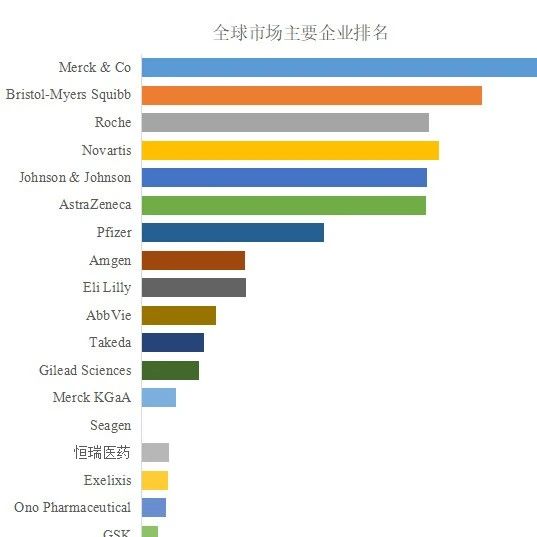
Core Viewpoint - The global cancer drug market is projected to reach $429.16 billion by 2031, with a compound annual growth rate (CAGR) of 11.1% in the coming years [1][11]. Market Overview - The major manufacturers in the global cancer drug market include Merck & Co, Bristol-Myers Squibb, Roche, Novartis, and Johnson & Johnson, which collectively hold approximately 55.0% of the market share in 2024 [5]. - Targeted therapy is the leading product type, accounting for about 55.1% of the market share [6]. - Blood-related cancers represent the largest demand source, making up approximately 22.3% of the market [9]. Market Drivers - The continuous rise in global cancer incidence and mortality rates, particularly for lung, breast, and colorectal cancers, drives the demand for effective treatment drugs [11]. - Increased health awareness and advancements in diagnostic technologies have led to earlier cancer detection, expanding the market size [11]. - Rapid developments in biotechnology have introduced revolutionary breakthroughs in cancer drug research, such as targeted therapies, immunotherapies, ADC drugs, and CAR-T cell therapies, significantly improving treatment outcomes and patient survival rates [11]. - Supportive government policies, including expedited drug reviews and incentives for rare disease medications, create a favorable environment for innovation [11]. - Growing investment enthusiasm in the capital market for innovative oncology drugs provides strong research and development motivation for small and medium-sized biotech companies [11]. Market Challenges - The cancer drug market faces challenges such as high research and development costs, long timelines, and high failure rates, with new drugs taking years to transition from the lab to clinical use [12]. - Despite the introduction of new drugs, many innovative treatments are expensive, and limited insurance coverage restricts accessibility and affordability in certain regions [12]. - Scientific issues like targeted resistance, tumor heterogeneity, and immune evasion remain unresolved, affecting the sustainability and broad applicability of treatment effects [12]. - Increasing regulatory scrutiny on clinical trial data quality, safety assessments, and ethical compliance raises the industry entry barriers [12]. Future Trends - The future development of cancer drugs will focus on more precise, individualized, and diversified approaches [13]. - Advances in genomics, transcriptomics, and proteomics will refine tumor molecular typing, shifting cancer treatment from traditional broad-spectrum therapies to targeted and precise models [13]. - Targeted drugs will continue to be developed for more mutation sites, such as KRAS, HER2, and EGFR, enabling precise interventions for specific patient populations [13]. - Immunotherapy will expand its application boundaries, with PD-1/PD-L1 inhibitors and CTLA-4 inhibitors being used in combination with other therapies to enhance efficacy and overcome immune tolerance issues [13]. - The concept of personalized treatment will be integrated throughout the drug development process, utilizing patient biomarkers and dynamic efficacy assessments to improve treatment outcomes and quality of life [13].
Xilio Therapeutics Announces Pipeline and Business Updates and Second Quarter 2025 Financial Results
Globenewswire· 2025-08-14 11:30
Core Insights - Xilio Therapeutics announced updated Phase 2 data for vilastobart, showing deep and durable responses with a differentiated safety profile for anti-CTLA-4 combination therapy [1][5] - The company is on track to nominate its first development candidates for masked T cell engager programs in the second half of 2025 [1][12] - As of June 30, 2025, Xilio reported $121.6 million in cash and cash equivalents, providing a cash runway through the end of the third quarter of 2026 [1][13] Pipeline and Business Updates - Vilastobart is a tumor-activated, Fc-enhanced anti-CTLA-4 monoclonal antibody currently evaluated in combination with atezolizumab for advanced solid tumors and metastatic microsatellite stable colorectal cancer [3][14] - XTX301, a tumor-activated IL-12, is designed to stimulate anti-tumor immunity and is being evaluated as a monotherapy in a Phase 1 clinical trial [4][15] - Xilio's masked T cell engager programs include bispecific and tri-specific molecules designed to enhance T cell activation and are advancing through IND-enabling studies [7][9] Financial Results - Collaboration and license revenue for the quarter ended June 30, 2025, was $8.1 million, up from $2.4 million in the same quarter of 2024 [17] - Research and development expenses increased to $15.3 million in Q2 2025 from $11.2 million in Q2 2024, driven by clinical development activities [17] - The net loss for the quarter ended June 30, 2025, was $15.8 million, compared to a net loss of $13.9 million for the same period in 2024 [17][23]