中国信达

Search documents
中证香港红利等权投资指数报3553.44点,前十大权重包含中国建材等
Jin Rong Jie· 2025-07-21 15:20
Group 1 - The core index, the China Securities Hong Kong Dividend Equal Weight Index (HK Dividend EW), has shown significant growth, with a 6.57% increase over the past month, 26.48% over the past three months, and 28.01% year-to-date [1] - The index comprises 30 securities selected from the Hong Kong Stock Connect, focusing on those with high cash dividend yields, stable dividends, and sufficient liquidity, calculated using an equal-weight methodology [1] - The index's top ten holdings include China National Building Material (4.14%), China Hongqiao Group (4.12%), China Cinda Asset Management (3.81%), and others, reflecting a diverse portfolio [1] Group 2 - The industry composition of the index shows that finance accounts for 37.14%, energy 15.94%, industrials 15.81%, materials 11.87%, real estate 6.84%, communication services 5.89%, consumer discretionary 3.32%, and utilities 3.20% [2] - The index samples are adjusted biannually, with changes implemented on the next trading day following the second Friday of June and December, typically not exceeding 20% of the sample [2] - Special adjustments may occur under certain conditions, such as delisting or significant corporate actions like mergers or acquisitions, ensuring the index remains relevant [2]
中证香港300内地高贝塔指数报1070.52点,前十大权重包含融创中国等
Jin Rong Jie· 2025-07-21 08:42
Core Points - The China Securities Index Hong Kong 300 Mainland High Beta Index (H300CNHB) has shown significant growth, with a 13.95% increase over the past month, 22.14% over the past three months, and 27.17% year-to-date [1] Group 1: Index Performance - The index is currently reported at 1070.52 points, reflecting a strong upward trend [1] - The index is based on a starting point of 1000.0 points as of December 30, 2005 [1] Group 2: Index Holdings - The top ten weighted stocks in the index include: - Sunac China (4.18%) - China Merchants Securities (3.13%) - China Cinda Asset Management (2.82%) - Bilibili Inc. (2.62%) - InnoCare Pharma (2.60%) - China International Capital Corporation (2.54%) - China Jinmao Holdings Group (2.40%) - China Everbright Holdings (2.38%) - GDS Holdings Limited (2.37%) - China Galaxy Securities (2.36%) [1] Group 3: Sector Allocation - The index is fully composed of stocks listed on the Hong Kong Stock Exchange, with a sector breakdown as follows: - Financials: 27.69% - Information Technology: 17.74% - Real Estate: 17.35% - Healthcare: 16.27% - Consumer Discretionary: 10.60% - Communication Services: 6.71% - Industrials: 3.64% [1]
智通港股空仓持单统计|7月18日
智通财经网· 2025-07-18 10:34
Group 1 - The top three companies with the highest short positions are WuXi AppTec (02359), CATL (03750), and COSCO Shipping Holdings (01919), with short ratios of 23.99%, 17.39%, and 14.14% respectively [1][2] - The companies with the largest increase in short positions are Giant Biogene (02367), WuXi AppTec (02359), and Henderson Land Development (00012), with increases of 2.05%, 1.43%, and 1.41% respectively [1][2] - The companies with the largest decrease in short positions are SF Holding (06936), Far East Horizon (03360), and Jiumaojiu International Holdings (09922), with decreases of -1.94%, -1.22%, and -1.18% respectively [1][3] Group 2 - The top ten companies with the highest short ratios include Ganfeng Lithium (01772) at 13.09%, Xiexin Technology (03800) at 12.57%, and Shandong Gold (01787) at 12.35% [2] - The companies with the largest increase in short ratios also include Fuyou Glass (06865) at 12.07% and Tigermed (03347) at 9.81% [2] - The companies with the largest decrease in short ratios include Vanke Enterprise (02202) at 11.38% and Green Leaf Pharmaceutical (02186) at 11.96% [3][4]

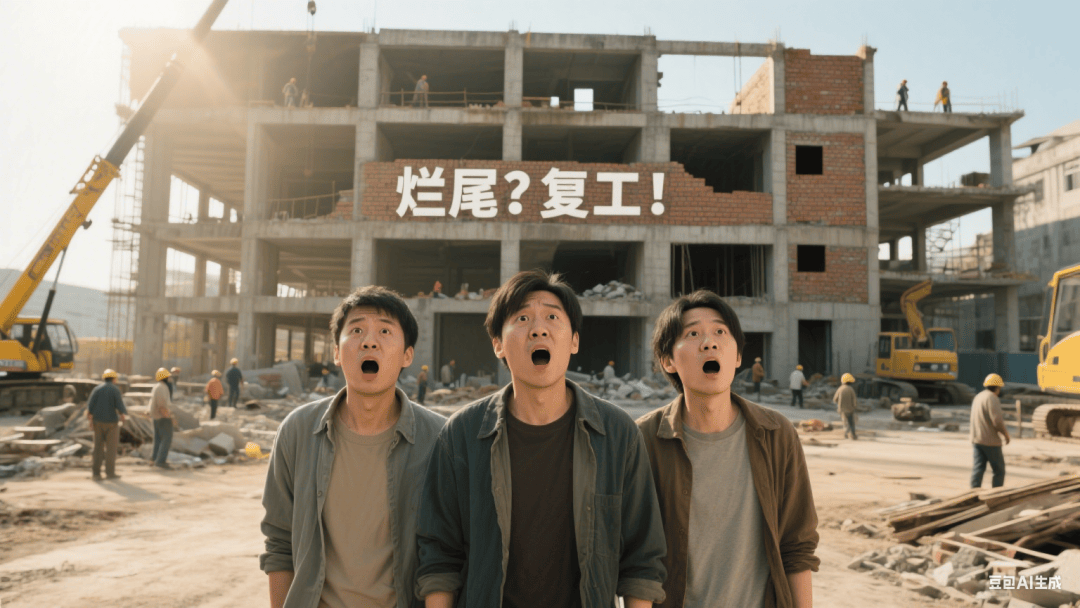
广州烂尾楼,正在疯狂复活
Sou Hu Cai Jing· 2025-07-16 15:28
Core Viewpoint - The article discusses the recent revival of several "stalled" real estate projects in Guangzhou, highlighting the city's efforts and strategies to address the issue of unfinished buildings and the potential for these projects to be revitalized [1][15]. Group 1: Revival of Stalled Projects - The "Rui Fu" project in Huadu District has been approved for development, with plans for 14 residential buildings and a kindergarten, marking a significant turnaround from its previous status as a stalled project [4][6]. - The "Jia Chuang Sheng Hui" underground commercial project, which has been inactive for over three years, is now listed for auction with a starting price of approximately 3 billion, indicating a potential revival [7]. - The "Yue Ken Green Garden," which has been stalled for over 20 years, has completed exterior renovations and is expected to be available for occupancy soon [9]. Group 2: Government Initiatives - The Guangzhou government has been actively addressing the issue of stalled projects for over 20 years, implementing various strategies and policies to revitalize these developments [16][17]. - Since 2003, the government has introduced measures to manage and revitalize stalled projects, with over 80% of such projects successfully transformed into commercial complexes or residential areas [17]. Group 3: Developer Strategies - Developers are seeking new avenues for project completion, with some actively pursuing partnerships and investments to revive stalled projects, as seen with the "Xu Hui Guang Yu Nan Fang" project [19]. - Large developers with substantial financial resources and experience are crucial in reviving stalled projects, as they can address debt issues and re-strategize project positioning [22].

个贷不良2.0时代的进阶:AMC如何迎接个贷不良新风口?
Zhong Cheng Xin Guo Ji· 2025-07-15 09:36
Investment Rating - The report indicates a positive outlook for the AMC industry in the context of personal loan non-performing assets, highlighting new business opportunities and regulatory support for compliance and orderly operations [3][4][6]. Core Insights - The personal loan non-performing asset market is experiencing rapid growth due to macroeconomic downturns, income fluctuations, and industry adjustments, presenting new business opportunities for AMCs [3][4]. - Regulatory policies have established a framework for the orderly development of personal loan non-performing asset management, emphasizing self-collection, outsourcing, and restructuring while prohibiting secondary transfers of non-performing loans [4][6]. - The market structure shows a dominance of local AMCs, with national AMCs beginning to make inroads, and a significant increase in the scale of personal loan non-performing assets since the pilot program began [11][16]. Summary by Sections Regulatory Policies Related to Personal Loan Non-Performing Assets - The report discusses the initiation of batch transfers of personal non-performing loans through regulatory notifications, which have opened new avenues for AMCs and emphasized the need for compliance in asset recovery [6][8]. - Key regulatory documents from 2021 to 2024 have progressively expanded the scope of participating institutions and asset types, enhancing market competition and establishing a more structured regulatory environment [8][10]. Market Size and Characteristics of Personal Loan Non-Performing Assets - The personal loan non-performing asset market has seen a significant increase, with a total of 1,314 asset packages listed by the end of 2024, amounting to 348.1 billion yuan, reflecting a compound annual growth rate of 142.53% from 2021 to 2024 [11]. - The composition of non-performing loans has shifted, with consumer loans and credit card overdrafts becoming more prominent, indicating a changing landscape in asset types [11][12]. Main Modes of AMC Disposal of Personal Loan Non-Performing Assets - AMCs primarily utilize traditional methods such as collection, legal action, debt restructuring, and judicial mediation, while some have adopted innovative approaches like asset securitization [20][21]. - The report highlights the varying recovery efficiencies across different disposal methods, with traditional methods generally yielding quicker returns but requiring significant financial strength and operational capability [20][22]. Case Studies of AMC Disposal of Personal Loan Non-Performing Assets - The report presents case studies illustrating how AMCs have integrated technology with traditional and innovative disposal methods to enhance recovery efficiency [26][30]. - Specific examples include the use of AI and big data by AMCs to optimize asset recovery processes and the establishment of partnerships with financial institutions to create specialized funds for asset management [30][34]. Challenges and Solutions in AMC Disposal of Personal Loan Non-Performing Assets - AMCs face challenges such as valuation difficulties, lack of experience, high judicial execution challenges, compliance risks, and profitability pressures [37][38]. - The report suggests that AMCs should enhance technological capabilities, optimize valuation models, and collaborate with regulatory bodies and third-party service providers to build a sustainable ecosystem for managing personal loan non-performing assets [41][42].
四川金融界大消息!
券商中国· 2025-07-15 06:07
Core Viewpoint - The article discusses the recent transfer of ownership of Changcheng Huaxi Bank from Changcheng Asset Management to Sichuan Bank, highlighting the ongoing trend of national Asset Management Companies (AMCs) divesting from banking assets [1][2][4]. Group 1: Ownership Transfer Details - Sichuan Bank has acquired 9.4259 billion shares of Changcheng Huaxi Bank, resulting in a 40.92% ownership stake [6]. - The previous controlling shareholder, Changcheng Asset Management, has completely exited its stake after over ten years of holding [6]. - The transaction was valued at 4.332 billion yuan, with the book value of Changcheng Huaxi Bank's total assets at 148.29 billion yuan and net assets at 10.064 billion yuan [6]. Group 2: Financial Metrics - As of the end of Q1 2023, Sichuan Bank reported total assets of 456.711 billion yuan and total liabilities of 419.824 billion yuan, with a revenue of 2.131 billion yuan and a net profit of 646 million yuan [3][7]. - Changcheng Huaxi Bank's total assets were reported at 156.261 billion yuan and total liabilities at 145.937 billion yuan, with total equity of 10.324 billion yuan [8]. - The capital adequacy ratio for Changcheng Huaxi Bank was 15.22%, with core tier one capital amounting to 10.324 billion yuan [9]. Group 3: AMC Divestment Trend - Following the exit of Changcheng Asset Management from Changcheng Huaxi Bank, only two banks remain under the control of national AMCs: Dalian Bank and Nanyang Commercial Bank [4][12]. - AMCs have been accelerating their exit from non-core banking subsidiaries, as evidenced by previous divestitures, including the transfer of Jilin Bank and Hunan Bank [12]. - Regulatory guidance has been issued to encourage AMCs to focus on their primary responsibilities and avoid unnecessary expansion into banking [14][15].

梁强拟任东方资产董事长 三大AMC高层职位动态调整中
Zhong Guo Jing Ying Bao· 2025-07-11 06:14
Group 1 - China Orient Asset Management announced the resignation of Wang Zhanfeng as chairman and executive director due to work changes, with Liang Qiang elected as the new chairman pending regulatory approval [1] - Liang Qiang has extensive experience in the four major national AMCs, having held senior positions in China Huarong, China Cinda, and China Great Wall, showcasing his expertise in crisis management [2] - The current leadership positions in the three major AMCs are experiencing dynamic adjustments, with several key roles remaining vacant, including the chairman position at China Great Wall [4][6] Group 2 - Liang Qiang's career includes significant contributions to risk resolution and business transformation at China Cinda, where he served as executive director and president before his recent appointment at China Orient [2][3] - The chairman position at China Great Wall has been vacant for seven months following the resignation of Li Junfeng, with the role currently being temporarily filled by the president [4] - Following Wang Zhanfeng's resignation, his future career path remains uncertain, and the search for a new president at China Cinda is ongoing [6]
港股金融股持续走强,交银国际涨超30%
news flash· 2025-07-10 05:40
Group 1 - Hong Kong financial stocks continue to strengthen, with China Merchants Bank International rising over 30% [1] - Yao Cai Securities Financial increased by over 20% [1] - Guotai Junan International saw an increase of over 10% [1] - China Securities and China Merchants Securities also experienced upward movement [1] Group 2 - Investors can buy Hong Kong stocks using A-share accounts without the need for Hong Kong Stock Connect, allowing for T+0 trading [1]
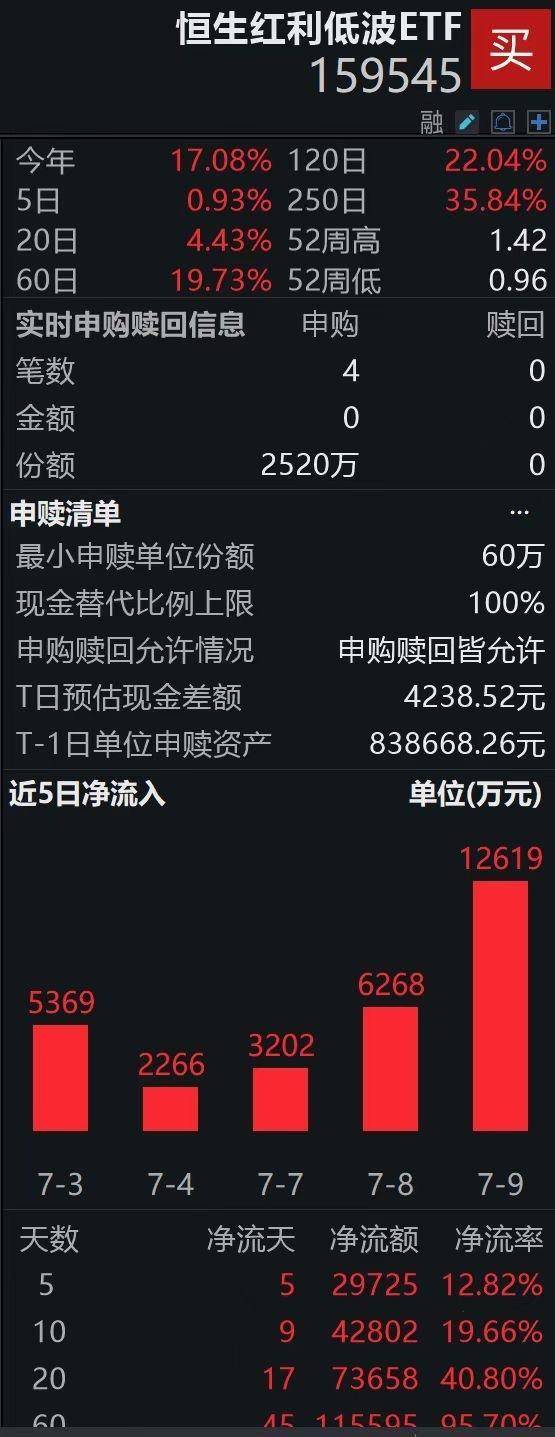
90家公司今日实施分红方案,恒生红利低波ETF(159545)盘中获净申购2520万份,连续5天获资金加仓
Sou Hu Cai Jing· 2025-07-10 03:44
Group 1 - The Hang Seng High Dividend Low Volatility Index (HSHYLV.HI) has increased by 0.61%, with notable movements in constituent stocks such as China Cinda (+2.8%) and Minsheng Bank (+5.2%) [1] - The Hang Seng Low Volatility ETF (159545) has seen significant capital inflows, totaling over 290 million in the last five days and over 730 million in the last 20 days [1] - As of July 9, the Hang Seng Low Volatility ETF (159545) reached a record fund size of 2.609 billion, ranking first among its peers [4] Group 2 - A total of 90 companies are implementing dividend distribution plans today, with 52 companies offering cash dividends of 1 yuan or more per 10 shares, and China Merchants Bank offering the highest at 20 yuan per 10 shares [7] - China Galaxy Securities suggests that in the current uncertain global environment, investors' demand for risk aversion will increase, making dividend assets attractive due to their stable cash flow and high dividend yield [7] - The Hang Seng High Dividend Low Volatility Index selects 50 high dividend, low volatility stocks from the Hong Kong Stock Connect, achieving a one-year dividend yield of 6.43% [7]
梁强拟任中国东方资产董事长,王占峰辞职
Sou Hu Cai Jing· 2025-07-09 00:50
Leadership Changes - Liang Qiang has been elected as the new chairman of China Orient Asset Management Co., Ltd., pending approval from the National Financial Regulatory Administration [2] - Wang Zhanfeng has resigned from his positions as chairman, executive director, and head of the board's strategic development committee due to work changes [2] Background of Liang Qiang - Liang Qiang, born in 1971, has extensive experience in the financial asset management sector, having worked in various roles at China Cinda Asset Management Co., Ltd. since 1999 [2][3] - His previous positions include serving as executive director and president at China Cinda, and he has held leadership roles in several other asset management companies [3] Company Overview - China Orient was established in October 1999 and transformed into a joint-stock company in September 2016, co-founded by the Ministry of Finance and the National Social Security Fund Council [4] - The company operates 26 branches nationwide and has eight major subsidiaries, covering various financial services including asset management, insurance, banking, and securities [4] Financial Performance - As of the end of 2024, China Orient's consolidated total assets reached 1.32 trillion yuan, with total equity of 162.42 billion yuan [5] - The parent company's total assets were 536.42 billion yuan, with total equity of 109.28 billion yuan, achieving a consolidated net profit of 3.166 billion yuan [5]