Grab Holdings Limited

Search documents
Why Serve Robotics Stock Skyrocketed Higher This Week
The Motley Fool· 2026-01-08 19:34
Core Insights - Serve Robotics has experienced a significant stock price increase of 33% this week, with shares rising by 16.78% on a single day, indicating strong market interest and momentum [1][2]. Company Performance - The current stock price of Serve Robotics is $15.73, with a market capitalization of $1.0 billion. The stock has a 52-week range of $4.66 to $23.10, reflecting substantial volatility [2]. - Analysts have raised the price target for Serve Robotics to $26 per share, suggesting a potential upside of 66% over the next year, following multiple strong buy ratings from various analysts [2]. Industry Developments - The company received notable attention from Nvidia's CEO Jensen Huang during CES 2026, which is expected to enhance its market perception, especially given the partnership between Serve Robotics and Nvidia [3]. - Recent acquisitions in the robotics sector, including Grab's purchase of Infermove and Mobileye's acquisition of Mentee Robotics, may have positively influenced investor sentiment towards Serve Robotics [4]. Revenue Projections - Serve Robotics is projected to grow its revenue from $2.5 million in 2025 to $25 million in 2026, indicating a significant potential for growth in the robotic delivery market [5].



拓展东南亚市场,广汽国际与Grab达成战略合作
Bei Jing Shang Bao· 2026-01-08 12:52
Core Viewpoint - GAC Group has announced a strategic partnership with Grab to promote electric vehicle adoption in Southeast Asia, aiming to deliver 20,000 high-performance electric vehicles within two years [1] Group 1: Partnership Details - GAC International and Grab officially established a deep strategic partnership on January 7, 2026 [1] - The collaboration targets six countries in Southeast Asia for the deployment of electric vehicles [1] Group 2: Goals and Objectives - The partnership aims to accelerate the transition to green mobility in the region [1] - A specific goal of 20,000 high-performance electric vehicles is set to be achieved within a two-year timeframe [1]


Grab’s Super-App Is Working, But the Market Isn’t Fully Pricing It In
Investing· 2026-01-07 09:40
Group 1 - MercadoLibre Inc reported a significant increase in revenue, with a year-over-year growth of 31% to $2.5 billion in the last quarter [1] - Sea Ltd has shown resilience in its e-commerce segment, achieving a gross merchandise value (GMV) growth of 25% year-over-year, reaching $3.2 billion [1] - Uber Technologies Inc continues to expand its market share, with a 20% increase in total bookings, amounting to $30 billion in the last quarter [1] Group 2 - Coupang LLC has experienced a 15% rise in revenue, totaling $1.8 billion, driven by increased customer engagement and repeat purchases [1] - The overall market for e-commerce and ride-sharing services is projected to grow, with analysts estimating a compound annual growth rate (CAGR) of 15% over the next five years [1] - Competitive pressures are intensifying in the logistics and delivery sectors, prompting companies to innovate and enhance their service offerings [1]


新加坡打车平台Grab收购AI机器人公司Infermove强化配送能力
Xin Lang Cai Jing· 2026-01-06 14:51
Core Insights - Grab Group has acquired Infermove, a Chinese AI robotics solution developer, to enhance its logistics capabilities in the "first mile" and "last mile" delivery services [1][2] Group 1 - The acquisition aims to strengthen Grab's service capabilities by integrating Infermove's technology with its existing logistics operations [1][2] - Grab plans to base the development of Infermove's technology in Singapore, focusing on creating smarter connections between online and offline scenarios [1][2] - The company will explore how to leverage Infermove's autonomous mobile robot technology to improve user and partner service experiences [1][2]

Claude Code、Cursor 都过时了?!硅谷顶流大牛炸场暴论:AI 编程练满 2000 小时才算“会用”,荒废一年世界级大神也成实习生水平
AI前线· 2026-01-02 05:32
Core Insights - The article discusses the evolution of software engineering towards "Vibe Coding" and the necessity for engineers to adapt to AI-driven development methods, emphasizing that traditional coding practices are becoming obsolete [2][3][4]. Group 1: Steve Yegge's Career and Contributions - Steve Yegge has over 30 years of experience in software development, having worked at Amazon and Google, where he played a crucial role in building technical infrastructures and developing tools like Grok [2][3]. - After leaving Google in 2018 due to perceived conservatism, Yegge joined Grab and later Sourcegraph, where he led the company's transition towards AI-driven development [3][4]. Group 2: Vibe Coding and AI Programming - Yegge argues that using traditional IDEs for coding is no longer acceptable for competent engineers, who must transition to agent programming, where the focus is on managing AI agents rather than writing code directly [5][6][9]. - He emphasizes that the core skill has shifted from coding to directing AI agents, and that engineers who do not embrace AI will quickly fall behind [10][11]. Group 3: Challenges and Future of Software Development - The article highlights the challenges of code merging in high-productivity environments, where traditional methods are insufficient to handle the volume of code changes [33][34]. - Yegge predicts that the future of programming will involve a shift towards "factory-style coding," where AI tools will automate much of the coding process, fundamentally changing team structures and workflows [38][39]. Group 4: Current State of AI Companies - Yegge notes that companies like Google, Anthropic, and OpenAI are currently experiencing internal chaos due to rapid expansion and the challenges of integrating AI into their workflows [45][46]. - He suggests that while these companies are making progress, they still face significant execution challenges that need to be addressed for successful AI integration [47][48].


SE's Credit Loss Provisions Surge: Is Digital Finance Growth at Risk?
ZACKS· 2025-12-31 16:40
Core Insights - Sea Limited's (SE) digital finance expansion is accelerating, but the sharp rise in credit loss provisions raises concerns about the sustainability of growth [1] Financial Performance - In Q3 2025, Sea Limited's provision for credit losses increased by 76.3% year over year, significantly outpacing its revenue growth of 38.3% [2][10] - Digital Financial Services (DFS) revenues rose by 60.8%, with consumer and SME loan balances climbing nearly 70% year over year [10] - The DFS cost of revenues increased by 37.5% year over year, driven by higher collection activity, transaction-related fees, and infrastructure build-outs [4][10] Customer Acquisition and Risk - DFS growth is driven by aggressive customer acquisition, onboarding a large number of first-time borrowers, which increases credit risk due to a rising share of newer, less-seasoned customers [3] - Despite management's assurance of stable portfolio quality with an NPL90+ ratio of 1.1%, provisioning trends indicate heightened caution as the loan portfolio expands rapidly [4] Competitive Landscape - Grab Holdings (GRAB) poses a strong competitive threat in digital financial services, with its Financial Services revenues growing by 39% year over year, driven by lending contributions from GrabFin and its digital banks [6] - PayPal (PYPL) reported approximately 7% revenue growth to about $8.4 billion in Q3 2025, highlighting its scale and robust risk technology, making it a powerful rival to SE's digital financial services [7] Stock Performance and Valuation - Sea Limited's shares have declined by 14.8% in the past six months, underperforming the broader Zacks Computer and Technology sector's growth of 20.9% [8] - SE stock is currently trading at a forward 12-month price-to-earnings ratio of 22.76, lower than the sector's 27.87X, and carries a Value Score of F [12] - The Zacks Consensus Estimate for SE's 2025 and 2026 earnings is $3.54 and $5.64 per share, implying strong year-over-year growth of 110.71% and 59.32%, respectively [15]

Uber, Lyft Team Up With Baidu to Start Robotaxi Trials in UK
Insurance Journal· 2025-12-29 16:44
Core Insights - Uber Technologies Inc. and Lyft Inc. are collaborating with Baidu Inc. to test driverless taxis in the UK, reflecting the competitive landscape of autonomous ride-sharing services globally [1][2] - Uber plans to initiate a pilot program with Baidu's Apollo Go RT6 robotaxis in London in the first half of 2026, with expectations for commercial services to launch before the end of next year [1][2] - Lyft is also set to conduct trials in the UK next year, pending regulatory approval, using the same type of vehicles [2] Company Strategies - Uber has shifted from in-house development of autonomous driving, which it abandoned in 2020, to forming partnerships with various robotaxi companies [5] - Uber's CEO has indicated plans to offer driverless services in over 10 markets by the end of next year [5] - Lyft has signed a deal with Baidu to deploy robotaxis in Europe, indicating a similar strategy to Uber [6] Industry Trends - The global rollout of robotaxis is accelerating, with companies like Baidu, Weride Inc., and Alphabet Inc.'s Waymo leading the market [2] - Other ride-hailing platforms, such as Southeast Asia's Grab, are also partnering with Chinese firms to enhance their autonomous vehicle offerings [6] - Despite the growth in the sector, profitability of the robotaxi model remains uncertain, as companies like Pony AI Inc. and Weride continue to incur losses [6]



JD's Food Delivery Business Expands: Can Margins and Growth Align?
ZACKS· 2025-12-26 16:51
Core Insights - JD.com's food delivery segment is a strategic expansion beyond traditional e-commerce, aiming to capture on-demand retail opportunities and enhance customer engagement [1] - The online food delivery market in China is projected to reach $181.43 billion by 2033, indicating significant growth potential despite increasing competition and margin pressures [1] Business Strategy - JD's differentiation strategy focuses on supply chain innovation, particularly through the 7Fresh Kitchen model, which addresses food safety concerns and builds consumer trust [2] - The integration of food delivery with JD's retail ecosystem has shown promising cohort conversion rates of nearly 50%, suggesting effective cross-platform engagement [2] Financial Performance - JD's New Businesses segment reported revenues of RMB15.6 billion in Q3, a 213.7% increase year over year, but operating loss margins expanded from 12.4% to 100.9% due to high customer acquisition costs [3] - Marketing expenses surged by 110.5% year over year, highlighting the significant costs associated with market share expansion [3] Market Dynamics - JD faces increasing competition from Alibaba and Grab, both of which are also scaling food delivery services under margin pressure [5] - Alibaba utilizes Ele.me within its local services ecosystem, while Grab focuses on improving unit economics through higher order density, contrasting with JD's supply-chain-centric approach [5] Valuation and Estimates - JD.com shares have declined by 11.8% over the past six months, underperforming the Zacks Internet-Commerce industry and Retail-Wholesale sector [6] - The company is trading at a forward 12-month price-to-earnings ratio of 9.38X, significantly lower than the industry's 24.4X, indicating potential undervaluation [9] - The Zacks Consensus Estimate for JD's 2025 earnings is $2.82 per share, reflecting a 33.8% decline year over year [11]


3 Emerging Market Stocks to Buy and Hold for 2026
Yahoo Finance· 2025-12-23 15:35
Group 1: Emerging Markets Overview - Emerging markets (EMs) are projected to lead global growth in 2026, with GDP growth forecasted in the range of 4% to 4.5%, driven by expanding middle classes and increasing digital adoption [2] - The rising consumer spending in emerging markets is reflected in the use of smartphones for digital payments across various sectors, including cafés, transit kiosks, and street shops [1] Group 2: Investment Opportunities - Companies in the "everyday economy" sectors such as payments, mobility, delivery, and value-oriented consumer brands are expected to benefit from the GDP growth in emerging markets [2][3] - DLocal (NASDAQ: DLO) is highlighted as a key player providing payment processing and pay-in solutions across emerging markets, enhancing consumer access and operational efficiency for businesses [3][4] - DLocal's financial metrics indicate strong revenue growth, improving profitability, and record-setting free cash flow, with expectations for continued strength into 2026 [4] Group 3: Analyst Insights - Analysts have increased coverage and price targets for DLocal, with a consensus indicating a potential upside of 15% and a high-end target suggesting up to 50% [5] - Factors contributing to the positive outlook for DLocal include a new CEO, turnaround efforts, improved financial clarity, and confidence in long-term growth, alongside upcoming catalysts such as the 2026 World Cup [5] Group 4: Other Notable Companies - Grab Holdings (NASDAQ: GRAB) is positioned as a leading "superapp" in Southeast Asia, offering ride-hailing, delivery, and fintech services, supported by its first-mover advantage and aggressive technology investments [6][8] - Arco Dorados is undergoing a digital transformation that is expected to drive growth and margin recovery [6]

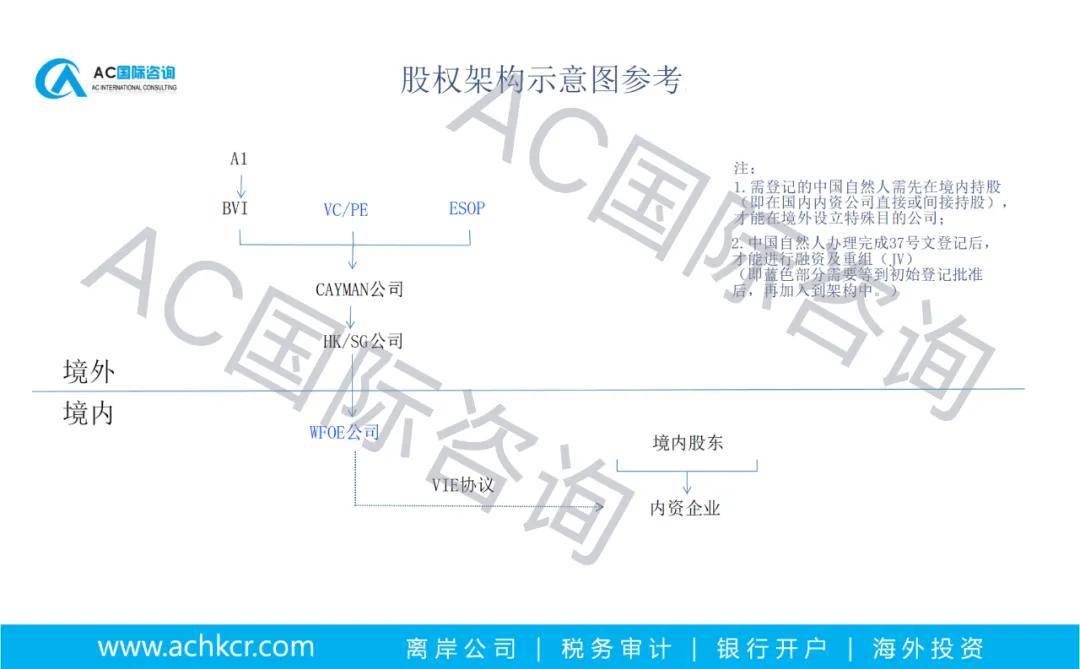
VIE与SPAC上市前景对决:2026年企业上市该如何选?
Sou Hu Cai Jing· 2025-12-16 10:24
Core Viewpoint - The VIE structure and SPAC listings are two key pathways for Chinese companies to raise funds overseas, with a fundamental competition between compliance stability and financing efficiency [1][2]. Group 1: Differences Between VIE and SPAC - The VIE structure relies on "contractual control" to bypass foreign investment restrictions, making it the only method for sensitive industries like internet and education to raise funds abroad [3]. - SPAC listings are an advanced version of "backdoor listings," allowing companies to go public quickly through mergers with shell companies, with a process that can take 3 to 6 months compared to the traditional 12 to 18 months [4]. Group 2: Future Outlook and Analysis - The VIE structure is expected to strengthen by the end of 2025, as regulatory frameworks like the Data Security Law evolve, leading to a more compliant and structured approach for companies [6]. - SPACs are entering a phase of "tightened regulation and value return" after a decline in popularity in 2022, with increased disclosure requirements from the SEC and less favorable conditions for SPAC trials in Hong Kong and Singapore [10]. Group 3: Decision-Making Guidelines for 2025 - Companies in foreign-restricted sectors (e.g., internet, AI) should prioritize the VIE structure and focus on compliance and optimization of their frameworks [13]. - For high-growth industries not subject to restrictions (e.g., renewable energy, biomedicine) with urgent financing needs, SPACs can be considered, but market conditions must be carefully evaluated [13]. - Long-term strategic alignment is crucial; VIE structures are suitable for companies aiming for global branding and sustained financing, while SPACs are better for those with short-term financing needs or plans for business restructuring [15].