Intel

Search documents
Republican lawmakers decry Intel's testing of Chinese-linked tools after Reuters report
Reuters· 2025-12-17 18:03
Core Viewpoint - Republican lawmakers have accused Intel of jeopardizing U.S. national security due to its evaluation of chipmaking equipment from a company with strong ties to China [1] Group 1: National Security Concerns - Intel is under scrutiny for potentially threatening U.S. national security by considering equipment from a Chinese-affiliated company [1] - The revelation was made by Reuters, highlighting the sensitive nature of the semiconductor supply chain and its implications for national security [1] Group 2: Political Reactions - The accusations from Republican lawmakers reflect growing concerns over foreign influence in critical technology sectors [1] - This situation underscores the increasing tension between U.S. lawmakers and companies that engage with Chinese firms in the technology space [1]


Intel Shelves Its Plan To Separate Network And Edge Group
Forbes· 2025-12-16 22:26
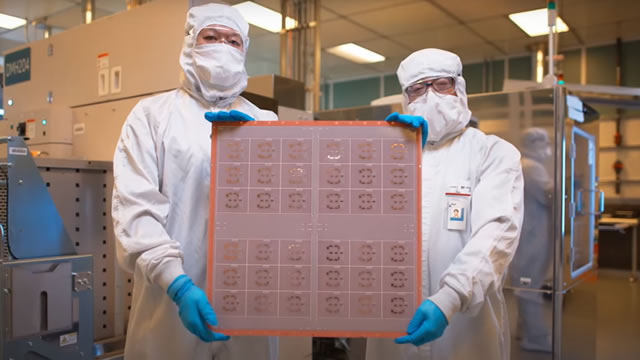
Core Insights - Intel Corp has decided not to separate its Network and Edge Group (NEX), believing it will perform better as part of the company's core operations [2][3] - The management concluded that retaining NEX in-house allows for better integration of silicon, software, and systems, enhancing customer offerings in AI, data centers, and edge computing [3] Company Strategy - Initially, on July 24, 2025, Intel announced plans to carve out NEX into a separate entity as part of a restructuring initiative led by CEO Lip-Bu Tan, focusing on core business areas like AI and semiconductor manufacturing [4][5] - The NEX was expected to concentrate on network silicon, data center Ethernet, edge systems, and AI-optimized communications chips, which are poised for growth in a cloud and 5G-enabled future [5] Financial Performance - In FY24, Intel reported total revenue of $53.1 billion, with the NEX generating approximately $5.8 billion, accounting for roughly 11% of Intel's total sales [6][7] - The NEX includes key products such as the Atom P7000/P5700/P5900 series, which are designed with integrated cybersecurity accelerators [7]
Can Intel's AI Focus Restore Its Competitive Edge & Boost Shares?
ZACKS· 2025-12-16 17:36
Core Insights - Intel Corporation is in advanced talks to acquire AI start-up SambaNova Systems for approximately $1.6 billion, which will enhance Intel's AI capabilities by providing ready-made AI architecture, software stacks, and engineering talent [1][8] - The acquisition aims to modernize Intel's CPUs with AI chips and software, offering a complete AI system to cloud and enterprise customers, while also increasing manufacturing strength [2][8] - Intel has launched new AI-powered chips that are faster and more energy-efficient, gaining traction in AI infrastructure with Super Micro Computer choosing Intel's Xeon 6 processors for high-performance enterprise servers [3][4] Company Developments - Intel is collaborating with Cisco to create an integrated platform for distributed AI workloads and has secured a $5 billion investment from NVIDIA to develop advanced AI technologies [4] - The company has seen a stock rally of 79.3% over the past year, outperforming the industry growth of 31.1% [7] - Current earnings estimates for 2025 have increased by 128.6% to $0.32, while estimates for 2026 have decreased by 10.7% to $0.59 [10] Competitive Landscape - Intel faces competition from Advanced Micro Devices (AMD) and Qualcomm, with Qualcomm focusing on advanced chips for AI-powered PCs and launching AI 200 and AI 250 chips [5] - AMD is expanding its AI business through new MI350 series accelerators and partnerships with major companies like Amazon and Microsoft, and has a long-term deal with OpenAI to power large AI systems using AMD's Instinct GPUs starting in 2026 [6]
Intel hires former Trump official to lead government affairs
Proactiveinvestors NA· 2025-12-16 16:20
About this content About Angela Harmantas Angela Harmantas is an Editor at Proactive. She has over 15 years of experience covering the equity markets in North America, with a particular focus on junior resource stocks. Angela has reported from numerous countries around the world, including Canada, the US, Australia, Brazil, Ghana, and South Africa for leading trade publications. Previously, she worked in investor relations and led the foreign direct investment program in Canada for the Swedish government ...
Intel Is Eyeing an AI Acquisition. Its Track Record Isn't Great.
The Motley Fool· 2025-12-16 00:15
Core Insights - Intel is reportedly in talks to acquire SambaNova Systems, an AI start-up previously valued at $5 billion, with a rumored acquisition price of $1.6 billion [1][9] Company Overview - SambaNova focuses on fast and efficient AI inference, developing custom AI chips known as Reconfigurable Dataflow Units (RDUs) [2] - The company offers a complete rack-scale solution called SambaRack, which integrates hardware, networking, and software, along with a cloud AI platform powered by its hardware [2] Previous Acquisition Context - Intel's last significant AI acquisition was Habana Labs in 2019 for approximately $2 billion, which focused on AI training processors [4] - Despite launching Gaudi 2 and Gaudi 3 under Intel, the chips failed to gain traction against Nvidia's GPUs due to an unfamiliar architecture and immature software ecosystem [5][6] Market Dynamics - Nvidia's CUDA platform has become the industry standard for accelerated computing, providing a competitive edge over Intel in the AI training market [7] - SambaNova's focus on AI inference solutions positions it in a more competitive market, where efficiency is crucial [10] Recent Developments - SambaNova has secured deals to power sovereign AI inference clouds in Australia, Europe, and the UK, and was selected by OVHcloud for its AI Endpoints solution [11] - The shift towards rack-scale AI solutions aligns with Intel's strategy after canceling Falcon Shores, indicating a potential acceleration in developing integrated systems [12] Strategic Implications - Acquiring SambaNova could help Intel gain ground in the AI infrastructure market, especially given its focus on AI inference and rack-scale solutions [13]
Intel appoints Trump economic adviser as head of government affairs
Reuters· 2025-12-15 22:25
Group 1 - Intel appointed an economic adviser to U.S. President Trump as its head of government affairs [1] - This appointment comes months after the U.S. government acquired a 10% stake in Intel [1]
Wall Street Bets on If, When AI Bubble Will Pop | Bloomberg Tech 12/15/2025
Bloomberg Technology· 2025-12-15 21:51
>> BLOOMBERG TECH IS LIVE FROM COAST-TO-COAST WITH CAROLINE HYDE IN NEW YORK AND ED LUDLOW IN SAN FRANCISCO. CAROLINE: THIS IS BLOOMBERG TECH. COMING UP, TECH TRADES LOWER AS AI ANXIETY KICKS OFF THE LAST FULL TRADING WEEK OF THE YEAR.OUR INVESTORS DOUBLING DOWN OR BRACING. WE DISCUSS. PLUS, BIG DEALS AND ADVANCED TALKS TO SPEND BILLIONS ON STARTUPS.A STABLECOIN GIANT ONCE A SOCCER TEAM. WHY TETHER IS BIDDING FOR ITALY'S TEAM. FIRST, A CHECK IN ON THESE MARKETS.MARKETS ARE UP ON THE NASDAQ 100. WE ARE OFF O ...

Intel Stock Gifts $92 Billion To Investors
Forbes· 2025-12-15 19:10
Core Insights - Intel is laying off nearly 4,000 employees as part of a cost-cutting initiative led by new CEO Lip-Bu Tan [2] - Over the past decade, Intel has returned $92 billion to shareholders through dividends and buybacks, ranking 19th in total capital returned in history [3][4] Financial Performance - Intel's revenue growth has been negative, with a -1.5% growth in the last twelve months and a -7.6% average over the last three years [9] - The company has a free cash flow margin of nearly -15.8% and an operating margin of -0.2% for the last twelve months [9] - Intel's stock trades at a P/E multiple of 764.9, indicating a high valuation relative to earnings [9] Market Position - The total capital returned to shareholders as a percentage of current market cap appears inversely proportional to growth prospects for reinvestments, with companies like Meta and Microsoft showing faster growth but lower capital returns [5] - The historical volatility of Intel's stock is significant, with declines of 74% during the Dot-Com Bubble and 62% during the 2022 inflation shock [6][7]
SoftBank CEO Masayoshi Son Just Delivered Incredible News to Nvidia Investors
The Motley Fool· 2025-12-15 17:16
Core Viewpoint - SoftBank sold its entire $5.8 billion stake in Nvidia, raising questions about its confidence in the company, but Masayoshi Son clarified that the decision was not due to a lack of faith in Nvidia's potential [2][4]. Group 1: SoftBank's Investment Strategy - SoftBank has been heavily invested in Nvidia over the years, benefiting from its significant role in the AI sector [2]. - The decision to sell was influenced by SoftBank's need to fund other initiatives, including a $500 billion investment in AI infrastructure through Project Stargate, a joint venture with Oracle and OpenAI [7][9]. - SoftBank also committed to investing up to $40 billion in OpenAI, with a projected $22.5 billion investment by year-end, and has made additional investments in Intel and Ampere Computing [8][9]. Group 2: Nvidia's Market Position - Nvidia's stock has a current market cap of $4.3 trillion, with a recent price of $177.62 and a 1-year forward price-to-earnings (P/E) multiple of 24 [3][11]. - The company has formed alliances with Anthropic, Palantir Technologies, and Nokia, which are expected to expand its market reach [12]. - Despite concerns about a potential bubble in AI stocks and increasing competition from companies like Alphabet and AMD, Nvidia is still well-positioned to capture growing capital expenditures in the AI space [11][13].

Intel: This Is The Comeback Of A Lifetime (NASDAQ:INTC)
Seeking Alpha· 2025-12-15 17:00
After years of struggling to revive growth, it appears that Intel Corporation ( INTC ) has finally managed to figure out how to turn things around and is currently on the verge of a massiveI'm a Ukraine-based seasoned investor, who firsthand experienced what’s it like to live in an environment full of systemic geopolitical shocks when the war came to my home country. Despite this, I managed to build an all-weather portfolio that has been able to thrive in volatile markets. My goal is to help investors find ...