ByteDance

Search documents
中国生成式人工智能_视频生成模型竞争格局回顾-China Generative AI_ Video generation model competitive landscape review
2025-07-21 14:26
Summary of Kuaishou Technology Conference Call Company Overview - **Company**: Kuaishou Technology - **Ticker**: 1024.HK - **Market Cap**: USD 31.534 billion as of July 18, 2025 [19] Industry Context - **Industry**: Internet Software & Services - **Key Competitors**: ByteDance's Seedance, Google's Veo 3, and Kuaishou's Kling 2.1 [8] Key Insights Competitive Landscape - The video generation model market has low entry barriers and switching costs, leading to users experimenting with various models rather than committing to one [2] - Chinese models are offered at a 40-80% discount compared to Google's Veo 3 subscription [2] - Each model has unique strengths: - **Veo 3**: Advanced audio generation and cinematic video quality - **Kling AI**: Editing tools and style control through image input - **Seedance**: Strong prompt adherence and multi-shot capabilities [2] Financial Performance - **Kling AI** reached an annualized revenue run rate (ARR) of USD 100 million by March 2025, with monthly bookings exceeding RMB 100 million [3] - Revenue breakdown: 70% from prosumer subscriptions, 30% from corporate clients' API fees, with 70% of revenue coming from overseas [3] - Kuaishou's revenue and adjusted net profit are projected to grow 11% and 7% year-over-year to RMB 34 billion and RMB 5 billion, respectively [4][14] Valuation Metrics - Kuaishou's target price raised to HKD 82 from HKD 75, reflecting a lower weighted average cost of capital (WACC) [4] - Kling AI's revenue estimate increased to USD 120 million for 2025 [4] - Valuation comparison with vertical AI peers shows an average price-to-sales (P/S) ratio of 61x, suggesting Kling AI could be valued at USD 7 billion or HKD 13 per share [3][12] Growth Projections - Expected growth in various segments: - Advertising revenue: 12% year-over-year - E-commerce GMV: 14% year-over-year - Live-streaming revenue: 5% year-over-year [14] Risks and Challenges - Potential risks include regulatory changes affecting tipping and short-video content, increased content auditing costs, macroeconomic headwinds, and intensified competition in advertising and e-commerce [15] Financial Forecasts - Revenue projections for Kuaishou: - 2025: RMB 141.926 billion - 2026: RMB 155.624 billion - 2027: RMB 166.763 billion [16] - Net profit estimates: - 2025: RMB 17.313 billion - 2026: RMB 22.588 billion - 2027: RMB 27.911 billion [16] Conclusion - Kuaishou Technology is positioned for growth in the competitive landscape of video generation models, with strong revenue projections and a favorable valuation outlook. However, it faces regulatory and competitive risks that could impact its performance in the near term.
Blackstone Backs Off From TikTok Ownership Plans
PYMNTS.com· 2025-07-20 21:02
Group 1 - Blackstone has withdrawn from plans to invest in TikTok US amid uncertainty regarding the deal and multiple delays [1][2][3] - The intended investment was aimed at purchasing a minority stake to separate TikTok's U.S. operations from its Chinese parent company, ByteDance [3] - The deadline for ByteDance to divest TikTok US has been postponed multiple times, leading to investor uncertainty [3][4] Group 2 - President Trump signed an executive order extending the deadline for ByteDance to sell TikTok US to September 17, 2024, from the initial deadline of January 19, 2024 [4] - Criticism has arisen from lawmakers regarding the extensions, claiming the administration is ignoring national security concerns related to ByteDance's connections to the Chinese government [4] - ByteDance is exploring options to address these concerns, including the potential sale or restructuring of its U.S. operations [5] Group 3 - Earlier plans to spin off TikTok's U.S. operations into a new U.S.-based firm were paused after China indicated it would not approve the transaction [6] - TikTok is reportedly developing a standalone U.S. app with its own algorithm and data system to migrate its 170 million American users [6] - Employees have been working on a U.S.-specific version of TikTok by duplicating the application's codebase, including AI models and user data [7]



Grok-4登顶,Kimi K2非思考模型SOTA,豆包、DeepSeek新模型性能提升|xbench月报
红杉汇· 2025-07-18 00:47
Core Insights - The article discusses the competitive landscape of AI large models, highlighting the recent release of xAI's Grok-4 and Kimi's K2 model, which have sparked a new wave of advancements in the field [1][4]. Model Performance Summary - Grok-4 achieved a significant score increase from 42.6 to 65.0 in the ScienceQA evaluation, marking a 50% improvement and surpassing OpenAI's o3 model to become the state-of-the-art (SOTA) model [4][8]. - Kimi K2, a non-thinking model, scored 49.6, placing it in the top ten, with a BoN (N=5) score of 73.0, indicating strong performance in multi-step reasoning tasks [11][24]. - OpenAI's o3-pro model scored 59.6, showing improvement over its predecessor, but with increased response time and API costs [11][25]. Cost and Efficiency Analysis - Grok-4 is noted for its competitive pricing at $15 per million tokens, significantly lower than o3-pro's $80, while maintaining high performance [15][21]. - Doubao-Seed-1.6 demonstrated a cost-effective model with a score of 56.6 and an output price of $1.1, making it one of the best value models [15][18]. - The analysis indicates a trend where longer reasoning times correlate with higher scores, with Grok-4 having the longest average response time of 227 seconds [17]. Model Innovations - Grok-4 incorporates advanced features such as real-time web retrieval and multi-agent collaboration for enhanced reasoning capabilities [23]. - Kimi K2 is recognized for its innovative training techniques, including the MuonClip optimizer and a comprehensive agent simulation pipeline, which contribute to its large parameter count and performance [24]. - OpenAI's o3-pro model has been optimized for scientific and programming tasks, showcasing improved reliability and reasoning capabilities [25]. Leaderboard Updates - The leaderboard reflects updates from 16 companies with 43 different model versions, maintaining a consistent ranking for major players like OpenAI, Google, and ByteDance [5][8]. - The leaderboard will continue to evolve with monthly updates, providing ongoing insights into model performance and capabilities [1][5].



高盛:中国顶级人工智能应用追踪- 聚焦芯片供应与人工智能应用采纳;6 月应用参与度稳健
Goldman Sachs· 2025-07-16 15:25
Investment Rating - The report maintains a "Buy" rating on PDD, indicating favorable risk-reward dynamics due to its non-participation in the food delivery competition and potential growth from new user traffic and general merchandise strength [10]. Core Insights - The report highlights a potential resumption of Nvidia H20 chip supply, which could positively impact China's cloud service providers' capital expenditures starting from Q3 2025, with an expected 44% quarter-over-quarter increase in aggregate capex [1]. - There is a notable increase in generative AI adoption among Chinese enterprises, with over 40% having pilot-tested generative AI tools, up from 8% last year [1]. - The performance gap between US and Chinese AI models is narrowing, with new releases from various internet platforms and AI startups [1]. - The report emphasizes steady progress in monetization of AI applications, with Chinese models achieving scalable annual recurring revenue (ARR) for their AI products [1]. Summary by Sections AI Application Trends - China's top AI applications showed healthy user engagement trends in June, with a 6% month-over-month increase in domestic AIGC application engagement, driven by strong growth in Doubao and DeepSeek [8][10]. - The overall time spent on the top 400 mobile apps increased by 7% year-over-year in June 2025, with significant growth in eCommerce and social engagement [7][10]. Capital Expenditure Forecasts - The report forecasts a drop in combined capex from China CSPs in Q2 2025, followed by gradual improvement in Q3 and Q4 2025, driven by the resumption of Nvidia shipments and domestic chip ramp-up [15]. Monetization and Revenue Growth - The ARR of various AI operations in Chinese companies shows significant figures, with Kuaishou's Kling AI expected to reach over US$400 million in total annual revenue by 2027 [20][21]. - The report notes that subscription-based productivity tools and advertising-based AI search engines are contributing to the monetization of AI applications [1]. Competitive Landscape - Competition in video-generative models is intensifying, with Kuaishou's Kling AI projected to achieve substantial revenue growth, alongside other models from ByteDance and Alibaba [1][6]. - The report highlights the increasing capabilities of Chinese AI models, which are closing the performance gap with US counterparts [33][34].



Nvidia's H20 China Play: Cramer's 'HUGE' Call Ignites A $15 Billion AI Bonanza
Benzinga· 2025-07-15 15:17
Core Viewpoint - Nvidia Corp has received approval from the U.S. government to export its H20 AI chips to China, marking a significant geopolitical win and leading to a surge in its stock price [1][5]. Group 1: Financial Impact - The previous export ban resulted in Nvidia facing $4.5 billion in stranded inventory and potential losses of up to $15 billion in sales to China [2]. - With the approval, Nvidia aims to regain its 13% share of revenue from China, which is crucial for its growth in the AI market [3]. Group 2: Market Dynamics - Major Chinese companies such as ByteDance, Tencent, and Alibaba are now eager to place orders for Nvidia's H20 chips, indicating strong demand in the Chinese market [2][3]. - Nvidia is also launching its new RTX Pro GPU, targeting the industrial AI sector in China, which could further boost its revenue [4]. Group 3: Analyst Sentiment - Analyst Jim Cramer has expressed strong support for Nvidia, advising investors to hold the stock long-term, emphasizing the importance of this policy change for Nvidia's growth trajectory [5].

Nvidia is set to resume China chip sales after months of regulatory whiplash
TechCrunch· 2025-07-15 04:36
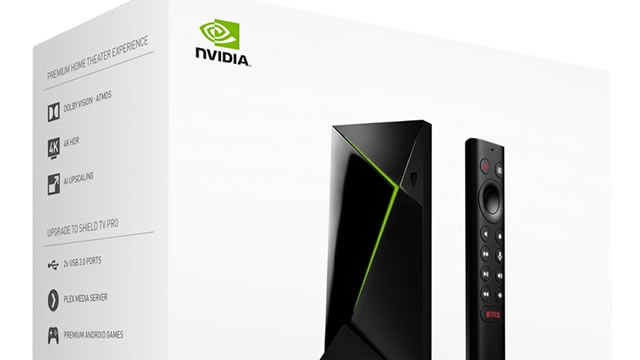
Core Insights - Nvidia is filing applications to restart sales of its H20 artificial intelligence chips to China, following a period of regulatory changes and discussions with U.S. officials [1][6] - The company anticipates receiving U.S. government licenses soon and plans to introduce a new "RTX Pro" chip tailored for the Chinese market, which is claimed to be fully compliant with regulations [2] Group 1: Regulatory Environment - The H20 chip is central to the U.S.-China tech standoff, being the most powerful chip Nvidia can legally sell to China under current export controls, designed for inference tasks rather than training new AI systems [3] - The Trump administration's restrictions in April could have cost Nvidia between $15 billion to $16 billion in revenue, based on Chinese firms' spending in the first quarter [5] - The restrictions were briefly lifted after Nvidia's CEO met with Trump, where promises of U.S. investments and job creation were made in exchange for continued access to chip sales [6] Group 2: Market Dynamics - Chinese tech giants like ByteDance, Alibaba, and Tencent have been stockpiling H20 chips in anticipation of stricter export controls, attracted by the chip's superior memory bandwidth and Nvidia's software ecosystem [4] - The ongoing situation highlights the balancing act U.S. policymakers face between national security concerns and commercial interests, suggesting potential future reversals in policy [10]

Alibaba-backed Moonshot releases new Kimi AI model that beats ChatGPT, Claude in coding — and it costs less
CNBC· 2025-07-14 07:30
Core Insights - The latest Chinese generative AI model, Kimi K2, has been launched as a low-cost, open-source alternative to OpenAI's ChatGPT, focusing on coding capabilities [2][6][11] - Kimi K2 claims to outperform OpenAI's GPT-4.1 and Anthropic's Claude Opus 4 in coding benchmarks, making it a competitive player in the AI market [6][14] - The model is available for free and offers significantly lower token costs compared to its competitors, making it attractive for budget-sensitive deployments [7][8] Company Developments - Moonshot, the Alibaba-backed startup, released Kimi K2, which is positioned as a disruptive force in the AI industry [2][11] - The company has previously open-sourced other AI models and has gained popularity as an alternative to ChatGPT in China [11] - Initial reviews of Kimi K2 have been positive, although some users reported issues with hallucinations, a common problem in generative AI [10] Market Context - The launch of Kimi K2 comes amid increasing competition in the AI space, particularly from Chinese companies like ByteDance and Tencent, as well as Baidu's revamped AI tools [11] - OpenAI's delay in releasing its first open-source model has created an opportunity for competitors like Moonshot to gain traction [3][13] - The AI market is witnessing a shift towards open-source models, with Kimi K2 being a notable example of this trend [2][6]
Where Will Alibaba Stock Be in 1 Year?
The Motley Fool· 2025-07-11 08:20
Core Viewpoint - Alibaba's stock has shown a nearly 50% increase over the past year, but it remains 65% below its all-time high from October 2020, indicating potential for future growth despite challenges [1][2]. Financial Performance - In fiscal 2022, Alibaba's revenue grew by 19%, but growth slowed to 2% in fiscal 2023, 8% in fiscal 2024, and is projected at 6% for fiscal 2025, primarily due to regulatory and macroeconomic challenges [2][4][5]. - Analysts expect Alibaba's revenue to rise by 7% in fiscal 2026 and by 8% in fiscal 2027, with adjusted EPS growth projected at 8% and 14% respectively [10]. Challenges Faced - Alibaba faced significant regulatory challenges, including fines and restrictions from China's antitrust regulators, which limited its competitive strategies [4]. - The Chinese economy's slowdown, exacerbated by "zero-COVID" policies and a weak real estate market, negatively impacted consumer spending and cloud customer expenditures [5]. - Leadership changes, including the departure of CEO Daniel Zhang in 2023, raised concerns about the company's growth trajectory [6]. Business Stabilization - Despite challenges, Alibaba's retail business saw growth in overseas markets, which helped offset weaker performance in its domestic marketplaces [7]. - The company implemented cost-cutting measures, share buybacks, and increased revenue from higher-margin cloud and AI businesses, leading to improved earnings per share [8]. Future Outlook - Alibaba's stock trades at 11 times its forward adjusted earnings, with potential for a higher valuation if trade tensions ease, possibly rising to about $167 by fiscal 2027 [12]. - The company may integrate its various business units more closely, enhancing its competitive position against less diversified rivals [11].
X @TechCrunch
TechCrunch· 2025-07-08 16:09
ByteDance reportedly plans to release US-specific version of CapCut | TechCrunch https://t.co/lqb84PaImt ...
Prediction: This Artificial Intelligence (AI) Stock Could Hit a $2 Trillion Valuation by 2028
The Motley Fool· 2025-07-05 08:55
Core Insights - Broadcom has emerged as a significant player in the AI chip market, primarily due to its application-specific integrated circuits (ASICs), which are preferred by cloud service providers for their cost-effectiveness and performance advantages over general-purpose chips [1][4]. Financial Performance - Broadcom's stock has increased by 65% over the past year, outperforming Nvidia's 30% gain, leading to a market capitalization of approximately $1.3 trillion, with potential to reach $2 trillion by 2028 [2][12]. - The company's revenue for the first half of fiscal 2025 rose by 22% year-over-year to $29.9 billion, driven largely by sales of AI chips [4][5]. - AI chip revenue surged by 77% year-over-year in Q1 and 46% in Q2, totaling $8.5 billion in the first half of the year, contributing nearly 30% to the company's overall revenue [5][6]. Market Dynamics - The adoption of custom AI processors is accelerating, with major companies like Microsoft, Google, and Amazon increasingly utilizing custom chips for enhanced performance and cost efficiency [7][8]. - Broadcom's client base for custom chips includes prominent firms such as Meta Platforms, ByteDance, and OpenAI, with expectations to expand further, potentially increasing its serviceable addressable market beyond the projected $60 billion to $90 billion by fiscal 2027 [9][10]. Growth Projections - Investment banking firm TD Cowen estimates that Broadcom's AI chip revenue could reach $50 billion annually by 2027, more than quadrupling its revenue from this segment last year [11]. - If Broadcom achieves $50 billion in AI revenue while maintaining flat revenue from other segments, its total revenue could exceed $89 billion by 2027, aligning with analyst expectations [12][14]. - Maintaining a price-to-sales ratio of 22.4 could result in a market cap nearing $2 trillion, indicating a potential 60% increase from current levels [14]. Investment Considerations - Despite trading at a premium valuation, the rapid growth of Broadcom's AI revenue and expanding clientele suggest that it remains an attractive investment opportunity for those seeking exposure to AI growth stocks [15].