通富微电

Search documents
通富微电(002156) - 内部审计制度
2025-11-28 11:18
通富微电子股份有限公司内部审计制度 通富微电子股份有限公司 内部审计制度 第一章 总 则 第一条 为加强通富微电子股份有限公司及其控股子公司(以下简称"公司" 或"本公司")内部审计工作,提高内部审计工作质量,保护投资者合法权益,依据 《审计法》、《深圳证券交易所上市公司自律监管指引第1号——主板上市公司规范运 作》等相关规定,制定本制度。 (一)遵守国家法律、法规、规章及其他相关规定; 第二条 本制度所称内部审计,是指由公司内部机构或人员,对其内部控制和 风险管理的有效性、财务信息的真实性、准确性、完整性和公平性以及经营活动的 效率和效果等开展的一种评价活动。 第三条 本制度所称内部控制,是指公司董事会、高级管理人员及其他有关人 员为实现下列目标而提供合理保证的过程: 第四条 公司董事会应当对内部控制制度的建立健全和有效实施负责,重要的 内部控制制度应当经董事会审议通过。 公司董事会及其全体成员应当保证内部控制相关信息披露内容的真实、准确、 完整和公平。 第二章 机构和职责 (二)提高公司经营的效率和效果; 第五条 公司设立审计部,负责内部审计工作,对公司财务信息的真实性和完 整性、内部控制制度的建立和实施 ...
通富微电(002156) - 信息披露暂缓与豁免制度
2025-11-28 11:18
通富微电子股份有限公司 信息披露暂缓与豁免制度 第一章 总则 第一条 为了规范通富微电子股份有限公司(以下简称"公司")信息披露暂缓与豁免 行为,确保公司及其他信息披露义务人依法合规地履行信息披露义务,保护投资者的合法权 益,根据《中华人民共和国公司法》《中华人民共和国证券法》《上市公司信息披露管理办 法》《上市公司信息披露暂缓与豁免管理规定》《深圳证券交易所股票上市规则》(以下简 称"《上市规则》")以及有关法律、法规、规章和《公司章程》的有关规定,制定本制 度。 第二条 公司及其他信息披露义务人按照《上市规则》及证券交易所其他业务规则等相 关法律法规、规范性文件的规定,办理信息披露暂缓、豁免事务的,适用本制度。 第三条 公司及其他信息披露义务人应自行审慎判断应当披露的信息是否存在《上市 规则》及证券交易所其他相关业务规则中规定的暂缓、豁免情形,并接受证券交易所对信息 披露暂缓、豁免事项的事后监管。 公司和其他信息披露义务人应当真实、准确、完整、及时、公平地披露信息,不得 滥用暂缓或者豁免披露规避信息披露义务、误导投资者,不得实施内幕交易、操纵市场 等违法行为。 第二章 信息披露暂缓与豁免的范围 第四条 公 ...
通富微电:拟注册发行不超30亿元债务融资工具
Ge Long Hui· 2025-11-28 11:18
Core Viewpoint - Tongfu Microelectronics announced plans to register and issue non-financial corporate debt financing instruments in the interbank bond market, with a total issuance scale not exceeding RMB 3 billion [1] Group 1: Issuance Details - The issuance will include short-term financing notes not exceeding RMB 1 billion and medium-term notes not exceeding RMB 2 billion [1] - The target investors for this issuance are institutional investors in the national interbank bond market [1] - The issuance interest rate will be determined based on market conditions and will be issued at par value [1] Group 2: Fund Utilization - The funds raised will primarily be used to supplement the company's working capital, repay loans from financial institutions, and for other purposes recognized by the China Interbank Market Dealers Association [1]
通富微电(002156) - 关于修订《公司章程》的公告
2025-11-28 11:16
本公司及董事会全体成员保证信息披露内容的真实、准确和完整,没有虚假记 载、误导性陈述或重大遗漏。 2025 年 11 月 28 日,通富微电子股份有限公司(以下简称"公司"或"通富微 电")召开了第八届董事会第十五次会议,审议通过了《关于修订<公司章程>的议 案》,该议案尚需提交股东会审议。现将有关详情公告如下: 一、关于取消监事会的情况 根据《中华人民共和国公司法》(以下简称"《公司法》")《深圳证券交易所股票 上市规则》《上市公司章程指引》《关于新〈公司法〉配套制度规则实施相关过渡期 安排》等相关法律、法规及规章的规定,为进一步优化公司治理结构,公司拟取消 监事会,由董事会审计委员会行使《公司法》规定的监事会职权。现任第八届监事 会监事职务自公司股东会审议通过相关议案之日起终止,《监事会议事规则》相应废 止,公司各项规章制度中涉及监事会、监事的规定不再适用。 本次取消监事会事项尚需提交公司股东会审议,在股东会审议通过取消监事会 设置事项前,公司第八届监事会仍将严格按照《公司法》《证券法》等法律法规的要 求,勤勉尽责履行监督职能,维护公司及全体股东的利益。公司监事任职期间恪尽 职守、勤勉尽责,公司对公司监事 ...
通富微电(002156) - 关于召开2025年第二次临时股东会的通知
2025-11-28 11:15
证券代码:002156 证券简称:通富微电 公告编号:2025-049 通富微电子股份有限公司 关于召开 2025 年第二次临时股东会的通知 本公司及董事会全体成员保证信息披露内容的真实、准确和完整,没有虚 假记载、误导性陈述或重大遗漏。 根据《公司法》与《通富微电子股份有限公司章程》的有关规定,决定于 2025 年 12 月 15 日召开通富微电子股份有限公司 2025 年第二次临时股东会。 一、召开会议的基本情况 1.股东会届次:通富微电子股份有限公司 2025 年第二次临时股东会。 2.股东会的召集人:公司董事会。公司于 2025 年 11 月 28 日召开的第八届 董事会第十五次会议审议通过了《关于召开公司 2025 年第二次临时股东会的议 案》。 3.会议召开的合法、合规性:本次股东会的召开符合有关法律、行政法规、 部门规章、规范性文件、深圳证券交易所业务规则和公司章程等的规定。 4.会议召开的日期、时间: 股股东均有权出席股东会,并可以以书面形式委托代理人出席会议和参加表决, 该股东代理人不必是公司股东。授权委托书格式详见附件2。 (2)公司董事、监事和高级管理人员; (3)公司聘请的律师; (4 ...
通富微电(002156) - 第八届监事会第十一次会议决议公告
2025-11-28 11:15
1、审议通过了《关于拟注册发行银行间债券市场非金融企业债务融资工具 的议案》 经审核,监事会认为:公司本次拟注册发行银行间债券市场非金融企业债务 融资工具符合公司目前的经营实际需要,有利于优化债务结构、拓宽融资渠道, 相关审议程序合法合规,不存在损害公司及全体股东利益的情形。同意公司本次 拟注册发行银行间债券市场非金融企业债务融资工具事项。 证券代码:002156 证券简称:通富微电 公告编号:2025-046 通富微电子股份有限公司 第八届监事会第十一次会议决议公告 本公司及监事会全体成员保证信息披露内容的真实、准确和完整,没有虚 假记载、误导性陈述或重大遗漏。 一、监事会会议召开情况 通富微电子股份有限公司(以下简称"公司")第八届监事会第十一次会议, 于 2025 年 11 月 20 日以电子邮件等方式发出会议通知,各位监事已知悉与所议 事项相关的必要信息,公司第八届监事会第十一次会议于 2025 年 11 月 28 日以 通讯表决方式召开。公司全体 3 名监事均行使了表决权,会议实际有效表决票 3 票。会议召开符合有关法律、行政法规、部门规章、规范性文件和公司章程的规 定。 二、监事会会议审议情况 表 ...
通富微电(002156) - 第八届董事会第十五次会议决议公告
2025-11-28 11:15
证券代码:002156 证券简称:通富微电 公告编号:2025-045 通富微电子股份有限公司 第八届董事会第十五次会议决议公告 本公司及董事会全体成员保证信息披露内容的真实、准确和完整,没有虚 假记载、误导性陈述或重大遗漏。 一、董事会会议召开情况 通富微电子股份有限公司(以下简称"公司")第八届董事会第十五次会议, 于 2025 年 11 月 20 日以电子邮件等方式发出会议通知,各位董事已知悉与所议 事项相关的必要信息,公司第八届董事会第十五次会议于 2025 年 11 月 28 日以 通讯表决方式召开。公司全体 8 名董事均行使了表决权,会议实际有效表决票 8 票。会议召开符合有关法律、行政法规、部门规章、规范性文件和公司章程的规 定。 二、 董事会会议审议情况 1、审议通过了《关于修订<公司章程>的议案》 根据《中华人民共和国公司法》(以下简称"《公司法》")《深圳证券交易所 股票上市规则》《上市公司章程指引》《关于新〈公司法〉配套制度规则实施相关 过渡期安排》等相关法律、法规及规章的规定,为进一步优化公司治理结构,公 司拟取消监事会,由董事会审计委员会行使《公司法》规定的监事会职权。现任 第八届监 ...
内存价格飞升,国产替代能否改变战局?
3 6 Ke· 2025-11-28 06:13
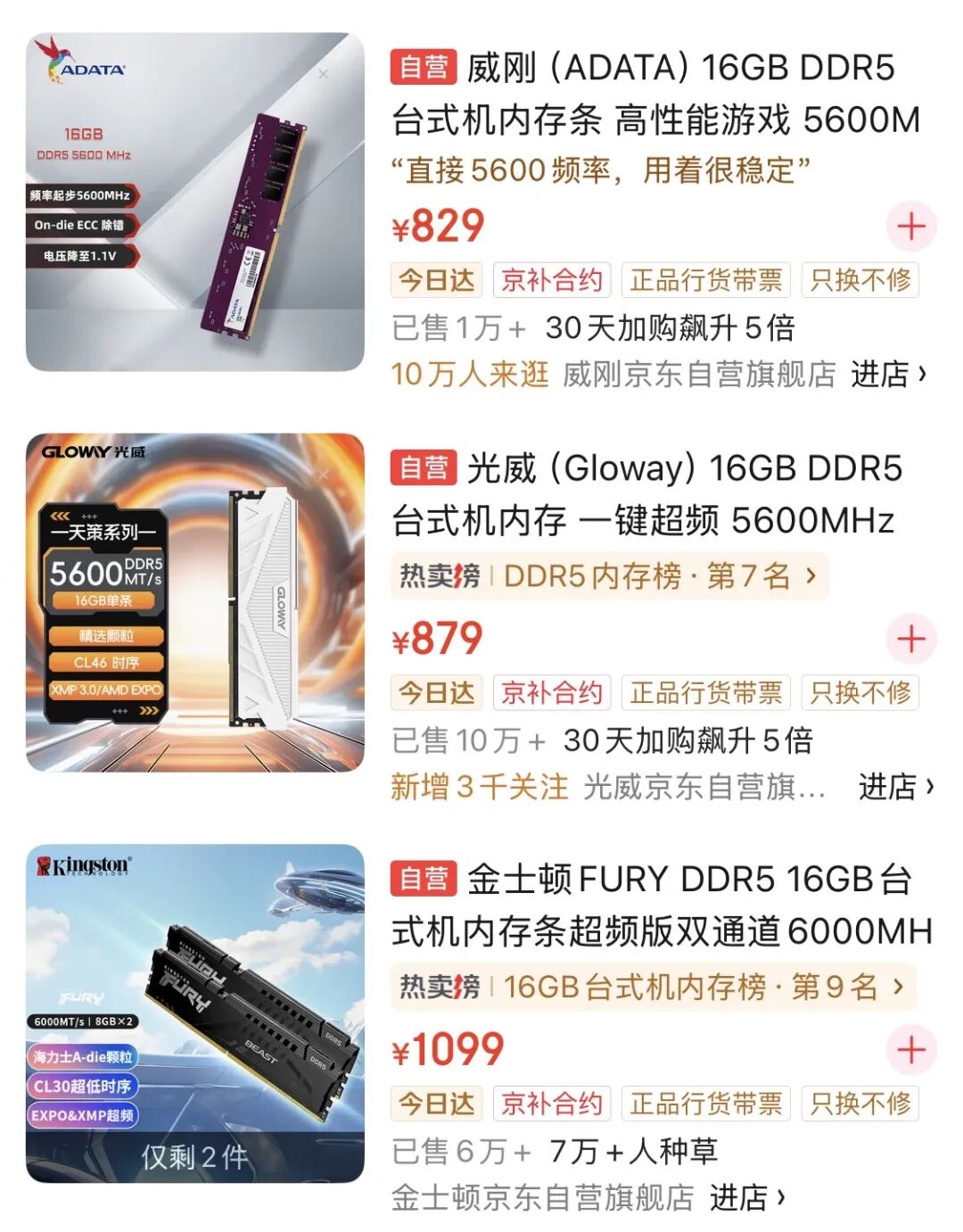
Group 1 - The core issue of rising memory prices is driven by increased demand from AI giants, leading to significant price hikes in consumer electronics [1][8][9] - The price of 16GB DDR5 memory has surged, with current prices rarely falling below 800 yuan, compared to less than half that earlier this year [1][8] - AI server requirements are substantially higher, with DRAM memory needs being eight times that of regular servers, and NAND flash needs three times higher [10][11] Group 2 - The memory industry is experiencing a "super cycle," with DRAM prices reaching historical highs and expected to remain elevated until at least mid-2026 [16][19] - Major players like Samsung and SK Hynix are shifting production capacity towards high-bandwidth memory (HBM) to meet the surging demand from AI data centers [15][24] - The Korean semiconductor industry is benefiting significantly from this cycle, regaining pricing power after years of low prices due to oversupply [19][20] Group 3 - Domestic memory manufacturers, such as Yangtze Memory Technologies and ChangXin Memory Technologies, are emerging as competitors in the market, focusing on NAND and DRAM technologies respectively [33][34] - The Chinese memory industry has developed a complete supply chain, with various companies contributing to the production and technology advancements [40][41] - Despite the challenges, the rise of domestic players indicates a potential shift in the global memory market dynamics, with a focus on high-value products and technology upgrades [40][41]

中国半导体设备_月度 SPE 进口分析_坚实的光刻设备进口推动 10 月同比增长 20%-China Semi Equipment_ Monthly SPE import analysis_ solid litho imports drove 20% YoY growth in October
2025-11-25 01:19
Summary of the Conference Call Transcript Industry Overview - The report focuses on the **semiconductor production equipment (SPE)** industry in China, highlighting significant trends in imports and market dynamics. Key Points Import Data - **October 2025 SPE Imports**: - Total imports reached **US$3.0 billion**, marking a **20% YoY increase** but a **29% MoM decrease** due to a high base in September, which was the second highest month historically [2][9]. - Year-to-date (YTD) SPE imports totaled **US$28.4 billion**, reflecting a **7% YoY growth**, which is an improvement from the **9M25 YoY growth** [2][9]. Lithography Equipment - Lithography imports were the primary driver of growth, with a **90% YoY increase** from a low base last year, totaling **US$1.0 billion** in October [2][3]. - Shanghai led lithography imports with **seven tools** valued at **US$598 million** (average selling price of **US$85 million** per unit) [4][10]. Regional Insights - **Shanghai** accounted for **40%** of China's total SPE imports in October, with a **106% YoY increase** [2]. - **Beijing** saw imports of **US$631 million** (+659% YoY), the highest this year, while **Guangdong** maintained high imports at **US$604 million** (+1% YoY) [2][9]. Equipment Type Breakdown - **Etch Imports**: Totaled **US$679 million**, showing a **6% YoY increase** but a **29% MoM decrease** [3]. - **Deposition Imports**: Reached **US$605 million**, with a slight **2% YoY growth** but a **42% MoM decline** [3]. Market Outlook - Optimism remains for Chinese **wafer fabrication equipment (WFE)** companies, with catalysts expected from domestic memory and logic fab expansions. Top picks include **NAURA**, **AMEC**, and **ACMR Shanghai** [5]. Risks and Opportunities Downside Risks - Potential risks include: - Weaker-than-expected macroeconomic conditions and end-demand [50]. - Intensifying geopolitical tensions and extended restrictions [50]. - Longer-than-expected downcycle in the semiconductor industry [50]. Upside Opportunities - Possible positive developments include: - Faster-than-expected recovery in end-demand [51]. - Easing geopolitical tensions and lifting of restrictions [51]. - More aggressive capex plans from China's fabs than currently estimated [51]. Conclusion - The semiconductor production equipment sector in China is experiencing significant growth, particularly in lithography imports, driven by strong demand from major regions like Shanghai and Beijing. However, the industry faces various risks that could impact future performance. The outlook remains cautiously optimistic, with several key players positioned for potential growth.
卡脖子:中国哪些新材料高度依赖日本进口及国外进口?





材料汇· 2025-11-24 15:58
Core Viewpoint - The article highlights the significant dependency of China's high-end manufacturing on Japan for critical strategic new materials, particularly in the semiconductor and advanced manufacturing sectors, emphasizing the risks posed by geopolitical tensions and supply chain vulnerabilities [2][4]. Group 1: Dependency on Japanese Core New Materials - Japan holds a monopolistic position in semiconductor materials, high-end polymers, and electronic chemicals, with China's dependency exceeding 50% in several key categories, and nearly 100% in some high-end areas [4][6]. - The complexity of semiconductor manufacturing processes means that Japan dominates the supply of critical materials like photoresists and silicon wafers, with global market shares consistently above 60% [6][9]. Group 2: Semiconductor Core Materials - **Photoresists**: China has an overall import dependency of about 90%, with high-end photoresists being 100% reliant on Japan. Major suppliers include JSR, Tokyo Ohka, Shin-Etsu Chemical, and Fujifilm, which control 92% of the high-end market [7]. - **12-inch Silicon Wafers**: The import dependency is around 90%, with Japan supplying 58%. Key players like Shin-Etsu Chemical and SUMCO dominate over 60% of the market [9]. - **High-Purity Ruthenium Targets**: The import dependency is 98%, with Japan's JX Metals and TOSOH holding a significant market share. Domestic production is limited to lower purity levels [12]. Group 3: High-End Polymer Materials - Japan leads the high-end market for electronic-grade polyimide films, with an import dependency of 85% for overall polyimide materials, and 90% for high-end applications [19]. - **Optical-grade PET Films**: The import dependency is 75%, with Japan supplying 100% of high-end films used in MLCCs [23]. Group 4: Other Key Materials in Electronics - **Sputtering Targets**: The import dependency is approximately 95%, with Japan's JX Metals and Nippon Mining controlling 60% of the market [27]. - **High-Purity Electronic Gases**: The import dependency is 70%, with Japan's Taiyo Nippon Sanso holding a 40% market share [31]. Group 5: Hydrogen Energy and Fuel Cell Key Materials - **High-End Carbon Carrier Materials**: The overall import dependency is 85%, with Japan's TOSOH dominating the market [35]. - **Fuel Cell Platinum-based Catalysts**: The import dependency is 78%, with significant reliance on European suppliers [107]. Group 6: Aerospace and High-End Manufacturing Key Materials - **High-Temperature Alloys**: The import dependency is 90%, with major suppliers from the US and Europe completely dominating the market [80]. - **Carbon Fiber**: The import dependency is 85%, with Japan and the US leading the high-end market [86]. Group 7: New Energy and Electronics Key Materials - **High-End Lithium-Ion Battery Separators**: The import dependency is 70%, with Japan's Asahi Kasei and Toray leading the market [94]. - **Ultra-Thin Copper Foils**: The import dependency is 80%, with Japan's JX Copper and Mitsui Mining dominating the supply [98].