内存

Search documents
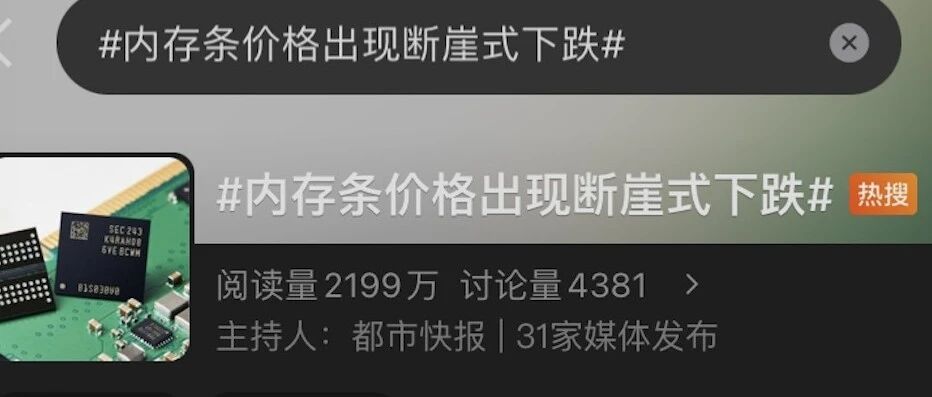
趣图:内存条价格出现断崖式下跌
程序员的那些事· 2026-03-29 13:10
Core Viewpoint - The article discusses a significant drop in memory prices, particularly highlighting a "cliff-like" decline in the price of mainstream 16GB memory sticks, which have reportedly decreased by 40-100 yuan in a short period, with a notable drop of over 100 yuan in just one day [2][4]. Group 1 - The price of a mainstream 16GB memory stick has dropped by 40-50 yuan recently, with a more dramatic decline of over 100 yuan occurring in a single day [2]. - A popular comment on social media highlighted that the price of memory increased from 600 to 1500 yuan before experiencing this recent drop, questioning the term "cliff-like decline" [2]. - The original report included a clear description and a curve graph to illustrate the price drop, raising questions about the accuracy of the "cliff-like decline" characterization [5]. Group 2 - The article also mentions a controversy surrounding Google's TurboQuant compression algorithm, which is facing allegations of academic plagiarism and data fabrication [6][7]. - The scandal has implications for the memory stock market, particularly affecting companies with significant investments in memory technology, as highlighted by the mention of a 620 billion yuan memory stock impacted by the controversy [7].

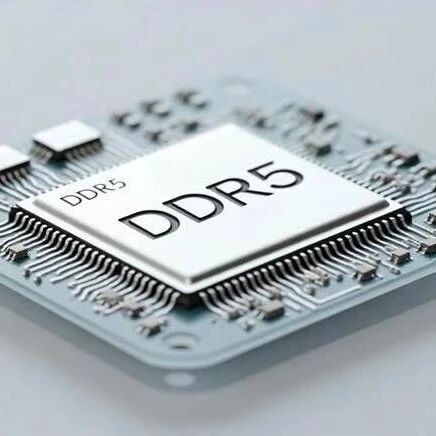
DDR 5,终于降价了,几个月来首次
半导体行业观察· 2026-03-29 01:46
Group 1 - The core point of the article is that DDR5 memory prices have recently experienced a significant decline, with discounts of up to $100 per set, although this is limited to a few suppliers [1][2] - Retailers in the US, including Amazon, have reported substantial price drops for DDR5 memory products, with a notable example being the Corsair 32GB VENGEANCE DDR5 memory now priced at approximately $379.99, down from around $490 [1] - The decline in memory prices is attributed to the release of Google's TurboQuant compression algorithm, which has sparked intense discussions in the memory industry and led to significant market value losses for DRAM suppliers like Micron [2] Group 2 - The price reductions are not exclusive to Amazon, as similar products can be found on Newegg, with Corsair's memory products seeing larger price cuts compared to other manufacturers [2] - The TurboQuant algorithm can potentially reduce memory demand for AI workloads by up to six times, which may alter future memory demand dynamics, although some experts are skeptical about this claim [2] - The current price drop may be a result of inventory sell-offs following the positive industry response to the TurboQuant algorithm, although this remains speculative [2]
四大巨头,重金投向这家DRAM厂
半导体行业观察· 2026-03-26 00:36
Core Viewpoint - Nanya Technology announced a private placement of 351.578 million shares, raising a total of NT$78.718 billion, with participation from major players in the DRAM and NAND flash memory sectors, indicating strong confidence in the long-term prospects of the DRAM market [1][2]. Group 1: Private Placement Details - The pricing for the private placement was set at NT$223.9 per share, reflecting a discount of only 1.15% compared to the closing price of NT$226.5, showcasing the optimism of the subscribing companies regarding the DRAM market [2]. - The specific subscription amounts from the four companies are as follows: Kioxia 70 million shares, SanDisk 138.685 million shares, Solidigm 71.393 million shares, and Cisco 71.5 million shares, corresponding to ownership stakes of 2%, 4%, 2%, and 2% respectively [2]. Group 2: Market Outlook and Strategic Initiatives - Despite some market discrepancies regarding DDR4 memory pricing, Nanya expects memory prices to continue to rise steadily throughout the year [2]. - The company is advancing new technologies such as Wafer on Wafer to meet the growing computational demands of edge AI applications, anticipating that the demand for memory in various terminal devices will continue to increase as AI applications extend from cloud to edge [2].
焦虑的内存厂
半导体行业观察· 2026-03-21 02:53
Core Viewpoint - The DRAM prices remain high, with significant profit increases reported by major players like Samsung and SK Hynix, yet there is a notable restraint in capacity expansion due to historical lessons learned from past cycles [2][3][4]. Group 1: Historical Lessons - The first lesson from 1993-1996 highlights that excessive capacity expansion led to a 75% price drop in 1996, resulting in significant losses for many companies, particularly Japanese firms [4][5]. - The second lesson from 2000-2002 illustrates that after the internet bubble burst, new capacities were released just as demand plummeted, leading to prolonged low prices and industry consolidation [6]. - The third lesson from 2017-2018 and the subsequent downturn in 2022-2023 shows that overexpansion during periods of high demand can lead to severe losses when the market corrects [7]. Group 2: Current Market Dynamics - The rise of High Bandwidth Memory (HBM) is changing the landscape, as it requires more resources to produce compared to standard DRAM, leading to a tighter supply for traditional memory products [8][9]. - AI-driven demand is significantly increasing memory consumption, with AI servers requiring three to four times more memory than traditional servers, creating a supply crunch in the market [8][9]. - The current DRAM inventory levels are critically low, with only 2-3 weeks of supply available, indicating a tight market situation that is expected to persist until new capacities come online in 2027 [14][16]. Group 3: Company Strategies - SK Hynix is capitalizing on its HBM market position, planning to invest heavily in DRAM while cautiously reducing HBM-related investments due to potential oversupply concerns [11]. - Samsung is navigating a complex situation, aiming to catch up in HBM production while being cautious about expansion due to fears of future overcapacity [11]. - Micron is taking a more aggressive approach by exiting the consumer memory market to focus entirely on AI data center clients, reflecting a strategic shift towards higher-margin opportunities [12]. Group 4: Future Considerations - The industry is facing uncertainty regarding the sustainability of AI infrastructure investments, with potential market reversals anticipated around 2028 as new capacities come online [15][16]. - The cyclical nature of the memory market remains a concern, as historical patterns suggest that overcapacity could lead to significant price declines once demand stabilizes [16][17]. - The differing strategies among major players reflect a collective anxiety about navigating the unpredictable demand landscape driven by AI and macroeconomic factors [17].

【美股盘前】三大期指齐跌超1%;石油股多数上涨,美国能源涨超18%;内存股普跌,美光跌超6%;明星科技股普跌,英伟达跌3%;联合创始人计划出售2.8亿美...
Mei Ri Jing Ji Xin Wen· 2026-03-03 10:23
Market Overview - Major U.S. stock index futures fell over 1%, with Dow futures down 1.14%, S&P 500 futures down 1.50%, and Nasdaq futures down 1.96% [1] Energy Sector - Oil stocks saw a pre-market increase, with U.S. Energy up 18.26%. Notable gains included Exxon Mobil up 2.00%, Chevron up 1.56%, and ConocoPhillips up 2.49%. WTI crude oil futures rose 5.19% to $74.97 per barrel [1] Defense Sector - Defense stocks collectively strengthened in pre-market trading, with Lockheed Martin up 1.56% and Raytheon Technologies up 0.82% [1] Airline Sector - U.S. airline stocks experienced a pre-market decline, with American Airlines down 3.12%, Delta Air Lines down 3.05%, and United Airlines down 2.91% [1] Memory Stocks - Memory stocks faced a pre-market downturn, with Micron Technology down 6.15%, Western Digital down 5.04%, and Seagate down 4.80% [1] Technology Sector - Prominent technology stocks also saw a pre-market decline, with Nvidia down 3%, Google down 2.68%, AMD down 3.71%, and Microsoft down 1.70% [1] Palantir - Palantir's co-founder Peter Thiel plans to sell up to 2 million shares worth $280 million, leading to a drop of 3.46% in Palantir's stock [2] Precious Metals - Precious metal stocks declined in pre-market trading, with Hecla Mining down 6.21%, Newmont Gold down 3.53%, and Pan American Silver down 4.6%. Spot gold prices fell 1.11% to $5260 per ounce, while spot silver prices dropped 6.04% to $83.96 per ounce [2] Paramount Global - Following Paramount's acquisition of Warner Bros, Fitch Ratings downgraded Paramount's corporate rating and long-term issuer rating to BB+, classifying it as junk status due to the company incurring $79 billion in net debt [2]

字节Seedance2.0爆火;OpenAI测试广告投放
2 1 Shi Ji Jing Ji Bao Dao· 2026-02-10 02:48
Group 1: Technology Developments - ByteDance's AI video generation model Seedance 2.0 has gained significant attention for its ability to create movie-quality videos from text and images, being described as the strongest video generation model currently available [2] - OpenAI is set to begin testing advertisements in ChatGPT, with ads clearly marked and placed separately from chat content, aiming for long-term ad revenue to be less than half of total income [3] - Alibaba's new AI model Qwen 3.5 is expected to be released soon, featuring a new mixed attention mechanism and potential capabilities for visual understanding [11] - Xiaohongshu is developing an AI video editing product called OpenStoryline, which is currently in testing and may be open-sourced in the future [12] Group 2: Market Insights - The consumer-grade XR market in China is projected to reach 645,000 units in 2025, with a year-on-year growth of 13%, and AR sales expected to surpass VR for the first time [5] - Memory prices are forecasted to surge by 80%-90% by the first quarter of 2026, driven by significant increases in server DRAM prices [6] - Pursuit Technology is expected to see a 189% revenue growth in North America by 2025, with overseas revenue accounting for nearly 80% of total income [7] - Sohu reported a total revenue of $142 million for Q4 2025, with an annual total of $584 million, showing a 6% year-on-year increase [8] Group 3: Financing Activities - Databricks has completed a $5 billion funding round, raising its valuation to $134 billion, a 34% increase from the previous funding round [9] - Shanghai Puxing Aerospace Technology has secured 30 million yuan in angel financing, which will be used for technology development and factory construction [10]

内存市场大动作!三巨头联手反囤积,价格要变天?
Sou Hu Cai Jing· 2026-02-03 12:20
Core Viewpoint - The memory market is experiencing significant changes as major players Samsung, SK Hynix, and Micron have formed an alliance to combat hoarding practices, aiming to stabilize the market and better understand real demand [1][3][5] Market Situation - The current memory market is chaotic, characterized by a cycle of hoarding and shortages, leading to inflated prices that do not reflect actual demand [3][4] - Many electronic component suppliers are hoarding memory chips in anticipation of price increases, which has resulted in genuine manufacturers facing supply shortages and forced to pay higher prices [3][4] Alliance Actions - The alliance's primary strategy involves strict verification of customer orders to ensure accurate reporting of downstream demand, thereby eliminating unnecessary hoarding [3][5] - This initiative is seen as a rational response to the market's disarray, with the goal of returning to a balance of supply and demand rather than relying on speculation [3][4] Price Implications - In the short term, hoarders may rush to sell off their stock, potentially leading to a slight decrease in memory prices; however, long-term demand from sectors like digital devices, servers, and electric vehicles remains strong [4][5] - Prices are expected to stabilize at levels that reflect actual demand rather than being driven by hoarding practices [4][5] Future Outlook - The alliance aims to gain significant market control by accurately assessing real demand and adjusting production accordingly, which will help maintain profitability and stabilize prices [4][5] - Downstream companies are advised to avoid hoarding and instead purchase based on actual needs to mitigate the impact of market fluctuations [4][5] Monitoring Developments - The potential resistance from hoarders and the risk of downstream companies misreporting demand could influence future price trends in the memory market, necessitating close monitoring of these dynamics [5]

港股不再只是“捡便宜”,国海富兰克林徐成:看重性价比,更看重长期盈利确定性
Xin Lang Cai Jing· 2026-01-30 10:28
Core Viewpoint - The Hong Kong stock market has transitioned from a phase dominated by sentiment-driven adjustments to a more rational valuation phase supported by policy and earnings recovery, with a focus on profitability, dividends, and industry structure rather than just being "cheap" [1][3] Group 1: Market Dynamics - The market is characterized by a stark contrast between high-dividend, strong cash flow assets and growth-oriented sectors influenced by global liquidity and thematic sentiment [1][3] - The global AI wave is reshaping capital flows and industry structures, with competition intensifying around computing power, algorithms, and application scenarios [1][7] - Institutional investors are increasingly focused on reassessing the cost-effectiveness of Hong Kong and Asian assets along the AI industry chain as valuations are no longer at extreme lows [1][3] Group 2: Investment Strategy - The investment strategy emphasizes understanding macroeconomic conditions, corporate competitiveness, and earnings volatility rather than solely relying on low valuations [3][10] - The focus has shifted from "valuation recovery" to identifying companies with potential earnings improvement in a gradually recovering macro environment [3][10] - The investment approach is characterized by a balance between high-dividend and high-growth sectors, allowing for dynamic switching between different styles [10][11] Group 3: Sector Insights - The internal demand sector is expected to have significant upside potential if stronger consumer support policies are introduced, although broad opportunities may be limited due to mixed macro data and slowing population growth [5][11] - Specific sectors like travel, leisure services, and experience-based consumption may see recovery and growth driven by policy support [5][11] - The hardware segment of the AI industry, particularly in memory and high-end manufacturing, is highlighted as a key area for investment due to its stable competitive landscape and high demand [7][8] Group 4: Risk Management - The investment philosophy includes a focus on safety margins and avoiding excessive concentration in single themes, with a preference for companies that demonstrate clear advantages in both valuation and earnings [10][11] - The approach to risk control involves monitoring individual stock valuations and overall portfolio beta exposure, adjusting positions based on macroeconomic and policy changes [11][12] - The emphasis is on identifying undervalued companies with long-term competitive advantages that may be overlooked or mispriced in the current market environment [12]
AI狂欢是“赢家的诅咒”么?
伍治坚证据主义· 2026-01-30 02:26
Core Viewpoint - The article discusses the phenomenon of "Winner's Curse" in the context of the current AI infrastructure competition, highlighting the irrational exuberance in capital expenditures driven by fear of missing out (FOMO) rather than sound financial models [2][5][9]. Group 1: Winner's Curse in AI Infrastructure - The term "Winner's Curse" refers to the tendency of winning bidders in auctions to overpay due to optimistic valuations, which can lead to disappointing returns [2][3]. - In the AI infrastructure race, major tech companies are engaged in a capital bidding war, with reported capital expenditures reaching up to $400 billion by 2025 [5][7]. - The competition is characterized by a lack of rigorous cash flow models, with companies driven by the fear of falling behind rather than rational assessments of value [5][7]. Group 2: Market Dynamics and Pricing - The rapid increase in hardware prices, such as DRAM and high-performance memory, reflects the "Winner's Curse" as suppliers capitalize on the competitive bidding environment [7]. - The article draws parallels to historical events, such as the California Gold Rush, where the true beneficiaries were not the miners but those supplying tools and resources [7]. - The disparity between rising asset prices and struggling operational cash flows indicates a potential misalignment in market valuations [7][8]. Group 3: Talent Acquisition and Valuation - The "Winner's Curse" extends to the talent market, where companies are overpaying for top AI talent, often leading to overestimation of their marginal value [8]. - The rapid pace of technological advancement can render significant investments in talent obsolete before the return on investment is realized [8]. - The article emphasizes the importance of having the ability to exit investments that no longer make sense, contrasting with the tendency to continue investing due to sunk cost fallacy [8][9].

TikTok Shop推出“地平线项目”:拉动美区千万美元年销额品牌入驻;iPhone Air三个月跌近3000元丨Going Global
创业邦· 2026-01-25 10:33
Group 1 - TikTok Shop launched the "Horizon Project" to attract brands with annual sales of at least $10 million to join its platform, aiming for a total sales target of $50 million by the end of 2026 [4] - Temu's market share is projected to equal Amazon's by 2025, with both platforms capturing nearly half of the global cross-border e-commerce market [5][7] - Alibaba's chip company T-Head is planning to restructure for independent listing, which is seen as a significant step in building its AI capabilities [9] Group 2 - The snack retail giant "Mingming Hen Mang" has initiated its IPO process, aiming to raise up to approximately HKD 3.34 billion, with a network of nearly 20,000 stores across China [10][11] - Heytea has expanded internationally, opening over 100 stores in 32 cities, with a focus on local product development for overseas markets [13] - Global memory giant SK Hynix announced record bonuses for employees, reflecting strong financial performance with a 39% year-on-year increase in sales [23]