
Neuralink

Search documents
2只脑机接口概念股年内股价翻倍!政策持续加码 中国有望领跑
2 1 Shi Ji Jing Ji Bao Dao· 2025-11-29 23:53
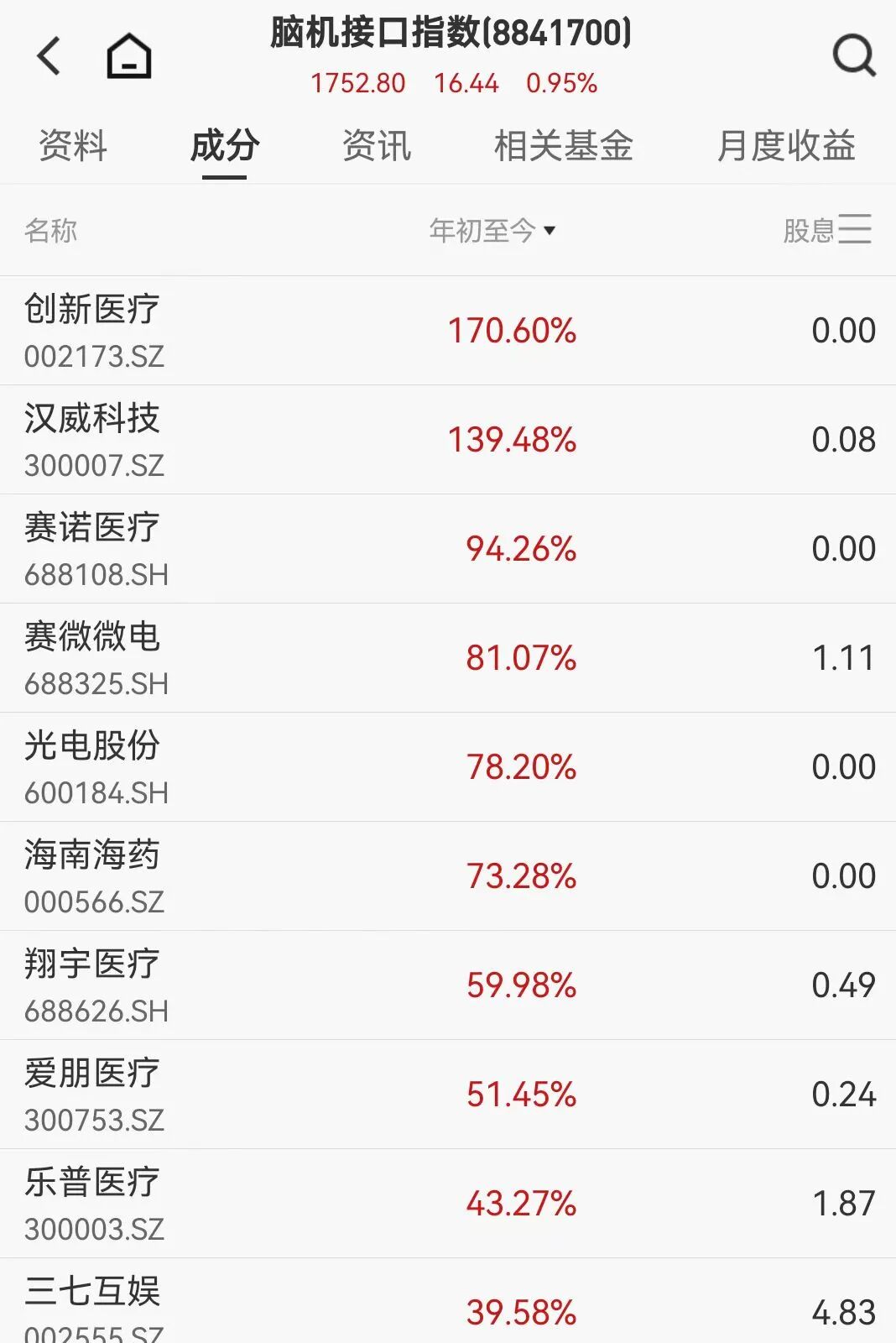
Core Insights - The year 2025 is viewed as a pivotal year for China's "brain-computer interface" (BCI) industry, with significant policy support and investment activity driving growth [2][5][7] Policy Support - The "14th Five-Year Plan" emphasizes BCI as one of the six key future industries, indicating strong governmental backing [7] - In July, multiple departments released implementation opinions to promote innovation and development in the BCI sector, establishing clear timelines for industry growth [5] - By 2027, breakthroughs in key technologies are expected, with the establishment of advanced technical, industrial, and standard systems [6] Market Performance - As of November, the BCI sector in China has seen 28 financing rounds totaling over 5 billion yuan [2] - The BCI concept index in the A-share market has surged by 52.13% over the past year, significantly outperforming the CSI 300 index, which rose by 15.04% [2] - Notable A-share companies in the BCI space, such as Innovation Medical and Hanwei Technology, have seen stock price increases of 170% and 139.48%, respectively [2] Industry Development - Shanghai has proactively laid out plans for BCI development, aiming for high-quality brain control and clinical applications by 2027 [8] - The BCI industry in China is rapidly advancing, with over 800 core enterprises identified, primarily located in China and the U.S. [9] - China is positioned to potentially lead in the BCI sector, with significant clinical advancements, including the first invasive clinical trial conducted in June [9][10] Financial Performance - In the A-share market, 24 companies related to BCI reported an average revenue of 3.428 billion yuan and an average net profit of 431 million yuan for the first three quarters [11] - Despite high gross profit margins, with 18 companies exceeding 30% and 9 over 60%, some companies are facing negative growth in revenue and net profit [12] Company Initiatives - Companies like Lepu Medical and Meihua Medical are actively pursuing commercialization of BCI products, with Lepu focusing on deep brain stimulation devices and Meihua collaborating with leading cochlear implant firms [13][14] - Aipeng Medical has received regulatory approval for its EEG collection products, which are part of a new ADHD treatment system, and is working with hospitals to implement these solutions [14]


2只脑机接口概念股年内股价翻倍
2 1 Shi Ji Jing Ji Bao Dao· 2025-11-29 23:36
Core Insights - The brain-computer interface (BCI) industry in China is expected to enter a significant development phase by 2025, driven by strong policy support and capital investment [1][5][6] - The BCI sector has seen substantial investment activity, with 28 financing rounds completed in 2023, totaling over 5 billion yuan [1] - The A-share market has recognized BCI as a hot investment trend, with the BCI concept index rising by 52.13% over the past year, significantly outperforming the Shanghai and Shenzhen 300 index [1] Policy Support - The "14th Five-Year Plan" emphasizes BCI as one of the six key future industries, with a clear timeline for technological breakthroughs and industry development by 2027 and 2030 [5][6] - In July, a joint initiative from seven departments outlined strategies for BCI innovation and development, aiming to establish a robust industry ecosystem [5] - Shanghai has proactively developed a BCI action plan, targeting clinical applications and technological advancements by 2027 and 2030 [6] Market Performance - The BCI concept index (8841700.WI) has shown a remarkable increase, with notable stocks like Innovation Medical and Hanwei Technology experiencing gains of 170% and 139.48% respectively [2][1] - A total of 24 A-share companies are involved in the BCI sector, with an average revenue of 3.43 billion yuan and an average net profit of 431 million yuan for the first three quarters of the year [11] Industry Landscape - The BCI industry in China is rapidly evolving, with over 800 core enterprises identified, positioning China among the leading countries in this field [8] - Recent clinical trials, including the first invasive clinical trial in China, indicate significant advancements in BCI technology [8][9] - The launch of the "North Brain No. 1" GCP multi-center clinical trial marks a new phase in large-scale clinical validation of BCI systems [9] Company Developments - Companies like Lepu Medical and Aipeng Medical are actively pursuing commercialization of BCI products, with Lepu focusing on deep brain stimulation devices and Aipeng on EEG collection products [12][13] - Aipeng Medical has established a joint laboratory for ADHD treatment, indicating a focus on integrating BCI technology into clinical applications [13] - Recent regulatory changes, including the establishment of a "green channel" for insurance coding of innovative medical products, are expected to accelerate the clinical application of BCI technologies [13]




2只脑机接口概念股年内股价翻倍
21世纪经济报道· 2025-11-29 23:34
Core Viewpoint - The article highlights the rapid development and investment opportunities in China's brain-computer interface (BCI) industry, which is expected to become a key focus area by 2025, supported by strong government policies and significant capital market activity [1][6][9]. Policy Support - The "14th Five-Year Plan" emphasizes BCI as one of the six key future industries, with increasing policy support and strategic importance [6][7]. - In July, multiple government departments released implementation opinions to promote BCI innovation, setting clear development milestones for the industry [6]. - By 2027, breakthroughs in key technologies are expected, with the establishment of advanced technical, industrial, and standard systems [6]. - Shanghai has initiated a plan to cultivate the BCI industry from 2025 to 2030, aiming for clinical applications of semi-invasive BCI products by 2027 [7][8]. Market Performance - The BCI concept index in the A-share market has seen a significant increase of 52.13% over the past year, outperforming the Shanghai and Shenzhen 300 index, which rose by 15.04% [1]. - Notable BCI-related stocks include Innovation Medical and Hanwei Technology, with year-to-date increases of 170% and 139.48%, respectively [2][1]. Industry Landscape - China is positioned to lead in the BCI sector, with over 800 core enterprises in the industry, primarily located in China and the U.S. [10]. - The first invasive clinical trial in China was successfully conducted in June, marking a significant milestone in the country's BCI technology development [10][11]. - The "North Brain No. 1" GCP multi-center clinical trial was launched in October, representing a new phase in large-scale clinical validation of BCI systems [11]. Financial Performance - In the A-share market, 24 companies related to BCI reported an average revenue of 3.428 billion yuan and an average net profit of 431 million yuan for the first three quarters [13]. - 18 companies have a gross margin exceeding 30%, indicating strong profitability, although many companies are facing challenges in revenue and profit growth [13]. - Companies like Lepu Medical and Aipeng Medical are actively working on commercialization and product development in the BCI space, with recent regulatory approvals and strategic partnerships [14].

AI医疗进阶3.0:医疗普惠潮下的效率革命与商业化破局丨2025·大复盘
Tai Mei Ti A P P· 2025-11-29 01:57
Core Insights - The consensus in the medical industry is that AI will not replace doctors but will serve as an essential assistant, supported by a strong regulatory framework [2] - The AI medical sector is transitioning from conceptual hype to substantial development driven by policies and market forces, with a projected industry scale of 115.7 billion yuan by 2025 [3][4] - The integration of AI into various medical applications is deepening, with significant advancements in areas such as imaging analysis and drug development [4][10] Industry Growth and Projections - The AI medical industry in China is expected to reach 115.7 billion yuan by 2025, with a compound annual growth rate of 10.5% from 2022 to 2028 [3] - By 2028, the industry scale is projected to increase to 159.8 billion yuan [3] Application Maturity and Areas of Focus - AI applications have expanded from diagnostic tools to encompass drug development, decision support, and medical robotics, with imaging analysis being the most mature area [4][10] - AI in medical imaging is projected to exceed 15 billion yuan by 2025, with a significant increase to 23.57 billion yuan by 2026 [10] Data Infrastructure and Challenges - As of July 2025, 206 algorithmic medical products have been registered, with 160 companies providing AI services directly to patients through apps [6] - The quality and standardization of medical data remain significant challenges, with a large volume of data being poorly structured and difficult to utilize effectively [21][22] Payment and Commercialization Issues - The integration of AI into the payment system is still developing, with current regulations preventing additional charges for AI-assisted diagnoses [23] - The recognition of AI's clinical value is crucial for its inclusion in payment systems, with a focus on demonstrating its effectiveness in improving patient outcomes [23][24] Future Directions and Sustainable Development - The AI medical sector is exploring diverse commercialization paths, with a focus on creating clear clinical value to ensure sustainability [27][30] - The concept of "inclusive healthcare" is emerging as a key focus, aiming to balance service quality, accessibility, and cost [30]
X @Tesla Owners Silicon Valley
Tesla Owners Silicon Valley· 2025-11-28 07:59
Elon Musk“With AI and robots like Optimus doing most work, Neuralink aims to boost our connection with AI so it understands human will. Human and machine intelligence will merge. I think there’s an 80–90% chance this future is amazing” https://t.co/Cxt5xjMhju ...
不是科幻!听韩璧丞聊聊“意念控物”的真相
新华网财经· 2025-11-28 05:14
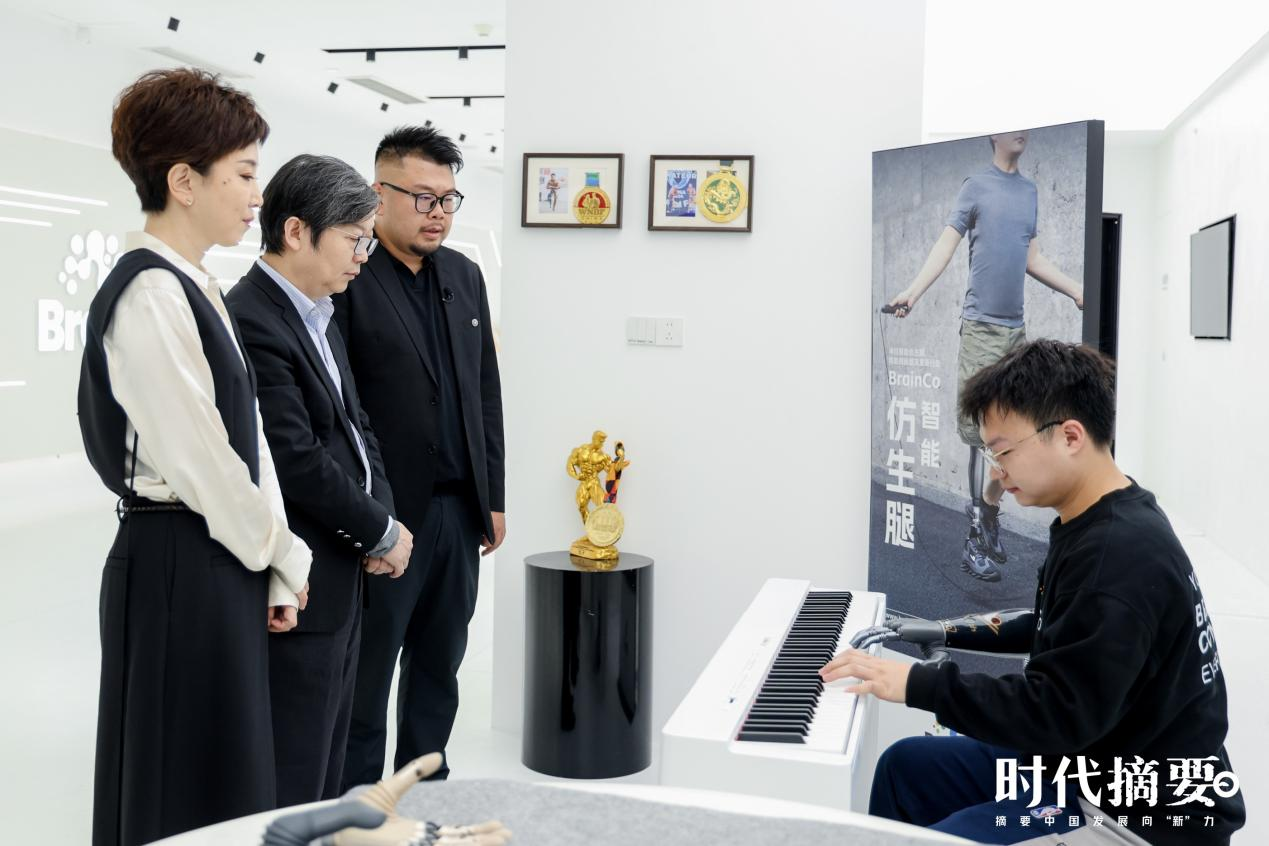
Core Viewpoint - The article highlights the emergence of brain-computer interface (BCI) technology, emphasizing that Chinese company BrainCo has become a leading player in the non-invasive BCI sector, competing with Elon Musk's Neuralink [1]. Group 1: Technological Breakthroughs - BrainCo, founded by Han Bicheng and a team of Chinese students at Harvard in 2015, has focused on developing non-invasive BCI technology for the past decade [3]. - The company has developed a super sensor capable of detecting human neural signals, which are extremely weak, comparable to one-millionth of a 5-volt battery [4]. - Unlike Neuralink's invasive approach, BrainCo's sensor captures neural and brain electrical signals through electrodes without the need for complex surgeries, acting as a "translator" between the brain and the external world [6]. Group 2: Industry Application - BrainCo's products are designed to address real-world needs, with the first application targeting rehabilitation for patients with limb disabilities [8]. - Training for using the device can be completed in one day for hand control, allowing patients to perform tasks like drinking and eating using their thoughts [10]. - The Zhejiang province has included non-invasive BCI adaptation fees in basic medical insurance, facilitating the development of the industry and providing strong motivation for innovative companies [12]. Group 3: Future Prospects - BCI technology has been recognized as one of the six future industries in China's 14th Five-Year Plan, indicating its strategic importance [15]. - The potential for human-machine interaction is expected to revolutionize the relationship between humans and technology, with applications ranging from alleviating neurological diseases to enhancing human capabilities [17]. - The article suggests that the BCI sector is on the verge of a significant breakthrough, with Chinese companies poised to lead in this innovative field [17].

《时代摘要》对话强脑科技韩璧丞:脑机接口产业迎来“奇点时刻”
Xin Hua Wang· 2025-11-28 03:06
Core Insights - Brain-computer interface (BCI) technology is on the verge of a breakthrough, recognized as one of the six future industries in China's 14th Five-Year Plan, alongside quantum technology and hydrogen energy [1][13] - BrainCo, headquartered in Hangzhou, has emerged as a leading player in non-invasive BCI technology, competing with Neuralink, and is focused on transforming future industries into new growth points [1][10] Group 1: Technological Breakthroughs - BrainCo was founded in 2015 by Han Bicheng and a team of Chinese students from Harvard, focusing on developing non-invasive BCI technology [2][4] - The company has dedicated ten years to perfecting a "super sensor" capable of detecting human neural signals, achieving a signal recognition accuracy of over 95% [4][7] - The non-invasive sensor captures neural and brain signals without the need for complex surgeries, making it safer and more accessible compared to invasive methods [6][10] Group 2: Market Applications - BrainCo's products target critical needs, particularly in rehabilitation, offering bionic hands that are significantly cheaper than imported smart prosthetics, priced at 1/7 to 1/10 of similar products [10][12] - The company has established a presence in over 400 hospitals and rehabilitation centers across China, aiming to assist over 6,000 disabled individuals this year [10][12] - Non-invasive BCI technology has been included in basic medical insurance in Zhejiang Province, facilitating wider adoption and market growth [12] Group 3: Future Prospects - The BCI technology is now part of China's strategic planning, providing unprecedented opportunities for companies in this sector [13][15] - BrainCo aims to help 1 million disabled individuals obtain smart prosthetics within the next 5-10 years, enhancing their quality of life [13] - Future developments include devices for treating Alzheimer's, depression, and Parkinson's disease, with the goal of revolutionizing human-machine interaction [15]
X @Elon Musk
Elon Musk· 2025-11-26 18:31
RT Noland Arbaugh (@ModdedQuad)Some people think the @neuralink surgery is scary or dangerous. But here’s the truth:It was one of the easiest experiences of my life. https://t.co/UM8Y4BXfb0 ...
X @Elon Musk
Elon Musk· 2025-11-26 15:21
RT Rob Greiner (@greiner_ro52817)My very first time playing a first person shooter while using neuralink Brain computer interfacing with the quad stick controller I can now aim with my thoughts and it's gonna take a ton of practice, like a ton because I'm only as accurate as I am with my cursor control on my laptop. But you gotta hand it to Neuralink ...
The Truth about Neuralink Making Our Brains 100x Faster
Neura Pod – Neuralink· 2025-11-25 22:45
This video is about how Neuralink will make our brains 100 times faster. Actually, maybe 100,000 times faster. Because you know when you have that genius idea, maybe it's a solution to a problem at work or the perfect way to explain something that you're passionate about or even just the funniest joke you ever thought of and then you try to say it out loud and it just falls flat.This happens to all of us every single day. Maybe some more than others. We're walking around with these supercomputers in our sku ...
