
国中水务

Search documents
2025年1-11月水的生产和供应业企业有4162个,同比增长4.65%
Chan Ye Xin Xi Wang· 2026-01-19 03:44
Group 1 - The core viewpoint of the article highlights the growth in the water production and supply industry in China, with an increase in the number of enterprises from the previous year [1] - As of January-November 2025, there are 4,162 enterprises in the water production and supply sector, representing a year-on-year increase of 185 enterprises, which is a growth rate of 4.65% [1] - The water production and supply industry accounts for 0.79% of the total industrial enterprises in China [1] Group 2 - The article references a report by Zhiyan Consulting titled "2026-2032 China Drinking Water Industry Market Special Research and Investment Prospects," indicating a focus on future investment opportunities in the sector [1] - The report emphasizes the importance of industry research and consulting services in aiding investment decisions, showcasing Zhiyan Consulting's expertise in providing comprehensive industry solutions [1]


午间涨跌停股分析:51只涨停股、25只跌停股,特高压概念活跃,宏盛华源、汉缆股份2连板
Xin Lang Cai Jing· 2026-01-19 03:41
Group 1 - A total of 51 stocks reached the daily limit up while 25 stocks hit the daily limit down in the A-share market on January 19 [1] - The ultra-high voltage concept stocks were active, with companies like Hongsheng Huayuan and Hancable achieving consecutive limit ups, while Huaming Equipment and China XD Electric also hit the limit up [1] - The power grid equipment sector showed strength, with companies such as Senyuan Electric and Jicheng Electronics achieving consecutive limit ups [1] Group 2 - Jia Mei Packaging achieved 15 limit ups in 22 days, while Fenglong Co. reached 14 consecutive limit ups [1] - ST Aowei faced a continuous decline with 7 consecutive limit downs, and ST Yanshi and ST Wanfang experienced 5 consecutive limit downs [1] - Other companies like ST Keli Da and Shenjian Co. faced 3 consecutive limit downs, while ST Tongmai and Suoling Co. had 2 consecutive limit downs [1]

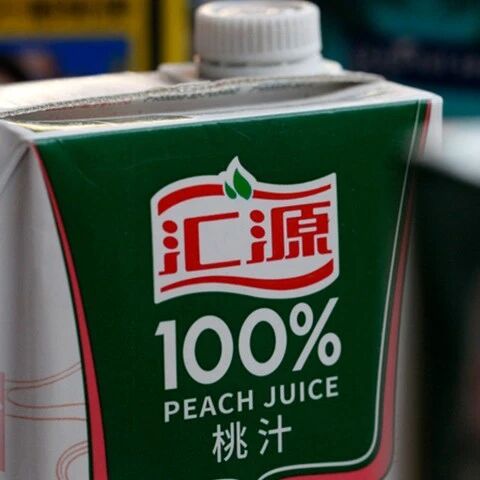
你喝了34年的汇源,可能要变山寨货了
36氪· 2026-01-18 09:08
Core Viewpoint - The article discusses the turmoil surrounding Huiyuan Juice, a once-popular brand in China, which has faced bankruptcy and internal conflicts after a takeover attempt by Wensheng Assets, leading to a split in the brand and ongoing legal battles [5][6][31]. Group 1: Background and Acquisition - Huiyuan Juice went bankrupt two years ago, prompting a search for a buyer to restructure the company [9]. - Wensheng Assets acquired 60% of Huiyuan's shares for 1.6 billion, but the partnership quickly deteriorated into public disputes [10][11]. - Wensheng Assets claimed to have rebranded Huiyuan Juice and started production independently, asserting their products were the "real" Huiyuan [11][14]. Group 2: Financial Disputes - The acquisition agreement stipulated a three-year payment plan, but Wensheng failed to pay the latter installments, leading to financial strain on Huiyuan [21][22]. - Huiyuan's management accused Wensheng of mismanaging funds, with most of the initial investment not being used for Huiyuan's operations [23][24]. - Wensheng profited from selling shares to another company while failing to fulfill their financial commitments to Huiyuan [25][26]. Group 3: Internal Conflicts - The conflict escalated with both parties engaging in legal actions, including Huiyuan suing Wensheng for mismanagement and Wensheng allegedly attempting to manipulate Huiyuan's governance [19][30]. - Allegations arose that Huiyuan's previous management had been siphoning funds to the original parent company, further complicating the financial situation [27][28]. Group 4: Market Position and Challenges - Huiyuan Juice, once a leading brand, has struggled to adapt to market changes and competition, leading to a significant decline in its market position [31][32]. - The company failed to innovate effectively, trailing behind competitors like Nongfu Spring, which capitalized on new trends and marketing strategies [37][38]. - Huiyuan's sales network has been poorly managed, resulting in decreased visibility and availability in retail channels, particularly among younger consumers [49][50]. Group 5: Future Outlook - Despite having strong brand recognition and production capabilities, Huiyuan's future remains uncertain due to ongoing internal conflicts and market challenges [64][65]. - The brand's reputation is at risk as the struggle for control continues, potentially leading to a further decline in consumer trust and market share [67].
今日涨跌停股分析:67只涨停股、57只跌停股,CPO概念活跃,长电科技、通富微电等涨停
Xin Lang Cai Jing· 2026-01-16 07:25
*ST奥维连续6日跌停,*ST岩石、*ST万方连续4日跌停,华夏幸福、亿晶光电等连续3日跌停,海格通 信、中国一重等连续2日跌停,东方明珠、外服控股等跌停。 连板股方面,*ST铖昌8连板板,博菲电气、*ST阳光5连板,*ST仁东7天4板,*ST和科4连板,新泉股 份6天3板,德邦股份、五矿发展等3连板,亚翔集成、大唐电信等3天2板,世嘉科技、康强电子2连板, 兆易创新、思源电气等涨停。 1月16日,A股全天下来共有67只涨停股、57只跌停股。CPO概念活跃,长电科技、通富微电等涨停; HBM概念上涨,赛腾股份涨停。 ...

午间涨跌停股分析:38只涨停股、54只跌停股,有色·锌概念活跃,锌业股份、罗平锌电涨停
Xin Lang Cai Jing· 2026-01-15 03:47
Group 1 - A-shares experienced significant market activity with 38 stocks hitting the daily limit up and 54 stocks hitting the daily limit down [1] - The non-ferrous metal sector, particularly zinc, showed strong performance with companies like Zinc Industry Co. and Luoping Zinc Electric reaching the daily limit up [1] - Notable stocks with consecutive limit up performances include *ST Gauss with 7 limit ups in 10 days, and others like Bofei Electric and *ST Sunshine with 4 consecutive limit ups [1] Group 2 - Conversely, *ST Aowei faced a continuous decline with 5 consecutive limit downs, alongside other companies like *ST Rock and *ST Wanfang with 3 consecutive limit downs [1] - Companies such as Yijing Photovoltaic and Huaxia Happiness also experienced consecutive limit downs, indicating a bearish trend in certain sectors [1] - Major companies like China First Heavy Industries and *ST Bosen hit the daily limit down, reflecting broader market challenges [1]

2025年1-11月黑龙江省工业企业有4886个,同比增长1.33%
Chan Ye Xin Xi Wang· 2026-01-14 03:22
Core Viewpoint - The report highlights the growth of industrial enterprises in Heilongjiang Province, indicating a slight increase in the number of large-scale industrial companies and their contribution to the national total [1]. Group 1: Company Information - Listed companies mentioned include Huadian Energy (600726), Daqing Huake (000985), Hengfeng Paper (600356), Baotailong (601011), Yuheng Pharmaceutical (002437), Hasa Lian (002900), Hainan Pharmaceutical (600664), Kewhua Pharmaceutical (002737), Zhenbaodao (603567), Haka Air Conditioning (600202), China First Heavy Industries (601106), Longjiang Transportation (601188), Jiuzhou Group (300040), and Guozhong Water (600187) [1]. Group 2: Industry Statistics - As of January-November 2025, Heilongjiang Province had 4,886 industrial enterprises, an increase of 64 compared to the same period last year, representing a year-on-year growth of 1.33% and accounting for 0.93% of the national total [1]. - The threshold for large-scale industrial enterprises in Heilongjiang was raised from an annual main business income of 5 million to 20 million yuan starting in 2011 [1]. Group 3: Research and Consulting - Zhiyan Consulting is identified as a leading industry consulting firm in China, specializing in in-depth industry research reports, business plans, feasibility studies, and customized services, aimed at providing comprehensive industry solutions to empower investment decisions [1].

民营AMC的大旗,倒了 / 金融机构抵债资产全流程管理
Xin Lang Cai Jing· 2026-01-13 11:34
Core Viewpoint - The restructuring plan led by Wensheng Asset for Huiyuan Group has officially failed, resulting in the freezing of 640 million shares of Wensheng Asset [2][4][27] Group 1: Restructuring and Financial Issues - Huiyuan Group has stated that it has fulfilled its obligations under the restructuring investment agreement, while Wensheng Asset has failed to pay 850 million yuan of the promised investment and has not managed the operations of Beijing Huiyuan as agreed [2][25] - The failure of the restructuring plan has been attributed to Wensheng Asset's fundamental breach of the investment agreement, leading to the court's restructuring ruling remaining unfulfilled [4][27] Group 2: Background and Capital Dynamics - Huiyuan Juice, once a national brand, has been embroiled in internal conflicts and capital issues since its delisting from the Hong Kong Stock Exchange in 2021 and subsequent bankruptcy restructuring in 2022 [5][28] - Wensheng Asset injected 1.6 billion yuan into the restructuring, with claims that over 90% of the funds were intended for operational upgrades [28] - National Water Company announced plans to indirectly acquire Beijing Huiyuan, holding 21.89% of its shares after multiple transactions with Wensheng Asset [5][28] Group 3: Brand and Operational Management - Huiyuan Group accused Wensheng Asset of irresponsible actions, including sourcing juice materials from unverified suppliers, undermining the brand's safety standards [6][29] - The internal conflict has led to significant market disruptions, including product shortages on major e-commerce platforms, affecting normal operations and sales [8][31] - Huiyuan Group has declared a complete takeover of Beijing Huiyuan's operations and will manage all orders until Wensheng Asset fulfills its obligations under the restructuring agreement [9][32]

汇源重整案陷“双生”困局,地方AMC跨界“翻车”
Hua Xia Shi Bao· 2026-01-13 05:31
Core Viewpoint - The ongoing dispute between Huiyuan Juice and its restructuring investor, Shanghai Wensheng Asset Management, has escalated into a battle over brand ownership, company control, and a 1.6 billion yuan investment, leading to confusion in the market regarding the authenticity of Huiyuan products [2][4]. Group 1: Company Background - Huiyuan Juice, with nearly 30 years of history, was once a staple on Chinese dining tables, known for its orange and peach juices [3]. - Shanghai Wensheng Asset Management, a private asset management company, is recognized for handling distressed assets and was initially seen as a "white knight" for Huiyuan [4]. Group 2: Restructuring and Investment Issues - The partnership began three years ago, with Shanghai Wensheng committing to invest 1.6 billion yuan to rescue Huiyuan, which had entered restructuring due to severe financial distress [4]. - The restructuring agreement allowed Shanghai Wensheng to gain control over Huiyuan through its subsidiary, while Huiyuan retained ownership of the brand [5]. - Disputes arose when Shanghai Wensheng failed to fulfill its investment commitments, leading to accusations of "funding defaults" and operational mismanagement [5][6]. Group 3: Legal and Operational Conflicts - On January 8, 2025, Huiyuan Group accused Shanghai Wensheng of fundamental breaches of the restructuring agreement, claiming that 850 million yuan of the promised investment was not paid [6]. - In response, the official Huiyuan Juice account claimed that Huiyuan Group was merely a contract manufacturer and that its trademark authorization had been terminated, labeling the products as infringing [6]. Group 4: Financial Structure and Vulnerabilities - The investment structure involved complex financial maneuvers, including the involvement of listed company Guozhong Water, which contributed approximately 930 million yuan to the restructuring [7]. - The financial model, characterized by high leverage, proved fragile when disputes led to the freezing of key shares, disrupting the funding chain and ultimately affecting the restructuring process [7][8]. Group 5: Industry Implications - The case highlights the challenges faced by local asset management companies (AMCs) in managing operational control while lacking experience in running businesses [10]. - Experts suggest that the failure of Huiyuan's restructuring underscores the need for stricter contractual and financial mechanisms within the AMC industry to prevent similar issues in the future [12].

微动态丨重整方案失败,汇源集团重掌“汇源”
Shang Hai Zheng Quan Bao· 2026-01-09 01:17
Group 1 - The core viewpoint of the article highlights the conflict between Huiyuan Group and its restructuring investor, Shanghai Wensheng Asset Management Co., Ltd., which has led to the failure of the restructuring plan and Huiyuan Group's decision to fully take over Beijing Huiyuan Food and Beverage Co., Ltd. [1][3] - Huiyuan Group accuses Shanghai Wensheng of breaching the agreement by sourcing juice materials from unapproved factories, undermining the brand's integrity and consumer safety [3][4] - The restructuring plan initiated due to Huiyuan's debt crisis has faced significant challenges, including delays in investment commitments from Wensheng and disputes over management control [4][5] Group 2 - The new factory established by Anhui Chuzhou Huaguan, which is linked to Wensheng, is identified as a "regular processing factory" and is set to produce products under the Huiyuan brand, leading to market competition between two entities using the same brand name [4][5] - Industry insiders express skepticism about Wensheng's ability to operate independently in the beverage sector, given its lack of experience and the established management systems of Huiyuan Group [5] - The ongoing dispute raises concerns about trademark compliance and potential legal risks for the processing factories involved, which could impact their future operations and financial stability [5]

重整方案失败,汇源集团重掌“汇源”
Shang Hai Zheng Quan Bao· 2026-01-08 15:57
Core Viewpoint - The core issue revolves around the conflict between Huiyuan Group and its restructuring investor, Shanghai Wensheng Asset Management Co., Ltd., leading to Huiyuan Group's decision to take over the management of Beijing Huiyuan Food and Beverage Co., Ltd. due to alleged breaches of contract by Wensheng [1][2]. Group 1: Company Actions and Statements - Huiyuan Group issued a statement declaring the failure of the restructuring plan and announced its intention to fully take over Beijing Huiyuan and its core juice ordering business [1]. - The group criticized Shanghai Wensheng for lacking the necessary experience and management capabilities in juice production, accusing it of sourcing raw materials from unapproved suppliers [1]. - Huiyuan Group declared all contracts signed by Beijing Huiyuan with external manufacturers during Wensheng's control as invalid, emphasizing that products not made with Huiyuan's raw materials cannot be sold under the Huiyuan brand [1][2]. Group 2: Background and Context - The restructuring process began due to Huiyuan's debt crisis, with the company historically holding a significant market share in China's juice industry [2]. - In June 2022, a court approved a restructuring plan that allowed Wensheng to invest 1.6 billion yuan over three years for a 60% stake in Beijing Huiyuan, aimed at debt repayment and operational support [2]. - Wensheng's plans for an A-share listing or selling shares to another company have faced obstacles, leading to public disputes over investment commitments and management control [3]. Group 3: Market Implications and Risks - The emergence of two competing "Huiyuan" brands in the market has raised concerns about brand integrity and compliance with trademark regulations [3]. - Industry insiders suggest that Wensheng's lack of experience in the beverage sector may hinder its ability to operate independently from Huiyuan Group, especially in a competitive market [3]. - There are potential risks for the contract manufacturers involved with Wensheng, including liability for unauthorized trademark use, which could impact their future operations and financial stability [3].