江苏新能

Search documents
山东统筹能源供应保障、绿色转型和改革创新,能源高质量发展取得突破性进展
Da Zhong Ri Bao· 2025-11-29 01:19
Core Insights - Shandong has made significant progress in high-quality energy development, balancing energy supply security, green transformation, and reform innovation [6] - The province has established a robust offshore wind power industry cluster, with 235 giant wind turbines generating 4.35 billion kWh of green electricity annually, equivalent to the carbon absorption of 14 million trees [2][6] - The integration of AI and 5G technology in offshore wind farm operations enhances efficiency and safety, addressing challenges such as maintenance costs and communication issues [3][4][5] Group 1: Offshore Wind Power Development - Shandong's offshore wind power capacity reached 5.92 million kW by the end of October, making it a key driver for green, low-carbon development in the province [2][6] - The operational maintenance costs for offshore wind power typically account for 20%-30% of project construction costs, significantly higher than onshore wind [2] Group 2: Technological Innovations - The implementation of a smart operation and maintenance system, including AI for real-time monitoring and 5G communication, has improved operational efficiency and safety in offshore wind farms [3][4][5] - The deployment of 5G technology has extended communication coverage up to 77 kilometers, enhancing response times for maintenance and safety [4] Group 3: Energy Transition Goals - By the end of October 2025, Shandong aims to exceed 250 million kW in total installed power capacity, with clean energy accounting for one-third of electricity consumption [6] - The province has invested over 200 billion yuan annually in energy projects, focusing on diverse clean energy sources such as nuclear, wind, solar, and geothermal [6]
“白色森林”装上智慧大脑,山东探路海上风电运维新模式
Da Zhong Ri Bao· 2025-11-28 22:41
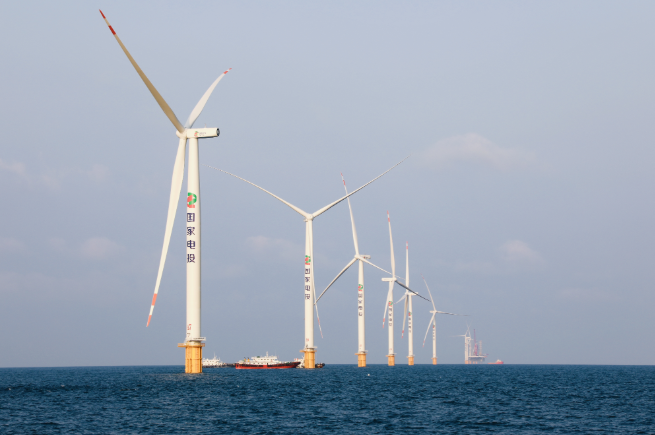
Core Viewpoint - The development of offshore wind power in Shandong has significantly increased green electricity supply and reduced carbon emissions, positioning the region as a leader in renewable energy in northern China [1][6]. Group 1: Offshore Wind Power Development - The construction of 235 giant wind turbines by State Power Investment Corporation (SPIC) in the southern sea area of Shandong generates 4.35 billion kilowatt-hours of green electricity annually, equivalent to the carbon absorption of 14 million trees [1]. - As of October 2023, Shandong's offshore wind power installed capacity reached 5.92 million kilowatts, making it a crucial engine for the province's green, low-carbon, and high-quality development [1]. Group 2: Operation and Maintenance Innovations - Offshore wind power operation and maintenance (O&M) costs typically account for 20%-30% of project construction costs, which is significantly higher than onshore wind power [3]. - The integration of AI in offshore wind power O&M has improved efficiency, with a smart system capable of real-time monitoring and alerts for equipment issues, thus preventing potential damages [3][4]. Group 3: Communication and Inspection Enhancements - A 5G base station has been established at the offshore wind farm, extending coverage up to 77 kilometers, which enhances communication capabilities for maintenance and safety [5]. - The deployment of inspection robots has replaced 70% of manual inspection work, improving efficiency and ensuring the safety of personnel during maintenance operations [5][6]. Group 4: Renewable Energy Growth and Future Goals - Shandong aims to achieve a total installed power capacity of over 250 million kilowatts by October 2025, with clean energy accounting for one-third of electricity consumption [6][9]. - The province has seen a nearly 10 percentage point increase in the share of renewable energy generation from 2021 to 2024, with new energy storage capacity growing more than fivefold compared to the end of 2022 [9].

华创证券电力行业2026年度投资策略:看好海风成长潜力 火水核价值回归可期
Zhi Tong Cai Jing· 2025-11-27 13:45
Core Viewpoint - The report from Huachuang Securities indicates a shift in the positioning of offshore wind energy from the 14th Five-Year Plan to the 15th, with expectations for growth due to a low current base. The report is optimistic about the recovery of valuations in renewable energy assets and the potential for traditional power assets like thermal, hydro, and nuclear power to be revalued by the market [1][4]. Group 1: Offshore Wind and Renewable Energy - The offshore wind sector is expected to experience a growth inflection point during the 15th Five-Year Plan, with a low current installation base of only 1.2% of the national total as of 2024, indicating significant development potential [5][6]. - The renewable energy sector has been stagnant, but upcoming policy changes and fundamental shifts are anticipated to lead to a substantial recovery in asset valuations [4][6]. Group 2: Thermal Power Transition - Thermal power is projected to transition from a cyclical nature to a public utility characteristic, with companies like Jiantou Energy and Jingneng Power expected to outperform the Shanghai Composite Index by 2025 [9]. - The stabilization of long-term electricity prices and the recent rebound in coal prices are expected to clarify performance expectations for thermal power in the coming year [9]. Group 3: Hydropower and Nuclear Power Valuation Recovery - Hydropower and nuclear power are expected to see a return to value, with hydropower companies showing a dividend yield exceeding 3%, indicating relative attractiveness [11]. - The nuclear power sector is anticipated to benefit from a stable growth outlook and the addition of new units by 2025, which may attract more investment if market risk appetite declines [14].

地方政府与城投企业债务风险研究报告:南京市
Lian He Zi Xin· 2025-11-26 11:26
Report Industry Investment Rating No relevant content provided. Core Views of the Report - Nanjing, an important central city in eastern China, has obvious regional advantages, convenient transportation, a high - level of urbanization, a reasonable industrial structure, and clear industrial planning. In 2024, its economic aggregate and general public budget revenue ranked second in Jiangsu Province. The general public budget revenue has good quality and strong fiscal self - sufficiency, while government - funded revenue decreased year - on - year. The government debt burden is at a medium level among prefecture - level cities in Jiangsu [4]. - Among Nanjing's districts, Jiangning District has the strongest overall economic strength, and core areas such as Jianye and Xuanwu Districts have prominent per - capita GDP levels. There are differences in fiscal strength among districts. Affected by the real - estate market adjustment, the government - funded revenues of Jiangning, Lishui, and Liuhe Districts are under significant pressure. Most areas have a relatively heavy overall debt burden [4]. - Nanjing has a large number of existing bond - issuing urban investment enterprises, with the main body ratings being AA and AA+. In 2024, the net financing of urban investment bonds turned from net inflow to net outflow. In the first three quarters of 2025, the net financing continued to show a large - scale net outflow. The debt scale of bond - issuing urban investment enterprises continued to grow, and some district - level platforms have heavy debt burdens and weak short - term solvency indicators [4]. Summary by Relevant Catalogs I. Nanjing's Economic and Fiscal Strength (1) Regional Characteristics and Economic Development in Nanjing - Regional advantages and transportation: Nanjing is the capital of Jiangsu Province, with obvious regional advantages and a well - developed transportation network including railways, highways, waterways, and aviation. In 2024, it opened new international train lines, and its subway, airport, and port all had good development [5][7]. - Urbanization level: By the end of 2024, Nanjing's permanent population was 9.577 million, ranking second in Jiangsu, with an urbanization rate of 87.3%, higher than the provincial average [6]. - Economic aggregate: In 2024, Nanjing's GDP was 1.850081 trillion yuan, ranking second in Jiangsu, with a growth rate of 4.5%. In the first half of 2025, it was 917.918 billion yuan, with a year - on - year growth of 5.3% [8]. - Industrial structure: Nanjing has a reasonable industrial structure and a clear "2 + 6+6" industrial plan. In 2024, investment in advanced manufacturing and related product output increased [9]. - Policies and support: Since 2024, Nanjing has introduced various economic guidance policies and received support from the superior government in terms of fiscal transfer payments [12]. (2) Nanjing's Fiscal Strength and Debt Situation - Fiscal revenue: In 2024, Nanjing's general public budget revenue ranked second in Jiangsu, with good quality and strong fiscal self - sufficiency. Government - funded revenue decreased year - on - year, and superior subsidies contributed to the comprehensive fiscal resources [14]. - Debt burden: By the end of 2024, Nanjing's local government debt ratio and debt - to - GDP ratio ranked eighth among prefecture - level cities in Jiangsu, at a medium level [16]. II. Economic and Fiscal Conditions of Nanjing's Districts (Counties, Cities) (1) Economic Strength of Nanjing's Districts - Regional planning: Nanjing will build a spatial structure of "rural areas in the north and south, a metropolis in the middle, development along the Yangtze River, and urban - rural integration" [18]. - Industrial development: Each district forms characteristic industrial clusters based on its own resource endowments, such as integrated circuits and biomedicine in Jiangbei New Area, and advanced manufacturing in Jiangning District [21]. - Economic development: In 2024, there were significant differences in the economic aggregates of Nanjing's districts. The economic growth rates of 11 districts were relatively balanced, and there were large differences in per - capita GDP levels [22]. (2) Fiscal Strength and Debt Situation of Each District - Fiscal revenue: In 2024, there were differences in fiscal strength among districts. Most areas had stable general public budget revenues. Tax revenues accounted for a high proportion, and the government - funded revenues of Jiangning, Lishui, and Liuhe Districts were under pressure. The comprehensive fiscal resources of Jiangning and Jiangbei New Areas were in the first echelon [28][34]. - Debt situation: Except for Jianye District, the government debt balances of other districts increased. Most areas had a relatively heavy overall debt burden, with Jiangning District having the largest debt scale and Gaochun District having the heaviest debt burden [36]. - Debt management: Nanjing and its districts have strengthened debt monitoring and management, and each district has formulated differentiated debt management plans [39][41]. III. Debt - Repayment Ability of Nanjing's Urban Investment Enterprises (1) Overview of Urban Investment Enterprises - As of September 30, 2025, there were 67 urban investment enterprises with existing bonds in Nanjing. The main body ratings were mainly AA and AA+. Since 2024, the ratings of 2 urban investment enterprises have been upgraded [44][45]. (2) Bond - Issuing Situation of Urban Investment Enterprises - In 2024, the bond - issuing scale of Nanjing's urban investment enterprises increased slightly year - on - year, and the net financing of urban investment bonds turned from net inflow to net outflow. In the first three quarters of 2025, the net financing continued to show a large - scale net outflow [46]. (3) Analysis of Debt - Repayment Ability - As of the end of 2024, the debt scale of Nanjing's bond - issuing urban investment enterprises continued to grow, concentrated in the city - level, Jiangning, and Jiangbei New Areas. Some district - level platforms had heavy debt burdens and weak short - term solvency indicators. In 2024 and the first half of 2025, the financing efforts of urban investment enterprises increased [51][59]. (4) Support and Guarantee Ability of Fiscal Revenue for the Debt of Bond - Issuing Urban Investment Enterprises - The ratio of "total debt of bond - issuing urban investment enterprises + local government debt" to "comprehensive fiscal resources" in Nanjing's districts ranges from 1321.72% to 127.20%, showing serious differentiation [61].
江苏30家企业亮相首届摩洛哥电动车及储能展
Yang Zi Wan Bao Wang· 2025-11-25 13:48
Core Insights - The first Morocco Electric Vehicle and Energy Storage Exhibition was held in Casablanca, attracting over 15,000 buyers and professionals from more than 20 countries, showcasing the potential for the electric vehicle industry in Morocco [1][2] - Jiangsu Province has a significant advantage in the electric vehicle industry, being home to the largest electric tricycle production base in China and producing one-third of the country's electric bicycles [1] - Jiangsu enterprises secured over $38 million in transactions and intended orders during the four-day exhibition, highlighting the international competitiveness of "Jiangsu Manufacturing" [1] Industry Developments - Jiangsu enterprises, such as Wuxi Tailg and Xuzhou Songling, reported substantial interest in their electric vehicles, with intended transaction amounts reaching $3.7 million and $3.3 million respectively [1] - The exhibition facilitated various collaborations, including a partnership between Wuxi Xishan Electric Vehicle Foreign Trade Association and the Moroccan Automotive Industry Association to promote electric two-wheelers [3] - A focus on North Africa as a key market was emphasized, with logistics companies exploring cross-border cooperation for the transportation of new energy vehicles and components [3] Legal and Compliance Support - To assist companies in navigating risks during international expansion, Jiangsu Province established a legal service station at the exhibition, providing support on trademark registration, patent strategies, and trade policy consultations [2] - The legal service team addressed concerns regarding intellectual property and customs risks, helping companies comply with local regulations and avoid legal pitfalls in the North African market [2] Strategic Partnerships - Jiangsu Province aims to enhance cooperation with Morocco in technology research, capacity layout, and standard recognition, leveraging both regions' strengths for mutual benefits [4] - The exhibition received strong support from the Moroccan Ministry of Industry and Trade, indicating a positive outlook for future collaborations between Chinese and Moroccan enterprises in the new energy sector [3][4]
腾讯云无锡峰会:腾讯云服务80%江苏头部民企 混元大模型等AI全栈产品加速进化
Yang Zi Wan Bao Wang· 2025-11-21 06:34
Core Insights - Tencent Cloud has established digital cooperation with 80% of the top 20 private enterprises in Jiangsu, serving over 30,000 clients in the province [1][2] - The company has made significant advancements in AI, launching models such as Hunyuan 3D 3.0 and Hunyuan Image 3.0, with the latter ranking first in the LMArena's latest generative image list [1][4] - Tencent Cloud's infrastructure improvements have led to a 17-fold increase in model startup speed and a 4-fold acceleration in multi-modal inference [1][5] Tencent Cloud's Contributions to Jiangsu - Tencent Cloud has been a long-term partner in Jiangsu's economic development, collaborating with major enterprises and sectors including finance, transportation, culture, and education [2][3] - In the financial sector, Tencent Cloud has partnered with nine listed banks in Jiangsu, with Zhangjiagang Rural Commercial Bank being the first to adopt a domestic distributed database for core business systems [2] - The company has also engaged in strategic collaborations with local enterprises to explore smart city and smart transportation initiatives [2] AI and Technological Advancements - Tencent has built a comprehensive AI technology system, providing enterprises with user-friendly AI products to facilitate their digital transformation [4] - The company has released over 30 new models this year, enhancing its capabilities in multi-modal generation and application across various industries [5] - Tencent Cloud's AI programming tool, CodeBuddy, has been adopted internally, reducing coding time by 40% and improving development efficiency by 16% [7] Global Expansion and Infrastructure - Tencent Cloud has experienced high double-digit growth in international business over the past three years, serving over 10,000 overseas clients across more than 80 countries [8] - The company has successfully assisted major enterprises like Midea and Trina Solar in migrating their IT systems to the cloud, enhancing stability and scalability [9] - Tencent aims to continue supporting Jiangsu's digital economy and global expansion through innovative technologies and solutions [9]

江苏新能:截至2025年9月30日,公司股东总数36634户
Zheng Quan Ri Bao Wang· 2025-11-18 12:43
Core Insights - Jiangsu New Energy (603693) reported that as of September 30, 2025, the total number of shareholders is 36,634 [1] Company Summary - Jiangsu New Energy has engaged with investors through an interactive platform, providing updates on shareholder numbers [1]

绿色电力板块走弱,上海电力触及跌停
Xin Lang Cai Jing· 2025-11-17 02:08
Group 1 - The green power sector is experiencing a downturn, with Shanghai Electric hitting the daily limit down [1] - Other companies such as Zhaoxin Co., Jidian Co., Gansu Energy, Jiangsu New Energy, Jiazhe New Energy, and Huayin Power are also seeing declines [1]

江苏新能跌2.07%,成交额2067.77万元,主力资金净流出78.53万元
Xin Lang Cai Jing· 2025-11-17 02:05
Core Viewpoint - Jiangsu Xineng's stock price has experienced fluctuations, with a year-to-date increase of 31.65% but a recent decline in the last five trading days by 3.48% [2] Group 1: Stock Performance - As of November 17, Jiangsu Xineng's stock price is 12.77 CNY per share, with a market capitalization of 11.384 billion CNY [1] - The stock has seen a net outflow of 785,300 CNY in principal funds, with no large purchases recorded [1] - Year-to-date, the stock has appeared on the leaderboard seven times, with the most recent occurrence on May 28 [2] Group 2: Financial Performance - For the period from January to September 2025, Jiangsu Xineng reported a revenue of 1.526 billion CNY, a year-on-year decrease of 2.07%, and a net profit attributable to shareholders of 390 million CNY, down 7.93% year-on-year [2] - The company's main business revenue composition includes 95.52% from electricity sales, 3.78% from steam and water supply, and 0.70% from other sources [2] Group 3: Shareholder Information - As of September 30, 2025, the number of shareholders is 36,600, a decrease of 15.20% from the previous period, with an average of 24,334 circulating shares per shareholder, an increase of 17.92% [2] - The top ten circulating shareholders include Hong Kong Central Clearing Limited, which increased its holdings by 38,390 shares, and several ETFs that have seen changes in their holdings [3]
借“光”兴农 海州走出乡村振兴新路径
Yang Zi Wan Bao Wang· 2025-11-13 04:14
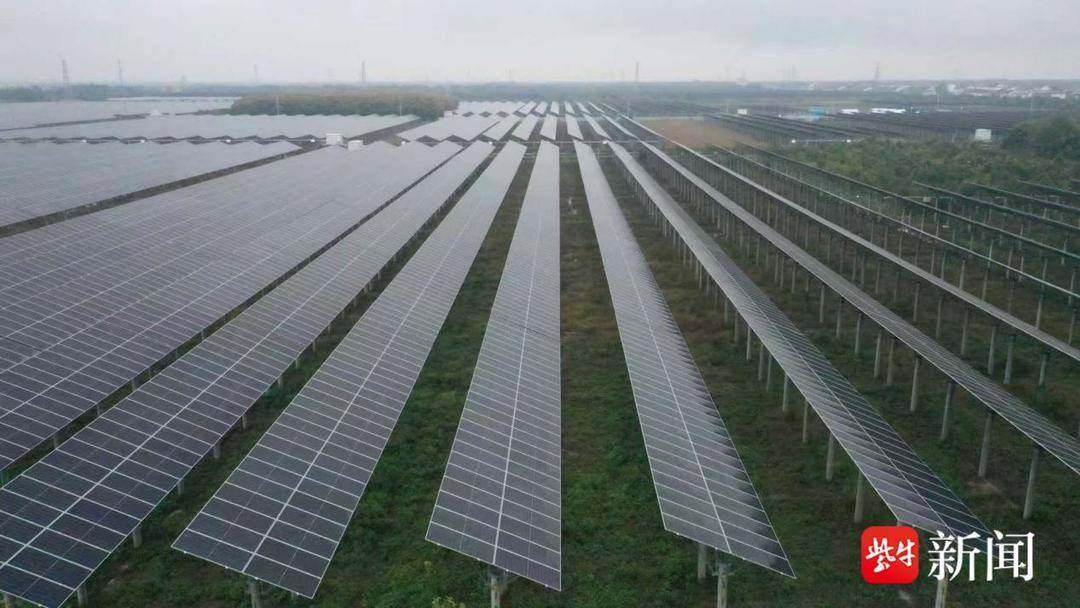
Core Insights - The article highlights the successful implementation of agrivoltaics projects in Haihe Village, Lianyungang City, which combines solar energy generation with agricultural production, significantly improving land utilization and local income [1][3][5]. Group 1: Project Overview - The agrivoltaics project in Haihe Village has a total investment of approximately 5.5 billion yuan, with stable operations already in place [1][3]. - The project covers an area of 570 acres and integrates solar power generation with agricultural activities, creating a dual-use model of "power generation above, planting below" [3][5]. Group 2: Financial and Environmental Impact - The project has a total installed capacity of 36 MWp on the DC side and 28 MW on the AC side, with an investment of about 1.5 billion yuan for the associated 10KV switch station [5]. - It is expected to generate an annual electricity output of 45.67 million kWh, contributing approximately 5 million yuan in annual tax revenue, while saving about 13,700 tons of standard coal and reducing CO2 emissions by approximately 36,500 tons [5]. - The project is projected to increase collective and individual farmer income by around 1.5 million yuan annually, enhancing the economic value of the land [5]. Group 3: Future Developments - Another key project, the Modern High-Efficiency Agricultural Technology Demonstration Park in Xinba Town, spans approximately 1,600 acres with a total investment of 400 million yuan, also adopting the "power generation above, planting below" approach [7]. - This project aims to establish a 96 MW solar power facility, expected to generate 130 million kWh annually, while cultivating medicinal herbs, potentially providing over 1,000 jobs and generating an additional 20 million yuan in income for locals [7]. - The ongoing agrivoltaics initiatives in Haihe Village and Xinba Town are seen as a model for integrating rural revitalization with sustainable development, aligning with the philosophy of "green mountains and clear waters are as valuable as mountains of gold and silver" [7].