Advanced Micro Devices

Search documents
Every Stock in This Index Group Is Up Double-Digits in 2026
The Motley Fool· 2026-01-25 12:30
Core Viewpoint - The semiconductor equipment sector is experiencing significant growth, with stocks in the S&P 500 Semiconductor Equipment & Materials index rising sharply due to increased capital expenditures from chipmakers [2][9]. Group 1: Semiconductor Equipment Performance - The S&P 500 Semiconductor Equipment & Materials index has seen every stock rise by double digits, with four out of five stocks increasing more than 25% since January 1, 2026 [2]. - Key companies in this index include Applied Materials (up 26.6%), Lam Research (up 33.4%), KLA (up 25.1%), Teradyne (up 19.8%), and Qnity Electronics (up 25.8%) [2][3]. Group 2: Market Dynamics - Unlike chipmakers like Nvidia and AMD, these equipment manufacturers do not produce AI chips but provide the systems necessary for chip production, positioning them as essential players in the AI supply chain [3]. - Major semiconductor manufacturers such as Nvidia, Intel, and Samsung are customers of Applied Materials, indicating a strong demand for their products [4]. Group 3: Industry Growth Projections - The semiconductor industry is projected to grow from a valuation of $630 billion to $680 billion in 2024, potentially reaching $1.1 trillion by 2030, primarily driven by AI and data center expansion [5]. - A report by McKinsey suggests that the industry's value could be underestimated, predicting a range of $1.5 trillion to $1.8 trillion by 2030 [6]. Group 4: Capital Expenditure Trends - Chipmakers are significantly increasing their capital expenditures, with Taiwan Semiconductor Manufacturing Company (TSMC) planning to spend between $52 billion and $56 billion on equipment in 2026, up from $41 billion in 2025 [7]. - TSMC's announcement has positively impacted the stock prices of major semiconductor equipment companies, with Applied Materials rising 8%, Lam Research 7%, KLA 6%, and Teradyne 3% following the news [9]. - Nvidia's capital expenditures are also expected to rise from $3.2 billion last year to approximately $6.2 billion this year and $7.6 billion in 2027, indicating a broader trend of increased investment in semiconductor manufacturing [9].


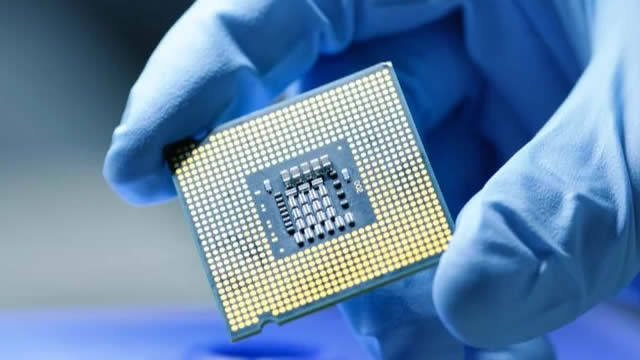
The Most Undervalued Chip Stock to Own in 2026
The Motley Fool· 2026-01-25 00:45
Core Viewpoint - The memory shortage is expected to persist until 2027, creating significant opportunities for semiconductor companies, particularly Micron Technology, which is currently undervalued compared to its peers despite strong growth prospects [1][9]. Industry Overview - There is a notable mispricing in the semiconductor industry, with investors favoring companies like Nvidia with higher P/E ratios, while undervaluing Micron Technology despite its faster earnings growth [2][4]. - The cyclical nature of the memory market contributes to Micron's lower valuation, but the demand for memory in AI chips is driving substantial growth for the company [3][5]. Company Performance - Micron's shares are trading at a forward P/E of 11, significantly lower than Nvidia's 24 and AMD's 35, indicating an attractive valuation [4]. - Wall Street analysts forecast Micron's earnings to grow at an annualized rate of 50% over the next few years, surpassing AMD's 45% and Nvidia's 36% [5]. - Earnings are projected to surge 294% this year to $32.67 per share, followed by a 27% increase next year to $41.54 per share, driven by rising memory prices and demand for GPUs [6][7]. Market Dynamics - Revenue for Micron increased by 57% year over year last quarter, with earnings rising by 175%, indicating strong momentum [7]. - The memory shortage is expected to be exacerbated by Nvidia's upcoming Rubin chips, which will require higher memory bandwidth, benefiting Micron [9]. Future Outlook - The current demand for advanced memory products appears sustainable, with management indicating strong customer commitments for high-bandwidth memory through 2026 [10]. - The low valuation of Micron relative to its earnings suggests potential for further upside in the coming years [10].

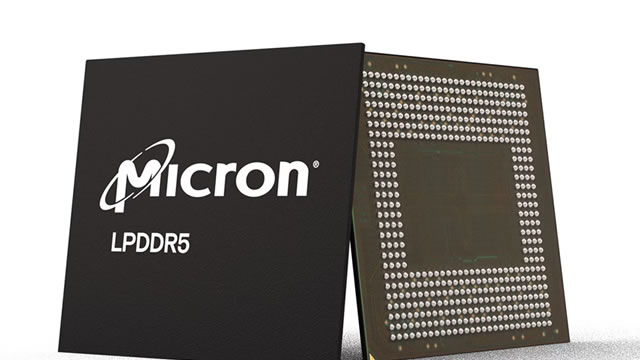
1 Reason Why Now Is a Great Time to Buy Micron Technology
The Motley Fool· 2026-01-24 03:31
Group 1 - Micron Technology has experienced a significant share price increase of 39% as of January 22, 2026, driven by strong financial results, including record revenue of $13.6 billion, a 57% year-over-year increase in Q1 of fiscal year 2026 [1][4][5] - The demand for high-bandwidth memory (HBM) is surging due to the growth of artificial intelligence (AI) technology, positioning Micron as one of the top three HBM providers alongside SK Hynix and Samsung Electronics [4][5] - Micron has established partnerships with leading AI companies, including Nvidia, Advanced Micro Devices, and Intel, enhancing its role as a crucial AI memory supplier [4][5] Group 2 - Due to high demand from AI companies, Micron has decided to discontinue its Crucial consumer business, with product shipments set to end next month, indicating a strategic shift towards serving the AI market [5] - Micron's stock is currently trading at 12 times forward earnings, which is considered a reasonable valuation, especially given its recent performance and strong order backlog [7] - The company's market capitalization stands at $447 billion, with a gross margin of 45.53% and a dividend yield of 0.12%, reflecting its financial health and growth potential [6][7]
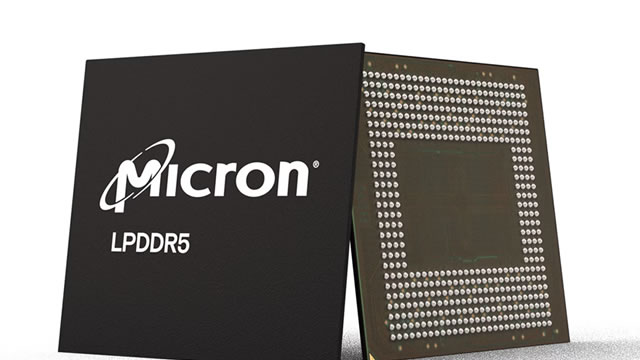
Stock Market Today, Jan. 23: Intel Plunges After Weak Outlook Highlights Supply Constraints and Foundry Losses
Yahoo Finance· 2026-01-23 22:36
Core Insights - Intel's stock closed at $45.07, down 17.03% after Q4 2025 earnings report, which revealed a weaker-than-expected Q1 2026 outlook due to supply constraints and foundry losses [1] - The trading volume for Intel reached 290 million shares, significantly above its three-month average of 100.3 million shares [1] - Intel's Q4 earnings exceeded Wall Street expectations, particularly in the data center and AI segment, generating $4.7 billion in revenue compared to the expected $4.4 billion [3] - Management's guidance for Q1 2026 sales is $12.2 billion, below the expected $12.6 billion, leading to a sell-off [3] - CFO David Zisner indicated that the supply constraint is expected to bottom out in Q1 and rebound in Q2, suggesting a positive long-term outlook despite short-term challenges [4] Market Movement - The S&P 500 finished up 0.03% at 6,915, while the Nasdaq Composite increased by 0.28% to close at 23,501 [2] - Among semiconductor stocks, Advanced Micro Devices closed at $259.68 (+2.35%), and Nvidia finished at $187.68 (+1.54%) [2]

Intel Shares Plunge 15% After Fourth-Quarter Loss and Weak Near-Term Outlook
Financial Modeling Prep· 2026-01-23 22:04
Core Viewpoint - Intel's shares dropped over 15% intra-day following a fourth-quarter loss and a pessimistic outlook for the current quarter, indicating significant challenges ahead for the company [1]. Financial Performance - Intel reported a net loss of $333 million for the fourth quarter, which was worse than Wall Street analysts had anticipated [1]. - For the first quarter, Intel expects a loss of $0.21 per share, highlighting ongoing difficulties in the competitive AI chip market [3]. Industry Challenges - Supply shortages driven by increased demand in data centers were identified as a major challenge, with CFO David Zinsner indicating that these shortages could last until 2026 [2]. - Intel's foundry business is lagging behind competitors like Taiwan Semiconductor Manufacturing Company, further complicating its market position [3]. Investor Sentiment - Investor confidence was negatively impacted by a lack of new disclosures, as Intel announced delays in updates regarding new foundry customers and provided limited information on potential buyers for its next-generation manufacturing technology [4].

Intel: Why Did the Stock Drop 14% After a Weak Forecast?
Investing· 2026-01-23 11:24
Core Viewpoint - Intel Corporation's shares fell over 12% in premarket trading following a significant drop of 14% after the fourth-quarter earnings release, despite beating Wall Street expectations for revenue and earnings per share. The decline was primarily driven by a bleak first-quarter forecast and ongoing manufacturing issues highlighted by CEO Lip-Bu Tan [1][2]. Financial Performance - Intel reported fourth-quarter revenue of $13.7 billion, exceeding analyst expectations of $13.4 billion, with adjusted earnings per share of 15 cents compared to the expected 8 cents. However, the company recorded a net loss of $600 million, or 12 cents per diluted share, a significant decline from a net loss of $100 million, or 3 cents per share, in the same period last year [3][4]. - The Data Center and AI segment generated $4.7 billion in revenue, reflecting a 9% year-over-year increase, driven by rising investments in AI infrastructure [4]. - The Client Computing Group's revenue fell 7% year-over-year to $8.2 billion, attributed to declining demand in the PC market [5]. - The foundry business reported $4.5 billion in revenue, although some of this revenue was related to internal accounting for Intel's own chip production [6]. Guidance and Challenges - Intel's first-quarter guidance projected revenue between $11.7 billion and $12.7 billion, with breakeven adjusted earnings per share, falling short of analyst expectations of 5 cents earnings per share on $12.51 billion in sales [7]. - The company anticipates a loss of $0.21 per share for Q1, highlighting significant challenges in CEO Lip-Bu Tan's turnaround efforts. Tan acknowledged production difficulties and emphasized the need for improved production efficiency [8]. - Investors expressed disappointment over the lack of updates regarding new customers for the chip fabrication division and minimal information on buyers for the next-generation 14A manufacturing process technology [8]. Stock Performance - Intel's stock, which had increased by 147% over the past year due to investments from Nvidia, SoftBank, and the U.S. government, closed at $54.32 on January 22 before dropping to $46.94 in premarket trading on January 23, marking a 13.59% decline [9].


Can Generative AI Drive These 3 ETFs to 43% Gains This Year?
The Motley Fool· 2026-01-23 10:15
Core Insights - The generative AI market is experiencing significant growth, with projections indicating a rise from $71.4 billion in 2025 to $890.6 billion by 2032, reflecting a compound annual growth rate of 43.4% [3] Group 1: Generative AI Overview - Generative AI differs from traditional AI as it creates content rather than merely analyzing it, with applications like ChatGPT demonstrating rapid user adoption [2] - The generative AI market is currently in a "hypergrowth" phase, presenting substantial investment opportunities [3] Group 2: Investment Opportunities - Investing in generative AI can be effectively achieved through thematic exchange-traded funds (ETFs) that provide diversified exposure to the sector [4] - The VanEck Semiconductor ETF focuses on companies involved in semiconductor production, with top holdings including Nvidia, Taiwan Semiconductor, and Broadcom, which are crucial for generative AI [6][7] - The State Street SPDR S&P Semiconductor ETF offers a broader array of semiconductor stocks and is designed to provide equal exposure to both small- and large-cap stocks [10][12] - The iShares Semiconductor ETF targets U.S. companies in the semiconductor sector and has a market-cap weighted structure, with top holdings including Nvidia and Micron [14][15]

美国半导体 - 2025 年第四季度财报前瞻:AVGO、NVDA、ADI、NXPI 为首选标的-US Semiconductors 4Q25 Earnings Preview AVGO NVDA ADI NXPI Top Picks
2026-01-22 02:44
Summary of Semiconductor Industry and Company Insights Industry Overview - **Semiconductor Sector**: The semiconductor industry is expected to experience a strong earnings season, with estimates likely to increase across most companies. The focus is on data center semiconductors driven by AI and general-purpose server demand, while caution is advised for PC and smartphone-related semiconductors due to rising bill of materials (BOM) costs impacting unit growth negatively [1][8][9]. Key Companies and Ratings - **Top Picks**: - **AVGO (Broadcom)**: Current Price: $351.7, Price Target: $480, Rating: Buy, Dividend Yield: 0.74% [8] - **NVDA (Nvidia)**: Current Price: $186.2, Price Target: $270, Rating: Buy, Dividend Yield: 0.02% [8] - **ADI (Analog Devices)**: Current Price: $300.3, Price Target: $340, Rating: Buy, Dividend Yield: 1.32% [8] - **NXPI (NXP Semiconductors)**: Current Price: $237.1, Price Target: $285, Rating: Buy, Dividend Yield: 1.71% [8] - **Caution on QCOM (Qualcomm)**: Neutral rating due to potential loss of modem business to Apple in 2026 [1][8]. Earnings and Market Trends - **AI Semiconductor Demand**: Recent pullbacks in AI semiconductor stocks present attractive entry points. Demand for compute and networking for next-gen models is accelerating, particularly for AVGO and NVDA [2]. - **Analog Semiconductor Recovery**: A long-awaited upturn in analog semiconductors is anticipated, with over half of the companies expected to report above-seasonal revenue growth. However, uncertainty remains due to global PMI manufacturing hovering around 50 [3]. - **PC Market Weakness**: PC unit demand is projected to decline by 7% year-over-year due to rising memory costs, impacting Intel and AMD negatively. However, legacy server strength is expected to mitigate some of these headwinds [4][29]. - **Smartphone Market Decline**: Smartphone units are expected to decline by 5% year-over-year in 2026, primarily due to increased memory costs affecting demand [32][36]. Demand Trends by End Market - **Data Center**: Strong demand driven by AI, accounting for 27% of semiconductor demand. The Big Five cloud providers are expected to increase capital expenditures significantly [15][16]. - **PC and Consumer Electronics**: These markets are softening, with expectations of lower unit growth due to rising BOM costs [15]. - **Automotive and Industrial**: The automotive market is stabilizing, with inventory corrections nearing completion. Industrial markets are showing signs of improvement, particularly in aerospace and defense [46][52]. Financial Projections - **2026 Semiconductor Sales Forecast**: Expected to grow by 21% to $947.3 billion, with unit growth of 12% and average selling prices (ASPs) up by 8% [11]. - **AI Accelerators Market**: Expected to grow significantly, with merchant GPUs projected to represent a large share of the market. Total AI accelerators sales are expected to reach $500 billion by 2028, growing at a 33% CAGR [26]. Valuation Insights - **SOX Index Valuation**: The SOX index is trading at a 27X NTM EPS, which is 20% above the S&P 500. The semiconductor sector has seen a significant expansion in NTM EPS estimates, indicating strong growth potential [57][59]. Conclusion - The semiconductor industry is poised for growth, particularly in data centers and AI-related sectors, while facing challenges in PC and smartphone markets. Companies like AVGO, NVDA, ADI, and NXPI are highlighted as strong investment opportunities, while caution is advised for QCOM due to competitive pressures.

Top Performing Leveraged/Inverse ETFs: 01/18/2026
Etftrends· 2026-01-21 20:03
Group 1: Cryptocurrency and Blockchain - RIOX ETF provides 2x long daily price performance of Riot Platforms, which saw over 52% weekly gains after announcing Bitcoin sales to fund a $96 million land acquisition in Texas [1] - MSTX ETF offers 2x leveraged exposure to MicroStrategy, whose shares surged as the crypto market rallied and Vanguard invested $505 million in the company, marking a significant institutional adoption milestone [4] - ETHU ETF aims for 2x daily price movements of Ether, achieving over 14% weekly gains due to record staking levels and a $200 million investment from BitMine into Beast Industries [11] Group 2: Technology and AI - AMDL ETF provides 2x leveraged exposure to AMD, which gained over 29% weekly as the company transitions into a full-stack AI powerhouse with its new Helios rack-scale platform [2] - SMCX ETF delivers 2x leveraged exposure to Super Micro Computer, whose stock rose following strong earnings from TSMC, indicating increased demand for high-performance servers [7] Group 3: Precious Metals - AGQ ETF offers 2x daily long leverage to Silver bullion, returning approximately 24% last week as silver prices reached all-time highs following tariff threats from President Trump [3] - GDXU ETF provides 3x exposure to gold miners, returning over 15% last week amid rising gold prices due to geopolitical tensions and economic uncertainties [8] Group 4: Defense Sector - DFEN ETF aims to triple the daily return of defense industry stocks, achieving over 14% weekly gains driven by proposed increases in the U.S. military budget amid heightened geopolitical tensions [10] Group 5: E-commerce - BABX ETF provides 2x leveraged exposure to Alibaba, which saw approximately 19% weekly gains as its AI models gained popularity and new regulations stabilized margins for its quick commerce division [5]


A Once-in-a-Decade Investment Opportunity: 1 Artificial Intelligence (AI) Semiconductor Stock to Buy Hand Over Fist Before It Soars Up to 32%, According to a Wall Street Analyst
The Motley Fool· 2026-01-21 01:25
Core Viewpoint - Wall Street is optimistic about Taiwan Semiconductor Manufacturing Company (TSMC), viewing it as a key player in the AI revolution and a strong investment opportunity due to its significant role in the semiconductor industry [1][4][16] Industry Overview - The semiconductor industry is crucial for the development of generative AI models, serving as the foundational hardware for technologies like ChatGPT [2] - TSMC is positioned at the intersection of technology and infrastructure, making it a vital component in the ongoing AI supercycle [4][10] Company Performance - TSMC is the largest chip manufacturer by revenue, surpassing competitors like Samsung and Intel, and is integral to the supply chains of major chip designers [9][10] - In Q4 2025, TSMC reported revenue of $33.7 billion, a 25% year-over-year increase, with a gross margin of 62%, up from 59% earlier in the year [12][13] - The company is experiencing increased demand driven by larger capital expenditures from hyperscalers, which enhances its pricing power and profit margins [13] Future Growth Potential - TSMC's CEO indicated plans for geographic expansion, suggesting that new facilities could contribute to growth by the end of the decade, aligning with the long-term AI megatrend [14] - Analysts are overwhelmingly bullish on TSMC, with 17 out of 18 rating the stock as a buy, and an average price target of $408, indicating a potential 19% upside [15] Investment Outlook - TSMC is seen as a compelling long-term investment due to its ability to grow revenue and profitability amid the ongoing AI infrastructure supercycle [16]