
LG Energy Solution

Search documents
LG Energy Solution 2025Q3 营业利润同比增长 34.2%至 6013 亿韩元
HUAXI Securities· 2025-11-05 07:14
Investment Rating - The report recommends a "Buy" rating for the industry, predicting that the industry index will outperform the Shanghai Composite Index by 10% or more in the upcoming period [4]. Core Insights - In Q3 2025, the company reported a revenue of 5.7 trillion KRW, a quarter-on-quarter increase of 2.4%, but a year-on-year decrease of 17.1%. The slight growth compared to the previous quarter is attributed to increased production of energy storage system batteries at the Michigan plant and new product launches for electric vehicles and IT clients [1][2]. - The operating profit for Q3 2025 reached 601.3 billion KRW, reflecting a quarter-on-quarter increase of 22.2% and a year-on-year increase of 34.2%, with an operating profit margin of 10.5% [1]. - The net profit for Q3 2025 was 536 billion KRW, showing a significant quarter-on-quarter increase of 489.0%, but a year-on-year decrease of 4.5% [2]. Financial Performance Summary - The company’s Q3 2025 financial performance indicates a gross profit of 1.447 trillion KRW, with a gross profit margin of 25.4% [7]. - The operating profit excluding production incentives was 236 billion KRW, with a margin of 4.1% [7]. - The company held cash and cash equivalents of 5.324 trillion KRW at the end of Q3 2025, a slight decrease from 5.44 trillion KRW at the end of the previous quarter [2][10]. Market Outlook and Strategic Response - The company anticipates a short-term slowdown in electric vehicle demand in the U.S. due to the expiration of EV subsidies, but expects a long-term increase in demand driven by advancements in artificial intelligence and autonomous driving services [3][5]. - The company plans to continue investing in diverse product forms and chemical compositions to meet specific market needs, focusing on high-nickel NCMA soft-pack batteries and 46-series cylindrical batteries for high-performance segments [6][5]. - The report highlights that the U.S. energy storage system market is expected to grow robustly, supported by the elimination of regulatory uncertainties and strong electricity demand from AI data centers [5].
Samsung SDI in talks to supply ESS batteries to Tesla
Yahoo Finance· 2025-11-04 16:38
Group 1 - Samsung SDI is in discussions to supply energy storage system (ESS) batteries to Tesla, with the potential contract valued at approximately Won3 trillion ($2.11 billion) or more [1] - This agreement aligns with Tesla's strategy to reduce reliance on Chinese components, as the company has increasingly sought South Korean suppliers for critical inputs like chips and batteries [1] - Samsung Electronics has previously signed a long-term contract worth $16.5 billion to deliver next-generation AutoPilot "AI6" chipsets to Tesla, indicating a growing partnership between the two companies [2] Group 2 - Samsung SDI reported a significant drop in demand from its joint venture partner Stellantis, prompting a shift in production from electric vehicle (EV) batteries to ESS products [3] - Tesla's recent earnings report showed a 37% year-on-year decline in attributable net income to $1.37 billion, despite achieving record revenue of $28.09 billion, which was a 12% increase year-on-year [4] - The increase in R&D expenses, which rose 56.9% from $1.03 billion in Q3 2024 to $1.63 billion in Q3 2025, has impacted Tesla's profitability [5]

【Tesla每日快訊】 特斯拉維修霸權崩解?軟體史詩級降價 76%,人人都能修 Tesla 了?🔥馬斯克滿世界搶電池!(2025/11/4-2)
大鱼聊电动· 2025-11-04 10:33
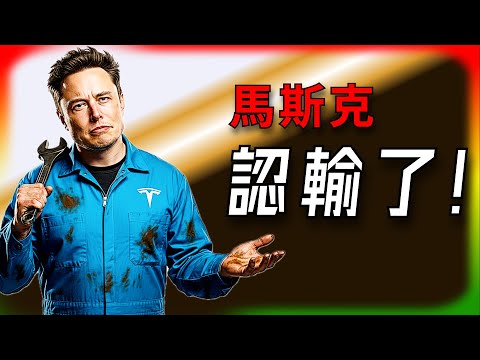
大家好我是大鱼 特斯拉的 售后服务 快要爆仓了 这不是危言耸听 随着海量的 Model 3 和Y 陆续过保 马斯克比谁都清楚 光靠直营服务中心 根本撑不住 所以 他最近低调地 将专业维修软体 「Toolbox 3」 永久降价76% 从3000美金 砍到700 这不是恩赐 这是在泄洪 这堵长久以来 被诟病的 维修高墙 终于倒下了 大家不要错过 今天的精彩内容 OK let's go 第一部分 特斯拉维修 霸权崩解 聊到Tesla 大家最怕的 除了「幽灵煞车」 大概就是维修了 不是说Tesla 车子爱坏 而是那个体验 尤其在车子 出了保固之后 回原厂排队的 等待时间 价格的透明度 可能都会成为 车主的痛点 但这一切 可能真的 就要变天了 Tesla 最近非常 非常低调地 干了件大事 他们把官方的 专业诊断软体 「Toolbox 3」 的年费 一口气从 3000 美金 直接砍到了 700 美金 你没听错 降幅超过76%! 这可不是什么 黑色星期五打折 这是永久的降价 这Toolbox 3 是什么玩意? 这可不是 你手机里那个 Tesla App 它是专业技师 用来跟车子 「深度沟通」的工具 堪称上帝模式 你要想做 ...

21亿美元!又一笔储能电池大单
行家说储能· 2025-11-04 07:59
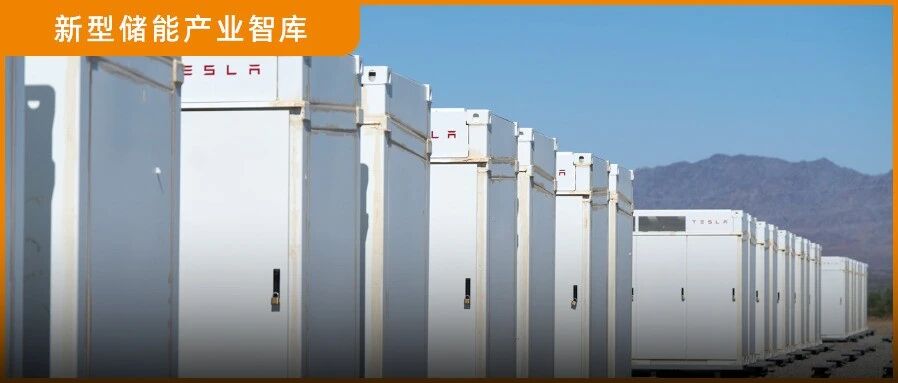
Core Viewpoint - Samsung SDI is in talks with Tesla for a potential supply agreement of energy storage system (ESS) batteries, involving an order of 30 GWh and a transaction value of at least 3 trillion KRW (approximately 21 billion USD or 148.5 billion CNY) [2][3] Group 1: Tesla's Supply Chain Strategy - The transaction aligns with Tesla's strategy to diversify its supply chain, as the company faces pressure in its energy storage business due to increased competition and rising tariffs [3] - Tesla's energy storage products have primarily relied on Chinese suppliers, but the company is actively seeking alternative solutions [3] - If the deal with Samsung SDI is finalized, it will add to Tesla's existing agreements, including a 4.3 billion USD contract with LG Energy Solution for lithium iron phosphate batteries [3] Group 2: Samsung SDI's Role and Production Plans - The potential deal would mark the first large-scale supply agreement between Samsung SDI and Tesla, focusing on fixed energy storage systems using lithium iron phosphate batteries [7] - Samsung SDI plans to supply 10 GWh of ESS batteries annually over three years, with production expected to take place at a joint battery factory with Stellantis in Indiana [7] - Samsung SDI aims to increase its energy storage battery production capacity in the U.S. to 30 GWh by the end of next year [7][8] Group 3: Market Context and Competitors - LG Energy Solution is also negotiating with Tesla to increase its supply by 50% to 30 GWh, following a previous contract to supply 20 GWh of lithium iron phosphate batteries [8] - As of the end of Q3, LG Energy Solution has approximately 120 GWh of energy storage battery orders pending delivery [8] - Tesla's energy division has shown strong performance, with Q3 revenue increasing by 44% year-over-year to 3.4 billion USD, and energy storage deployment reaching 12.5 GWh, a year-over-year increase of 81% [4]
GM lays off over 1,700 workers indefinitely as EV demand slows
Fox Business· 2025-10-30 18:41
Core Points - General Motors (GM) is laying off 1,750 workers indefinitely and temporarily cutting 1,670 others as it reduces electric vehicle production [1][2] - The company is scaling back production plans at Factory Zero in Michigan due to slower electric vehicle adoption and regulatory changes, anticipating a $1.6 billion loss for Q3 2025 related to these adjustments [2][6] - GM remains committed to its U.S. manufacturing operations and believes that its investments in flexible operations will enhance resilience [3] Production Adjustments - Production at Factory Zero will be paused through November 24, after which it will shift to one production shift, resulting in 1,200 layoffs for those not selected to return [6][11] - Adjustments are also being made at Ultium Cells battery plants in Warren, Ohio, and Spring Hill, Tennessee, to align with changing demand for electric vehicles [7][9] - Battery cell production at these facilities will be temporarily paused starting January 2026, with operations expected to resume by mid-2026 [9][10] Employee Impact - During the production pause, 850 employees in Ohio will be temporarily laid off, with an additional 550 cuts expected when the plant resumes operations [11] - The Spring Hill facility will also temporarily lay off 710 employees, who will be brought back when production resumes [13] - Affected employees may continue to receive a significant portion of their wages and benefits during the production pause, along with holiday pay [14]


GM to cut US EV and battery jobs amid weaker demand
Yahoo Finance· 2025-10-30 09:10
Core Viewpoint - General Motors (GM) is reducing its US workforce by approximately 1,750 employees at electric vehicle (EV) and battery production sites due to slower EV adoption and regulatory changes [1][2]. Workforce Reduction - The layoffs will affect two main facilities: around 1,200 positions will be cut at a Detroit plant, and about 550 roles will be eliminated at the Ultium Cells battery plant in Warren, Ohio, a joint venture with LG Energy Solution [1]. - GM is also halting production at its battery cell plants in Ohio and Tennessee starting in early 2026, which may lead to temporary layoffs for about 1,550 staff during a six-month stoppage [2][3]. Production Adjustments - Battery cell production at the Spring Hill, Tennessee, and Warren, Ohio facilities will be paused beginning January 2026, with impacted employees potentially receiving a significant portion of their wages and benefits during this period [4]. - GM has recently laid off over 200 salaried staff at its Tech Center in Warren, Michigan, as part of broader cost-reduction measures [4]. Strategic Realignment - The company is reviewing its white-collar workforce to identify duplicate positions and enhance efficiency [5]. - GM has ceased production of the BrightDrop electric delivery van at the CAMI Assembly plant in Ingersoll, Ontario, Canada, citing the expiration of the US federal $7,500 EV tax credit as a challenge to EV sales [5]. Financial Performance - GM reported a significant decline in third-quarter 2025 net income, which fell 57% to $1.32 billion from $3.05 billion a year earlier, while revenue slightly decreased to $48.59 billion from $48.76 billion in the previous year [6].
Panasonic cuts full-year profit forecast on weaker outlook for auto battery business
Yahoo Finance· 2025-10-30 06:49
Core Viewpoint - Panasonic Holdings has reduced its full-year operating profit forecast by 13.5% primarily due to a decline in profit from its energy unit, which supplies batteries to Tesla and other automakers [1][2]. Financial Performance - The revised operating profit forecast for Panasonic is now 320 billion yen ($2.12 billion) for the fiscal year ending March 2026, down from the previous expectation of 370 billion yen [1]. - The energy unit's operating profit saw a dramatic decline of 96.4%, reporting only 1.2 billion yen for the second quarter ending September, compared to the same period last year [3]. Market Conditions - The forecast adjustment reflects the impact of U.S. tariffs, lower-than-expected sales volumes, reduced benefits from U.S. federal tax credits for the automotive battery sector, and higher-than-anticipated restructuring costs [2]. - Panasonic has also reduced its automotive battery sales projection for North America by 13% to 40 gigawatt hours (GWh) for the fiscal year 2025/26, citing worsening EV market conditions in the U.S. [4]. Industry Context - LG Energy Solution, a competitor, has also lowered its earnings guidance, predicting a mid-single-digit percentage decline in 2025 sales due to the expiration of U.S. tax credits for electric vehicle purchases, which contrasts with its previous growth expectations of 5% to 10% [3].
GM to cut EV, battery production and 1,200 jobs at Detroit plant
Yahoo Finance· 2025-10-29 17:58
Core Viewpoint - General Motors is significantly reducing its U.S. electric vehicle and battery production due to a notable decline in demand for its battery-powered vehicles [1][4]. Production Cuts - GM will cut production at its Detroit EV plant to one shift starting in January, reducing output by approximately 50% [3]. - The company will halt battery cell production at its two U.S. joint-venture battery plants in Tennessee and Ohio for about six months, leading to temporary layoffs of around 1,550 workers [2]. - Additionally, GM will lay off 550 workers indefinitely at the Ohio plant, which it operates with LG Energy Solution [2]. Market Conditions - The cuts are attributed to slower near-term EV adoption and changes in the regulatory environment [4]. - The expiration of a $7,500 federal tax credit for EV buyers is expected to lead to a significant drop in consumer demand, with some analysts predicting that EV sales could fall by half in the coming months [5]. Industry Trends - Other automakers, including Nissan and Stellantis, have also canceled plans for future electric models, reflecting a broader retreat from aggressive EV strategies [6]. - GM has been revising its outlook for EV sales and has made additional production cuts throughout the year [6]. Union Response - The United Auto Workers union criticized GM for the job cuts, highlighting that the company recently raised its expected annual profits to $13 billion [7]. - The union is advocating for increased investment in both internal combustion engine (ICE) and EV production [7]. Future Expectations - GM CEO Mary Barra indicated that the company anticipates a reduction in EV losses starting in 2026 and beyond, acknowledging the impact of the evolving regulatory framework and the end of federal consumer incentives on near-term EV adoption [8].
Hyundai supports renewed US-South Korea trade talks
Yahoo Finance· 2025-10-24 09:10
Group 1 - Hyundai Motor Group's executive chairman, Chung Euisun, visited the US to support the South Korean government's efforts for better access to the US market [1] - A previous mission in August did not alter the US decision to impose a 25% import duty on South Korean imports, while Japan and the EU face lower duties of 15% and the UK at 10% [2] - Hyundai Motor and Kia Corporation, along with GM Korea, exported approximately 1.6 million vehicles to the US last year, valued at around US$ 38 billion [3] Group 2 - Despite challenging trade conditions, Hyundai Motor Group's US sales rose over 10% to 1.37 million vehicles in the first nine months of 2025, while imports from South Korea decreased by nearly 7% [4] - Key issues in the South Korea-US trade negotiations include US access to South Korean markets and the commitment to invest US$ 350 billion in US manufacturing, with only US$ 150-200 billion currently committed [5] - Hyundai Motor Group plans to increase its US investments from US$ 21 billion to US$ 26 billion, including expanding its Savannah plant's capacity to 500,000 vehicles per year by 2028 [6] Group 3 - A raid by US immigration authorities on the construction site of Hyundai's EV battery manufacturing joint venture with LG Energy Solution is expected to delay the investment completion by at least three months [7]
电池周刊 10 月 20 日-Battery Weekly 20 October
2025-10-23 13:28
Summary of Key Points from the Conference Call Industry Overview - **Industry**: Global Energy Storage and Electric Vehicles (EVs) - **Key Focus**: Developments in battery technology, EV sales, and market dynamics Key Insights 1. **Record NEV Sales in China**: In September, China recorded 1.6 million new energy vehicles (NEVs), marking a 24.6% increase year-over-year and a 15.0% increase from August. Battery electric vehicles (BEVs) surpassed one million units for the first time, with exports doubling compared to September 2024, although they stagnated at around 222,000 units, representing 13.8% of total NEV sales in China [1][1][1] 2. **POSCO Future M's Supply Deal**: POSCO Future M signed a $470 million contract to supply natural graphite anode materials to a global automaker, highlighting its growing role in the battery materials supply chain. The deal could expand to a total value of 1.7 trillion won if extended to ten years [1][1][1] 3. **BYD's Vehicle Recall**: BYD, the largest EV manufacturer, is recalling over 115,000 vehicles due to technical defects, raising concerns about quality control. The recalls involve both hybrid and pure-electric models, with issues related to component design and battery waterproofing [1][1][1] 4. **Air China Flight Incident**: A fire caused by a lithium battery in a passenger's luggage forced an Air China flight to divert. This incident has led to increased scrutiny and regulations regarding the transport of lithium batteries on flights [1][1][1] 5. **China's EV Charging Capacity Plan**: The National Energy Administration of China aims to double the service capacity of EV charging facilities to over 300 GW by 2027, expanding the national charging network to around 28 million facilities [2][2][2] 6. **SK On's New Battery Prototype**: SK On is manufacturing prototypes of its new 46-series cylindrical batteries in China, with a production capacity of 300,000 units per year. This positions SK On to compete in the growing battery market [2][2][2] 7. **Fluence's Market Outlook**: Fluence Energy anticipates that the US will account for half of its demand in 2026, driven by increased power demand from electrification and data center growth. The company is working to meet eligibility requirements for federal incentives [5][5][5] 8. **US EV Market Dynamics**: In Q3, US electric vehicle sales reached 438,500 units, representing 11% of all new car sales, driven by consumers rushing to take advantage of federal incentives before they expired [5][5][5] 9. **GM and Posco's Plant Expansion Halt**: GM and Posco have paused the expansion of their joint cathode material plant in Canada due to changing market dynamics, although the initial phase of the project remains on track [5][5][5] 10. **Synthetic Graphite Production in Europe**: Imerys and Shanshan are partnering to produce synthetic graphite in Europe, aimed at supplying high-performance materials for lithium-ion battery anodes [5][5][5] 11. **Norway's EV VAT Changes**: Norway plans to phase out the VAT exemption for electric vehicles by 2027, reducing the threshold from NOK 500,000 to NOK 300,000, which has drawn criticism from the Electric Vehicle Association [6][6][6] Additional Insights - **Cobalt Price Dynamics**: Rising cobalt prices due to export limits in the Democratic Republic of Congo may push battery makers to seek alternatives, as prices have more than doubled recently [10][10][10] - **BYD's Flash Charging Stations**: BYD plans to introduce 'flash charging' stations in South Africa, allowing vehicles to recharge significantly in a short time, which could enhance the EV infrastructure in the region [10][10][10] - **Battery Material Prices**: Recent data indicates fluctuations in battery material prices, with cobalt prices rising significantly while lithium prices show signs of stabilization [8][8][8] This summary encapsulates the critical developments and insights from the conference call, providing a comprehensive overview of the current state of the global energy storage and electric vehicle industries.
