储能系统电池

Search documents
全球电池龙头已斩获超300亿储能订单!
起点锂电· 2026-03-16 10:38
Core Viewpoint - The article discusses the accelerating competition among Korean battery manufacturers in the energy storage market, highlighting their strategic shifts and significant order acquisitions, particularly in North America, as they aim to capture a larger market share in the rapidly growing sector [2][15]. Group 1: Event Announcement - The 2026 (Second) Starting Point Lithium Battery Cylindrical Battery Technology Forum will take place on April 10, 2026, at the Venus Hall, Venus Royal Hotel, Shenzhen [2]. - The event is organized by Starting Point Lithium Battery and Starting Point Research Institute (SPIR), with several prominent sponsors and speakers from companies like Penghui Energy, Dofluor, and others [2]. Group 2: Korean Battery Manufacturers' Strategies - Since 2026, Korean battery manufacturers have intensified their efforts in the energy storage sector, transitioning their competitive strengths from the power battery field to energy storage, leading to a surge in orders [2]. - Samsung SDI has secured over 300 billion yuan in energy storage orders, with significant contracts including a 1.5 trillion won (approximately 69 billion yuan) deal with a U.S. energy company for battery supply from 2026 to 2029 [3][8]. - LG Energy has over 120 GWh of unfulfilled energy storage battery orders and plans to add more than 90 GWh of new orders in 2026, focusing on North America [9][10]. - SK On aims to capture at least 10 GWh of energy storage battery supply contracts in 2026, targeting specific segments like AI data center backup power and grid-side storage [11][12]. Group 3: Market Dynamics and Growth - The global energy storage market is experiencing explosive growth, particularly in North America, driven by policies like the U.S. Inflation Reduction Act and increasing demand for AI data center backup and grid storage [13][14]. - Korean battery manufacturers are rapidly closing the gap with Chinese companies, which previously dominated the market with over 90% share in LFP technology [15]. - The competition is expected to intensify as both Korean and Chinese companies continue to innovate and expand their production capabilities, with a focus on localizing production to mitigate trade barriers and leverage local incentives [14][15].

换赛道,韩国电池制造商押注机器人
Huan Qiu Shi Bao· 2026-02-08 22:46
Core Viewpoint - The decline in electric vehicle sales in South Korea has prompted local battery manufacturers to explore opportunities in the robotics sector, particularly in high-quality battery production for humanoid robots, despite the smaller market size compared to electric vehicles [1][2]. Group 1: Company Developments - LG Energy Solution is actively engaging with six leading global tech companies regarding next-generation robot battery specifications and production timelines [1]. - Samsung SDI has signed a memorandum of understanding with Hyundai Motor Group to develop batteries optimized for robots, while also facing significant losses due to declining electric vehicle sales [1]. - Samsung SDI's energy storage system battery division achieved record sales, which helped reduce its losses by approximately half compared to the previous quarter [1]. Group 2: Market Insights - The robotics market presents an attractive opportunity for battery manufacturers, with potentially higher profit margins and more customized solutions compared to electric vehicles [2]. - Analysts predict that the average selling price of robot batteries will be significantly higher, ranging from $200 to $350 per kilowatt-hour by 2030, compared to $80 to $120 per kilowatt-hour for electric vehicle batteries [2]. - The robot battery market is expected to reach a size of 1 to 3 gigawatt-hours by 2030, which is considerably smaller than the electric vehicle market projected at 1,647 gigawatt-hours [2].

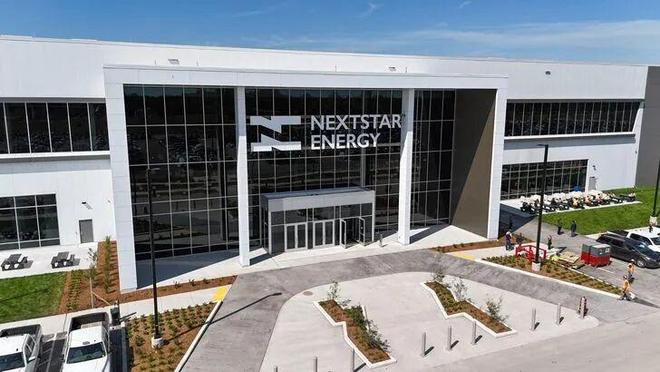
100美元“吞下”10亿美金工厂?LG新能源全资控股NextStar,押注北美储能赛道
Xin Lang Cai Jing· 2026-02-07 06:35
Core Insights - NextStar Energy, a joint venture established in 2022 in Ontario, Canada, is transitioning from electric vehicle (EV) battery production to becoming a key production hub for energy storage systems (ESS) batteries due to stagnation in the global EV market [1][3] - Major automakers like Ford and Stellantis are adjusting their strategies, slowing down or canceling some pure electric vehicle development plans, leading Stellantis to exit its equity management in the joint venture to reduce fixed asset investments and operational risks [1][3] Production Status - The ESS production line at the NextStar Energy facility officially commenced operations in November 2025, with LG Energy Solution's CEO stating that full ownership will enable quicker responses to ESS market demands and strengthen its position in the North American battery supply chain [1][2] Capacity Goals - By 2026, the production capacity at the NextStar facility is expected to more than double, achieving a utilization rate of 70%, which will significantly lower unit production costs [2][4] Strategic Shift - LG Energy Solution is shifting its focus from power batteries to the energy storage sector, enhancing its financial stability and competitive differentiation in the North American market [3][4] Financial Benefits - As a wholly-owned subsidiary, LG Energy Solution will directly benefit from Canadian government investment subsidies and production tax incentives similar to the U.S. Inflation Reduction Act (AMPC), improving capital efficiency [4] Ongoing Collaboration - Despite the change in equity structure, LG Energy Solution will maintain a long-term business partnership with Stellantis, continuing to supply EV batteries produced at the facility to Stellantis brands as originally planned [4]
越疆开启第三批全尺寸工业人形机器人ATOM的2026年量产交付;商业航天首个卫星测发技术厂房诞生丨智能制造日报
创业邦· 2026-02-05 03:08
Group 1 - Counterpoint predicts that Broadcom will expand its market share in the custom chip (ASIC) market to 60% next year, capturing nearly 99% of wafer manufacturing orders from the top ten global data centers and ASIC customers [2] - The competition in the AI chip market is expected to intensify between ASICs and GPUs, with Broadcom and TSMC positioned as the biggest winners in the second phase of the AI chip boom [2] Group 2 - Yujian has commenced the mass delivery process for its third batch of full-size industrial humanoid robots, ATOM, which are set for large-scale delivery in 2026 [2] - LG Energy Solution has signed an agreement with Hanwha's U.S. subsidiary to supply 5 GWh of batteries for energy storage systems, with production planned locally to avoid tariff uncertainties [2] Group 3 - Samsung Display plans to start mass production of 8.6-generation OLED panels in May, which are expected to be used in Apple's upcoming OLED MacBook Pro models [2] Group 4 - Tianbing Technology announced the completion of the first satellite measurement and launch technology plant in China's commercial aerospace sector, which will enhance the efficiency of satellite testing and launch preparations [2]


三星SDI跟踪
数说新能源· 2026-02-04 03:02
Core Viewpoint - The article discusses the performance and market outlook of the battery and electronic materials sectors, highlighting both challenges and growth opportunities in the context of the new energy landscape. Group 1: Company Performance - In Q4 2025, the company's revenue reached 18.822 billion yuan, a year-on-year increase of 2.8% and a quarter-on-quarter increase of 26.4%. However, the operating loss expanded to 1.458 billion yuan, a year-on-year increase of 16.3% but a quarter-on-quarter reduction of 49.4% [2] - The battery segment generated revenue of 17.666 billion yuan in Q4 2025, reflecting a year-on-year increase of 1.6% and a quarter-on-quarter increase of 28.4%. The operating loss was 1.654 billion yuan, with a year-on-year increase in loss of 26.5% but a quarter-on-quarter reduction of 46.2% [3] - The electronic materials segment maintained stable operating profit quarter-on-quarter, but overall revenue and profitability declined year-on-year due to weak OLED material sales, despite improvements in semiconductor material sales [4][6] Group 2: Market Trends and Forecasts - Global demand for electric vehicle batteries is expected to grow by 16% year-on-year, with a 6% increase excluding the Chinese market. The U.S. market is projected to decline by 9%, while Europe is expected to grow by 9% [8] - The demand for energy storage system batteries is anticipated to continue growing, driven by AI data centers and public utility needs. Non-Chinese companies are expected to gain more opportunities in the U.S. market due to IRA and tariff policies [9] - The global battery market is projected to reach 1,850 GWh by 2026 and 2,400 GWh by 2028. The U.S. energy storage system battery market is expected to grow to 100 GWh by 2026 and continue to 150 GWh by 2030 [12] Group 3: Strategic Initiatives - The company is advancing its Hungarian factory's production lines and aims to enter the HEV market while promoting high-power cylindrical batteries [13] - The U.S. SBB 2.0 production line is planned to achieve mass production by Q4 2026, with a target of 20 GWh for square energy storage batteries, expecting nearly 50% year-on-year revenue growth in ESS [14] - The company has partnered with Hyundai for robot batteries and is exploring high-safety, high-power battery supplies for various applications, targeting mass production by 2027 [15] Group 4: Investment and Innovation - Capital expenditure in 2026 will focus on the Hungarian production line, U.S. LFP ESS line upgrades, and technology applications in Malaysia, with a slight year-on-year decrease in overall capital spending [16] - The company aims to achieve mass production of solid-state batteries by 2027 and is focusing on R&D for energy storage systems and non-active material technologies [16]

重大利空!突然宣布:取消!
券商中国· 2025-12-27 15:34
Core Viewpoint - LG Energy Solution, a leading South Korean battery manufacturer, has faced significant contract cancellations, resulting in a loss of approximately 13.5 trillion KRW (around 650 million RMB) in expected revenue within ten days, which exceeds half of its total revenue from the previous year [1][4]. Group 1: Contract Cancellations - LG Energy Solution announced the cancellation of a 3.9 trillion KRW contract with Freudenberg Battery Power Systems, which is part of the Kordel Group [3]. - Prior to this, LG Energy lost a contract worth 9.6 trillion KRW with Ford, which accounted for 37.5% of the company's total revenue last year [4]. - The cumulative loss from these cancellations highlights the volatility in the electric vehicle battery supply chain and the challenges faced by LG Energy in maintaining stable revenue streams [4]. Group 2: Financial Impact and Market Response - Following the contract cancellations, LG Energy's stock price dropped nearly 9% in a single day, and as of December 26, the stock was down 1.79%, with a market capitalization of 89.74 trillion KRW (approximately 4.35 billion RMB) [1][4]. - The company stated that the cancellations would not result in financial losses due to the nature of the contracts and the lack of specialized investments tied to them [4]. Group 3: Strategic Adjustments - In response to the cancellations and market uncertainties, LG Energy is shifting its focus from pursuing large orders to enhancing profitability and cash flow health [6]. - The company plans to optimize its customer structure and concentrate resources on more stable growth areas, such as energy storage systems (ESS) [6]. - LG Energy aims to increase its ESS battery production capacity in North America to 50 GWh, significantly up from the initial target of 30 GWh, driven by rising demand in the region [6].

五粮液布局储能;宁德时代落子扬州;三星SDI携手特斯拉;国资8亿元入股中科电气;大众90GWh电池厂开建;逸飞激光签1.9亿订单
起点锂电· 2025-11-09 08:42
Group 1 - Kelu Electronics has established a new energy storage company with a registered capital of 10 million yuan, holding 99% of the shares [3] - Kelu Electronics, as a veteran in the energy storage industry, offers comprehensive self-manufacturing capabilities for key components and systems, providing one-stop services for customers [4] - PowerCo, a subsidiary of Volkswagen, has begun construction of a 90 GWh battery factory in Canada with an estimated total investment of 7 billion CAD (approximately 5 billion USD) [5] Group 2 - China Science Electric announced a transfer of 5.001% of its shares to a state-owned investment fund for approximately 800 million yuan, marking a significant upgrade in its supply chain collaboration [6] - Nandu Power's project in Zhejiang is progressing well, with an investment exceeding 1 billion yuan and an expected annual production capacity of 5.6 GWh of lithium batteries [7] - Samsung SDI has reached an agreement with Tesla to supply approximately 30 GWh of energy storage system batteries over the next three years, valued at around 150 billion yuan [8] Group 3 - LG Energy Solution reported a Q3 revenue of approximately 5.7 trillion KRW, with a 22.2% increase in operating profit, benefiting from policy subsidies [9] - Times Qi Ji New Energy Technology has been established with a registered capital of 5 million yuan, focusing on emerging energy technology research and battery sales [10][11] - Wuliangye has announced a tender for a 10 MW/20 MWh energy storage system project, indicating its entry into the energy storage sector [12] Group 4 - Pylon Technologies has opened a subsidiary in Australia, marking its expansion into the Australian market [13] - EVE Energy has secured a strategic partnership with EVO Power to supply 2.2 GWh of energy storage batteries over the next five years [14] - Samsung C&T is entering the Japanese energy storage market through a joint venture with Irex, focusing on large-scale energy storage systems [15] Group 5 - Hichain Energy has signed a strategic cooperation agreement with El-Mor for a 1.5 GWh long-duration energy storage project in Israel [16] - A report indicates that the revenue growth of lithium battery copper foil companies is improving, with significant increases in revenue for companies like Defu Technology and Jiayuan Technology [18] - A lithium battery water-based anode binder project has been signed in Hubei, with an investment of 105 million yuan expected to enhance the local supply chain [19] Group 6 - Peking University and OneD Battery Sciences have signed a joint development agreement to advance silicon-based anode materials for lithium-ion batteries [20][21] - New Energy Company has reported a significant increase in the export volume of lithium hexafluorophosphate, indicating strong overseas demand [22][23] - Yifei Laser has secured a 1.9 billion yuan order for lithium battery equipment assembly lines, which is expected to positively impact future financial performance [25] Group 7 - Hymson has established a strategic partnership with Swiss semiconductor testing company Attolight AG, marking its entry into high-end material testing [26] - The Mannester intelligent equipment production base project has commenced in Huai'an, indicating growth in the intelligent manufacturing sector [27] - Gree's latest performance report shows a significant increase in the recycling and dismantling of power batteries, with a total of 36,643 tons recycled in the first three quarters [29] Group 8 - Zhongxin Innovation has established a new company focused on battery manufacturing and recycling, with a registered capital of 1 billion yuan [30][31] - A lithium battery recycling project in Hubei has entered trial production, with a capacity to process 20,000 tons of retired batteries annually [32] - Anhui Jinxiangzi New Energy Technology is planning a 100,000-ton battery recycling project, with a phased approach to increase capacity [33] Group 9 - Zhongxin Innovation has launched a new 5C supercharging battery pack for the Xiaopeng X9, emphasizing high energy capacity and fast charging [35] - BYD has reaffirmed its commitment to lithium iron phosphate battery technology, highlighting its safety and reliability in electric buses [36] - WM Motor has relaunched its app, restoring key functionalities for vehicle control and information synchronization [37] Group 10 - Chuangneng New Energy has officially entered the automotive manufacturing sector, utilizing the former WM Motor factory [38] - CATL is facing increased demand from multiple automakers as they rush to secure battery supplies ahead of upcoming policy changes [39]




LG Energy Solution 2025Q3 营业利润同比增长 34.2%至 6013 亿韩元
HUAXI Securities· 2025-11-05 07:14
Investment Rating - The report recommends a "Buy" rating for the industry, predicting that the industry index will outperform the Shanghai Composite Index by 10% or more in the upcoming period [4]. Core Insights - In Q3 2025, the company reported a revenue of 5.7 trillion KRW, a quarter-on-quarter increase of 2.4%, but a year-on-year decrease of 17.1%. The slight growth compared to the previous quarter is attributed to increased production of energy storage system batteries at the Michigan plant and new product launches for electric vehicles and IT clients [1][2]. - The operating profit for Q3 2025 reached 601.3 billion KRW, reflecting a quarter-on-quarter increase of 22.2% and a year-on-year increase of 34.2%, with an operating profit margin of 10.5% [1]. - The net profit for Q3 2025 was 536 billion KRW, showing a significant quarter-on-quarter increase of 489.0%, but a year-on-year decrease of 4.5% [2]. Financial Performance Summary - The company’s Q3 2025 financial performance indicates a gross profit of 1.447 trillion KRW, with a gross profit margin of 25.4% [7]. - The operating profit excluding production incentives was 236 billion KRW, with a margin of 4.1% [7]. - The company held cash and cash equivalents of 5.324 trillion KRW at the end of Q3 2025, a slight decrease from 5.44 trillion KRW at the end of the previous quarter [2][10]. Market Outlook and Strategic Response - The company anticipates a short-term slowdown in electric vehicle demand in the U.S. due to the expiration of EV subsidies, but expects a long-term increase in demand driven by advancements in artificial intelligence and autonomous driving services [3][5]. - The company plans to continue investing in diverse product forms and chemical compositions to meet specific market needs, focusing on high-nickel NCMA soft-pack batteries and 46-series cylindrical batteries for high-performance segments [6][5]. - The report highlights that the U.S. energy storage system market is expected to grow robustly, supported by the elimination of regulatory uncertainties and strong electricity demand from AI data centers [5].
三星SDI2025Q3电池业务收入同比下降23.2%至2.82万亿韩元,电池业务营业亏损6301亿韩元
HUAXI Securities· 2025-11-05 06:16
Investment Rating - The report recommends a "Buy" rating for the industry, predicting that the industry index will outperform the Shanghai Composite Index by 10% or more during the specified period [5]. Core Insights - In Q3 2025, the company's battery business revenue decreased by 23.2% year-on-year to 2.82 trillion KRW, with an operating loss of 630.1 billion KRW attributed to a slowdown in electric vehicle battery sales and tariffs on energy storage system batteries in the U.S. [2][3] - The company has signed supply contracts exceeding 110 GWh with several global automotive groups and has secured a significant portion of orders in a government-led energy storage system project [3]. - The company plans to enhance its presence in the energy storage system market and improve operational efficiency, with a projected annual production capacity of 30 GWh for energy storage system batteries in the U.S. by the end of next year [6]. Financial Performance Summary - For Q3 2025, the company's total revenue was 3.05 trillion KRW (21.3 billion USD), a decrease of 22.5% year-on-year and 4% quarter-on-quarter [1]. - The operating loss for Q3 2025 was 591.3 billion KRW (4.16 billion USD), marking a shift from profit to loss compared to the previous year [1][2]. - The company's cash and cash equivalents remained stable at 2.15 trillion KRW at the end of Q3 2025, compared to 2.15 trillion KRW in Q2 2025 [1]. Business Segment Performance - The battery business revenue was 2.82 trillion KRW, down 23.2% year-on-year and 4.8% quarter-on-quarter, with an operating loss of 630.1 billion KRW [2]. - The electronic materials business generated revenue of 231.8 billion KRW, a 6.2% increase from the previous quarter but a 12.1% decrease year-on-year, with operating profit rising by 17.6% to 38.8 billion KRW [2].
150亿元!30GWh储能电池大单将落地
起点锂电· 2025-11-04 10:26
Core Viewpoint - Korean battery companies are accelerating their entry into the global energy storage battery market through the development of lithium iron phosphate (LFP) battery technology, with Samsung SDI in discussions with Tesla for battery supply agreements [3][4]. Group 1: Market Developments - Samsung SDI is reportedly set to supply approximately 10 GWh of energy storage system batteries annually to Tesla for at least the next three years, totaling around 30 GWh and potentially exceeding 3 trillion KRW (approximately 150 million RMB) in procurement value [4]. - The global energy storage lithium battery shipment reached 315.8 GWh in the first half of the year, marking a 98% year-on-year increase, with leading companies including CATL, EVE Energy, and BYD [4][6]. Group 2: Competitive Landscape - The top ten companies in energy storage battery shipments do not include the three major Korean battery firms: LG Energy Solution, Samsung SDI, and SK On [5]. - The shift towards lithium iron phosphate batteries is driven by safety concerns and higher costs associated with ternary lithium batteries, positioning Korean companies as significant competitors to Chinese firms in the energy storage sector [7]. Group 3: Strategic Initiatives - Korean battery companies are making progress in LFP battery production, with Samsung SDI planning to achieve mass production by 2026 and establishing production capacity in Indiana, USA [8]. - LG Energy Solution has signed a $4.3 billion (approximately 303 million RMB) supply agreement with Tesla for LFP batteries, with production set to begin in Michigan [8]. - SK On is converting part of its Georgia factory's EV battery production lines to LFP energy storage systems, aiming for mass production by the second half of 2026 [9]. Group 4: Market Trends - The demand for electric vehicles in Europe and the US is currently weak, prompting the three major Korean battery companies to focus on energy storage as a primary strategy for business restructuring and improving operational capabilities [10].