
MediaTek

Search documents
TSMC Mulls Advanced Chip Production At Japan Plant To Meet Soaring AI Demand: Report - Amazon.com (NASDAQ:AMZN), Alphabet (NASDAQ:GOOG)
Benzinga· 2025-12-11 12:53
Core Viewpoint - Taiwan Semiconductor Manufacturing Co. (TSMC) is considering producing its advanced 4-nanometer chip at its second plant in Japan to address the rising demand for AI-related products [1][4]. Group 1: Shift Towards Advanced Chips - The Kumamoto plant, initially designed for 6-nm and 7-nm chips, may undergo a transition to 4-nm technology, which could lead to design revisions and a delay in the plant's launch, currently scheduled for 2027 [2]. - Construction at the Kumamoto plant has been paused, and TSMC is also delaying new equipment installation at its existing plant, which produces mature chips for various applications [3]. Group 2: Demand for AI Chips - TSMC's potential shift to 4-nanometer production is a direct response to the surging demand for AI products, with plans to expand 2-nanometer chip production from seven to ten fabs, supported by a $28 billion investment [4]. - Major tech companies, including Nvidia, Google, Amazon, and MediaTek, are driving this demand, leaving TSMC with no spare capacity despite its expansion efforts [5]. Group 3: Financial Performance - TSMC reported NT$343.61 billion ($11.01 billion) in net revenue, reflecting a 24.5% year-over-year increase but a 6.5% decrease month-over-month. For the period from January to November, revenue reached NT$3.47 trillion ($110 billion), marking a 32.8% year-over-year increase [7]. - Year-to-date, TSMC's stock has increased by 53.85%, although it experienced a 2.22% decline recently, closing at $310.14 [8].


QCOM vs. ASTS: Which Wireless Innovator is the Smarter Bet for 2026?
ZACKS· 2025-12-10 15:46
Core Insights - Qualcomm and AST SpaceMobile are significant players in the wireless communications ecosystem, with Qualcomm focusing on high-performance chip designs and AST SpaceMobile developing a global cellular broadband network in space [1][2]. Qualcomm Overview - Qualcomm is well-positioned for long-term revenue growth, driven by strong 5G traction and a diversified revenue stream, with innovative product launches in mobile chipsets [4]. - The company is enhancing its Snapdragon mobile platforms, which support advanced features for augmented reality, virtual reality, and superior connectivity [4]. - Qualcomm is transitioning from a mobile communications firm to a connected processor company, gaining traction in EDGE networking and vehicle-to-everything (V2X) communication systems [5]. - Despite its advancements, Qualcomm faces competition from Intel in the AI PC market and from Samsung and MediaTek in the smartphone market, with potential impacts from U.S.-China trade tensions [6]. AST SpaceMobile Overview - AST SpaceMobile is preparing to launch BlueBird 6, a next-generation satellite that will significantly increase data capacity and size compared to previous models [7]. - The company plans to deploy 45-60 satellites by the end of 2026 to establish a space-based mobile network, enhancing cellular coverage in areas lacking terrestrial networks [8][9]. - AST SpaceMobile's service connects directly to standard smartphones, filling coverage gaps and partnering with major carriers like AT&T and Verizon [10]. - The company faces challenges from macroeconomic conditions and competition from established players like SpaceX's Starlink, which may impact its financial performance [11]. Financial Performance and Estimates - Qualcomm's fiscal 2026 sales are expected to grow by 3.2%, with EPS estimates trending upward by 2.1% over the past 60 days [12]. - AST SpaceMobile's 2025 sales are projected to grow by 1142%, but EPS estimates indicate a decline of 60.6%, with a downward trend of 8.2% over the past 60 days [12]. - Over the past year, Qualcomm's stock has increased by 10.2%, while AST SpaceMobile has surged by 209.2% [16]. Valuation Comparison - Qualcomm appears more attractive from a valuation perspective, trading at a price/sales ratio of 4.13, significantly lower than AST SpaceMobile's 107.22 [16]. - Both companies are rated with a Zacks Rank 3 (Hold), but Qualcomm is considered a better investment option for 2026 due to its steady revenue growth compared to AST SpaceMobile's volatility [19].



4Q25 AI 服务器动态- 加入 OpenAI 阵营延续热潮-Global Semiconductors, Hardware, Internet & Software-4Q25 AI Server Pulse joining the OpenAI club to keep the party going
2025-12-10 02:49
Summary of Key Points from the Conference Call Industry Overview - The conference call focuses on the **Global Semiconductors, Hardware, Internet & Software** industry, particularly the **AI server market** and the **AI supply chain** dynamics [1][2]. Core Insights and Arguments 1. **Investment in Data Centers**: Total investment in upcoming and under-construction data centers is approximately **US$840 billion**. Major projects include OpenAI's agreements with semiconductor and cloud service providers (CSPs) [3][38]. 2. **AI Capital Expenditure (Capex)**: Following 3Q25 earnings, consensus estimates for 2026 capex for major CSPs have been raised by nearly **20%**, projecting total capex to grow at a **36% CAGR** to around **US$630 billion** from 2024 to 2027 [3][37]. 3. **Server Shipment Growth**: Global server and high-end GPU AI server shipments are expected to grow at **3%** and **31% CAGR**, respectively, from 2025 to 2027. High-end GPU server shipments are projected to increase by **46%** in 2026 [4][58]. 4. **ASIC and GPU Demand**: ASIC adoption is increasing, with projections indicating that ASICs will comprise **47%** of total CoWoS-based AI chip shipments in 2026. The demand for TPUs is also expected to grow by approximately **75% YoY** [4][5]. 5. **Financial Performance of Suppliers**: ASIC supply chain stocks have recently outperformed GPU supply chains, driven by significant orders from Broadcom and successful product launches from OpenAI and Google [6][34]. Additional Important Insights 1. **Circular Financing Concerns**: There are concerns regarding "circular financing" among AI giants, particularly with OpenAI's substantial commitments to various suppliers, which may lead to a "too big to fail" scenario [34][35]. 2. **OpenAI's Revenue Projections**: OpenAI's revenue for 1H25 was reported at **US$4.3 billion**, with a target of **US$13 billion** for the full year. However, the company has significant purchase commitments exceeding **US$1 trillion** over the next 5-7 years [35][36]. 3. **Major CSPs' Capex Guidance**: Companies like Microsoft, Amazon, and Google have increased their capex guidance significantly for 2025, indicating a strong focus on AI infrastructure [57]. 4. **Emerging Neoclouds**: Neoclouds are gaining traction with flexible "build-to-order" models, showcasing a growing revenue backlog and partnerships with major tech firms [43]. Investment Ratings and Price Targets - **Chroma**: Rated Outperform, Price Target (PT) = NT$830 [11] - **Delta**: Rated Outperform, PT = NT$1190 [12] - **Unimicron**: Rated Outperform, PT = NT$220 [13] - **Quanta**: Rated Underperform, PT = NT$250 [14] - **Google**: Rated Market-Perform, PT = $305 [15] - **Meta**: Rated Outperform, PT = $870 [16] - **Amazon**: Rated Outperform, PT = $300 [17] - **Microsoft**: Rated Outperform, PT = $645 [18] - **AMD**: Rated Market-Perform, PT = $200 [19] - **NVIDIA**: Rated Outperform, PT = $275 [21] - **TSMC**: Rated Outperform, PT = NT$1,444 [25] This summary encapsulates the key points discussed in the conference call, highlighting the significant trends, financial projections, and investment opportunities within the AI server and semiconductor industries.




Cerence (NasdaqGS:CRNC) Conference Transcript
2025-12-08 20:22
Cerence Conference Call Summary Company Overview - **Company**: Cerence (NasdaqGS:CRNC) - **Industry**: Automotive AI and Voice Recognition Technology - **Key Executives**: Brian Krzanich (CEO), Tony Rodriquez (CFO) Key Points Intellectual Property and Competitive Moat - Cerence's intellectual property (IP) originates from Nuance, a pioneer in voice technology, specifically tailored for automotive applications [3][4] - The company possesses fundamental technologies such as text-to-speech and Wake Up Word, which are now integrated into large language model (LLM)-based systems [4] - Cerence's technology is embedded in approximately 50% of vehicles on the road globally, showcasing its extensive market penetration [5] Geographic Revenue Exposure - Revenue distribution: 16% from the Americas, with the remainder evenly split between Europe and Asia [9] - Cerence's software is utilized by major Chinese OEMs, including BYD and Great Wall, for their language capabilities [5] Business Segments - Cerence primarily operates within the automotive segment, with revenue streams from: - License revenue (software embedded in vehicles) - Connected service revenue (subscription-based services) - Professional services [10] Competitive Landscape - Cerence competes mainly with Google and occasionally Amazon, focusing on providing agnostic solutions that allow flexibility in data management and integration [12][14] - The company emphasizes its ability to connect with various AI technologies, unlike competitors who may restrict data to their ecosystems [14] Product Development and Customer Pipeline - The XUI platform enhances user interaction with vehicles, allowing for conversational commands and proactive assistance [20] - Two major customers, Jaguar Land Rover and a VW Group brand, are set to launch products utilizing XUI in mid-2026, with significant revenue expected in 2027 [21][22] Growth Outlook - Core technology is projected to grow at a high single-digit rate (8-9%) due to increased shipments and connected vehicle adoption [36][41] - The current penetration rate of Cerence technology in new vehicles is over 50%, indicating room for growth as the market evolves [36] IP Monetization Strategy - Cerence recently secured a $50 million patent license agreement with Samsung, with ongoing litigations against other major companies like Apple and Sony [42][43] - The company aims to monetize its foundational IP across various sectors, not limited to automotive [44][46] Financial Performance and Margins - Gross margins are expected to remain around 80% in 2026, with EBITDA margins in the low to mid-teens [51] - Cost reduction efforts and restructuring have led to improved profitability, with a target of $310 million in revenue for 2026, representing a 23% growth [52][53] Cash Flow and Debt Management - Cerence has successfully paid down $87 million of convertible debt and aims to maintain a lower leverage balance sheet [64][65] - The company anticipates generating close to $60 million in free cash flow next year, providing flexibility for future investments [63] Future Outlook - The CEO expressed excitement about the potential of Cerence's technology to enhance user experience in vehicles, particularly as the industry moves towards greater autonomy [66][67] - The focus will be on creating a seamless, conversational interface for drivers, making interactions with vehicles more intuitive and enjoyable [67] Conclusion Cerence is positioned as a leader in automotive AI and voice recognition technology, with a strong IP portfolio and a clear growth strategy. The company is focused on expanding its market presence, enhancing product offerings, and improving financial performance while navigating a competitive landscape.

Nvidia, Google, Amazon And MediaTek Demand Is Making TSMC Turn To Partners: Report - Taiwan Semiconductor (NYSE:TSM)
Benzinga· 2025-12-08 08:10
Core Insights - Taiwan Semiconductor Manufacturing Co. (TSMC) is experiencing overwhelming demand for its advanced packaging technologies, particularly Chip on Wafer on Substrate (CoWoS), driven by major companies like Nvidia, Google, Amazon, and MediaTek seeking capacity for next-generation AI chips [1][2]. Group 1: Demand and Capacity - TSMC's CoWoS lines are fully booked, with no spare capacity available despite aggressive expansion efforts, indicating a severe short supply [2]. - The company is investing heavily to close the capacity gap, as stated by TSMC's chairman during an earnings call [2]. Group 2: Outsourcing and Partnerships - Due to demand outpacing internal expansion, TSMC plans to outsource parts of its packaging workflow starting in 2026, accelerating collaborations with equipment and packaging partners to ensure timely delivery of advanced components [3][4]. - Suppliers are experiencing surging orders as TSMC shifts from a fully in-house model to a hybrid approach [4]. Group 3: Revenue Growth - TSMC reported a consolidated net revenue of approximately NT$367.47 billion for October 2025, marking a 16.9% increase year-over-year and an 11.0% increase from the previous quarter [7]. - From January to October, TSMC's revenue totaled NT$3.13 trillion, up 33.8% compared to the same period last year [7]. Group 4: Market Position and Performance - TSMC remains a key manufacturing partner for Nvidia's Blackwell AI platform, which continues to see strong global demand despite changes in U.S. export rules [8]. - The company's stock has surged 47.07% year-to-date, with strong rankings in Quality and Growth and Momentum relative to competitors [8].
追踪中国半导体国产化:AI GPU 与中国 AI 智能手机-Tracking China’s Semi Localization-AI GPU and AI smartphones in China
2025-12-03 02:16
Summary of Key Points from the Conference Call Industry Overview - The focus is on the **AI GPU and AI smartphone** sectors in **China**, particularly the developments surrounding **Bytedance** and its **Doubao AI smartphones** [1][4][7]. Core Insights and Arguments - **Bytedance's Winter Force Conference**: Scheduled for December 18-19, 2025, in Shanghai, it will showcase advancements in agentic AI and updates on Doubao's LLM and AI applications. Monthly token usage for Bytedance's services increased to **900 trillion**, a **77%** rise from **508 trillion** in May [7][10]. - **Local AI GPU Vendors**: Two companies, **Moore Thread** and **MetaX**, are set to be listed on China's A-share STAR board. Moore Thread anticipates **2025 revenue** between **Rmb1.2 billion** and **Rmb1.5 billion**, indicating a **210%** growth from 2024. MetaX expects **2025 revenue** between **Rmb1.5 billion** and **Rmb2.0 billion**, reflecting a **134%** growth [4][7]. - **AI Inference Computing**: The ability of local AI GPU chips to support strong AI inference computing is still uncertain. Current reliance on Nvidia's **5090 gaming graphics chips** and other local chips persists [7][10]. - **Huawei's Kirin 9030 Processor**: The new processor powers the **Mate 80** series smartphones, boasting a **35%** performance improvement over the previous model, despite limitations in foundry processes [10]. Additional Important Insights - **China's Semiconductor Self-Sufficiency**: The self-sufficiency ratio in semiconductors rose to **24%** in 2024 from **20%** in 2023, with expectations to reach **30%** by 2027. This growth is driven by advancements in CPU and GPU production, particularly with Huawei's **Ascend 910B** chips [31][34]. - **Market Trends**: China's semiconductor equipment imports increased by **20%** year-over-year in October 2025, indicating strong demand and spending in the second half of the year [11][12]. - **Stock Performance**: Notable performers include **SICC** (+21.1%) and **Naura** (+0.4%), while underperformers include **GigaDevice** (-17.8%) and **Empyrean** (-17.6%) [18][19]. Conclusion - The developments in AI GPU and smartphone sectors, particularly with local vendors and Bytedance's initiatives, indicate a robust growth trajectory in China's tech landscape. The ongoing improvements in semiconductor self-sufficiency and equipment imports further support this positive outlook.
被华为Mate 80带火的“无网通信”是什么?
3 6 Ke· 2025-12-02 09:27
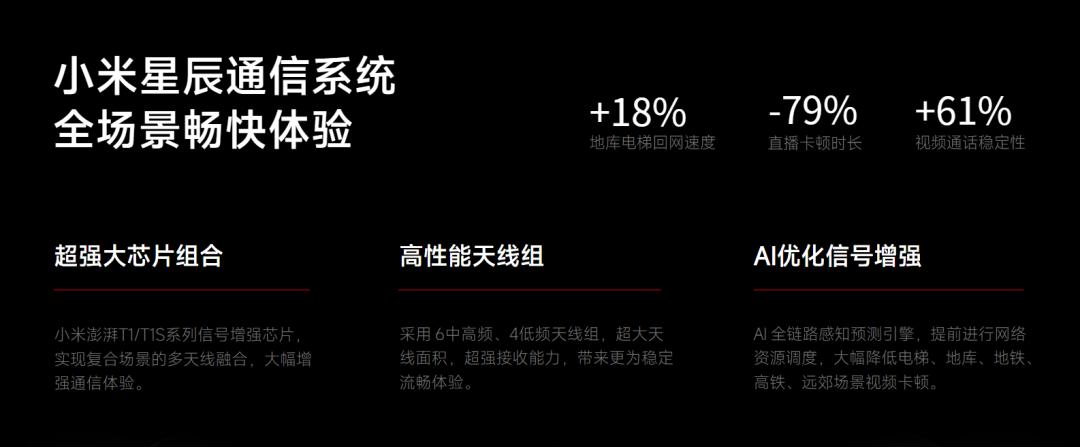
Core Viewpoint - Huawei's Mate 80 series has launched the industry's first 700MHz emergency communication feature, enhancing communication capabilities in disaster scenarios and positioning itself as a leader in integrated communication functions [2][18]. Summary by Sections 1. Introduction of 700MHz Emergency Communication - Huawei announced the Mate 80 series featuring 700MHz emergency communication, capable of penetrating three floors and covering over 13 kilometers, aimed at providing communication during disasters [2][18]. 2. Understanding "No Network Communication" - "No network communication" refers to the ability to communicate without traditional network infrastructure, relying on direct, decentralized connections between devices [2][4]. - This technology has gained attention due to its potential to maintain communication in extreme environments where traditional networks fail [3][21]. 3. Technical Mechanisms - The core principles of no network communication include direct device-to-device (D2D) communication and mesh networking, allowing devices to form ad-hoc networks for data transmission [5][6]. - Devices can communicate directly using protocols like Bluetooth and Wi-Fi Direct, bypassing traditional network infrastructure [5][6]. 4. Market Trends and User Demand - The rise of no network communication is driven by market saturation in traditional hardware features, prompting manufacturers to seek new selling points that enhance user experience [8]. - Increasing outdoor activities and the need for reliable communication in weak network areas have made no network communication a critical feature for consumers [8][21]. 5. Competitor Developments - Other manufacturers like OPPO and Vivo have also introduced their versions of no network communication, showcasing various capabilities such as long-distance communication and emergency SOS features [9][12][14]. - Xiaomi's "Starry No Network Communication" system utilizes a distributed network approach, allowing devices to act as signal relay nodes, enhancing communication stability [14][17]. 6. Future Prospects - The future of no network communication lies in its ability to complement existing cellular networks, providing reliable communication in areas where traditional networks are inadequate [20][22]. - This technology is expected to evolve into a secondary communication channel, ensuring connectivity in extreme conditions and enhancing safety in various applications [21][22].

AI 供应链:台积电 CoWoS 产能扩张、ASIC 动态、亚洲实地考察-Asia-Pacific Technology-AI Supply Chain TSMC CoWoS Expansion; ASIC Dynamics; Asia Field Trip
2025-12-02 02:08
Summary of TSMC CoWoS Capacity and AI Semiconductor Market Insights Industry Overview - The report focuses on the **Asia-Pacific Technology** sector, specifically the **AI semiconductor** market and **TSMC's** CoWoS (Chip on Wafer on Substrate) capacity expansion for 2026 [1][2]. Key Insights on TSMC and CoWoS Capacity - TSMC is expected to increase its CoWoS capacity by **79%** to **125k wafers per month (kwpm)** by 2026, up from an estimated **70k kwpm** at the end of 2025 [3][12]. - The additional capacity will primarily support **NVIDIA** and **Broadcom**, with some allocation to **MediaTek** [3][12]. - NVIDIA's CoWoS-L capacity is revised upward to **700k wafers**, aligning with its forecast of **US$500 billion** in AI GPU revenue through the end of 2026 [4][12]. AI Semiconductor Demand Dynamics - **NVIDIA** is experiencing strong AI demand, but production of the **B40 chip** has been cut from an expected **1.5-2 million units** in the second half of 2025 to **900k units**, indicating potential pricing issues in the Chinese market [4]. - **Google's TPU** is identified as a significant growth driver in the ASIC market, with Broadcom's CoWoS bookings increasing to **230k units** [5][13]. - The competition for **AWS's Trainium ASIC** involves Broadcom and Marvell, with expectations of increased production capacity for AWS [6]. Market Trends and Projections - The report highlights key players in the AI semiconductor space, including **TSMC**, **MediaTek**, **KYEC**, **Aspeed**, **Alchip**, **GUC**, **SMIC**, **Naura**, **AMEC**, and **ASMPT** [7]. - The demand for CoWoS capacity is projected to grow significantly, with NVIDIA, Broadcom, and AMD leading the charge [23][24]. - The overall demand for CoWoS is expected to reach **1,329k wafers** in 2026, up from **680k wafers** in 2025, indicating a robust growth trajectory [24]. Financial Implications - The report notes that **AMD** anticipates an **18% CAGR** in data center CPU demand from 2025 to 2030, with AI contributing an additional **US$30 billion** in revenue by 2030 [14]. - The AI semiconductor market is projected to see quarterly revenue increases, with significant contributions from both NVIDIA and AMD [42][44]. Additional Considerations - TSMC's capacity expansion may face challenges due to clean room space limitations, potentially impacting its ability to meet rising demand [33]. - The report emphasizes the importance of understanding the supply chain dynamics and the implications of power deployment plans on CoWoS demand [36][38]. Conclusion - The AI semiconductor market is poised for substantial growth, driven by increasing demand for advanced chips from major players like NVIDIA and Google. TSMC's strategic capacity expansion will be crucial in meeting this demand, although operational challenges may arise. Investors should closely monitor these developments for potential investment opportunities in the sector [1][2][3][4][5][6][7][12][14][23][24][36][38].
科技:ASIC 受益标的;按 AI 芯片平台划分的营收敞口- Tech_ ASIC beneficiaries; revenues exposures by AI chips platform; Read across to Google's Gemini 3 announcement
2025-12-01 03:18
Summary of Key Points from the Conference Call Industry Overview - The report focuses on the ASIC (Application-Specific Integrated Circuit) market, particularly in relation to AI (Artificial Intelligence) chips and servers, highlighting the increasing demand and customization in this sector [1][11][22]. Core Insights and Arguments - **ASIC Market Growth**: ASIC chips are expected to play a significant role in AI server solutions, with projections indicating that ASICs will contribute 40% of total AI chips by 2026 and 45% by 2027 [11][22]. - **Demand Projections**: The demand for AI chips is forecasted to reach 10 million, 14 million, and 17 million units from 2025 to 2027, with ASIC shipments contributing 38%, 40%, and 45% respectively [1]. - **Revenue Growth**: The global server total addressable market (TAM) is expected to grow by 42%, 32%, and 19% year-over-year, reaching $359 billion, $474 billion, and $563 billion from 2025 to 2027 [13]. - **Customization Benefits**: ASIC solutions provide higher gross margins for suppliers due to their customization, which allows for better performance and energy efficiency compared to general-purpose GPUs [15][22]. Company-Specific Highlights - **Wiwynn**: Expected to have the largest ASIC exposure among ODMs by 2026, with significant partnerships with Amazon and Meta. The company has reported over 100% year-over-year growth in revenue for the first three quarters of 2025 [6][27]. - **Hon Hai**: Anticipated to expand its ASIC customer base significantly by 2026, benefiting from its role as a supplier for Google TPU servers [23]. - **Innolight**: Positioned as a key supplier of optical transceivers, with expected revenue growth of 104% year-over-year in 2026 from 800G optical modules [24][25]. - **LandMark**: Expected to see a revenue increase from 71% in 2025 to 85% in 2026 due to the demand for high-speed optical transceivers [26]. - **EMC**: Anticipated to maintain a strong market position with over 50% market share in the ASIC AI server supply chain, expecting solid revenue growth [28]. - **TSMC**: Expected to manufacture next-generation TPUs, with projections indicating that TPU revenue will account for less than 5% of TSMC's total revenue through 2026 [29]. Additional Important Insights - **Market Dynamics**: The shift towards ASICs is driven by major AI model suppliers developing in-house ASIC platforms to optimize performance and reduce costs [22]. - **Investment Trends**: Amazon plans to invest up to $50 billion in AI infrastructure, which will utilize in-house Trainium chips and Nvidia GPUs [24]. - **Emerging Partnerships**: OpenAI's collaboration with Broadcom to design in-house AI accelerators is expected to enhance the capabilities of AI systems by 2029 [24]. This summary encapsulates the key points from the conference call, providing insights into the ASIC market's growth, company-specific developments, and broader industry trends.

TPU 供应核查激增,更多迹象显示 TPU 销售策略初现雏形-Internet-Are Surging TPU Supply Checks More Evidence of a Budding TPU Sales Strategy
2025-12-01 03:18
Summary of Key Points from the Conference Call Industry and Company Overview - **Industry**: Internet and Semiconductor - **Company**: Alphabet Inc. (GOOGL) Core Insights and Arguments - **TPU Production Forecast**: The Asia semiconductor team has revised its forecast for TPU production to approximately 5 million in 2027 and 7 million in 2028, an increase from previous estimates of around 3 million and 3.2 million respectively. This indicates a significant growth potential in TPU supply [1][2][3] - **Revenue Impact**: Each additional 500,000 TPU chip sales could potentially contribute around $13 billion in revenue and increase GOOGL's EPS by approximately $0.40 in 2027. This highlights the financial significance of TPU sales for GOOGL [1][2] - **First Party Use and GCP Sales**: While much of the expected TPU sales are attributed to GOOGL's first-party use and Google Cloud Platform (GCP) sales, the potential for GOOGL to sell TPUs externally is also emphasized. The forecast suggests a total of 12 million TPUs over two years, compared to 7.9 million over the previous four years, indicating a strategic shift [2][3] Additional Important Insights - **Analyst Upgrades**: The increased TPU purchasing signals led to an upgrade of MediaTek to Overweight (OW) by the Asia Semiconductor analyst, indicating confidence in the semiconductor market's growth [2] - **Market Dynamics**: The report suggests that the TPU supply uncertainty may be diminishing, which could facilitate GOOGL's sales strategy in the semiconductor space [1][2] - **Investment Drivers**: Continued AI-driven innovation across GOOGL's platforms (Search, YouTube, Cloud) is expected to enhance long-term growth prospects and improve operating leverage, leading to upward revisions in EPS and free cash flow estimates [15][19] Financial Projections - **Price Target**: The price target for GOOGL is set at $330, based on a discounted cash flow model and a long-term EBITDA multiple of approximately 25x for 2027 [8] - **Earnings Estimates**: For FY Dec 2025, Morgan Stanley estimates GOOGL's sales/revenue at $335.4 billion, EBITDA at $148 billion, and net income at $120.3 billion, with an EPS of $9.70 [23] Risk Factors - **Market Risks**: Potential risks include slower global ad growth, increased competition, and margin pressures due to new AI products affecting monetization rates [19][29] - **Ownership Positioning**: Institutional ownership stands at 57.1%, with a hedge fund sector long/short ratio of 2.9x, indicating a bullish sentiment among institutional investors [22] This summary encapsulates the key points from the conference call, focusing on the implications for GOOGL and the broader semiconductor industry.