SK Hynix

Search documents
Is This AI Infrastructure Stock a Real Millionaire Maker or Just Hype?
The Motley Fool· 2026-02-16 03:30
Core Viewpoint - The article discusses the potential of Micron Technology as a key player in the AI hardware market, highlighting its growth opportunities amidst the increasing demand for memory hardware driven by AI applications [1][2][11]. Industry Overview - Hardware and infrastructure companies have been significant beneficiaries of the AI boom, with a focus on memory hardware being crucial for AI applications [1][2]. - The demand for memory hardware, particularly dynamic random access memory (DRAM), is expected to rise sharply, leading to a projected 50% increase in RAM prices in Q1 2026 [6]. Company Analysis - Micron Technology is one of the three major players in the memory hardware market, alongside Samsung and SK Hynix, and has shifted its focus from consumer PC markets to AI-driven memory solutions [6][7]. - The company recently initiated the construction of a $100 billion semiconductor factory in New York, which will be the largest in the U.S. and aims to employ over 9,000 people [8]. Financial Performance - Micron reported a 57% year-over-year revenue increase for Q1 of fiscal 2026, reaching $13.6 billion, with DRAM accounting for 79% of this revenue [9]. - The company boasts a gross margin of 56.8%, an operating margin of 32.5%, and a net margin of 28.15%, indicating strong profitability [10]. - Micron's forward price-to-earnings (P/E) ratio stands at 10.57, which, when adjusted for growth (PEG ratio of 1.12), presents an attractive investment opportunity compared to Samsung's PEG ratio of 3.31 [10][11].


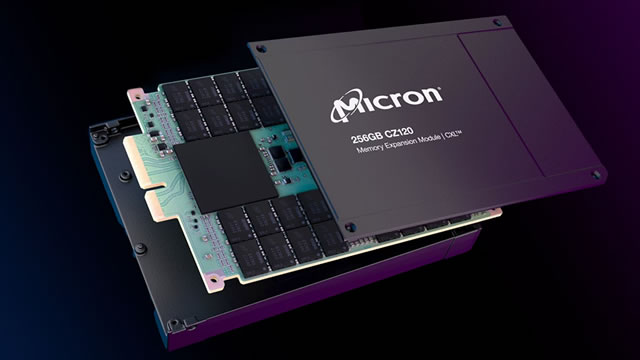
Will Micron Be the Next Nvidia -- or the Next Intel?
The Motley Fool· 2026-02-15 08:54
Core Viewpoint - Micron Technology is currently experiencing a cyclical upturn that may last longer than previous cycles, raising questions about its future position in the semiconductor industry compared to Nvidia and Intel [1][2]. Group 1: Company Performance - Micron's revenue increased approximately 57% year-over-year in the first quarter of fiscal 2026, ending November 27, 2025, with adjusted earnings soaring 169% year-over-year to $5.5 billion [5]. - The company has sold out its high-bandwidth memory (HBM) supply for all of 2026, indicating strong demand similar to Nvidia's challenges in meeting GPU demand [4]. Group 2: Market Position and Competition - Micron's market capitalization stands at $463 billion, with a current share price of $411.48, reflecting a significant increase in value over the past year, where its stock price has more than quadrupled [7]. - The competitive landscape includes significant threats from Samsung and SK Hynix, which have substantial market shares in memory chips, raising concerns about Micron's ability to maintain its position [7][8]. Group 3: Future Outlook - There are concerns about Micron's cyclical nature, with fears that a memory supply-demand imbalance could lead to a rapid decline in share price, as evidenced by its forward earnings trading at only 11.8 times [9]. - Despite cyclical concerns, there is speculation that the demand for AI applications will sustain the need for Micron's HBM longer than previous memory chip cycles, potentially positioning Micron more like Nvidia than Intel in the future [12].


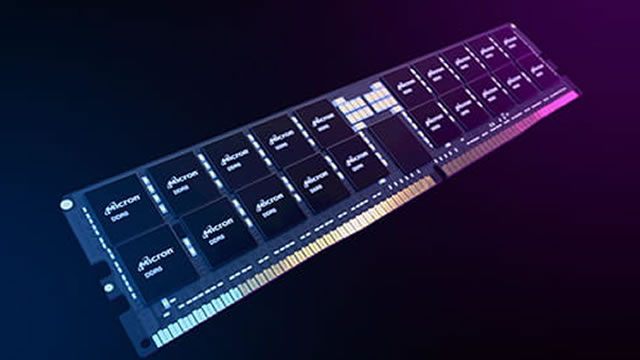
Memory-chip stocks are still quite cheap — especially if you look overseas
MarketWatch· 2026-02-14 14:27
Core Viewpoint - Samsung Electronics and SK Hynix shares, despite strong gains this year, are still less expensive compared to their U.S. counterparts [1] Company Analysis - Samsung Electronics and SK Hynix have shown significant stock price increases in the current year [1] - The valuation of these companies remains lower than that of similar companies in the U.S. market [1] Industry Context - The semiconductor industry, represented by Samsung and SK Hynix, is experiencing a competitive landscape where pricing and valuation are critical factors [1]

算力为王:AI数据中心万亿赛道的产业链争霸与投资风暴
QYResearch· 2026-02-13 09:30
Core Insights - The article emphasizes the accelerated global construction of AI-driven data centers, highlighting significant investments from major tech companies like Meta and Mistral AI, which reflect the strategic importance of AI computing power deployment [2][3] - Data centers are not only foundational for AI applications but also serve as critical support for profit growth and technological competition across the industry [4] Market Size and Policy Environment by Region - North America: Projected market size of approximately $95-100 billion by 2026 and $300-350 billion by 2030, with a CAGR of ~28%. The region benefits from supportive AI innovation policies and strict data privacy regulations [6] - Europe: Expected market size of around $40-45 billion by 2026 and $120-150 billion by 2030, with a CAGR of ~25%. The region faces strict GDPR compliance and has a strong demand for localized data centers [6] - China: Anticipated market size of about $50-55 billion by 2026 and $160-200 billion by 2030, with a CAGR of ~27%. The government encourages AI and computing infrastructure development [6] - South Korea: Estimated market size of $5-6 billion by 2026 and $20-25 billion by 2030, with a CAGR of ~30%. The government promotes AI strategies and local semiconductor advantages [6] - Japan: Projected market size of $6-7 billion by 2026 and $18-22 billion by 2030, with a CAGR of ~23%. The region's stable demand comes from high-end manufacturing and finance sectors [6] - India: Expected market size of $3-4 billion by 2026 and $12-15 billion by 2030, with a CAGR of ~28-30%. The region shows rapid growth in cloud computing and AI applications [6] Key Industry Chain and Leading Companies - AI Chips/Accelerators: Key players include NVIDIA, AMD, Intel, and Google, focusing on high-performance AI training and inference [8] - Data Center Infrastructure: Major operators like Equinix and Digital Realty, along with self-built centers from Meta, AWS, and Microsoft, dominate the market [8] - Cloud Services/AI Platforms: AWS, Microsoft Azure, and Google Cloud are leading providers of AI services and solutions [8] - Storage/Memory: Companies like Samsung and SK Hynix are crucial for high-speed storage demands [9] - Network Equipment: Cisco and Arista Networks are essential for data center connectivity [9] - Energy and Cooling: Schneider Electric and Vertiv lead in providing reliable power and cooling solutions [9] - Data Center Software: VMware and HashiCorp/Red Hat offer critical management tools for data centers [9] Investment Opportunities - Upstream Chips: Investment in GPU/TPU/accelerators offers high margins and long-term contracts [10] - Data Center Operations: Focus on self-built or managed centers in high-demand regions like North America, China, and South Korea for stable rental income [10] - Cloud Service Platforms: High-growth subscription revenue opportunities in AI SaaS/IaaS [10] - Storage/Memory: Long-term supply agreements with major operators for HBM/SSD [10] - Network Equipment: Targeting AI-optimized and low-latency products for mid to long-term replacement [10] - Energy/Cooling: Building green data centers to leverage policy benefits [10] - Software/Operations: Providing intelligent operation and monitoring services for high profit margins [10] Conclusion and Strategic Recommendations - AI data centers are positioned as the core hub of the global tech industry over the next decade, with understanding technology trends and market opportunities being crucial for competitive advantage and long-term returns [12][14] - Regional market differences indicate that North America and China have large, stable markets, while South Korea and Southeast Asia show rapid growth [14] - Investment strategies should focus on leveraging these regional insights for optimal positioning in the evolving landscape [14]





Chinese Stocks Can't Wait for Holiday Break, Except Zhipu | The China Show 2/13/2026
Bloomberg Television· 2026-02-13 07:12
It's 9 a. m. in Shanghai, Shenzhen, and here in Hong Kong, you're watching the China show.I'm Annabel Trawlers with David Inglis. Good morning. We're counting down to the open at markets in Greater China.Let's get to your top stories today. Stocks across the Asia-Pacific tracking the the drop that we had a sharp drop. Let me just underscore that point here on Wall Street as the scare trade takes hold.But three in tech stocks are cushioning the blow here amid warnings of a supply shortage in memory chips mad ...

How AI Is Proving to Be a Double-Edged Sword for Equities | Insight with Haslinda Amin 02/13/2026
Bloomberg Television· 2026-02-13 06:50
Gone. And another one gone. So which sector is going to be next to bite the dust.As Wall Street waits to find out the fear of A. I. inflicted business disruption is making Asian stocks the champions.Live from Sydney, I'm Paul Allen. This is INSIGHT. Well, the heavy presence of advanced chip makers, semiconductor foundries and assemblers is ensuring that Korean and Taiwanese stocks remain in the spotlight.BNP Paribas Wealth Management's Grace Tan is going to join us with her outlook and strategy for the I di ...

中国汽车:市场反馈及行业预期下调 -1 月季节性表现弱于往常,且物料成本通胀加剧-China Automobiles_ Marketing feedback & lowering estimates for the sector on weaker-than-usual Jan seasonality with BOM cost inflation
2026-02-13 02:18
Summary of Conference Call Notes on the Automotive Industry Industry Overview - **Industry**: Automotive, specifically focusing on electric vehicles (EVs) and new energy vehicles (NEVs) in China - **Current Market Sentiment**: Investor positioning in the automotive sector is underweight as of early 2026, with concerns about demand and cost inflation impacting outlooks [1][2] Key Points 1. Industry Volume Trajectory - **January 2026 Performance**: Domestic passenger vehicle retail volume decreased by 20% month-over-month (mom), compared to a 14% decrease in January 2024 [3] - **Market Expectations**: Anticipation of continued volume decline into February 2026, attributed to the Chinese New Year holiday and reduced stimulus effects [3] - **Future Outlook**: Expected recovery in consumer demand starting March 2026, coinciding with new product launches from BYD and the Beijing Auto Show [3] 2. Raw Material and Memory Cost Inflation - **Cost Increases**: Year-to-date increases in commodity prices (lithium, copper, aluminum) range from 27% to 85% year-over-year [4][18] - **Impact on BOM Costs**: Estimated average increase in Bill of Materials (BOM) costs for EVs is approximately Rmb4,000, leading to a gross margin decline of 2.0% and a net margin decline of 1.7% [4][11] - **OEM Negotiations**: OEMs are negotiating cost-sharing with suppliers, but are expected to absorb 100% of memory cost increases [4] 3. Potential Policy Stimulus - **Government Support Expectations**: Investors anticipate additional government support if demand remains weak, including subsidies for Level 3 vehicles and domestic chip usage [7] - **Economic Contribution**: Passenger vehicles accounted for about 5% of GDP in 2025, indicating the sector's significance to the economy [7] 4. Sensitivity Analysis on Costs - **Margin Concerns**: Rising raw material and memory costs are raising concerns about potential margin impacts for OEMs [8] - **Cost Pass-Through Assumptions**: Analysis assumes a 50/50 cost pass-through ratio for battery and metals, while memory costs are fully absorbed by OEMs [9][12] 5. Target Price Adjustments - **Price Target Reductions**: Target prices for covered OEMs and suppliers have been cut by up to 12% due to weaker demand and higher costs, with average estimates lowered by approximately 16% [2][24] - **Specific Company Adjustments**: - **BYD**: Target price reduced from Rmb144 to Rmb137 due to weaker delivery volumes and higher BOM costs [25] - **Li Auto**: Target price reduced from US$27 to US$24, reflecting lower sales and higher costs [25] - **XPeng**: Target price reduced from US$25 to US$22, driven by weaker sales and pricing pressures [25] - **NIO**: Target price reduced from US$7.0 to US$6.6, impacted by BOM cost inflation [25] 6. Long-term Projections - **Revenue and Net Income Changes**: Projections for revenue and net income have been adjusted downward for several companies, reflecting anticipated market conditions through 2030 [24][30] Additional Insights - **Investor Concerns**: There is a growing concern among investors regarding the sustainability of margins in light of rising costs and competitive pressures [8] - **Market Dynamics**: The automotive sector is facing significant challenges from both internal cost pressures and external market conditions, necessitating close monitoring of policy developments and consumer demand trends [7][8] This summary encapsulates the critical insights from the conference call, highlighting the automotive industry's current challenges and future outlook.




半导体・存储:铠侠 2025 财年第四季度解读;强劲的隐含平均售价指引支撑我们对行业的积极展望-APAC Tech_ Semiconductors Memory_ Kioxia CY4Q25 read-across; strong implied ASP guidance supports our positive outlook for
2026-02-13 02:18
12 February 2026 | 11:41PM KST Equity Research APAC Tech: Semiconductors Memory: Kioxia CY4Q25 read-across; strong implied ASP guidance supports our positive outlook for On February 12, Japanese NAND producer Kioxia (covered by Shuhei Nakamura) reported its CY4Q25 (FY3Q25 or December quarter) earnings, and we provide read-across to our covered Korean memory suppliers, SK Hynix (Hynix, Buy) and Samsung Electronics (SEC, Buy). Key takeaways include: 1) Strong implied guidance on CY1Q26 ASP growth, 2) Unchange ...
Why Did Micron Stock Pop Again Today?
Yahoo Finance· 2026-02-12 16:17
Group 1 - Micron's stock has increased by 3.7% due to the tight supply and rising prices of high-bandwidth memory (HBM) [1] - Cisco Systems reported strong earnings but warned that high memory costs may impact future profits, highlighting the tightness in the DRAM memory chip market [1] - Samsung has started shipping its latest HBM4 chips to capitalize on high prices, while SK Hynix is also increasing HBM production [2] Group 2 - Micron has begun high-volume production of HBM4, contributing to the competitive landscape in the HBM market [2] - The current tight supply and rising prices are boosting Micron's profits, but increased production from competitors may eventually lead to a supply surplus and lower prices [4] - The semiconductor industry remains cyclical, indicating that the current boom for Micron may not be sustainable in the long term [5]


ClearBridge Emerging Markets Strategy Q4 2025 Commentary (Mutual Fund:MCEIX)
Seeking Alpha· 2026-02-12 15:15
Market and Performance Overview - Emerging markets advanced 4.7% in Q4 2025, finishing as one of the best-performing global equity asset classes, with the MSCI Emerging Markets Index rising 33.6% for the year, outperforming the MSCI EAFE Index (+31.2%) and the U.S. S&P 500 Index (+17.9%) [2] - Performance in Q4 was led by Korea and Taiwan, with Korean equities soaring 27.3% driven by a 50% gain in the IT sector, while Taiwanese stocks climbed 10.4% due to AI-related momentum [3] Sector Performance - The IT sector gained 16.4%, bolstered by AI-related stocks, while the materials sector advanced 11.6% as gold prices rose over 10% and copper prices hit record highs [6] - Energy, financials, and industrials sectors outperformed the index, while consumer discretionary, communication services, health care, and real estate underperformed [6] Company Highlights - SK Hynix saw its shares soar over 80% in Q4 and nearly tripled for the year due to increased demand for DRAM and NAND memory, particularly for AI workloads [7] - Samsung Electronics also experienced strong performance, benefiting from memory shortages that enhanced pricing power [7] - Taiwan Semiconductor, a leading manufacturer of high-end chips for Nvidia, significantly outperformed the benchmark [7] Regional Contributions - Significant contributors included China's Sieyuan Electric and Korea's HD Hyundai Electric, supporting AI data center buildouts [10] - Capitec Bank in South Africa delivered strong financial results, while Titan, an Indian jewelry retailer, showed encouraging performance despite India's overall underperformance [10] Detractors - Alibaba and Tencent surrendered gains due to a broader rotation out of China, while Contemporary Amperex Technology also faced declines [11] - MercadoLibre remained weak amid competition concerns in Brazil, and Apollo Hospitals detracted due to its large portfolio weight in a lagging Indian market [12] Portfolio Positioning - The strategy added four new positions, including Raia Drogasil and Nu Holdings in Brazil, while exiting positions in B3 S.A. and Proya Cosmetics [13][14][17] - Upgraded exposure in Indonesia by replacing PT Bank Rakyat Indonesia with PT Bank Central Asia, which has a strong deposit franchise [15] Outlook - The emerging market recovery is viewed as being in its early stages, with appealing valuations and supportive macroeconomic drivers [18] - Anticipated increased foreign investments into EM equities, driven by lower valuations and stronger economic growth [19] - The Chinese economy shows signs of increased stability, with improved trade relations and a more optimistic outlook [20] - Emerging markets offer opportunities in world-class companies with technological innovation, particularly in sectors like industrial automation, e-commerce, and fintech [21] - India remains a focus due to its large population and status as the fastest-growing major global economy, despite challenges faced in 2025 [22] Portfolio Highlights - The ClearBridge Emerging Market Strategy outperformed its benchmark in Q4, with gains across five of the nine sectors invested [23] - Stock selection in IT and industrials sectors contributed positively, while communication services and an underweight in materials detracted from performance [24] - Leading contributors included SK Hynix, Samsung Electronics, and Capitec Bank, while Tencent, Alibaba, and MercadoLibre were primary detractors [25]