中国科学技术大学

Search documents
超57亿,48所高校科研院所仪器采购意向汇总(2025年7月)
仪器信息网· 2025-08-03 04:06
Core Insights - The total budget for instrument procurement intentions from various universities in China exceeds 5.7 billion [1][2] Group 1: Procurement Intentions Overview - A total of 48 universities and research institutions have announced their procurement plans for July, reflecting a significant investment in equipment updates [2] - The procurement intentions are part of a larger trend initiated in 2024, focusing on large-scale equipment updates across universities [2] Group 2: Detailed Procurement Amounts - Notable procurement amounts include: - Tsinghua University: 2.13 billion - China Academy of Sciences: 1.15 billion - Shanghai University of Science and Technology: 1.35 billion - China Agricultural University: 1.06 billion - South China University of Technology: 1.08 billion [3][4] - Other universities such as Zhejiang University and Nanjing University of Science and Technology also have significant procurement budgets, indicating a widespread investment across the educational sector [4]


中国科学技术大学1.16亿元采购大批仪器
仪器信息网· 2025-07-28 03:47
Core Viewpoint - The article discusses the procurement intentions of the University of Science and Technology of China, highlighting a total budget of 116 million yuan for 27 items of scientific instruments, with expected procurement dates between June and August 2025 [1][3]. Group 1: Procurement Overview - The total budget for the procurement of scientific instruments is 116 million yuan [1]. - The procurement includes advanced systems such as a full-spectrum imaging flow sorting system, ultra-low field magnetic resonance scanning device, and small animal 3D optical in vivo imaging system [1][2]. - The expected procurement period is from June to August 2025 [1]. Group 2: Instrument Descriptions - The small animal 3D optical in vivo imaging system allows for non-invasive real-time observation of physiological and pathological processes in live animals, widely used in life sciences and medical research [1]. - The atomic force microscope (AFM) provides high-resolution 3D imaging and mechanical property analysis at the nanoscale, relying on atomic interactions rather than optical or electronic principles [1]. - The two-photon laser scanning microscopy system is designed for high-resolution imaging in deep tissues, minimizing light damage to samples, particularly useful in biomedical research [2]. Group 3: Detailed Procurement List - A high-performance GPU server is planned for procurement to support large-scale parallel computing needs in computational chemistry, enhancing deep learning model training efficiency [4]. - The ultra-low field magnetic resonance scanning device is intended for precise magnetic resonance detection in materials science and biomedicine, particularly suitable for polymer and biological material systems [4]. - The procurement also includes a high-frequency dual-output femtosecond laser system for constructing a high temporal and spatial resolution ultrafast spectroscopy system [5].
国盾量子: 2025年第三次临时股东大会会议资料
Zheng Quan Zhi Xing· 2025-07-23 16:14
Core Points - The company is holding its third extraordinary general meeting of shareholders in 2025 to discuss important proposals, including signing a patent implementation license contract and revising the external investment management system [1][24]. Group 1: Meeting Details - The meeting is scheduled for July 31, 2025, at 15:00, located at the Keda Guandun Quantum Technology Park in Hefei, Anhui Province [7]. - Voting will be conducted through a combination of on-site and online methods, with specific time slots for online voting [7][3]. Group 2: Proposal on Patent License Agreement - The company plans to renew a patent implementation license agreement with the University of Science and Technology of China (USTC) and sign a new agreement due to business needs [5][10]. - The first contract involves a patent for an arbitrary waveform generation system and a proprietary technology for a low-latency synchronization device, with a license period of three years and a revenue-sharing model where 30% of net sales profit will be paid to USTC [6][10][12]. - The second contract includes three patents and one proprietary technology, with a two-year license period and a one-time entry fee of 200,000 yuan, along with a 50% share of net sales profit [17][18]. Group 3: Impact and Compliance - The transactions are considered normal business operations that will enhance the company's product matrix and market competitiveness without harming the interests of the company or its shareholders [22]. - The company emphasizes that these transactions will not significantly impact its independence or create major reliance on the related party [22].

【科技日报】双极膜重水解离技术实现低成本制备氘代酸碱
Ke Ji Ri Bao· 2025-07-22 00:55
Core Insights - The research conducted by a team from the University of Science and Technology of China has innovatively utilized bipolar membranes to achieve efficient dissociation of heavy water, overturning the traditional belief that the dissociation rate of heavy water is slower than that of regular water [1][2] - The newly developed technology significantly reduces production costs for deuterated acids and bases, which are essential for synthesizing deuterated drugs and enhancing the lifespan of organic light-emitting diode (OLED) devices [1][2] Group 1 - The research clarifies the core mechanism of efficient heavy water dissociation using bipolar membranes, where deuterium ions and deuteroxide ions are generated at a rate 1.25 times faster than hydrogen ions and hydroxide ions under the same charge conditions [2] - The production process of deuterated acids and bases has been streamlined to use inexpensive inorganic salts and heavy water at room temperature, resulting in a significant reduction in production costs to one-fifth of traditional methods [2] - The technology has successfully scaled up to produce 3 tons per year of deuterated acids and bases, laying a solid foundation for industrial-scale production [2] Group 2 - The environmental impact of the new production process is minimal, as it does not require strong corrosive agents or heavy metal catalysts, leading to near-zero emissions [2] - The market potential for deuterated acids and bases is substantial, given their critical role in various chemical processes and applications, including drug synthesis and OLED technology [1]
国盾量子: 关于签订专利实施许可合同暨关联交易的公告
Zheng Quan Zhi Xing· 2025-07-15 13:17
Core Viewpoint - The company intends to renew a patent/technology licensing agreement with its affiliate, the University of Science and Technology of China (USTC), and also sign a new licensing agreement due to business expansion needs [1][3]. Summary by Sections Licensing Agreements Overview - The company has an existing patent licensing agreement with USTC that has expired and plans to renew it. Additionally, a new patent licensing agreement will be signed [4][18]. - The first contract involves a patent for a waveform generation system with a licensing period of 3 years, where the company will pay 30% of the sales net profit as a royalty [2][3]. - The second contract includes multiple patents with a licensing period of 2 years, requiring an upfront fee of 200,000 yuan and a royalty of 50% of the sales net profit [2][3]. Related Party Transactions - USTC is a significant shareholder, holding over 5% of the company's shares, establishing a related party relationship [3][18]. - The transactions are considered normal business operations and are not expected to impact the company's independence or create significant reliance on the affiliate [3][18]. Financial Terms - The sales net profit is calculated as sales revenue minus manufacturing costs, direct sales expenses, and taxes. The company must provide accurate sales records to USTC [5][13]. - The pricing of the licensing agreements was determined through multiple negotiations and is compliant with relevant laws and regulations [5][18]. Approval Process - The agreements have been approved by the company's board of directors and supervisory board, with independent directors also reviewing and approving the proposals [19][20]. - The agreements will be submitted for approval at the shareholders' meeting, where related parties will abstain from voting [19][20].
超45亿,37所高校科研院所仪器采购意向汇总(2025年6月)
仪器信息网· 2025-07-14 03:33
Core Viewpoint - In June 2025, major universities and research institutions in China announced their intention to procure scientific instruments, with a total budget exceeding 4.5 billion yuan [1][2]. Summary by Sections Procurement Intentions - A total of 37 universities and research institutions have released procurement plans, reflecting a significant push for equipment updates initiated since 2024 [2]. - The procurement budget from these institutions collectively amounts to over 4.5 billion yuan [2]. Detailed Procurement Plans - The following are some of the notable procurement amounts from various institutions: - Shenyang Institute of Automation, Chinese Academy of Sciences: 161 million yuan - Chinese Academy of Medical Sciences: 221 million yuan - Wuhan University of Technology: 156 million yuan - Southeast University: 121 million yuan - Tsinghua University: 100 million yuan - Wuhan University: 199 million yuan - Chongqing Medical University: 215 million yuan [3][4]. Historical Context - Previous months have seen varying procurement intentions, with amounts ranging from 235 million yuan in February to 460 million yuan in March, indicating a growing trend in investment in scientific instruments [5].

【科技日报】我国科学家首次观测到电场布赖特—拉比效应
Ke Ji Ri Bao· 2025-07-10 01:52
记者7月2日从中国科学技术大学获悉,该校教授卢征天、研究员夏添团队在实验上首次成功观测到 原子能级在电场中的布赖特—拉比位移现象。研究论文日前发表于国际期刊《美国国家科学院院刊》。 在原子物理学中,量子态能级通常在磁场中会发生与磁场强度成正比的塞曼位移。1931年,理论物 理学家布赖特和拉比描述了一种非线性的能级位移现象,这一现象后被命名为布赖特—拉比效应。这是 一种由原子的超精细结构与磁场共同作用产生的量子力学基本效应,已在众多实验中被观测到,并在量 子精密调控领域得到广泛应用。 在本研究中,研究团队首先将镱-171原子载入光偶极阱,利用激光囚禁的高选择性排除了可能带来 干扰的其他同位素;随后,利用光偶极阱精确操控原子,将其置于间隔仅1毫米的一对万伏高压电极之 间;同时,通过激光冷却技术将原子温度降至40微开尔文,有效消除了多普勒效应对谱线的加宽影响。 通过实验,研究团队成功实现镱-171原子在强电场环境下的高精度光谱测量。 实验结果显示,原子能级的变化显著偏离了常规的斯塔克效应。研究团队观测到能级位移中与电场 四次方、六次方成正比的高阶贡献,直接验证了电场布赖特—拉比效应。 (原载于《科技日报》 2025 ...
【科技日报】科研人员制备高性能液流电池用超薄聚合物膜材料
Ke Ji Ri Bao· 2025-07-03 05:46
Core Insights - The research team has developed a high-stability ultra-thin polymer membrane with a thickness of only 3 micrometers, which enhances the working current density of all-vanadium flow batteries to 300 milliamps per square centimeter [1][2]. Group 1: Research and Development - The polymer ion-selective membrane is favored in the market due to its low cost and ease of large-scale production [1]. - Traditional polymer membranes often have irregular pore structures, making it difficult to accurately separate active materials and charge carriers in flow batteries [1]. - A new interfacial crosslinking strategy was proposed to create a robust covalent crosslink network in the membrane, improving mechanical stability even at reduced thickness [1][2]. Group 2: Performance and Applications - The pore size distribution of the membrane's separation layer ranges from 1.8 Å to 5.4 Å, allowing for precise separation of active materials and rapid conduction of charge carriers [2]. - The ultra-thin membrane exhibits ultra-low surface resistance and active material permeability across a wide pH range, reducing ion transport resistance [2]. - The membrane was tested in an all-vanadium flow cell, achieving an energy efficiency exceeding 80% at a high current density of 300 milliamps per square centimeter [2]. - The ultra-thin membrane can also be applied to alkaline zinc-iron flow batteries and aqueous organic flow batteries, demonstrating excellent performance at high current densities [2].
太猛了,这些高校疯狂进步,背后是中国全力押注理工科
3 6 Ke· 2025-07-02 03:15
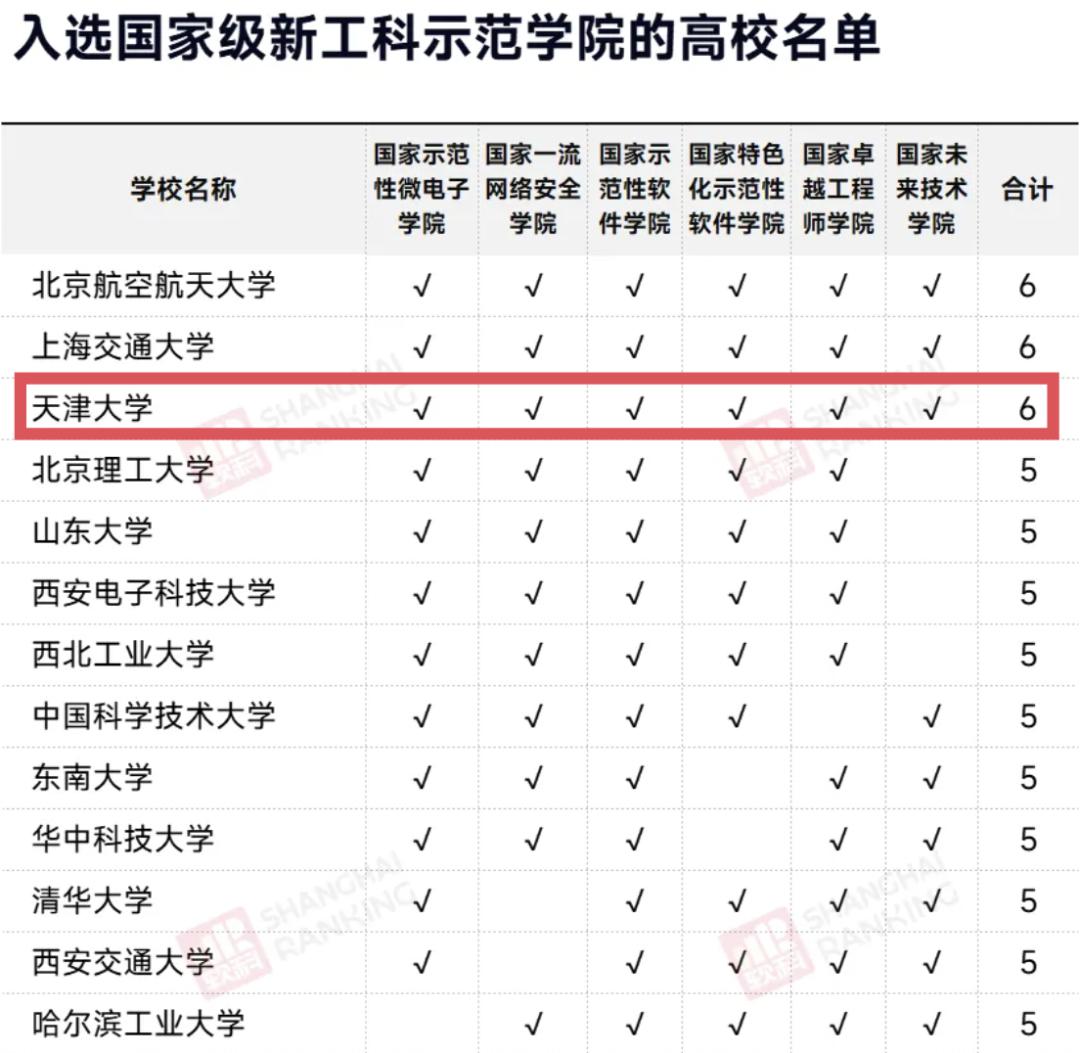
Core Insights - The article discusses the significant changes in the rankings of Chinese universities over the past decade, highlighting both the rapid rise of certain institutions and the decline of others, particularly in the context of engineering and technology education [1][2]. Group 1: Fastest Rising Universities - Tianjin University has experienced the most remarkable rise, jumping 172 places to rank 12th nationally, supported by its focus on "new engineering" education and strong performance across multiple rankings [3][4][6]. - Other notable universities that have improved their rankings include Tongji University (up 168 places), Sichuan University (up 167 places), and Beijing Institute of Technology (up 149 places) [6]. Group 2: Factors Driving Success - The success of these rising universities is largely attributed to their emphasis on engineering disciplines, aligning with China's national strategy for technological innovation [9][25]. - Tianjin University leads in establishing national-level demonstration colleges, showcasing its comprehensive approach to new engineering education [4][5]. Group 3: Emerging Research Universities - New research-oriented universities like Southern University of Science and Technology are gaining prominence, with high competition for admissions and significant funding for research [13][14]. - These institutions are strategically located in economically vibrant regions, benefiting from local industry and investment [20][26]. Group 4: Declining Institutions - Traditional liberal arts universities, such as Nankai University and Renmin University, are facing challenges in rankings due to their focus on non-engineering disciplines, which are less favored in current evaluation metrics [21][22][23]. - The shift in ranking criteria, which now emphasizes employability and international collaboration, has put these institutions at a disadvantage [8][24]. Group 5: Financial Investment in Education - Shenzhen University leads in budget allocation among local universities, with a total revenue of 7.507 billion yuan, focusing heavily on high-demand fields like artificial intelligence and biomedical research [12][10]. - The financial commitment to education and research is crucial for universities aiming to enhance their global standing and attract top talent [20][27].
中国高校第一省,又变了
36氪· 2025-07-02 00:10
Core Viewpoint - The article discusses the evolving landscape of higher education in China, highlighting the rapid establishment of new universities and the shifting distribution of institutions across provinces, particularly focusing on the implications for regional development and educational quality [5][6][10]. Group 1: Overview of Higher Education Landscape - As of 2025, there are 2,919 higher education institutions in China, including 1,365 universities and 1,554 vocational colleges [6]. - Over the past year, more than 100 new universities have been established or renamed, including 36 vocational universities transitioning to "specialized undergraduate" institutions [7]. Group 2: Provincial Distribution of Universities - Twelve provinces have over 100 universities, predominantly in the eastern and central regions [10]. - Henan leads with 178 universities, surpassing traditional educational powerhouses like Jiangsu, Shandong, and Guangdong [11][12]. - The increase in Henan's universities from 140 to over 170 in recent years reflects a significant push for higher education [12]. Group 3: Quality vs. Quantity in Higher Education - While Henan has a high number of institutions, the majority are vocational colleges, raising concerns about the quality of education [14]. - In contrast, Jiangsu has 82 undergraduate institutions, maintaining its position as the top province for quality higher education [16]. - Beijing has a unique profile with nearly 75% of its universities being undergraduate institutions, indicating a focus on educational quality [20]. Group 4: Challenges and Strategic Responses - Henan's strategy of building vocational colleges aims to address immediate educational needs and align with regional industrial demands, particularly in skill-based sectors [34][36]. - The province's gross enrollment rate in higher education is still below the national average, necessitating a focus on expanding access [33]. - The article emphasizes the need for a balance between quantity and quality in higher education, advocating for improvements in educational standards rather than mere expansion [48][57]. Group 5: Future Directions and Policy Implications - The Ministry of Education plans to direct new higher education resources towards central and western provinces, which may benefit regions like Henan [62]. - There is a push for local universities to establish branches and for collaboration with institutions from Hong Kong and Macau, enhancing educational opportunities in economically vibrant areas [66][70]. - The article concludes that while the expansion of universities is crucial, the focus should shift towards building high-quality institutions to meet future educational demands [57][74].