Tesla

Search documents
Amazon's Zoox Is Expanding Its Robotaxi to San Francisco and Las Vegas — Tesla Should Be Worried
247Wallst· 2026-03-24 14:56
Core Viewpoint - Amazon's subsidiary Zoox is expanding its fully driverless robotaxi service to San Francisco and Las Vegas, creating competitive pressure for Tesla in the autonomous vehicle market [4][6]. Company Developments - Zoox operates fully driverless robotaxis without a safety driver, while Tesla is only beginning to remove safety monitors as of January 2026 [2][6]. - Zoox has launched its first fully autonomous ride-hailing service in Las Vegas and is testing vehicles in multiple U.S. cities, establishing a first-mover advantage in high-profile markets [3][6]. Market Position and Competition - Prediction markets assign only a 14.5% probability to Tesla launching robotaxis in California by June 30, 2026, indicating a significant gap in competitive readiness [3][6]. - Tesla's shares have fallen 15.31% year-to-date to $379.68, with only 44% of analysts holding a bullish view on the stock [2][7]. Investor Sentiment - Amazon's stock is trading at $208.23, with a consensus analyst target of $280.47 and 63 buy ratings against just 4 holds, suggesting strong investor confidence [8]. - Analysts are concerned that if Tesla cannot accelerate its driverless transition, it may lose brand recognition to Zoox in key markets like Las Vegas and the Bay Area [8].


This Could Cut Tesla's Stock Price By 70%
247Wallst· 2026-03-24 12:30
Core Viewpoint - Tesla's stock price could potentially decrease by 70% if the market begins to view it primarily as a car company rather than a technology innovator [1][6]. Group 1: Sales Performance - Tesla's sales in Europe have shown a recovery, with a 29% increase in February, reaching 13,740 units, although it still trails behind BYD, which saw a 185% increase to 15,438 units [2]. - The company continues to face challenges in China, the largest EV market, where competition is fierce and sales are declining [3]. Group 2: Market Capitalization - Tesla's current market capitalization stands at $1.43 trillion, significantly higher than BYD's $144 billion and Toyota's $274 billion, indicating a potential risk if the market reassesses Tesla's value based on car sales alone [6]. - If Tesla's value becomes more dependent on car sales due to failures in its new initiatives, it could lead to a substantial decline in its market cap [5]. Group 3: Competition and Challenges - Tesla's Robotaxi has faced safety concerns due to accidents, and it competes with companies like Waymo and WeRide in the self-driving vehicle space [4]. - The expiration of the $7,500 tax credit for EV purchases in the US has negatively impacted the entire EV industry, including Tesla [3]. Group 4: Investor Sentiment - Investors have been patient with Tesla's ambitious projects, but if key initiatives fail, it could undermine confidence in the company's future prospects [8].
Musk says Tesla, SpaceX to build advanced chip manufacturing facility
Fox Business· 2026-03-24 12:04
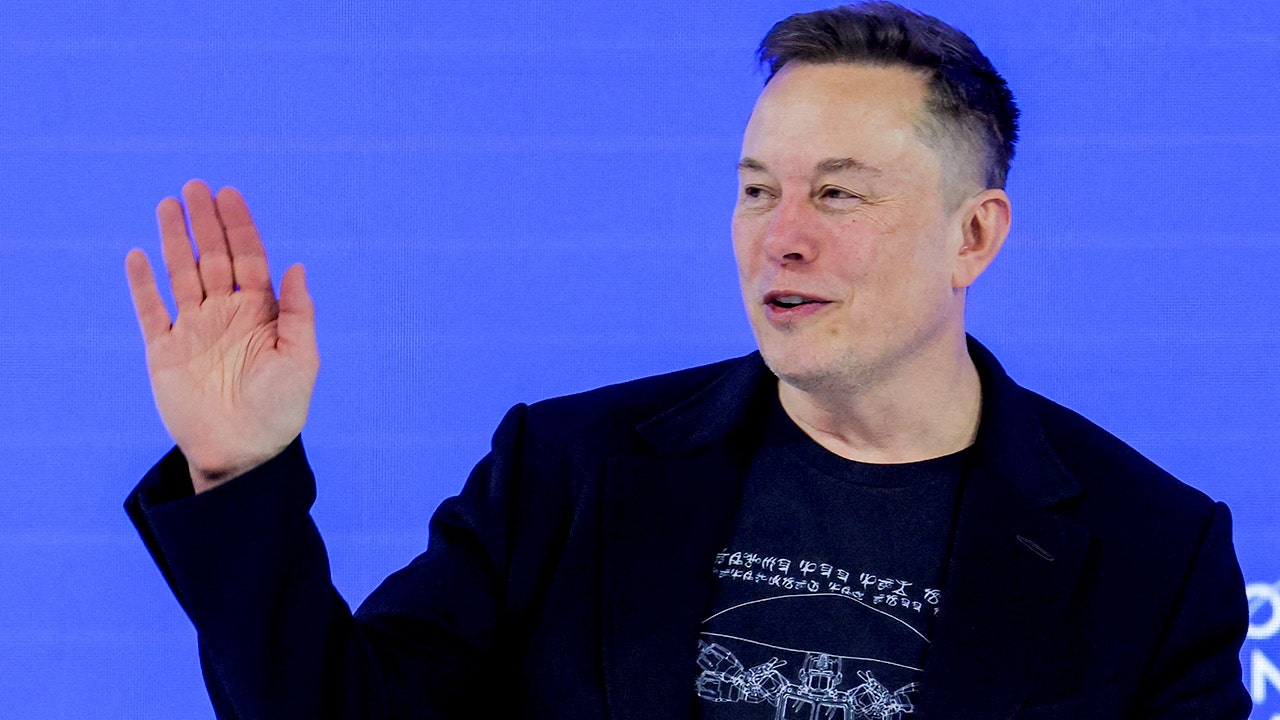
Core Viewpoint - Tesla and SpaceX are establishing an advanced chip facility named Terafab in Austin, Texas, to address the growing demand for AI chips amid a global chip shortage [1][5]. Group 1: Facility and Production - Terafab will consist of two separate fabs, each dedicated to a specific chip design [1]. - One facility will focus on AI chips for Tesla's electric vehicles and Optimus humanoid robots, while the other will cater to AI chips for SpaceX's space-based data centers [1]. - The facility is projected to produce one terawatt of computing capacity annually, significantly surpassing the current U.S. output of approximately half a terawatt [10]. Group 2: Demand and Supply - Musk emphasized that the demand for computing power from Tesla and SpaceX will exceed what can be sourced from existing suppliers, necessitating the establishment of Terafab [2][5]. - Current global chip production is insufficient to meet the future needs of these companies, which has prompted the decision to build the new facility [5]. Group 3: Special Requirements for Space Chips - The AI chips designed for SpaceX's data centers will require special characteristics to endure the harsh conditions of space, including high energy ions and elevated temperatures [6][7]. - Musk highlighted the need for chips that can operate effectively in a hostile space environment, optimizing for higher operational temperatures to reduce radiator mass [7].
Tesla Sales Rebound in Europe After Monthslong Slump
WSJ· 2026-03-24 05:43
Group 1 - Tesla's new-car registrations increased by nearly 12% year-over-year, marking its first rise in European monthly sales in over a year [1]
European car sales rise modestly in February, Tesla reverses year-long skid
Reuters· 2026-03-24 05:01
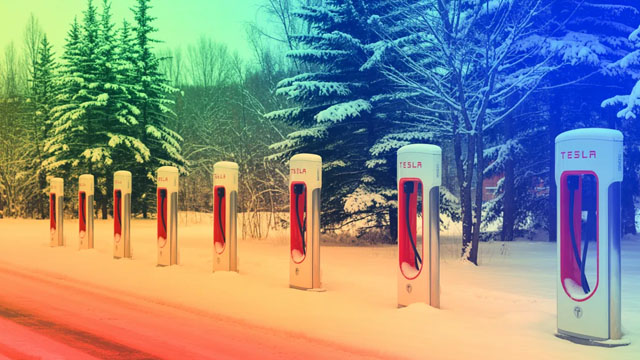
Core Insights - European car sales increased by 1.7% in February, totaling 979,321 vehicles, following a decline in January, with electric vehicle demand contributing to Tesla's growth after a year-long downturn [2][5]. Group 1: Overall Market Performance - Total car registrations in the EU, Britain, and the European Free Trade Association rose to 979,321 vehicles, marking a 1.7% increase [2]. - In the EU alone, car sales increased by 1.4%, reaching 865,437 vehicles sold [6]. Group 2: Electric Vehicle Sales - Two-thirds of the vehicles sold in February were electrified, including battery-electric, plug-in hybrid, and hybrid models [2]. - Registrations of battery electric cars rose by 20.6%, plug-in hybrids by 32.1%, and hybrid electric cars by 10.1%, collectively accounting for 67% of total registrations, up from 58.5% in February 2025 [7]. Group 3: Company-Specific Performance - Tesla's registrations increased by 11.8% year-on-year in February, ending a thirteen-month negative trend, although they remained slightly lower than BYD's sales, which more than doubled compared to the same month in 2025 [5]. - Volkswagen and Stellantis saw sales increases of 2.2% and 9.5%, respectively, while Renault experienced a decline of 14.3% [6].

Are Any of These Tesla Competitors Buys in 2026?
The Motley Fool· 2026-03-24 02:41
Core Insights - Tesla is facing increasing competition in the electric vehicle (EV) market from both pure-play EV manufacturers like Rivian and BYD, as well as legacy automakers such as Ford and General Motors [1] Tesla Overview - Tesla's current stock price is $380.94, with a market cap of $1.4 trillion and a gross margin of 18.03% [2] Rivian Analysis - Rivian is set to launch its R2 fleet, which is expected to be high-tech and affordable, and has partnered with Uber for a $1.25 billion investment over five years to provide 50,000 self-driving taxis [3][5] - Despite not being profitable, Rivian benefits from a joint venture with Volkswagen, which provides a cash cushion and contributes to a positive overall gross profit [4] - The success of Rivian's R2 launch and Uber partnership is crucial for its path to profitability, making it a speculative buy for investors [5] BYD Insights - BYD has surpassed Tesla as the world's best-selling EV maker, benefiting from a vertically integrated structure that includes in-house production of batteries and semiconductors [6] - The company is expanding globally with new factories in Southeast Asia, Europe, and Latin America, but faces declining sales in China due to increased competition [7][9] - BYD's stock has fallen nearly 27% over the past year, indicating a need for sustainable profitability overseas while regaining market share in China [9] Ford's Position - Ford is successfully transitioning into the EV market, with its EV models being affordable and competitive, although it struggles to gain momentum in the U.S. [10][11] - The company's diverse vehicle lineup, including hybrids, provides a more reliable cash flow and a larger competitive moat [12] - Ford's stock is more suited for value investors, offering a dividend yield of 5.15%, but EV sales are currently not a strong point [13] General Motors Overview - General Motors, similar to Ford, has a diverse range of gas, hybrid, and electric vehicles, and is investing in software to boost revenue [14] - GM's stock has risen over 47% in the past year, with a low forward price-to-earnings ratio under 6, indicating potential value [16] Investment Considerations - Ford and GM are established and profitable, presenting lower risk, while Rivian and BYD offer higher growth potential but come with greater speculation [17]




Elon Musk Unwraps $25 Billion Terafab Chip-Building Project
CNET· 2026-03-24 01:40
Core Viewpoint - Elon Musk announced a partnership between Tesla, SpaceX, and xAI to establish a $25 billion semiconductor manufacturing facility named Terafab in Austin, Texas, which aims to address the current chip shortage and potentially become the largest semiconductor plant globally [1] Group 1: Project Overview - The Terafab project is intended to alleviate the semiconductor supply issues by producing chips at a scale of billions, targeting a 2-nanometer process [5] - If realized, Terafab would be the most expensive semiconductor manufacturing facility, significantly enhancing the onshore chip-making infrastructure in the US [3] Group 2: Industry Context - The CHIPS Act of 2022 has led to increased investments in semiconductor facilities in the US, with companies like Nvidia already manufacturing chips in Arizona [2] - Despite the CHIPS Act funding several projects, the establishment of new semiconductor fabs in the US has been slow, highlighting the urgency for projects like Terafab [3] Group 3: Technological Ambitions - The Terafab facility aims to produce chips that will power various technologies, including AI robotics and self-driving cars, with specific chips like AI5, AI6, and D3 being developed for terrestrial and orbital applications [4] - The ambition of the Terafab project aligns with similar goals announced by Nvidia to create orbital AI data centers, indicating a broader trend in the industry towards advanced semiconductor capabilities [4]

科技未来:视觉语言动作- 自动驾驶的下一个 AI 前沿-Future of Tech_ VLA as the next AI frontier in autonomous driving
2026-03-24 01:27
Summary of Key Points from the Conference Call Industry Overview - The focus is on the autonomous driving industry, particularly advancements in AI technologies and their implications for various automakers in Japan and China [1][4][5][12][13]. Core Insights and Arguments Global Autonomous Driving Penetration - Global L2+/L2++ penetration is projected to reach 36% by 2030, up from 15% in 2025, while L3 adoption is expected to be limited due to complexity and regulatory hurdles [1][25][28]. - In China, L2+/L2++ penetration is expected to rise to approximately 70% by 2030, significantly higher than the global average [30][34]. - The US market is anticipated to see L2+/L2++ penetration of around 36% by 2030, supported by consumer acceptance of advanced features [43][47]. Japan's Approach to Autonomous Driving - Japanese automakers are adopting varied strategies for commercialization, with Toyota leading through a 'multi-pathway' approach, combining internal development and partnerships [4][9][12]. - Upcoming models like Toyota's RAV4 and Sony Honda Mobility's Afeela are expected to drive the rollout of software-defined vehicles (SDVs) [8][12]. - The Japanese market is characterized by a cautious approach, prioritizing safety and reliability, with L2+/L2++ penetration projected at 29% by 2030 [48][49]. China's Competitive Landscape - Leading Chinese EV manufacturers such as XPeng and Li Auto are at the forefront of adopting Vision-Language-Action (VLA) models, enhancing user experience and decision-making capabilities [5][13]. - The intense competition among Chinese OEMs is accelerating the development of advanced driver-assistance systems (ADAS), which are becoming essential features in premium EVs [5][13]. - Concerns remain regarding the monetization potential of these technologies and the ability of Chinese OEMs to introduce advanced features in international markets [5][13]. Technological Shifts - The transition from rule-based systems to end-to-end (E2E) architectures is being driven by the need for faster deployment and improved handling of edge cases [2][9]. - VLA models are seen as the next frontier in E2E development, with companies like Waymo leveraging advanced AI to enhance navigation capabilities [3][9]. Additional Important Insights - Traditional auto parts suppliers face challenges as automakers assert more control over software layers, potentially reducing suppliers' revenue from design changes [11]. - Japan's government is promoting SDVs as a national priority, aiming for a 30% penetration target by 2030-2035, which may accelerate strategic initiatives across the sector [12]. - The role of high-definition (HD) maps remains relevant even in E2E systems, as they provide essential localization support and training data for AI models [66][67]. Investment Implications - Ratings for Japanese automakers include Outperform for Suzuki and Toyota, Market-Perform for Honda and Denso, and Underperform for Nissan, Mazda, and Subaru [12][14]. - In China, BYD and Xiaomi are rated as Outperform, while XPeng, NIO, and Li Auto are rated as Market-Perform [14]. This summary encapsulates the key points discussed in the conference call, highlighting the advancements and strategic directions of the autonomous driving industry in Japan and China.


Is Tesla's Robotaxi Future at Risk? (Hint: Yes, but It's Complicated)
The Motley Fool· 2026-03-24 01:05
Core Viewpoint - Tesla's valuation of $1.2 trillion is significantly supported by its investments in the robotaxi market, which could potentially reach a global value of $10 trillion [1] Group 1: Regulatory Investigation - The U.S. National Highway Traffic Safety Administration (NHTSA) has escalated its investigation into Tesla's full self-driving (FSD) features, which are active in 3.2 million vehicles [2][3] - The NHTSA's investigation began with a preliminary evaluation in October 2024, initially covering 2.4 million vehicles, and was later expanded due to concerns about the system's ability to detect or warn drivers in poor visibility [3] - The investigation is critical as it directly impacts Tesla's valuation, especially given the company's recent sales decline, where it delivered fewer cars in 2025 than in 2024 [4] Group 2: Impact on Valuation and Growth - Despite slowing sales growth, Tesla's valuation continues to rise, largely driven by the anticipated growth of its robotaxi business, which currently contributes less than 1% of its revenue [5] - The ongoing regulatory probe could delay the launch of robotaxis, affecting Tesla's ability to secure early market share, with potential implications for its valuation if a recall is mandated [6] - A forced recall could challenge the market's current pricing of Tesla's robotaxi growth potential, raising questions about the sustainability of its $1.2 trillion valuation [6]
Dow Jones gains 600 points as as oil drops after Trump delays Iran strikes
Invezz· 2026-03-23 20:48
Market Reaction - US equities experienced a significant rebound, with all three major indexes closing over 1% higher as oil prices dropped following President Trump's announcement to delay military action against Iran [1][3] - The Dow Jones Industrial Average rose by 631 points, or 1.39%, closing at 46,211.53, while the S&P 500 and Nasdaq Composite increased by 1.13% and 1.39%, respectively [3] Oil Price Impact - Oil prices saw a sharp decline, with Brent crude and West Texas Intermediate both falling more than 10%, which contributed to easing inflation concerns and positively impacted equity markets [6][8] - The drop in energy prices was a key factor in the market rally, particularly benefiting cyclical stocks sensitive to economic activity and energy costs [10] Geopolitical Context - Trump's comments indicated productive conversations with Iran regarding de-escalation of hostilities, leading to a temporary pause in military strikes targeting Iranian energy infrastructure [4][5] - Despite the positive market reaction, uncertainty remains regarding the actual existence of negotiations between the US and Iran, as Iranian officials denied direct talks [7][9] Sector Performance - The rally was broad-based, with all 11 sectors of the S&P 500 advancing, particularly benefiting cyclical sectors such as airlines and cruise operators due to lower fuel costs [10] - Bank stocks also rebounded significantly, with the S&P 500 banking index posting its largest gain since the onset of the conflict [11] Investor Sentiment - The CBOE Volatility Index decreased after reaching a two-week high, indicating reduced market anxiety among investors [11] - Expectations for interest rate hikes were scaled back, with the probability of a Federal Reserve increase by December dropping to around 12% [11]