罗氏

Search documents
罗氏:将继续与欧洲药品管理局就Elevidys疗法合作
news flash· 2025-07-25 11:22
Core Viewpoint - Roche announced a negative opinion from the European Medicines Agency (EMA) regarding the conditional marketing authorization (CMA) application for the Elevidys therapy aimed at treating Duchenne muscular dystrophy (DMD) in patients aged 3 to 7 years [1] Group 1 - Roche plans to continue collaborating with the EMA to explore potential solutions due to the significant unmet medical needs in the DMD field [1]

速递|新减重药竞争力不足,罗氏终止27亿美元收购来的一款早期肥胖药物
GLP1减重宝典· 2025-07-25 02:08
Core Viewpoint - Roche has decided to discontinue the development of its early obesity candidate drug CT-173 due to competitive considerations and internal standards not being met [2][3]. Group 1: Drug Development and Discontinuation - Roche's pharmaceutical department head, Teresa Graham, stated that CT-173 did not meet the expected thresholds based on the company's development potential and market competitiveness standards [3]. - The drug CT-173, acquired for $2.7 billion from Carmot Therapeutics in December 2023, is a molecule that mimics the gut hormone PYY, which regulates insulin secretion and appetite suppression when blood sugar levels rise [3]. - Despite initial positive signals from early studies showing that CT-173 combined with CT-388 could break weight loss plateau in mouse models, the decision to abandon CT-173 was made [5][6]. Group 2: Impact on Roche's Obesity Pipeline - Graham emphasized that the abandonment of CT-173 has a minimal impact on Roche's overall obesity project, noting that the molecule is still in a very early stage [6]. - The company remains confident in its obesity pipeline and plans to continue investing in promising obesity treatment products that have the potential to be industry-leading [6]. - This decision reflects Roche's strategic direction to prioritize clinical and commercial prospects of its strongest assets [7].

医药巨头:要让美国药价“减半”很简单
Hua Er Jie Jian Wen· 2025-07-25 00:41
Group 1 - Roche's CEO Thomas Schinecker proposed a direct-to-patient sales model to potentially cut U.S. drug prices by 50% by bypassing intermediaries like Pharmacy Benefit Managers (PBMs) [1] - The current supply chain allows PBMs to capture up to 50% of the profits without bearing any risk for innovation, which Roche aims to address through its new strategy [1] - Roche is in discussions with the U.S. government regarding this proposal, highlighting the complexity of the existing distribution system as a key factor in high drug prices [1] Group 2 - The proposal comes amid increasing pressure from the Trump administration, which has signed an executive order aimed at significantly reducing drug prices, potentially by 50% to 90% [2] - The executive order mandates that U.S. drug prices should not exceed the lowest prices paid in other developed countries, posing a significant threat to the pharmaceutical industry [2] - A study by Rand Corporation indicates that U.S. drug prices are, on average, 2.3 times higher than those in 32 other OECD countries, emphasizing the need for reform [2] Group 3 - In response to potential policy impacts, Roche has taken defensive measures, including expanding production and relocating inventory to the U.S. to prepare for possible tariffs [3] - Roche announced a $50 billion investment in the U.S. for production and research, aiming to demonstrate its commitment to meeting U.S. drug needs [3] - The company maintains its 2025 performance guidance, expecting mid-single-digit sales growth and high-single-digit growth in core earnings per share [3]
罗氏2025年H1营收:狂揽390亿美元!Phesgo、Xolair等成业绩王牌
Xin Lang Cai Jing· 2025-07-24 06:53
Core Viewpoint - Roche reported a strong performance in the first half of 2025, achieving a 7% growth in total sales to CHF 30.944 billion (approximately USD 39.0512 billion) driven by robust demand for its pharmaceuticals [1] Group 1: Pharmaceutical Division Performance - The pharmaceutical division saw a notable sales increase of 10%, reaching CHF 23.985 billion, supported by five key growth drivers: Phesgo, Xolair, Hemlibra, Vabysmo, and Ocrevus, which collectively generated CHF 10.6 billion, a CHF 1.7 billion increase from the first half of 2024 [2] - Ocrevus sales reached CHF 3.506 billion, an 8% increase, with the U.S. market contributing CHF 2.462 billion, accounting for over 70% of total sales [2] - Hemlibra sales were CHF 2.421 billion, up 17%, with international markets (excluding the U.S., Europe, and Japan) showing a 66% growth [2] - Vabysmo sales increased by 18% to CHF 2.067 billion, with Europe and Japan growing by 33% and 31%, respectively [2] - Xolair experienced a remarkable 34% growth, with sales of CHF 1.445 billion, all from the U.S. market [2] - Phesgo emerged as a strong performer in breast cancer treatment, with sales of CHF 1.197 billion, a 55% increase, and international sales growing by 182% [2] Group 2: Regional Sales Performance - The U.S. market remains the primary revenue source for the pharmaceutical division, with sales of CHF 12.67 billion, a 10% increase [3] - European market sales reached CHF 4.566 billion, growing by 5%, while the Japanese market also grew by 5% to CHF 1.425 billion [3] - The international market, including Asia-Pacific and Latin America, showed the fastest growth at 14%, with sales of CHF 5.324 billion, driven by the successful promotion of products like Phesgo and Hemlibra [3] Group 3: Diagnostics Division Performance - The diagnostics division reported sales of CHF 6.959 billion, remaining flat at constant exchange rates but declining by 3% in Swiss francs [4] - Despite an 18% decline in sales in the Asia-Pacific region due to medical pricing reforms in China, strong demand for pathology solutions and blood screening tests mitigated this pressure, with pathology laboratory sales growing by 12% to CHF 0.852 billion [4] - Regional performance included a 5% growth in Europe, the Middle East, and Africa, with sales of CHF 2.485 billion, and a 6% increase in North America to CHF 2.235 billion [4] Group 4: Research and Development Progress - Roche's growth is supported by ongoing advancements in its R&D pipeline, with several key molecules entering Phase 3 development, including prasinezumab for early Parkinson's treatment and zosurabalpin for severe bacterial infections [5] - The company received regulatory approvals for Susvimo for diabetic retinopathy, Itovebi for advanced breast cancer, and Evrysdi for spinal muscular atrophy, with Phesgo's label update expected to reduce treatment costs significantly in Western Europe [5] - For the full year 2025, Roche maintains its guidance for mid-single-digit sales growth at constant exchange rates and high-single-digit growth in core earnings per share [5] Group 5: Overall Performance Summary - Overall, Roche delivered a strong performance in the first half of 2025, driven by robust growth in its pharmaceutical business and stable adjustments in its diagnostics division, with promising prospects for future development [6]
European Commission Approved DARZALEX Faspro® for Adult Patients with Smouldering Multiple Myeloma
Prnewswire· 2025-07-23 15:36
Core Insights - Halozyme Therapeutics announced the European Commission approval for DARZALEX Faspro® (daratumumab) co-formulated with ENHANZE® for treating high-risk smouldering multiple myeloma (SMM) [1][2] - This approval marks a significant advancement in early intervention strategies for multiple myeloma, addressing critical patient needs [2] Company Overview - Halozyme is a biopharmaceutical company focused on innovative solutions to enhance patient experiences and outcomes, particularly through its ENHANZE® drug delivery technology [4] - The company has successfully licensed its ENHANZE® technology to major pharmaceutical firms, including Roche, Takeda, and Pfizer, among others [4] - Halozyme has two proprietary commercial products, Hylenex® and XYOSTED®, and is involved in ongoing product development with various partners [5] Clinical Study Insights - The EC approval is based on data from the Phase 3 AQUILA study, which compared the efficacy and safety of daratumumab SC monotherapy against active monitoring in high-risk SMM patients [3]



Will Keytruda Continue to Aid MRK's Top Line Ahead of Q2 Earnings?
ZACKS· 2025-07-23 15:26
Core Insights - Merck's primary strength is in oncology, driven by its PD-L1 inhibitor, Keytruda, which constitutes nearly 50% of the company's pharmaceutical sales and is a significant contributor to top-line growth [1][9] Sales Performance - Investors are keenly awaiting the second-quarter results, particularly the sales performance of Keytruda, which is estimated to reach $7.90 billion according to the Zacks Consensus Estimate, while the company's own estimate is $7.87 billion [2] - In the last reported quarter, U.S. sales of Keytruda were negatively impacted by approximately $250 million due to the timing of wholesaler purchases, but this negative impact is expected to have reversed in the upcoming report [3] Growth Drivers - Keytruda's sales are benefiting from rapid uptake in earlier-stage indications, especially early-stage non-small cell lung cancer, along with strong momentum in metastatic indications [4] - The company anticipates continued growth from Keytruda, particularly in early lung cancer, with a projected compound annual growth rate (CAGR) of 5.4% over the next three years [4] Competitive Landscape - Keytruda faces competition from other PD-L1 inhibitors such as Bristol Myers' Opdivo, Roche's Tecentriq, and AstraZeneca's Imfinzi, which are also approved for multiple cancer types [6] - Opdivo generated $2.26 billion in sales during the first quarter of 2025, reflecting a 9% year-over-year increase, while Imfinzi and Tecentriq reported sales of $1.26 billion (up 16%) and CHF 870 million, respectively [6][7] Financial Performance - Year-to-date, Merck's shares have decreased by 17.9%, contrasting with a 2.7% decline in the industry [8] - From a valuation perspective, Merck's shares trade at a forward price/earnings ratio of 8.79, which is lower than the industry average of 14.60 and its 5-year mean of 12.81 [10] Earnings Estimates - The Zacks Consensus Estimate for Merck's 2025 earnings has decreased from $8.93 per share to $8.85, and for 2026, it has declined from $9.74 to $9.63 over the past 60 days [11]

从“狂飙”到“深潜”,创新药资本热潮冷思考|创新药观察
Hua Xia Shi Bao· 2025-07-23 01:26
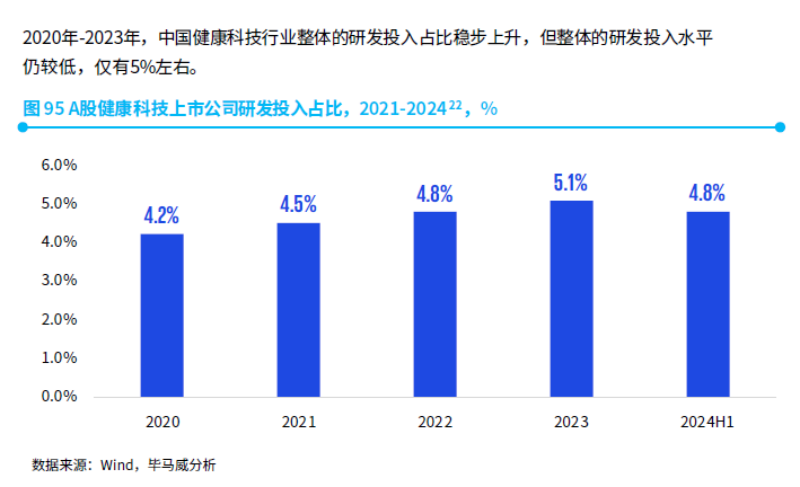
Group 1: Market Performance - The Hong Kong pharmaceutical sector has seen a dramatic increase, with over 10 innovative drug companies achieving a maximum rise of over 200% in 2023, including a notable 30% single-day surge for Sanofi due to a $1.25 billion upfront deal with Pfizer [1][2] - More than 30 healthcare companies have submitted applications for listing on the Hong Kong Stock Exchange, with two-thirds focusing on innovative drug development [1] Group 2: Investment Trends - In 2024, the Chinese health technology industry is expected to see a significant increase in License-out transactions, with total upfront payments exceeding $3 billion, surpassing the total financing amount for innovative drugs that year [3] - The first quarter of 2025 saw License-out transaction totals reach $36.9 billion, marking a 222% year-on-year increase, with major buyers including Pfizer and Roche [3] Group 3: Strategic Shifts - Health technology companies are advised to enhance their overseas strategies by establishing R&D institutions abroad and adopting various models such as License-out and NewCo to mitigate risks and improve funding [4][5] - The License-out model allows companies to transfer commercialization risks to partners while quickly recouping funds, making it a popular choice among innovative drug companies [5] Group 4: R&D Investment - A-share pharmaceutical companies have a low R&D investment ratio, with only 5.1% in 2023, indicating a need for increased investment in innovation [6] - Recent regulatory changes, including the reintroduction of listing standards for unprofitable biotech firms, aim to support high-quality technology enterprises and enhance the capital market's appeal [7][10] Group 5: Future Opportunities - The health technology sector is predicted to experience significant growth in AI pharmaceuticals, precision medicine, and surgical robotics over the next 3-5 years, with AI healthcare leading in financing events [12][15] - The AI healthcare market is projected to grow at an annual rate of 43% from 2024 to 2032, potentially reaching a market size of $491 billion by 2032 [15]
Roche’s Board of Directors proposes exchange of Genussscheine for participation certificates (Partizipationsscheine)
Globenewswire· 2025-07-22 16:45
Core Viewpoint - Roche is proposing a modernization of its capital structure, which includes the exchange of existing non-voting equity securities for participation certificates, subject to shareholder approval at the 2026 Annual General Meeting [1][3][9]. Group 1: Capital Structure Changes - The Board of Directors will propose to shareholders the exchange of non-voting equity securities ("Genussscheine") for participation certificates with a nominal value of CHF 0.001 each [1][3]. - To ensure equal treatment, the nominal value of bearer shares will be reduced from CHF 1.00 to CHF 0.001, with a cash repayment of CHF 0.999 per bearer share, totaling CHF 106,584,309 [2][9]. - The participation certificates will be listed on the SIX Swiss Exchange and will have the same dividend entitlement and liquidation proceeds as bearer shares [3][9]. Group 2: Discontinuation of Printed Materials - Roche will cease issuing printed dividend vouchers after the payment of the dividend for the financial year 2025 and the completion of the capital structure changes [4][6]. - Home custodians are encouraged to submit printed certificates and dividend vouchers to a depository bank for conversion into intermediated securities to ensure smooth future dividend payments [5][6]. Group 3: Future Practices - The transition to intermediated securities aligns with modern market practices, and Roche will no longer issue printed certificates for any equity securities in the future [6][9].
PCR仪中标周报 | 总金额830万,伯乐、罗氏、赛默飞各中标超4台荧光定量PCR仪(2025年29周)
仪器信息网· 2025-07-22 03:24
Core Insights - This week, 33 PCR instruments were awarded contracts, a decrease of 59.3% compared to last week, while the total contract amount reached 8.303 million yuan, an increase of 46.5% from the previous week [1][2]. Summary by Sections Contract Information - In the 29th week of 2025 (July 14 - July 20), a total of 12 PCR-related contracts were recorded, with 33 units awarded, reflecting a 59.3% decrease from the previous week. The total contract amount was 8.303 million yuan, which is a 46.5% increase from the last week [2][3]. Brand and Pricing Details - The brands that won contracts this week include Bio-Rad, Roche, Thermo Fisher, Benbenxiang, Hongshi, Seville, and Eppendorf. Specifically, Bio-Rad, Roche, and Thermo Fisher secured 4, 6, and 5 units respectively of the fluorescent quantitative PCR instruments, with an average contract price of 486,000 yuan per unit [2][4]. Breakdown of Contracts - The breakdown of the types of PCR instruments awarded this week includes: - 16 standard PCR instruments totaling 859,766 yuan - 15 fluorescent quantitative PCR instruments totaling 7,293,600 yuan - 2 gradient PCR instruments totaling 150,000 yuan [5].

SRPT Down After Third Death in Muscular Dystrophy Gene Therapy Program
ZACKS· 2025-07-21 16:21
Core Insights - Shares of Sarepta Therapeutics (SRPT) fell 35.9% following the death of a patient in a trial for its gene therapy SRP-9004, which is aimed at treating limb-girdle muscular dystrophy (LGMD) Type 2D [1][9] - This incident marks the third patient death linked to Sarepta's gene therapies, with previous deaths occurring in non-ambulatory patients treated with Elevidys for Duchenne muscular dystrophy (DMD) [2][9] - The FDA has placed all of Sarepta's clinical studies for LGMD on hold and requested a halt to Elevidys shipments, which the company has refused, citing safety data [5][6][9] Company Developments - Sarepta has suspended Elevidys dosing for non-ambulatory patients and is considering enhanced immunosuppression to improve safety [3] - The company has lowered its net product revenue guidance for full-year 2025 to $2.3-$2.6 billion from $2.9-$3.1 billion due to safety concerns affecting drug uptake [4] - Sarepta announced a restructuring plan to cut 36% of its workforce, aiming for annual savings of $400 million by 2026 [13][15] Regulatory Actions - The FDA has revoked Sarepta's AAVrh74 platform technology designation, citing insufficient evidence to support its safety for multiple drugs [10] - The agency continues to assess risks associated with gene therapies based on this platform, including severe liver complications [10] Product Information - Elevidys is the first and only one-time gene therapy for DMD in the U.S., approved for individuals aged four years and older [11] - The therapy has received full approval for ambulatory DMD patients but only accelerated approval for non-ambulatory patients [11] Financial Impact - Sarepta's sales from Elevidys accounted for over half of its revenue in Q1 2025, and the recent safety concerns are expected to severely impact sales in the latter half of the year [4] - The company anticipates more than $100 million in cost savings this year despite incurring one-time charges of up to $37 million [15]