
Neuralink

Search documents
上海证券:脑机接口技术展现潜在应用价值 关注核心技术突破方向
智通财经网· 2025-08-15 03:47
Group 1 - Brain-computer interface (BCI) technology is recognized as a strategic priority by multiple countries, highlighting its potential disruptive impact in the 21st century [1] - The global BCI market is currently in a critical phase of "technological breakthroughs, clinical validation, and commercial implementation" [2] - China has made significant strides in BCI technology, conducting its first invasive BCI clinical trial and becoming the second country to enter this phase [2][3] Group 2 - Various countries, especially developed nations, are accelerating their policy frameworks for BCI technology, with the U.S. government agencies like NIH investing in research and development [4] - Europe has established a strategic roadmap for neuroscience technology through initiatives like the "Human Brain Project" [4] - Countries such as Japan, South Korea, and Australia are also actively promoting their respective "brain plans" to advance BCI technology [4]
脑机接口概念延续强势 创新医疗9天6板
Xin Lang Cai Jing· 2025-08-15 01:41
【脑机接口概念延续强势 创新医疗9天6板】智通财经8月15日电,早盘脑机接口概念延续强势,创新医 疗走出9天6板,浙江东日、南京熊猫、诚益通、北陆药业、伟思医疗、三博脑科等冲高。消息面上, OpenAI及其首席执行官山姆·奥特曼将支持新脑机接口公司MergeLabs,与马斯克的Neuralink展开竞 争。MergeLabs正在进行新一轮融资,估值达8.5亿美元,新资金主要来源为OpenAI的风投。 转自:智通财经 ...

脑机接口专题政策+创新双轮驱动,商业化落地进入快车道
2025-08-14 14:48
Summary of Brain-Computer Interface Industry Conference Call Industry Overview - The brain-computer interface (BCI) industry is experiencing rapid commercialization driven by supportive policies and innovations from the Chinese National Medical Products Administration, which has optimized lifecycle regulation and clarified product registration standards, accelerating the development and commercialization of BCI medical devices [1][2] Market Potential - The global BCI market is projected to reach $2.62 billion by 2024, with the medical sector expected to grow to $15 billion and consumer medical applications exceeding $25 billion over the next decade, leading to a total market potential of over $40 billion [1][4] Key Players and Developments - Leading companies in the invasive BCI sector include Neuralink and Paradromics, which have made significant advancements in clinical trials. Domestic companies are focusing on non-invasive products, with a vibrant primary market financing environment, raising over 800 million yuan in the first half of the year [3][5] - Domestic invasive BCI companies, such as a Shanghai-based firm, have completed their first human clinical trial and expect to launch products by 2028. Other companies like Brain Tiger Technology and New Day have also made progress in clinical experiments [9][10] Technology Classification - BCI technology is categorized into non-invasive, semi-invasive, and invasive types. Invasive interfaces provide high signal quality but come with significant risks, primarily used for patients with paralysis. Non-invasive and semi-invasive technologies are safer and have promising applications in consumer markets [6][7] Application Scenarios - BCI applications span both medical and non-medical fields, including treatment for epilepsy, Parkinson's disease, depression, pain management, ADHD, Alzheimer's, and sensory impairments. Non-invasive products are also used for sleep monitoring, emotional regulation, gaming, and smart home control [4][22] Investment Opportunities - The conference highlighted two types of companies to watch: those with extensive pipelines in non-invasive BCI and those with differentiated competitive advantages in invasive, semi-invasive, and interventional products. Companies that can expand their application areas and accelerate commercialization will gain significant advantages [22][25] Future Outlook - The BCI industry is in a growth phase, with a projected market size of at least $40 billion in the medical sector within the next decade. The industry is catalyzed by policies that aim to foster the emergence of globally influential companies by 2030. The upcoming years will see an acceleration in clinical data validation for various BCI products [23][24]
加速“侵入式”脑机接口研发,智冉医疗融资超3亿元
Sou Hu Cai Jing· 2025-08-14 12:56
Core Insights - Zhiran Medical, a hard-tech company based in Haidian, Beijing, has completed over 300 million yuan in Series A financing to accelerate the development of its next-generation invasive flexible brain-computer interface (BCI) platform [1] - The financing round was led by the Social Security Fund's Zhongguancun Independent Innovation Special Fund, Junlian Capital, and IDG Capital, with participation from existing shareholders and other investors [1] - The company aims to use the funds primarily for advancing technology development and conducting large-scale clinical trials [1] Company Overview - Zhiran Medical was founded in 2022 and has raised nearly 500 million yuan in total funding, reflecting market recognition of its technology and commercialization prospects [1] - The founder and chief scientist, Fang Ying, is a researcher at the Beijing Brain Science and Brain-like Research Institute, while the CEO, Song Qi, is a serial entrepreneur with experience in AI medical enterprises [1] Industry Context - The concept of brain-computer interfaces (BCI) has gained significant attention recently due to advancements in high-bandwidth human-computer interaction, particularly through invasive BCI technology [2] - Invasive BCIs offer unique advantages in high-throughput, high-resolution signal acquisition, and precise neural modulation compared to non-invasive and semi-invasive technologies [2] - The development of invasive BCI technology is seen as a key to unlocking a new era of high-throughput human-computer interaction, similar to how deep neural networks revolutionized the AI field [2] Technological Development - Zhiran Medical has focused on the challenging route of invasive BCI technology, similar to the approach taken by international competitor Neuralink [2] - The company has developed proprietary invasive high-throughput flexible electrodes that have received patent authorization in both China and the United States, utilizing ultra-thin flexible materials to minimize brain damage during implantation [2] - The team has established a comprehensive system for invasive BCI, including hardware, software, decoding algorithms, and implantation robots, along with a clinical-grade micro-nano processing workshop and GMP facility to ensure product quality and safety [3]
宣战马斯克!奥特曼进军脑机接口
证券时报· 2025-08-14 12:48
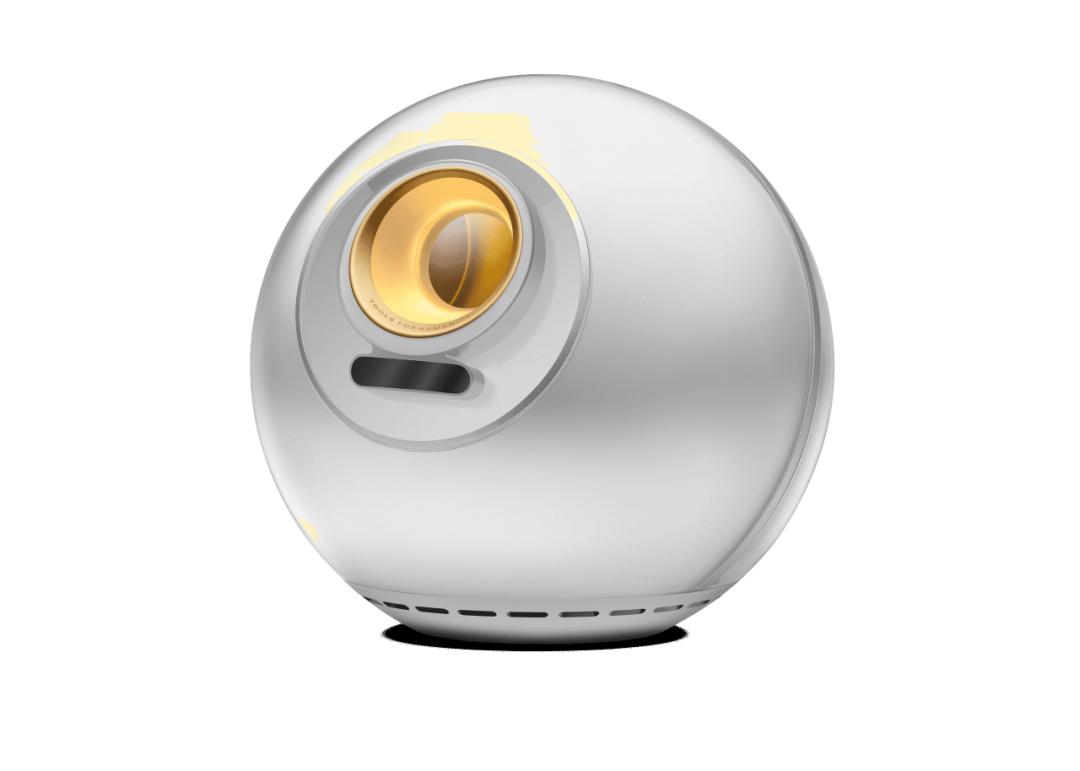
Core Viewpoint - OpenAI's co-founder Sam Altman is planning to invest in a brain-computer interface company called Merge Labs, which is seen as a direct competition to Elon Musk's Neuralink [1][9]. Group 1: Company Overview - Merge Labs is co-founded by Sam Altman and physicist Alex Blania, with a valuation of $850 million and an initial funding round of $250 million [3]. - The company aims to explore the integration of humans and machines, a concept Altman has been advocating since 2017 [3]. - Merge Labs may focus on cognitive enhancement and human-AI symbiosis rather than direct medical applications, differentiating itself from Neuralink's primary focus on treating medical conditions [11]. Group 2: Background of Co-founders - Alex Blania has a background in physics and industrial engineering and co-founded Tools for Humanity with Altman, focusing on digital identity and blockchain [4]. - Tools for Humanity's key project, WorldCoin, aims to create a unique digital identity through biometric verification [6]. Group 3: Competitive Landscape - Neuralink, founded in 2016, has made significant progress in brain-computer interface technology, with a valuation exceeding $10 billion after raising $650 million in June [10]. - Altman and Musk have engaged in public disputes, indicating a competitive rivalry between their respective companies [8][9].


宣战马斯克!奥特曼进军脑机接口
Zheng Quan Shi Bao Wang· 2025-08-14 11:58
Core Viewpoint - OpenAI's co-founder Sam Altman is planning to invest in a new brain-computer interface company, Merge Labs, which is seen as a direct competitor to Elon Musk's Neuralink [1][6]. Group 1: Company Overview - Merge Labs is co-founded by Sam Altman and physicist Alex Blania, with a valuation of $850 million and an initial funding round of $250 million, primarily from OpenAI's venture capital arm [2]. - The company aims to explore the integration of human and machine through brain-computer interfaces, a concept Altman has advocated since 2017 [2][3]. Group 2: Background of Founders - Alex Blania, co-founder of Merge Labs, has a background in physics and industrial engineering and previously co-founded Tools for Humanity, focusing on digital identity and blockchain [3]. - Tools for Humanity has developed WorldCoin, which includes a biometric device called "Orb" for unique human identity verification [5]. Group 3: Competitive Landscape - Neuralink, founded in 2016, has made significant advancements in brain-computer interface technology, with a valuation exceeding $10 billion after raising $650 million in June [7]. - While Neuralink focuses on medical applications, Merge Labs is positioned to address broader cognitive enhancement and human-AI symbiosis, differentiating its approach from Neuralink's medical focus [7][8]. Group 4: Strategic Implications - Merge Labs may integrate WorldCoin's digital verification with brain-computer interface technology to tackle fundamental issues related to identity, privacy, and economic sustainability in the AI era [8].
脑机接口行业专题报告(二):战略价值凸显,全球加速竞逐
Shanghai Securities· 2025-08-14 11:22
Investment Rating - The report maintains an "Overweight" rating for the pharmaceutical and biotechnology industry, specifically focusing on the brain-computer interface (BCI) sector [1]. Core Insights - The brain-computer interface is recognized as a "disruptive technology of the 21st century," with strategic significance highlighted by multiple countries prioritizing its development [3]. - The global BCI market is in a critical phase of "technological breakthroughs, clinical validation, and commercial implementation," with significant advancements in various countries [4]. - The potential market size for BCI applications in the medical field is estimated to reach between $40 billion and $145 billion by 2030-2040, with serious medical applications projected at $15 billion to $85 billion [5]. Summary by Sections Section 1: Global BCI Industry Development - The BCI industry has evolved from concept to commercialization over the past fifty years, with significant milestones in research and application phases [8][9]. Section 2: Industry Growth and Company Numbers - The global BCI market reached $1.98 billion in 2023, with over 500 representative companies worldwide, primarily concentrated in the US and China [10]. Section 3: National Strategic Planning - Various countries have released strategic plans to accelerate BCI development, with differing focuses based on regional priorities [14]. Section 4: US BCI Development and Policy - The US has a comprehensive policy framework supporting BCI development, with significant investments from agencies like NIH and DARPA [16][18]. Section 5: European "Human Brain Project" - The EU's "Human Brain Project" aims to simulate human brain functions and has established a roadmap for future research and ethical considerations [20][23]. Section 6: Initiatives in Japan, South Korea, and Australia - Japan, South Korea, and Australia have launched their respective brain initiatives to support BCI research and applications, focusing on various neurological diseases [24]. Section 7: China's Policy Support for BCI - China's BCI industry has seen rapid growth due to supportive policies, with significant investments and plans at both national and local levels [25][29].
龙虎榜复盘 | RWA概念今日反弹大涨,脑机接口资金活跃
Xuan Gu Bao· 2025-08-14 10:55
Group 1: Stock Market Activity - Today, 35 stocks were listed on the institutional trading list, with 16 stocks seeing net purchases and 19 stocks experiencing net sales [1] - The top three stocks with the highest net purchases by institutions were: Innovation Medical (128 million), Youfang Technology (76.31 million), and Nanmo Biology (56.58 million) [1][2] Group 2: Company Developments - Youfang Technology has announced plans to engage in financing leasing to support its cloud computing services, driven by the growing demand for computing power in the artificial intelligence sector [2] - The company has previously focused on providing cloud infrastructure products to meet customer needs for storage, computing, and transportation [2] Group 3: Brain-Computer Interface Industry - The brain-computer interface product developed by Botuo Bio has entered the clinical trial phase, showing significant recovery effects in the first treated depression patient, with plans to start medical device registration in 2026 [4] - The Chinese government has issued policies to promote innovation in the brain-computer interface industry, with expectations for breakthroughs in key technologies by 2027 [4] - McKinsey predicts that the global market for medical applications of brain-computer interfaces could reach $40 billion by 2030 and $145 billion by 2040, with specific segments for central nervous system disease treatment and emotional assessment [4]


传奥尔特曼已注资脑机接口公司Merge Labs
Sou Hu Cai Jing· 2025-08-14 03:35
Group 1 - OpenAI co-founder and CEO Sam Altman is supporting a startup called Merge Labs, which aims to compete with Elon Musk's Neuralink in the brain-computer interface sector [1][2] - Merge Labs recently raised funding at a valuation of $850 million (approximately 6.11 billion RMB), primarily from OpenAI's venture capital team [1] - Altman is not only an investor but also a co-founder of Merge Labs, although he will not be involved in day-to-day management [1] Group 2 - Merge Labs plans to raise an additional $250 million (approximately 1.797 billion RMB) from OpenAI and other investors, with negotiations still in early stages [1] - Elon Musk's Neuralink, founded in 2016, claims to maintain a "leading position" in the brain-computer interface industry, having completed a $650 million funding round at a $9 billion valuation earlier this year [2] - The historical relationship between Musk and Altman has been competitive since Musk left the OpenAI board in 2018 due to disagreements [2]
OpenAI进军脑机接口 行业临床技术接连突破(附概念股)
Zhi Tong Cai Jing· 2025-08-14 00:35
2025年8月13日,据《英国金融时报》报道,OpenAI及CEO Sam Altman将联合Worldcoin创始人Alex Blania成立新公司Merge Labs,正式进军脑机接口赛道,直面马斯克的Neuralink。 Merge Labs本轮融资估值约8.5亿美元,主要资金由OpenAI风投提供,Altman将以联合创始人身份参 与。 Altman曾经提出,人类与AI最终将融合,脑机接口与AI聊天机器人是实现这一愿景的两大核心路径。 ChatGPT已实现前者,Merge Labs则将承接其在脑机接口上的布局。 此次OpenAI进军脑机接口,有望给脑机接口行业带来深远影响。 中国脑机接口在无线微创、侵入式、半侵入式及闭环刺激等多路线实现临床突破:宣武/天坛联合清华 完成无线微创植入"NEO",华山携手阶梯医疗、脑虎科技实现高精度脑控与意念对话,天坛/北大一 院"北脑一号"达成全球首例中文实时解码,清华与品驰医疗闭环DBS助力帕金森智能治疗,南开大学实 现血管介入式脑机接口在康复治疗中的临床转化。 国际上,Neuralink已在多例患者中实现光标控制、下肢运动,Synchron等介入式BCI进入多国临床 ...