
赛诺菲

Search documents
全球胰岛素原料药市场前10 强生产商排名及市场占有率
QYResearch· 2025-08-21 09:42
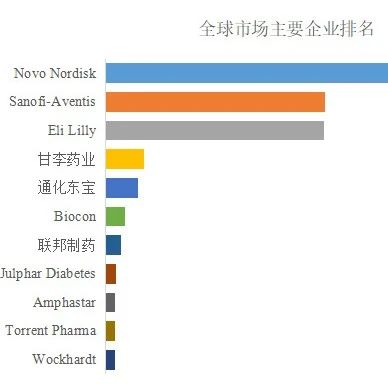
Core Viewpoint - The global insulin raw material market is projected to reach USD 3.76 billion by 2031, with a compound annual growth rate (CAGR) of 4.1% in the coming years [1][6]. Market Overview - Insulin raw materials are active pharmaceutical ingredients used in the production of various insulin formulations, crucial for diabetes management [1]. - The market is dominated by major players such as Novo Nordisk, Sanofi-Aventis, and Eli Lilly, with the top five companies holding approximately 88.0% of the market share in 2024 [6][16]. Product Segmentation - Insulin analogs represent the largest segment, accounting for about 82.0% of the market share [8]. - Rapid-acting insulin is the primary demand source, making up approximately 34.9% of the market [10]. Market Drivers - The increasing prevalence of diabetes, especially in developing countries and aging populations, is driving demand for insulin formulations, thereby expanding the upstream raw material market [13]. - Advances in biotechnology and production processes, including recombinant DNA technology, have made insulin production more efficient and cost-competitive [13]. - Countries are promoting generic drug policies to encourage local production of insulin raw materials, which supports the growth of domestic industries [13]. Challenges - The market faces high technical barriers, making it difficult for small and medium enterprises to enter and achieve stable production [14]. - The international market is highly concentrated, with major multinational companies dominating, posing challenges for new entrants in customer acquisition and product recognition [14]. - Stricter regulatory requirements, including GMP compliance and data integrity, are critical for market entry, necessitating continuous investment from companies [14]. - Fluctuations in raw material prices, stringent environmental policies, and geopolitical factors may disrupt the stability of raw material production and exports [14].

广州若羽臣上半年收入超13亿元 家清品牌绽家增长157%
Nan Fang Du Shi Bao· 2025-08-19 14:50
Core Viewpoint - The company, Ruoyuchen, reported significant growth in its 2025 semi-annual financial results, with revenue reaching 1.319 billion yuan, a year-on-year increase of 67.55%, and net profit of 72.63 million yuan, up 85.60% [2][3]. Revenue Breakdown - The self-owned brand business generated 603 million yuan in revenue, a substantial increase of 242.42%, accounting for 45.75% of total revenue [4]. - The brand Zhanjia achieved revenue of 444 million yuan, growing by 157.11%, while the health product brand FineNutri generated 160 million yuan [2][4]. Business Model and Growth Drivers - Ruoyuchen operates as an e-commerce service provider, managing online stores and marketing for brands, evolving from a pure agency model to brand management and self-owned brands [2]. - The brand management segment reported revenue of 335 million yuan, a growth of 52.53%, indicating a new growth curve for the company [7]. Sales Channels and Performance - The sales channel analysis shows that Douyin accounted for the highest sales proportion at 37.24%, with sales amounting to 489 million yuan during the reporting period [6]. - During the 618 shopping festival, the overall GMV for Zhanjia increased by over 160%, with significant growth across multiple platforms [4]. International Expansion Plans - The company plans to issue H-shares and list on the Hong Kong Stock Exchange, aiming to raise funds for product development, brand building, and global expansion [10]. - Ruoyuchen is considering entering the Southeast Asian market, where the cleaning products sector is projected to grow significantly, particularly in laundry products [11]. Legal Disputes - The company faced legal disputes with Mead Johnson and Mentholatum, involving contract and trademark issues, but has taken steps to mitigate potential impacts on its operations [8][9].
Sanofi: Information concerning the total number of voting rights and shares - July 2025
Globenewswire· 2025-08-18 16:30
Group 1 - The total number of issued shares for Sanofi as of July 31, 2025, is 1,227,468,973 [1] - The number of real voting rights, excluding treasury shares, is 1,353,375,756 [1] - The theoretical number of voting rights, including treasury shares, is 1,361,835,529 [1] Group 2 - Sanofi is a French société anonyme with a registered share capital of €2,454,937,946 [1] - The company is registered at the Paris Commercial and Companies Registry under number 395 030 844 [1] - Additional information regarding shares and voting rights is available on Sanofi's official website [2]


Can Eylea HD and Dupixent Profits Revive Regeneron Stock?
ZACKS· 2025-08-15 15:11
Core Insights - Regeneron's performance has been lackluster in 2023, with Eylea sales under pressure, but the company achieved revenue growth in Q2, providing some relief to investors [1][2] Eylea Performance - Eylea, a key drug for Regeneron, has faced declining sales due to competition from Roche's Vabysmo, which has seen significant uptake [3][4] - Eylea HD sales in the U.S. increased by 29% in Q2, driven by higher sales volumes and demand [4] - Regulatory approvals for Eylea HD are expected to be delayed until August 2025 due to issues identified during an FDA site inspection [5] Dupixent Contributions - Dupixent sales have positively impacted Regeneron's top line, with the drug approved for multiple conditions, including atopic dermatitis and asthma [7][8] - Recent label expansions for Dupixent are expected to further boost sales, with strong demand trends noted [11] Oncology Portfolio Expansion - Regeneron is expanding its oncology portfolio, with Libtayo sales reaching $561.3 million in the first half of 2025, an 18% year-over-year increase [12] - The FDA has accepted a supplemental biologics license application for Libtayo, with a target action date in October 2025 [13] - Recent FDA approvals for linvoseltamab (Lynozyfic) and odronextamab (Ordspono) have strengthened the oncology franchise, although odronextamab faced a setback due to a complete response letter from the FDA [14][15] Future Outlook - The progress in the oncology portfolio and consistent label expansions for Dupixent are expected to support Regeneron's top-line growth [16][17] - Pipeline setbacks, particularly related to the studies on itepekimab for COPD, have raised concerns among investors [18]


MacroGenics Reports Second Quarter 2025 Financial Results and Highlights Key Strategic Priorities
GlobeNewswire News Room· 2025-08-14 20:01
Core Insights - MacroGenics, Inc. is focused on developing innovative antibody-based therapeutics for cancer treatment and has reported financial results for Q2 2025, highlighting corporate progress and strategic priorities for the upcoming years [1][2][11]. Corporate Updates - Eric Risser has been appointed as the new President and CEO, succeeding Scott Koenig, who served for 24 years. Risser has previously generated over $550 million in non-dilutive capital for the company [4]. - The company aims to enhance its focus and capital efficiency while advancing its pipeline, with updates expected on strategic priorities [2][7]. Financial Performance - As of June 30, 2025, MacroGenics reported cash, cash equivalents, and marketable securities of $176.5 million, down from $201.7 million at the end of 2024, providing a cash runway through the first half of 2027 [7][15]. - Total revenue for Q2 2025 was $22.2 million, a significant increase from $10.8 million in Q2 2024, driven by higher contract manufacturing revenue [11][14]. - Research and development expenses decreased to $40.8 million in Q2 2025 from $51.7 million in Q2 2024, while selling, general, and administrative expenses also fell to $9.3 million from $14.4 million [11][14]. Pipeline and Programs - The company is advancing several key programs, including lorigerlimab, MGC026, MGC028, and MGC030, with ongoing clinical trials and plans for IND submissions [5][8][12]. - Lorigerlimab is currently being evaluated in two Phase 2 studies for metastatic castration-resistant prostate cancer and gynecologic cancers [9]. - MacroGenics is developing three antibody-drug conjugates (ADCs) in collaboration with Synaffix, focusing on innovative payloads [6]. Partnered Programs - The company has entered into a royalty purchase agreement with Sagard Healthcare Partners for ZYNYZ®, receiving $70 million upfront [7]. - MacroGenics retains economic interests in ZYNYZ and is eligible for up to $540 million in additional milestones [12]. - The company also has ongoing collaborations with Gilead Sciences for MGD024, with potential milestone payments totaling $1.7 billion [12].

减肥药行业关键节点,WHO计划9月发布GLP-1应用指南
Xuan Gu Bao· 2025-08-14 07:01
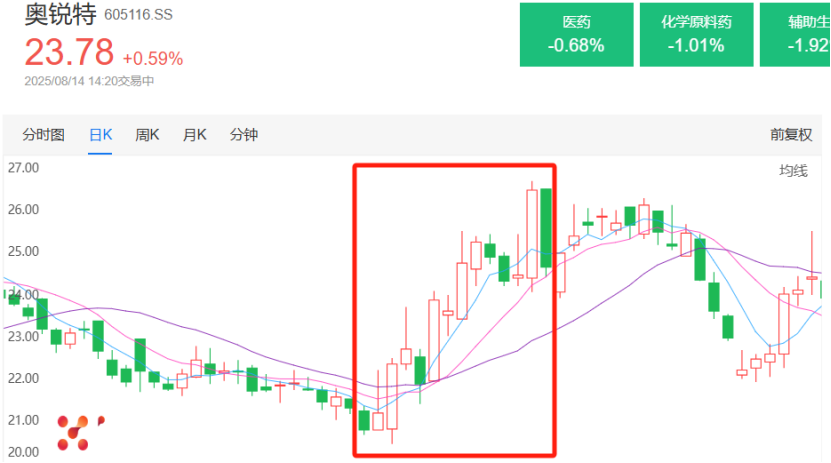
Group 1 - The World Health Organization (WHO) is set to release new guidelines for GLP-1 therapies for treating adult obesity by September 2025, marking a significant policy shift in addressing the global obesity crisis [1] - The guidelines aim to clarify the clinical indications and applications of GLP-1 receptor agonists (RAs), which are expected to be the first officially recommended medications for adult obesity treatment by WHO [1] - In China, the diabetes prevalence has reached 11.9%, with a treatment rate of only 33%, indicating a substantial unmet medical need, particularly among the over 600 million overweight individuals [1] Group 2 - The GLP-1RA market in China grew from 9.62 billion yuan in 2020 to 10.74 billion yuan in 2023, with a compound annual growth rate (CAGR) of 3.7%. It is projected to reach 71.7 billion yuan by 2029, with a CAGR of 22.2% [2] - On June 26, 2024, a joint initiative by 16 departments in China to implement a "Weight Management Year" led to a significant stock price increase for Aorite, which rose by 9% and continued to rise thereafter [3] Group 3 - Currently listed companies with GLP-1 drugs include major pharmaceutical firms such as Novo Nordisk, Eli Lilly, and AstraZeneca, with various products targeting diabetes and weight management [5][6] - The GLP-1RA industry chain includes a range of companies involved in the development and commercialization of these therapies, highlighting the growing interest and investment in this sector [6]


Press Release: Sanofi’s rilzabrutinib earns orphan designation in the EU for IgG4-related disease
Globenewswire· 2025-08-14 05:00
Core Insights - Sanofi's rilzabrutinib has received orphan designation from the European Medicines Agency for IgG4-related disease, indicating its potential as a treatment for this rare condition [1] - The drug demonstrated efficacy in a phase 2 study, showing a reduction in disease flare and other markers over a 52-week treatment period [2] - Rilzabrutinib has also received orphan designations for other conditions, including immune thrombocytopenia and warm autoimmune hemolytic anemia, and is under regulatory review in multiple regions [3][4] Group 1: Rilzabrutinib Overview - Rilzabrutinib is a novel oral reversible covalent Bruton's tyrosine kinase inhibitor, aimed at treating various rare immune-mediated diseases by restoring immune balance [5] - The drug's mechanism involves selective inhibition of BTK, which is crucial in immune-mediated disease processes [5] Group 2: IgG4-Related Disease - IgG4-related disease is a chronic immune-mediated condition that can affect multiple organs and lead to severe complications, with an estimated prevalence of 8 in 100,000 adult patients in the US annually [6] Group 3: Sanofi's Commitment - Sanofi is focused on advancing new medicines for rare diseases, as evidenced by the orphan designations and ongoing clinical studies for rilzabrutinib [8]
跨国药企上半年“成绩单”出炉
Guo Ji Jin Rong Bao· 2025-08-13 11:49
Group 1: Industry Overview - Major multinational pharmaceutical companies (MNCs) have reported their performance for the first half of 2025, with Johnson & Johnson leading with revenues of $45.636 billion, followed by Roche and Merck [1][2] - Nearly 200 drugs are expected to lose patent protection in the coming years, including at least 69 blockbuster drugs with annual sales exceeding $1 billion, leading to an estimated cumulative sales loss of over $300 billion for MNCs [2][3] - The competitive landscape among the top ten pharmaceutical companies remains intense, with close revenue figures among companies ranked fourth to eighth [2] Group 2: Company Performances - Johnson & Johnson reported a revenue of $45.636 billion for the first half of 2025, a year-on-year increase of 4.1%, driven by its innovative pharmaceuticals and medical technology segments [3] - Merck's total revenue was $31.335 billion, a decline of 2% year-on-year, with significant drops in its China revenue, which fell by 70% to $1.075 billion [4] - Eli Lilly achieved a remarkable revenue growth of 41%, reaching $28.286 billion, with its weight loss drug Mounjaro seeing an 85% increase in sales [5][6] - AstraZeneca reported a revenue of $28.045 billion, an 11% increase, with its China revenue growing by 5% to $3.515 billion, making it the top performer in the Chinese market [7] Group 3: Market Dynamics - The competition for the title of "King of Drugs" is intensifying, with Eli Lilly's two weight loss drugs nearing the sales figures of Novo Nordisk's semaglutide [6] - MNCs are increasingly focusing on the Chinese market, with a notable increase in collaborations with domestic innovative pharmaceutical companies, resulting in 52 outbound deals in the first half of 2025 [7][8] - The growth rates of MNCs in China are shifting, with some companies like Merck experiencing significant declines in sales, while others like AstraZeneca and Eli Lilly are capitalizing on the market opportunities [8]


药盒里的潮汐进退:进口原研药高溢价神话崩塌与国产药逆袭
Hua Xia Shi Bao· 2025-08-12 11:07
Core Insights - The shift from imported original research drugs to domestic generics and innovative drugs is significant, with the market share of imported original cancer drugs in top-tier hospitals dropping from 68% in 2021 to 34% in 2024, while domestic generics and innovative drugs now account for 66% [1][5][10] - The decline of imported original drugs is attributed to aggressive pricing strategies by multinational pharmaceutical companies and the cost advantages of domestic generics [1][6][10] - Patients are increasingly accepting domestic drugs, with many reporting satisfactory treatment outcomes and reduced financial burdens [4][12] Industry Dynamics - Multinational pharmaceutical companies are accelerating localization efforts, expanding production bases, and upgrading R&D centers to balance cost and innovation [2][13] - The Chinese government's policies, including centralized drug procurement and price negotiations, are effectively reducing drug prices and reshaping the market landscape [10][16] - The acceptance of domestic drugs is growing among patients, driven by improved quality and increased awareness [5][12] Market Trends - The usage of imported original cancer drugs has significantly decreased, with one hospital reporting a drop from over 200 units per month to around 50 units, while the usage of domestic innovative drugs has more than doubled [4][5] - The market for imported original drugs is facing challenges, with a low bid success rate in centralized procurement, leading to many companies withdrawing from public hospital markets [6][10] - The trend of patients preferring cost-effective domestic drugs is supported by studies showing equivalent efficacy and safety compared to original drugs [12][16] Future Outlook - The pharmaceutical industry is expected to continue evolving, with multinational companies adapting their strategies to maintain market presence through innovation and collaboration with local firms [13][14] - The Chinese market is becoming increasingly competitive, with domestic companies focusing on differentiated innovation to capture market share [11][14] - Ongoing reforms in the healthcare system aim to ensure that patients have access to a wider range of affordable and high-quality medications [16]
AI制药行业动态点评:晶泰控股收到5100万美金首付款,AI制药商业模式得到验证
Shanxi Securities· 2025-08-12 07:52
Investment Rating - The report maintains an investment rating of "Leading the Market-A" for the pharmaceutical AI drug development industry [1]. Core Insights - The collaboration between CrystalTech Holdings and DoveTree, which includes a $51 million upfront payment, validates the AI drug development business model and reflects the accelerating commercialization of AI pharmaceutical companies [1][4]. - The AI pharmaceutical sector is on the brink of an explosive growth phase, characterized by three major trends: deepening technological integration, diversification of collaboration models, and the gradual establishment of regulatory frameworks [5]. Summary by Sections Industry Performance - The pharmaceutical sector has shown significant market performance over the past year, with a notable increase in high-value collaborations in the AI drug development space [1]. Key Developments - CrystalTech Holdings signed a strategic cooperation agreement with DoveTree to develop drug candidates in oncology and immune inflammation, receiving a $51 million upfront payment and potential future payments totaling up to $5.89 billion [1][4]. - The report highlights several high-value collaborations in the AI pharmaceutical field, indicating a strong demand from traditional pharmaceutical companies for AI technologies [4]. Future Outlook - The report anticipates that AI pharmaceutical companies will increasingly engage in downstream clinical development to share higher profits, moving beyond traditional licensing agreements [5]. - The FDA and other regulatory bodies are beginning to establish guidelines for the evaluation of AI in drug development, which will accelerate the standardization process within the industry [5].