
库卡

Search documents
2025世界机器人大会即将召开
Zhong Guo Jing Ji Wang· 2025-08-05 00:00
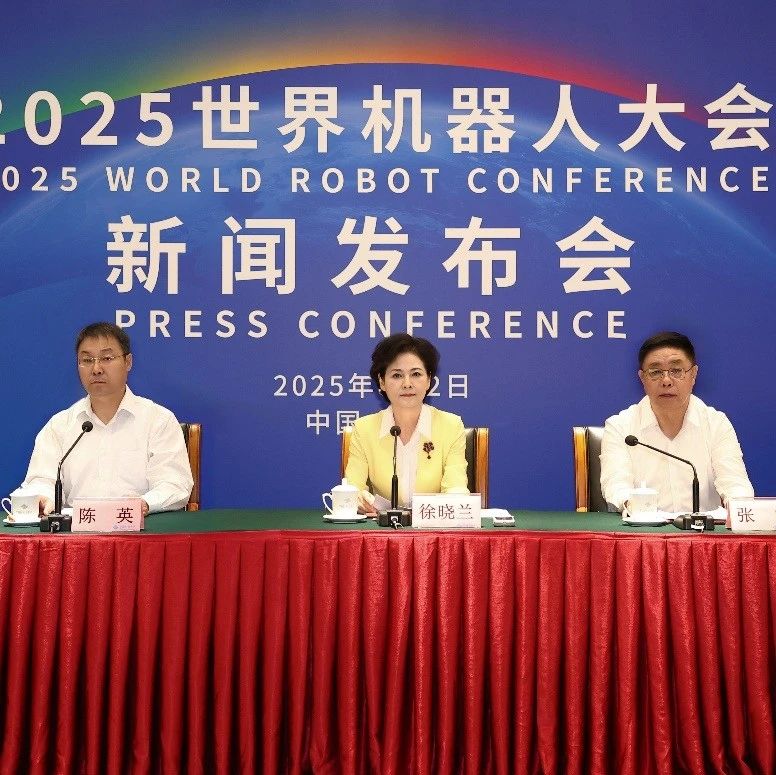
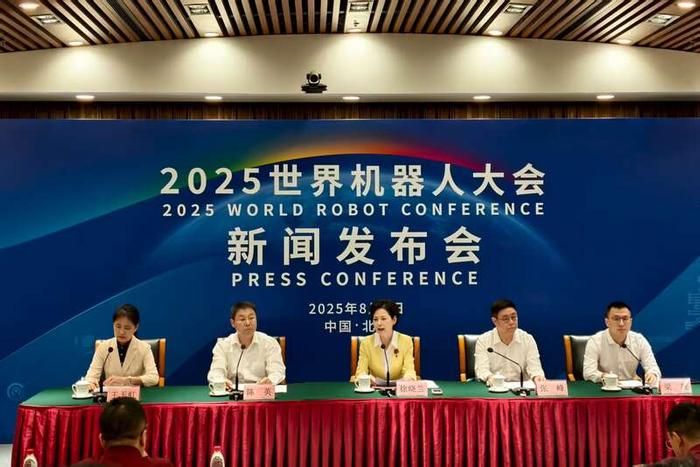
转自:环球网 梁靓介绍,北京经济技术开发区将在本届世界机器人大会期间同步举办"E-Town 机器人消费节"。首 届"E-Town机器人消费节"以"Robo惠购,亦庄必Go!"为主题,由"体验4大消费场景+构建4大服务体 系"构成,地点涵盖北京亦创国际会展中心、机器人大世界以及北京亦庄龙湖天街、大族广场等6大商 圈。活动对象包括企业端用户、线下消费用户、线上消费者等,打造机器人购物体验、特色餐饮、文创 产品、打卡活动等服务体系。通过举办机器人消费节,塑造具有亦庄特色的机器人消费IP,激发企业端 与消费端双向活力,实现活动影响力与消费转化的双重提升。 8月2日,2025世界机器人大会新闻发布会在北京召开。全国政协常委、致公党中央副主席、全国妇联副 主席、工业和信息化部原副部长、中国电子学会理事长徐晓兰出席发布会并介绍世界机器人大会举办十 年的情况。中国电子学会理事会党委书记、中国人形机器人百人会理事长张峰介绍中国人形机器人百人 会工作情况。中国电子学会副理事长兼秘书长、总部党委书记陈英发布2025世界机器人大会议程。北京 经济技术开发区管委会副主任梁靓介绍E-Town机器人消费节相关情况。发布会由中国电子学会副秘 ...

昆山不遗余力打造新千亿级产业集群“具身智能”为钥 解锁“无限之门”
Xin Hua Ri Bao· 2025-08-04 23:51
Core Viewpoint - The conference in Kunshan highlighted the urgency and potential of the embodied intelligence industry, showcasing various applications of AI in real-world scenarios, and emphasizing Kunshan's strategic focus on this emerging sector [1][2]. Urgency: Seizing Future Opportunities - Embodied intelligence refers to AI with a physical presence, such as robots and drones, which can perceive, learn, and interact with their environment. Kunshan aims to capitalize on this promising frontier [2]. - Kunshan has a robust industrial foundation with a 700 billion yuan electronic information sector and a 300 billion yuan equipment manufacturing industry, contributing over 1.2 trillion yuan to industrial output last year [2]. - The city has established a public smart infrastructure that collects 1.5 million data points daily, creating a fertile ground for the development of embodied intelligence applications [2]. - Since 2008, Kunshan has prioritized the robotics industry, attracting leading companies and creating a complete industrial ecosystem from R&D to application [2]. Challenges: Undertaking Difficult but Necessary Tasks - Companies face significant challenges in developing embodied intelligence technologies, including long development cycles, high technical barriers, and ecosystem monopolies [4]. - A company introduced a developer platform for embodied intelligence robots, aiming to lower entry barriers and enhance computational power across the development chain [4]. - The industry is characterized by a commitment to overcoming technical challenges and building a collaborative ecosystem [6]. Expectations: Becoming a New Urban Engine - The "Kunshan Action Plan for Promoting Innovation in the Embodied Intelligence Industry (2025-2027)" aims to create a new trillion-yuan industry cluster by focusing on AI servers, intelligent robots, smart connected vehicles, and low-altitude aircraft [7]. - By 2027, Kunshan targets to exceed 100 billion yuan in the embodied intelligence and AI server industry, 50 billion yuan in intelligent robots, 200 billion yuan in smart connected vehicles, and 50 billion yuan in low-altitude aircraft [7]. - The city is positioned to leverage its manufacturing capabilities and application scenarios to drive rapid growth in the embodied intelligence sector [8]. - A demand list for embodied intelligence applications has been released, identifying 50 innovation needs across various industries, inviting global innovation [8].
“让机器人更智慧,让具身体更智能” 2025世界机器人大会新闻发布会在京召开
Xin Lang Cai Jing· 2025-08-04 01:35
专题:2025世界机器人大会:AI大模型赋能机器人与具身智能产业新范式交流活动 来源:世界机器人大会 8月2日,2025世界机器人大会新闻发布会在北京召开。全国政协常委、致公党中央副主席、全国妇联副 主席、工业和信息化部原副部长、中国电子学会理事长徐晓兰出席发布会并介绍世界机器人大会举办十 年的情况。中国电子学会理事会党委书记、中国人形机器人百人会理事长张峰介绍中国人形机器人百人 会工作情况。中国电子学会副理事长兼秘书长、总部党委书记陈英发布2025世界机器人大会议程。北京 经济技术开发区管委会副主任梁靓介绍E-Town机器人消费节相关情况。发布会由中国电子学会副秘书 长王天虹主持。 徐晓兰介绍世界机器人 大会举办十年的情况 张峰介绍中国人形机器 人百人会工作情况 徐晓兰表示,今年是习近平总书记向首届世界机器人大会致贺信十周年。十年来,世界机器人大会已成 为全球机器人领域的"创新引领盛会" "产业促进盛会" "应用推广盛会" "国际合作盛会",推动机器人在 四个方面实现了新突破。一是科技创新突破。2024年,我国机器人专利申请量占全球机器人专利申请总 量的2/3。机器人核心零部件形成丰富的自有产品谱系。机器人 ...

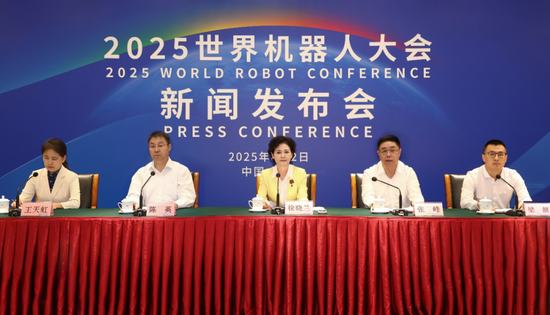
“让机器人更智慧,让具身体更智能”2025世界机器人大会新闻发布会在京召开
机器人圈· 2025-08-03 13:13
徐晓兰介绍世界机器人大会举办十年的情况 徐晓兰 表示, 今年是习近平总书记向首届世界机器人大会致贺信十周年。十年来,世界机器人大会已成为全球机器 人领域的 " 创新引领盛会 " " 产业促进盛会 " " 应用推广盛会 " " 国际合作盛会 " ,推动机器人在四个方面实现了 新突破。 一是 科技创新突破。 2024 年,我国机器人专利申请量占全球机器人专利申请总量的 2/3 。机器人核心 2025 世界机器人大会新闻发布会在京召开 8 月 2 日, 2025 世界机器人大会新闻发布会在北京召开。全国政协常委、致公党中央副主席、全国妇联副主席、 工业和信息化部原副部长、中国电子学会理事长徐晓兰出席发布会并介绍世界机器人大会举办十年的情况。中国电子 学会理事会党委书记、中国人形机器人百人会理事长张峰介绍中国人形机器人百人会工作情况。中国电子学会副理事 长兼秘书长、总部党委书记陈英发布 2025 世界机器人大会议程。北京经济技术开发区管委会副主任梁靓介绍 E- TOWN 机器人消费节相关情况。发布会由中国电子学会副秘书长王天虹主持。 陈英介绍, 2025 世界机器人大会 主论坛 设置 " 产业发展 " " 创新应用 ...
观察者网WAIC直播实录:AI大潮下的具身和人形,中国在跟跑还是并跑?
Guan Cha Zhe Wang· 2025-08-03 05:36
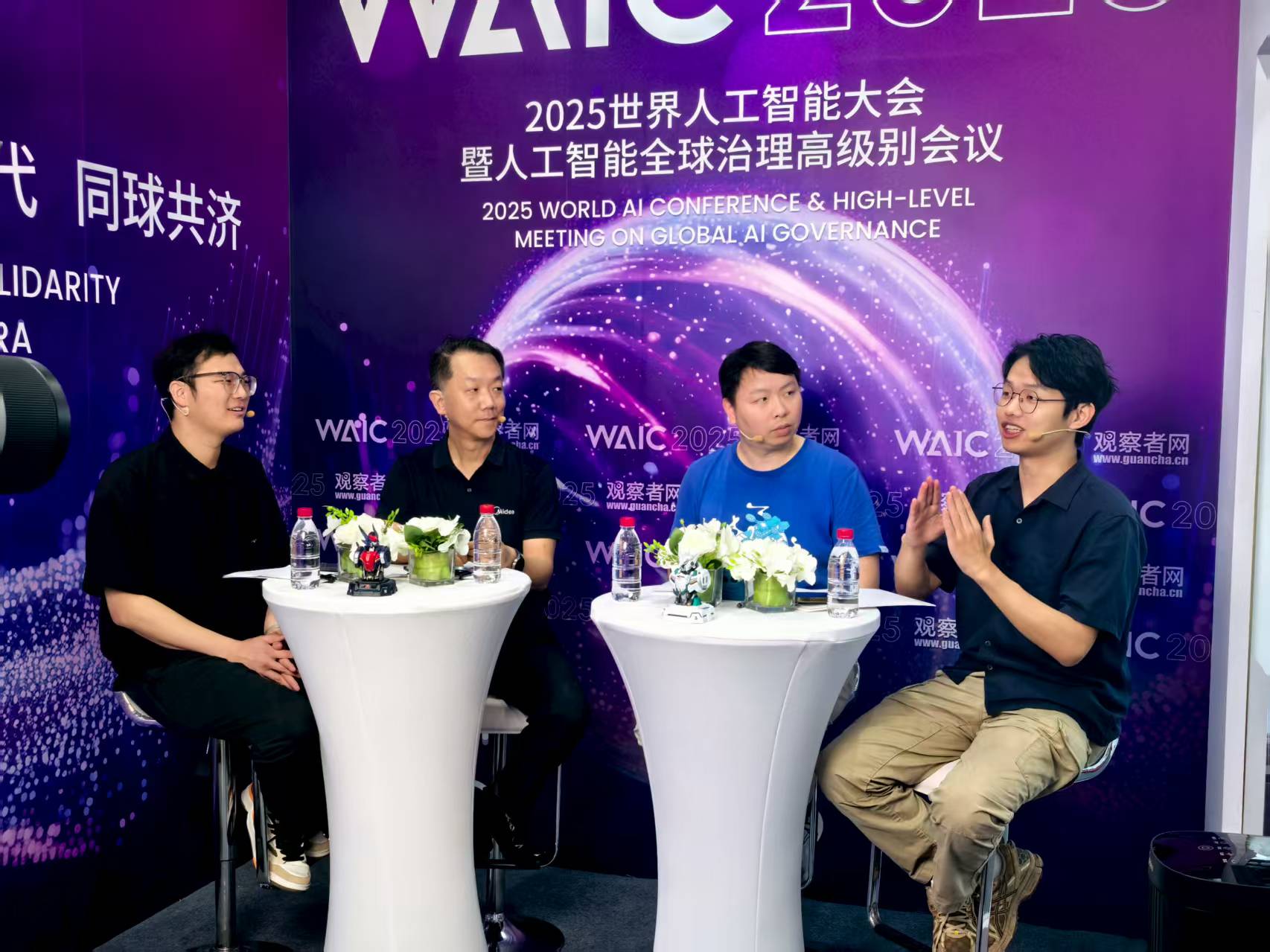
Group 1 - The global focus is on "embodied intelligence" and "humanoid robots," with discussions on whether China is catching up to or surpassing the U.S. in AI advancements [1][3] - The dialogue at WAIC highlighted the importance of supply chains, reinforcement learning algorithms, and capital pathways in the development of humanoid robots [1][3] - Companies like Midea have diversified into humanoid robotics, leveraging their existing technology and product lines to enter this new market [4][5] Group 2 - Midea's acquisition of KUKA in 2016 marked its entry into the robotics sector, with a focus on various industries including automotive and logistics [5] - The development of humanoid robots has seen significant advancements due to breakthroughs in reinforcement learning and embodied intelligence, allowing for more complex robotic movements [9][10] - The current humanoid robots average around 40 joints, with traditional methods of control being replaced by reinforcement learning techniques [9][11] Group 3 - The discussion emphasized the differences between traditional hydraulic-driven robots and modern electric-driven robots, highlighting the advantages of the latter in incorporating intelligent algorithms [12][13] - The potential for humanoid robots to evolve into "super humanoid robots" tailored for specific industrial applications was explored, aiming to exceed human efficiency in tasks [15][16] - The conversation also touched on the necessity of dexterous hands for humanoid robots, with a focus on the trade-offs between complexity and reliability in real-world applications [24][27] Group 4 - The concept of embodied intelligence was defined as the ability of robots to interact effectively with the physical world, moving beyond traditional control methods [31][36] - The importance of world models and video models in enhancing the capabilities of humanoid robots was discussed, emphasizing their role in understanding complex environments [37][42] - Reinforcement learning was identified as a crucial component in the development of intelligent robots, with companies like Dyna Robotics focusing on real-world applications [46][47]



超1500件展品亮相!2025世界机器人大会即将开幕
2 1 Shi Ji Jing Ji Bao Dao· 2025-08-03 05:22
Core Points - The 2025 World Robot Conference will be held from August 8 to 12 in Beijing, focusing on making robots smarter and bodies more intelligent [1] - The conference will feature a main forum with three chapters: industrial development, innovative applications, and technology integration [2] - Over 200 domestic and international robot companies will showcase more than 1,500 exhibits, with a 25% increase in participating companies compared to last year [3] Group 1: Conference Overview - The conference will include an opening ceremony, forums, an exhibition, competitions, and closing ceremonies [1] - The main forum will take place from August 9 to 11, featuring leaders from government and industry, as well as international experts sharing insights on global robot industry trends [2] - The exhibition will feature three main pavilions: innovation, application, and technology, with a significant number of new product launches [3] Group 2: Competitions and Events - The competition segment will include the Inclusive Robot Challenge, BCI Brain-Controlled Robot Competition, and a Youth Robot Design Competition, with over 10,000 participants from more than 10 countries [4] - The venue will undergo significant upgrades, including a newly designed reception area for the conference [5] Group 3: E-Town Robot Consumption Festival - The "E-Town Robot Consumption Festival" will be held concurrently, marking the world's first robot consumption festival [6] - The festival will feature four major consumption scenarios and service systems, targeting both enterprise and consumer users [7]
超100款新品集中亮相!2025世界机器人大会8月8日北京启幕
Huan Qiu Wang Zi Xun· 2025-08-03 04:37
Core Insights - The 2025 World Robot Conference will be held from August 8 to 12 in Beijing, featuring over 200 domestic and international robot companies showcasing more than 1,500 exhibits, including over 100 new product launches [1][3] - The theme of this year's conference is "Making Robots Smarter and Bodies More Intelligent," supported by 28 international organizations, marking a record high in international participation [1][3] Industry Overview - The World Robot Conference has become a leading event for innovation in the global robotics field over the past decade, with China accounting for two-thirds of global robot patent applications in 2024 [3] - China continues to solidify its position as the largest industrial robot market for 12 consecutive years and is the world's largest robot producer, with industrial robots now applied across 71 major sectors of the national economy [3] - The density of robots in the manufacturing sector has risen to the third highest globally [3] Conference Structure - The main forum will cover three key areas: "Industry Development," "Innovative Applications," and "Technology Integration," featuring over 400 top scientists, international organization representatives, academicians, and entrepreneurs [3] - The exhibition will include three main pavilions: Innovation Pavilion, Application Pavilion, and Technology Pavilion, showcasing cutting-edge products from leading companies such as ABB, KUKA, and others [3] Competitions and Events - The conference will host three major competitions: the Inclusive Robot Challenge, BCI Brain-Controlled Robot Competition, and Youth Robot Design Competition, with over 6,000 teams and 10,000 participants from more than 10 countries [4] - A total of 31 activities will be organized around themes such as innovative applications of robots, international cooperation, technological breakthroughs, standard testing, investment and financing, academic discussions, and talent cultivation in the industry [4] Human-Robot Interaction - The conference will feature 50 humanoid robot companies showcasing innovative applications in various sectors, including industrial manufacturing, medical care, and home services [5] - An "E-Town Robot Consumption Festival" will be held concurrently, offering a unique shopping experience and services for both online and offline consumers [5]
200+企业、1500+展品、100+首发新品!2025世界机器人大会亮点抢先看
机器人大讲堂· 2025-08-03 04:05
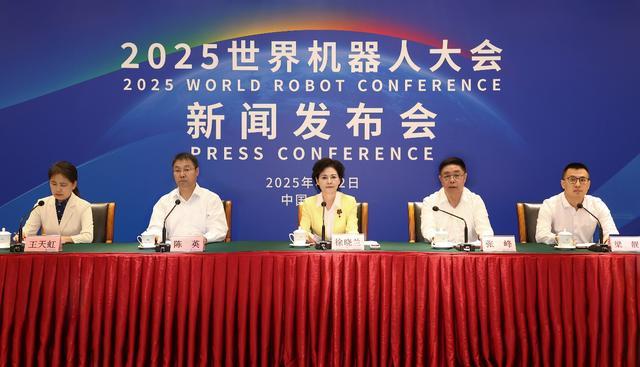
Core Viewpoint - The 2025 World Robot Conference aims to enhance global cooperation and innovation in the robotics industry, celebrating ten years of significant advancements in technology, industry development, application scenarios, and international collaboration [5][12]. Group 1: Conference Overview - The 2025 World Robot Conference will feature a main forum with three chapters: "Industry Development," "Innovative Applications," and "Technological Integration," with over 400 top scientists and representatives participating [9]. - The conference will include an exhibition with three main halls showcasing over 1,500 exhibits from more than 200 domestic and international robot companies, including over 100 new product launches [9]. - The event will host competitions such as the Inclusive Robot Challenge and the BCI Brain-Controlled Robot Competition, with participation from over 10 countries and 6,000 teams [9]. Group 2: Achievements in Robotics - Over the past decade, the World Robot Conference has become a leading event for innovation, industry promotion, application expansion, and international cooperation in robotics [5]. - In 2024, China accounted for two-thirds of global robot patent applications, solidifying its position as the largest industrial robot market for 12 consecutive years [5]. - The application of industrial robots has expanded to cover 71 major industries and 236 sub-industries, with China's robot density ranking third globally [5]. Group 3: Human-Robot Interaction and Standards - The establishment of the China Humanoid Robot Hundred Association aims to foster high-quality development in the humanoid robot industry, focusing on strategic research, policy support, and standardization [7]. - The association has identified 85 key projects for technological breakthroughs and is working on a framework for humanoid robot technology innovation [7]. - A standardization roadmap has been developed in collaboration with over 120 enterprises and research institutions, identifying 88 key standard requirements [7]. Group 4: E-Town Robot Consumption Festival - The E-Town Robot Consumption Festival will coincide with the World Robot Conference, featuring four consumption scenarios and service systems to enhance consumer engagement with robotics [11]. - The festival aims to create a unique robot consumption experience, promoting high-end manufacturing products to the general public [11]. - JD.com will serve as a strategic partner, providing a platform for showcasing various robot products aimed at enhancing everyday life [11].
2025世界机器人大会即将开幕,人形机器人仍是热门
Zhong Guo Qing Nian Bao· 2025-08-02 12:29
Core Points - The 2025 World Robot Conference will be held in Beijing from August 8 to August 12, focusing on making robots smarter and more intelligent [1][3] - The main forum will take place from August 9 to August 11, featuring discussions on industry development, innovative applications, and technology integration [3] - The conference will showcase over 1,500 exhibits from more than 200 domestic and international robot companies, with a 25% increase in participating companies compared to last year [3][4] - Humanoid robots will be a highlight, with 50 leading companies displaying their latest products and solutions, marking the largest number of humanoid robot manufacturers at a similar event [3][4] Industry Insights - China is rapidly advancing in the robotics field, with robot patent applications expected to account for two-thirds of the global total by 2024 [4][5] - The sales of industrial robots in China have grown from 70,000 units in 2015 to 302,000 units in 2024, maintaining its position as the largest industrial robot market globally for 12 consecutive years [5] - Humanoid robots are anticipated to become a disruptive product, impacting various sectors such as home services, manufacturing, logistics, and healthcare [5] Event Highlights - The conference will host the World Robot Competition, featuring over 6,000 teams and 10,000 participants from more than 10 countries [4] - An E-Town Robot Consumption Festival will be held, offering unique food experiences and robot-themed products during the conference [5]
超1500件展品将亮相“2025世界机器人大会”
Mei Ri Jing Ji Xin Wen· 2025-08-02 11:57
Core Insights - The "2025 World Robot Conference" will be held from August 8 to August 12 in Beijing, focusing on the theme "Making Robots Smarter, Making Bodies More Intelligent" [1] Exhibition Details - The conference will feature three main exhibition halls: Innovation Hall, Application Hall, and Technology Hall, showcasing over 1,500 exhibits from more than 200 domestic and international robot companies, representing a 25% increase in participating companies compared to last year [1] - There will be over 100 new product launches, nearly double the number from the previous year [1] - Humanoid robots will be a key highlight, with 50 humanoid robot manufacturers participating, marking the highest number of such exhibitors in similar events [1] Consumer Engagement - The Beijing Economic and Technological Development Zone will concurrently host the "E-Town Robot Consumption Festival," allowing consumers to purchase robots and related products offline during the conference [1]