Boston Dynamics

Search documents
MuJoCo具身智能实战:从零基础到强化学习与Sim2Real
具身智能之心· 2025-07-07 09:20
Core Viewpoint - The article discusses the unprecedented advancements in AI, particularly in embodied intelligence, which is transforming the relationship between humans and machines. Major tech companies are competing in this revolutionary field, which has the potential to significantly impact various industries such as manufacturing, healthcare, and space exploration [1][2]. Group 1: Embodied Intelligence - Embodied intelligence is characterized by machines that can understand language commands, navigate complex environments, and make intelligent decisions in real-time [1]. - Leading companies like Tesla, Boston Dynamics, OpenAI, and Google are actively developing technologies in this area, emphasizing the need for AI systems to possess both a "brain" and a "body" [1][2]. Group 2: Technical Challenges - Achieving true embodied intelligence presents significant technical challenges, including the need for advanced algorithms and a deep understanding of physical simulation, robot control, and perception fusion [2][4]. - MuJoCo (Multi-Joint dynamics with Contact) is highlighted as a key technology in overcoming these challenges, serving as a high-fidelity training environment for robot learning [4][6]. Group 3: MuJoCo's Role - MuJoCo is not just a physics simulation engine; it acts as a crucial bridge between the virtual and real worlds, enabling researchers to conduct millions of trials in a simulated environment without risking expensive hardware [4][6]. - The advantages of MuJoCo include simulation speeds hundreds of times faster than real-time, the ability to test extreme scenarios safely, and effective transfer of learned strategies to real-world applications [6][8]. Group 4: Educational Opportunities - A comprehensive MuJoCo development course has been created, focusing on practical applications and theoretical foundations, covering topics from physics simulation to deep reinforcement learning [9][10]. - The course is structured into six modules, each with specific learning objectives and practical projects, ensuring a solid grasp of embodied intelligence technologies [11][13]. Group 5: Project-Based Learning - The course includes six progressively challenging projects, such as building a robotic arm control system and implementing vision-guided grasping, which are designed to reinforce theoretical concepts through hands-on experience [15][17][19]. - Each project is tailored to address specific technical points while aligning with overall learning goals, providing a comprehensive understanding of embodied intelligence [12][28]. Group 6: Career Development - Completing the course equips participants with a complete skill set in embodied intelligence, enhancing their technical, engineering, and innovative capabilities, which are crucial for career advancement in this field [29][31]. - Potential career paths include roles as robot algorithm engineers, AI research engineers, or product managers, with competitive salaries ranging from 300,000 to 1,500,000 CNY depending on the position and company [33].

X @TechCrunch
TechCrunch· 2025-07-05 19:04
Automation & Technology Adoption - Cargill's oilseed facility has been utilizing Boston Dynamics' Spot robot since mid-2024 for routine inspections and visual safety checks [1] - Cargill is moving towards more autonomous operations by using robots for routine tasks [1] - Cargill aims to shift human focus to predictive maintenance and long-term planning [1]
X @TechCrunch
TechCrunch· 2025-07-03 22:14
Automation & Technology Adoption - Cargill has been utilizing Boston Dynamics' Spot robot at its oilseed facility since mid-2024 [1] - The deployment of Spot is part of Cargill's strategy to increase autonomous operations [1] - The goal is to have robots handle routine tasks, allowing humans to focus on predictive maintenance and long-term planning [1] Operational Efficiency - Robots are being used for routine inspections and visual safety checks [1]
具身智能入门必备的技术栈:从零基础到强化学习与Sim2Real
具身智能之心· 2025-06-30 03:47
Core Insights - The article emphasizes that the field of AI is at a transformative juncture, particularly with the rise of embodied intelligence, which allows machines to understand and interact with the physical world [1][2]. Group 1: Embodied Intelligence - Embodied intelligence is defined as AI systems that not only possess a "brain" but also have a "body" capable of perceiving and altering the physical environment [1]. - Major tech companies like Tesla, Boston Dynamics, OpenAI, and Google are actively developing technologies in this revolutionary field [1]. - The potential impact of embodied intelligence spans across various industries, including manufacturing, healthcare, and space exploration [1]. Group 2: Technical Challenges - Achieving true embodied intelligence presents unprecedented technical challenges, requiring advanced algorithms and a deep understanding of physical simulation, robot control, and perception fusion [2][4]. - MuJoCo (Multi-Joint dynamics with Contact) is highlighted as a critical technology in this domain, serving as a high-fidelity simulation engine that bridges the virtual and real worlds [4][6]. Group 3: MuJoCo's Role - MuJoCo allows researchers to create realistic virtual robots and environments, enabling millions of trials and learning experiences without risking expensive hardware [6]. - The simulation speed of MuJoCo can be hundreds of times faster than real-time, significantly accelerating the learning process [6]. - MuJoCo has become a standard tool in both academia and industry, with major companies utilizing it for robot research [7]. Group 4: Practical Training - A comprehensive MuJoCo development course has been developed, focusing on practical applications and theoretical foundations in embodied intelligence [8][9]. - The course is structured into six modules, each with specific learning objectives and practical projects, ensuring a solid grasp of the technology [10][12]. - Projects range from basic robotic arm control to complex multi-agent systems, providing hands-on experience in real-world applications [14][21]. Group 5: Target Audience and Outcomes - The course is designed for individuals with programming or algorithm backgrounds looking to enter the field of embodied robotics, as well as students and professionals seeking to enhance their practical skills [27][28]. - Upon completion, participants will have a complete skill set in embodied intelligence, including proficiency in MuJoCo, reinforcement learning, and real-world application of simulation techniques [27][28].

保姆级具身智能实战:从零基础到强化学习与Sim2Real
具身智能之心· 2025-06-27 08:36
Core Viewpoint - The article discusses the unprecedented turning point in AI development, highlighting the rise of embodied intelligence and its potential to revolutionize various industries, including manufacturing, healthcare, and space exploration [1]. Group 1: Embodied Intelligence - Embodied intelligence is defined as AI systems that not only possess a "brain" but also have the capability to perceive and interact with the physical world [1]. - Major tech companies like Tesla, Boston Dynamics, OpenAI, and Google are actively investing in this transformative field [1]. Group 2: Technical Challenges - Achieving true embodied intelligence presents significant technical challenges, requiring advanced algorithms and a deep understanding of physical simulation, robot control, and perception fusion [2]. Group 3: MuJoCo's Role - MuJoCo (Multi-Joint dynamics with Contact) is identified as a critical technology for embodied intelligence, serving as a high-fidelity training environment for robot learning [4]. - It allows researchers to conduct millions of trials in a virtual environment, significantly speeding up the learning process and reducing costs associated with physical hardware [6]. Group 4: MuJoCo's Advantages - MuJoCo features advanced contact dynamics algorithms, supports parallel computation, and provides a variety of sensor models, making it a standard tool in both academia and industry [6][7]. - Major tech companies utilize MuJoCo for their robot research, indicating its importance in the field [7]. Group 5: Practical Training - A comprehensive MuJoCo development course is offered, focusing on practical applications and theoretical foundations, covering topics from physical simulation to deep reinforcement learning [8][9]. - The course is structured into six modules, each with specific learning objectives and practical projects, ensuring a solid grasp of embodied intelligence technologies [10][12]. Group 6: Project Examples - The course includes projects such as intelligent robotic arm control, vision-guided grasping systems, and multi-robot collaboration, allowing participants to apply their knowledge in real-world scenarios [14][21]. Group 7: Target Audience and Outcomes - The course is suitable for individuals with programming or algorithm backgrounds looking to enter the field of embodied robotics, as well as graduate and undergraduate students focused on robotics and reinforcement learning [27]. - Upon completion, participants will have a complete skill set in embodied intelligence, including technical, engineering, and innovative capabilities [28].

物流业最后的“人工堡垒”即将失守?机器人正式接管卡车装卸工作
Hua Er Jie Jian Wen· 2025-06-23 11:37
Core Insights - The rapid advancement of robotics technology is addressing the last automation challenge in the logistics and warehousing industry, specifically truck loading and unloading, which has been a labor-intensive task for retailers and courier companies [1][2] - Major logistics companies like DHL, UPS, and FedEx are beginning to deploy unloading robots on a large scale, with DHL recently signing an agreement to purchase 1,000 additional robots from Boston Dynamics [1][4] Group 1: Automation in Logistics - The automation of truck loading and unloading is seen as the "holy grail" of warehousing logistics, as it has historically relied heavily on manual labor due to the physically demanding nature of the work [2][3] - Workers in this field face high turnover rates and frequent injuries due to the strenuous conditions, including lifting packages weighing up to 70 pounds (approximately 31.7 kg) [2][3] Group 2: Technological Advancements - Advances in sensors, algorithms, and AI have enabled robots to perform complex tasks similar to "3D Tetris," allowing for efficient loading and unloading of packages [1][3] - Boston Dynamics' Stretch robot, equipped with a vacuum gripper, can lift packages weighing up to 50 pounds (approximately 22.7 kg) and is designed to reach the top corners of trucks [3][4] Group 3: Implementation and Efficiency - DHL has deployed 7 Stretch robots across its supply chain facilities in three states, with one robot nicknamed "Johnny 5" capable of unloading approximately 580 packages per hour, nearly double the efficiency of human workers [4] - UPS is also increasing automation in its facilities, with executives indicating that this will help reduce costs, while FedEx has been testing and improving truck loading processes in collaboration with Dexterity since 2023 [4]


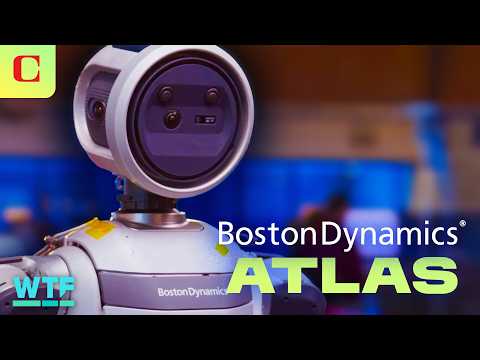
How Boston Dynamics' Atlas Humanoid Robot Sees the World
CNET· 2025-06-08 12:00
Robotics Technology & Development - Boston Dynamics' Atlas robot showcases advancements in perception, enabling it to identify objects and navigate dynamic environments [1][3][4] - Atlas utilizes a vision system with cameras and overlaid red/green points to perceive its surroundings, identify objects, and avoid hazards [3][4] - The robot constructs both 2D and 3D models of its environment to determine object distance and orientation [4] - Atlas combines vision system data with joint information to track object positions, even when visibility is obstructed [5] - The robot compares objects to 3D models from its training to determine their pose, location, and optimal gripping method [5] - The robotics industry is shifting towards generalized robot training, enabling robots to perform various tasks from a single training type [1][6] - NVIDIA's Dextra RGB workflow facilitates fully autonomous robot training in simulation before real-world application [6] Industry Trends - The robotics industry is moving away from task-specific training towards more versatile, generalized training methods [1][6]
Tesla Optimus robotics vice president Milan Kovac is leaving the company
CNBC· 2025-06-06 23:24
Core Insights - Tesla's vice president of Optimus robotics, Milan Kovac, has announced his departure from the company after an eight-year tenure, expressing gratitude towards CEO Elon Musk and optimism for Tesla's future [1][2]. Company Developments - Tesla is developing the Optimus robot with plans to begin builds on its Fremont pilot production line in 2025, aiming for broader deployment of robots in factory settings [3]. - During the 2024 annual shareholder meeting, Musk projected that humanoid robots could significantly increase Tesla's market capitalization to $25 trillion at an unspecified future date [3]. Technological Advancements - Currently, Tesla is training its Optimus systems to perform basic tasks such as picking up objects, opening doors, and throwing balls, indicating progress in the development of the robot [4]. - Competitors in the robotics space include Boston Dynamics, Agility Robotics, Apptronik, 1X, and Figure, highlighting a competitive landscape for Tesla's Optimus initiative [4].


未知机构:深度-中国机器人初创企业崛起-20250606
未知机构· 2025-06-06 06:55
Summary of the Conference Call on China's Humanoid Robot Industry Industry Overview - The conference call discusses the rapidly evolving humanoid robot industry in China, highlighting the competitive landscape and technological advancements made by local startups like EngineAI and Unitree Robotics [4][10][12]. Key Points and Arguments 1. **Technological Advancements**: EngineAI's humanoid robot demonstrated the ability to learn dance moves using computer vision and machine learning, showcasing significant progress in AI applications for robotics [8][9]. 2. **Market Potential**: Citigroup projects the market for humanoid robots and related services could reach $7 trillion by 2050, with an estimated 648 million humanoid robots potentially in use globally [18]. 3. **Government Support**: The Chinese government has been instrumental in fostering the growth of the robotics sector, with plans to invest 1 trillion yuan ($138 billion) over the next two decades [26][27]. 4. **Labor Shortages**: The development of humanoid robots is partly driven by a looming labor shortage in China, with a projected 30 million worker shortfall in manufacturing by the end of the year [34]. 5. **Competitive Landscape**: Approximately 50 to 60 companies in China are currently engaged in humanoid robot development, benefiting from the country's manufacturing expertise and government backing [14][15]. 6. **Global Competition**: Elon Musk expressed concerns that Chinese companies may dominate the humanoid market, indicating the competitive pressure faced by U.S. firms like Tesla [16][17]. 7. **Economic Viability**: Analysts suggest that humanoid robots could pay for themselves within 36 weeks based on labor cost savings, making them economically attractive for various industries [67]. Additional Important Insights 1. **Integration Across Sectors**: China aims to integrate humanoid robots into various sectors, including manufacturing, healthcare, and hospitality, with a current robot density of 470 robots per 10,000 workers, surpassing the U.S. and Japan [37][38]. 2. **Challenges in Development**: Despite advancements, the industry faces challenges, such as the need for humanoid robots to provide tangible value to justify their costs [55][56]. 3. **Future Outlook**: The growing number of startups in China is intensifying competition, driving innovation and improvements in AI capabilities and physical designs of robots [70]. 4. **Cultural Perception**: Humanoid robots have captured public imagination for decades, but their practical applications and economic sense remain under scrutiny [59][60]. This summary encapsulates the key discussions and insights from the conference call regarding the state and future of the humanoid robot industry in China, emphasizing both the opportunities and challenges present in this rapidly evolving field.
NVIDIA Powers Humanoid Robot Industry With Cloud-to-Robot Computing Platforms for Physical AI
Globenewswire· 2025-05-19 04:25
Core Insights - NVIDIA has introduced the NVIDIA Isaac GR00T N1.5, an updated foundation model for humanoid reasoning and skills, along with the GR00T-Dreams blueprint for generating synthetic motion data and Blackwell systems to enhance humanoid robot development [1][3][10] Group 1: Product Announcements - The NVIDIA Isaac GR00T N1.5 model improves adaptability to new environments and workspace configurations, enhancing its success rate in material handling and manufacturing tasks [7][8] - The GR00T-Dreams blueprint generates vast amounts of synthetic motion data, allowing robots to learn new behaviors and adapt to changing environments [3][4] - The GR00T-Dreams blueprint complements the previously released GR00T-Mimic blueprint, which augments existing data rather than generating new data [5] Group 2: Industry Adoption - Various humanoid and robotics developers, including Agility Robotics, Boston Dynamics, and XPENG Robotics, are adopting NVIDIA's Isaac platform technologies to advance their robot development [2][9] - Early adopters of the GR00T N models are utilizing them for tasks such as natural language understanding and complex workflows in industrial settings [8] Group 3: Technological Advancements - NVIDIA's simulation technologies, including Isaac Sim and Isaac Lab, are being used by companies to close the data and testing gap in humanoid robot development [9] - The Blackwell systems, including NVIDIA RTX PRO 6000 workstations, provide a unified architecture for running various robot development workloads, achieving up to 18 times greater performance for data processing [10][11]