重庆银行

Search documents
这家上市银行公开选聘首席信息官!有这些要求
券商中国· 2025-09-05 02:56
Core Viewpoint - The recruitment announcement by Zhengzhou Bank highlights the increasing importance of the Chief Information Officer (CIO) role in driving the bank's digital transformation strategy, particularly in the context of emerging technologies like artificial intelligence [2][4]. Group 1: Recruitment Requirements - Zhengzhou Bank emphasizes the need for candidates to have a deep understanding of the bank's digital transformation strategy and to be proficient in various banking operations [3][4]. - Candidates are required to have at least 6 years of experience in information technology, including 4 years in senior management roles and 2 years in financial work [4]. - The bank seeks individuals with management experience in information technology at major state-owned banks, national joint-stock commercial banks, or leading city commercial banks [4]. Group 2: Digital Transformation and Technology - The role of the CIO is crucial for the digital transformation of banks, with a focus on leveraging technologies such as big data, cloud computing, artificial intelligence, and blockchain [6]. - The recruitment criteria include a strong insight into these technologies and successful practical implementation experience [6]. - The rise of digital finance has significantly enhanced banking efficiency, with AI becoming a key driver for transformation [6][7]. Group 3: Performance Metrics - As of mid-2025, Zhengzhou Bank reported 5,593 employees, with 339 in information technology, accounting for 5.54% of the workforce [5]. - The bank achieved a revenue of 6.69 billion yuan, a year-on-year increase of 4.64%, and a net profit of 1.63 billion yuan, up 2.10% [5]. - The total assets of Zhengzhou Bank reached 719.738 billion yuan, reflecting a growth of 6.41% compared to the previous year [5]. Group 4: Industry Trends - Many listed banks are prioritizing AI in their strategic transformation, with major banks like ICBC and Agricultural Bank of China leading the way in AI application [7][8]. - Smaller banks are also making strides in AI capabilities, with various initiatives to enhance their digital transformation efforts [7][8]. - The ability of commercial banks to effectively implement digital transformation will be critical to their future competitiveness [8].


A股银行股普跌,邮储银行、中信银行跌超2%
Ge Long Hui A P P· 2025-09-05 02:52
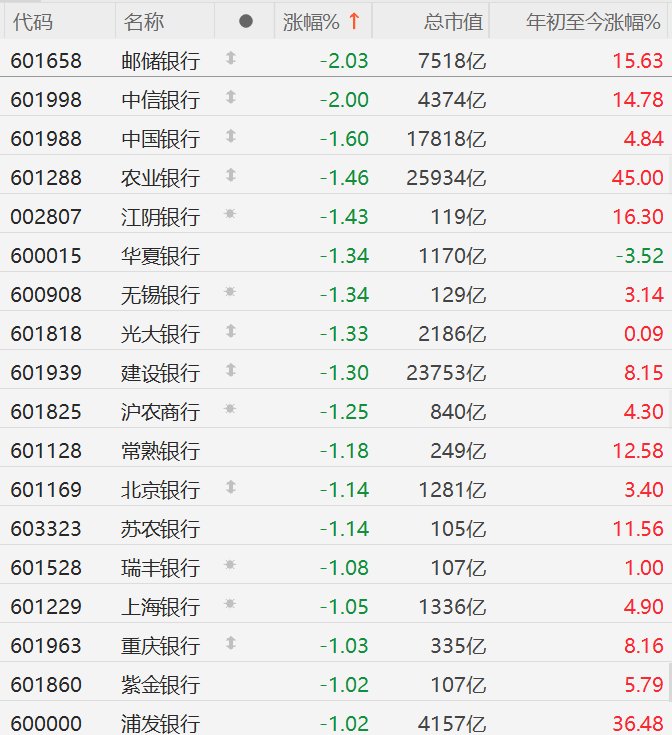
Core Viewpoint - The A-share market experienced a widespread decline in bank stocks, with several major banks seeing significant drops in their share prices [1][2]. Group 1: Stock Performance - Postal Savings Bank of China saw a decrease of 2.03%, with a total market capitalization of 751.8 billion [2]. - CITIC Bank's shares fell by 2.00%, with a market value of 437.4 billion [2]. - Bank of China experienced a decline of 1.60%, with a market capitalization of 1.7818 trillion [2]. - Agricultural Bank of China dropped by 1.46%, holding a market value of 2.5934 trillion [2]. - Other banks such as Everbright Bank, Construction Bank, and Shanghai Pudong Development Bank also reported declines of over 1% [1]. Group 2: Year-to-Date Performance - Agricultural Bank of China has the highest year-to-date increase at 45.00% [2]. - Postal Savings Bank of China and CITIC Bank have year-to-date increases of 15.63% and 14.78%, respectively [2]. - Shanghai Pudong Development Bank has a notable year-to-date increase of 36.48% despite the recent decline [2].




总资产1.37万亿 成都银行“一骑绝尘”
Nan Fang Du Shi Bao· 2025-09-04 23:07
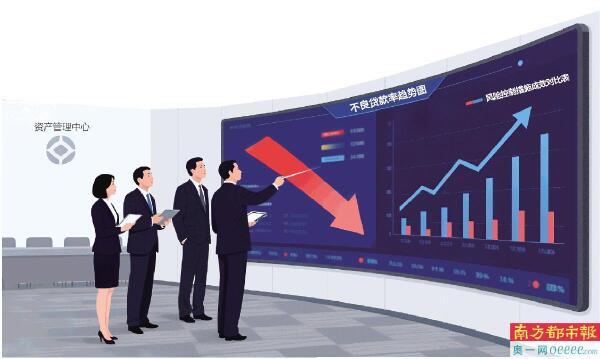
Core Insights - The article discusses the performance of Chengdu Bank and Chongqing Bank in the first half of 2025, highlighting their competitive positions in the Southwest region of China [2][9] - Chengdu Bank maintains its status as the only city commercial bank in Southwest China with total assets exceeding 1 trillion yuan, while Chongqing Bank shows rapid growth in asset scale and revenue [3][9] Asset Scale - As of June 30, 2025, Chengdu Bank's total assets reached 1.37 trillion yuan, a year-on-year increase of 9.77%, solidifying its position as the largest city commercial bank in the Southwest [3] - Chongqing Bank's total assets amounted to 983.37 billion yuan, with a significant increase of 14.79% year-on-year, indicating strong growth momentum [3][9] Revenue and Profitability - Chengdu Bank reported revenue of 12.27 billion yuan, a 5.91% increase year-on-year, and a net profit of 6.617 billion yuan, up 7.29% [4] - Chongqing Bank achieved revenue of 7.659 billion yuan, a 7% increase, and a net profit of 3.19 billion yuan, growing by 5.39% [4][5] - Both banks face challenges in revenue structure, particularly in the transformation of intermediary businesses [4][5] Business Layout - Chengdu Bank focuses heavily on corporate business, with corporate loans and advances totaling 689.64 billion yuan, a 14.44% increase, and infrastructure loans making up 67.81% of corporate loans [6] - Chongqing Bank actively supports regional projects, providing nearly 140 billion yuan in credit support and increasing its corporate loan average balance by 821.49 billion yuan [7] Risk Management - Chengdu Bank maintains a low non-performing loan (NPL) ratio of 0.66% and a robust provision coverage ratio of 452.65% [8] - Chongqing Bank's NPL ratio improved to 1.17%, with a provision coverage ratio of 248.27%, indicating ongoing asset quality enhancement [8][9] - Both banks show varying capital adequacy ratios, with Chengdu Bank's core tier one capital ratio at 8.61% and Chongqing Bank's at 8.8%, both experiencing declines [8][9] Future Outlook - Analysts suggest that the bank that can optimize its business structure and enhance its intermediary and retail business will have a better chance of claiming the title of "King of Southwest" [10]
24家银行上半年人均月薪超3万元
第一财经· 2025-09-04 16:10
Core Viewpoint - The banking sector in A-shares has regained its position as the largest sector with a market value of 11.31 trillion yuan, surpassing the electronics sector, and the salary situation of banking employees has become a focal point as 42 banks disclose their salary data for the first half of 2025 [2][3]. Salary Structure - The average monthly salary in the banking industry for the first half of 2025 is 30,200 yuan, a slight increase of 1,300 yuan year-on-year, reversing the trend of a 5,300 yuan decrease in the same period last year [5][6]. - The top tier of banks, including joint-stock banks and strong city commercial banks in eastern regions, have an average monthly salary exceeding 45,000 yuan, with specific banks like China Merchants Bank and Nanjing Bank reporting 50,500 yuan and 48,185 yuan respectively [5][6]. - The second tier consists of state-owned banks with average monthly salaries ranging from 25,000 to 30,000 yuan, while the third tier includes some rural and city commercial banks with salaries below 25,000 yuan [7]. Management Salary Trends - A notable trend is the decline in executive salaries across the banking sector, with 33 out of 42 A-share listed banks reporting a decrease in management compensation, with the highest drop reaching 82.4% [9][10]. - For instance, Zhengzhou Bank's key management salary total fell from 10,388 million yuan to 5,957 million yuan year-on-year [9]. - The emphasis on value creation and the adjustment of salary structures to favor grassroots employees are becoming key themes in many banks' compensation reforms [10][11]. Salary Reform Mechanisms - The implementation of a reverse salary reclamation mechanism is gaining traction, with banks establishing systems to withhold or reclaim performance-related pay in cases of misconduct or excessive risk exposure [11]. - For example, China Merchants Bank reported reclaiming over 100 million yuan in performance pay over the past two years due to such mechanisms [11]. - The overall trend indicates a shift towards aligning total compensation with bank performance, suggesting that if revenue and profits decline, salaries may also be affected [11][12].

“把脉”A股42家上市银行中期资产质量:对公贷款不良率持续向好,零售贷款仍处风险暴露期
Mei Ri Jing Ji Xin Wen· 2025-09-04 14:35
Group 1: Overall Asset Quality - As of August 31, 2023, the asset quality of 42 listed banks in A-shares shows a stable improvement, with some banks experiencing a slight increase in non-performing loan (NPL) ratios compared to the end of the previous year [1] - The overall NPL ratio for commercial banks was 1.49% at the end of Q2 2023, improving by 0.02 percentage points from the end of Q1 [3] - The provision coverage ratio for state-owned banks and rural commercial banks increased to 249.16% and 161.87%, respectively, while the ratios for joint-stock banks and city commercial banks decreased [4] Group 2: Non-Performing Loan Trends - The NPL ratio for corporate loans is improving, while the NPL ratio for retail loans is on the rise, indicating a structural change in asset quality [5][6] - For example, Industrial and Commercial Bank of China (ICBC) reported a decrease in corporate loan NPL ratio from 1.58% to 1.47%, while the personal loan NPL ratio increased from 1.15% to 1.35% [5] - The rise in retail loan NPLs is attributed to factors such as market conditions, increased flexible employment, and changes in industry environments affecting borrower income [6] Group 3: Real Estate Loan Performance - The real estate sector remains a significant source of NPLs, with some banks reporting an increase in real estate loan NPL ratios, while others have seen improvements [7][8] - For instance, Qingnong Commercial Bank's real estate NPL ratio rose to 21.32%, an increase of 14.15 percentage points from the end of the previous year [7] - The overall decline in real estate sales and the high leverage of real estate companies are fundamental reasons for the rising NPL ratios in this sector [8]





中信保诚国企红利量化股票A:2025年上半年利润6089.98元 净值增长率0.06%
Sou Hu Cai Jing· 2025-09-04 13:58
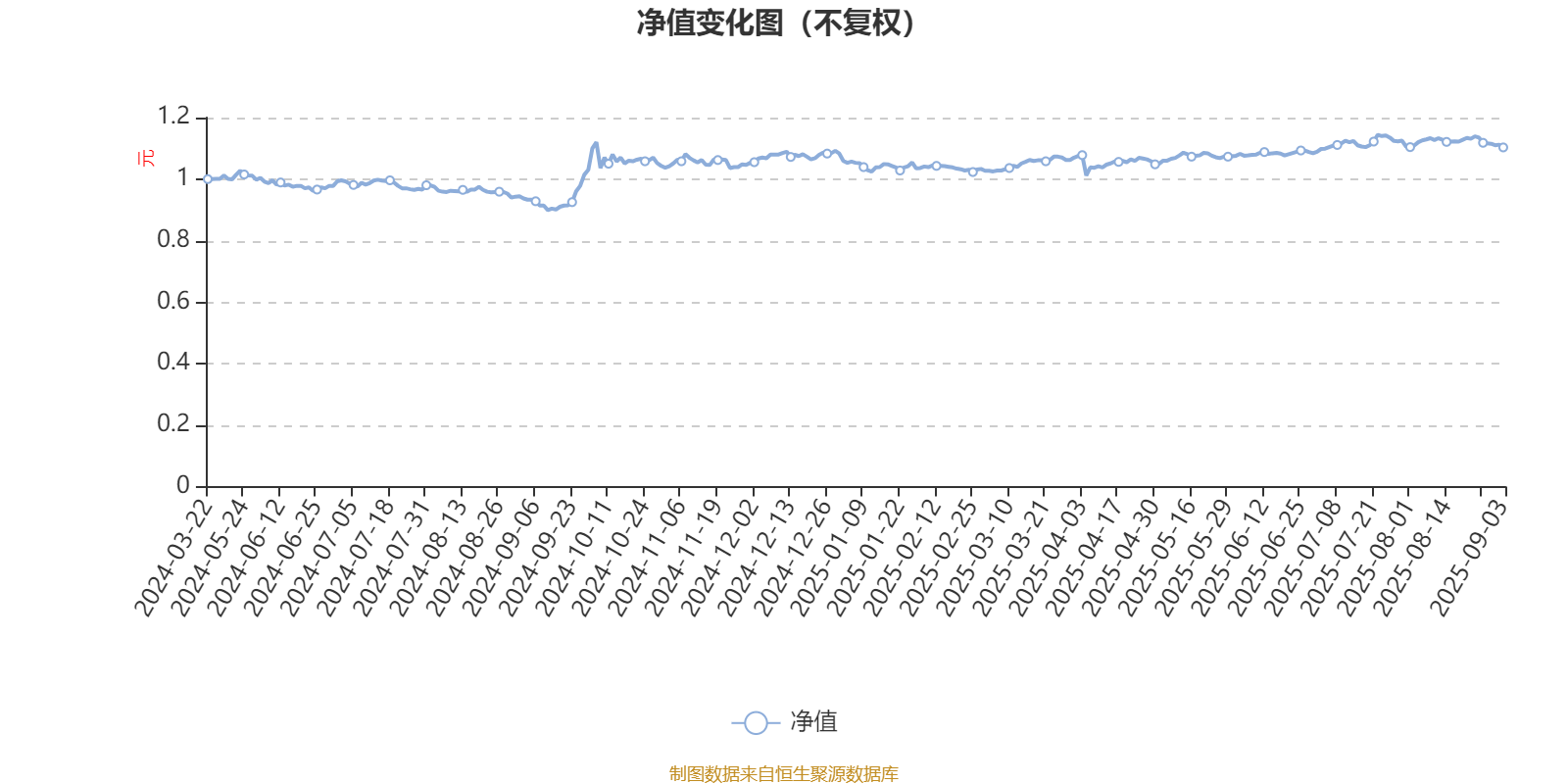
Core Viewpoint - The AI Fund CITIC Prudential State-owned Enterprise Dividend Quantitative Stock A (020768) reported a profit of 6089.98 yuan for the first half of 2025, with a net asset value growth rate of 0.06% during the period, and a fund size of 16.21 million yuan as of the end of June 2025 [3][31]. Fund Performance - As of September 3, 2025, the fund's unit net value was 1.103 yuan, with a one-year cumulative net value growth rate of 17.71%, ranking 104 out of 110 comparable funds [3][6]. - The fund's net value growth rate over the past three months was 2.53%, and over the past six months, it was 7.45%, ranking 100 out of 110 and 99 out of 110 respectively among comparable funds [6]. Investment Strategy - The fund maintained a high stock position during the reporting period, focusing on investment opportunities in high-dividend state-owned enterprises, and employed a quantitative stock selection model to achieve long-term returns exceeding the performance benchmark [3]. Valuation Metrics - As of June 30, 2025, the fund's weighted average price-to-earnings (P/E) ratio was approximately 10.47 times, significantly lower than the industry average of 28.84 times. The weighted average price-to-book (P/B) ratio was about 0.7 times, compared to the industry average of 2.19 times, and the weighted average price-to-sales (P/S) ratio was approximately 0.29 times, against an industry average of 1.95 times [10]. Growth Metrics - For the first half of 2025, the weighted revenue growth rate of the stocks held by the fund was -0.08%, and the weighted net profit growth rate was -0.24%, with a weighted annualized return on equity of 0.07% [16]. Fund Composition - As of June 30, 2025, the fund had a total of 625 holders, with a total of 14.96 million shares held. Individual investors accounted for 94.69% of the holdings, while management and institutional investors held 5.97% and 5.31% respectively [34]. - The fund's top ten holdings included major companies such as Bank of Communications, Lu'an Environmental Energy, and Xiamen International Trade [40]. Trading Activity - The fund's turnover rate over the last six months was approximately 217.94%, consistently lower than the industry average [37].
规模大增!银行发力消费贷,存量客户也可享受贴息
Guo Ji Jin Rong Bao· 2025-09-04 13:21
Core Viewpoint - The personal consumption loan business is becoming a key focus for many banks as they aim to boost consumer spending, with significant growth observed in the first half of 2025, particularly among state-owned banks and city commercial banks [1][2][3]. Group 1: Growth in Personal Consumption Loans - Over half of the banks reported an increase in personal consumption loan amounts, with 25 out of 37 banks showing growth [2]. - Notably, 14 banks increased their consumption loan amounts by over 5 billion yuan, while 11 banks achieved double-digit growth compared to the beginning of the year [2]. - Major state-owned banks like China Construction Bank, Agricultural Bank of China, Bank of Communications, and Bank of China saw increases exceeding 50 billion yuan, with amounts of 862.99 billion yuan, 626.86 billion yuan, 555.38 billion yuan, and 508.67 billion yuan respectively [3]. Group 2: Policy Impact on Consumption Loans - The implementation of the personal consumption loan subsidy policy on September 1 has further stimulated consumer interest, with many banks quickly launching their first subsidy transactions [1][4]. - The process for applying for loan subsidies is straightforward, allowing new customers to complete applications online, and existing customers can also benefit from the subsidy [4]. - The subsidy policy is expected to lower effective interest rates on loans, thereby stimulating consumer demand and enhancing consumption willingness [4]. Group 3: Future Outlook - Experts predict that personal consumption loans and business loans will tap into potential credit demand from residents, supported by favorable fiscal policies [1][3]. - By the end of June 2025, the total personal consumption loan scale is estimated to be around 12.5 trillion yuan, with the potential to generate an additional 1 trillion yuan in credit demand annually [5]. - New policy financial tools are expected to be introduced in the second half of the year, potentially injecting 500 billion yuan to stimulate approximately 4 trillion yuan in credit growth [6].


重庆银行长江·聚惠点金产品2025年第10期9月4日起发行,业绩比较基准2.25%-3.05%
Cai Jing Wang· 2025-09-04 09:11
9月4日,据重庆银行披露,该行发行的长江·聚惠公募净值型点金产品2025年第10期募集期为2025年9月 4日到2025年9月11日。计划发行量5亿元,投资者认购起点金额为1万元。产品类型为固定收益类,风险 评级为中低风险,期限为739天,业绩比较基准为2.25%~3.05%(年化)。 以上理财产品信息仅供参考,具体应以《产品说明书》等销售文件为准。本文不构成任何投资建议,投 资者据此操作,风险自担。 (重庆银行) 注:业绩比较基准不是预期收益率,不代表产品的未来表现和实际收益,不构成对产品收益的承诺。 ...
港股1630 | 港股全面转入防守? 南向资金继续抄底
Sou Hu Cai Jing· 2025-09-04 08:51
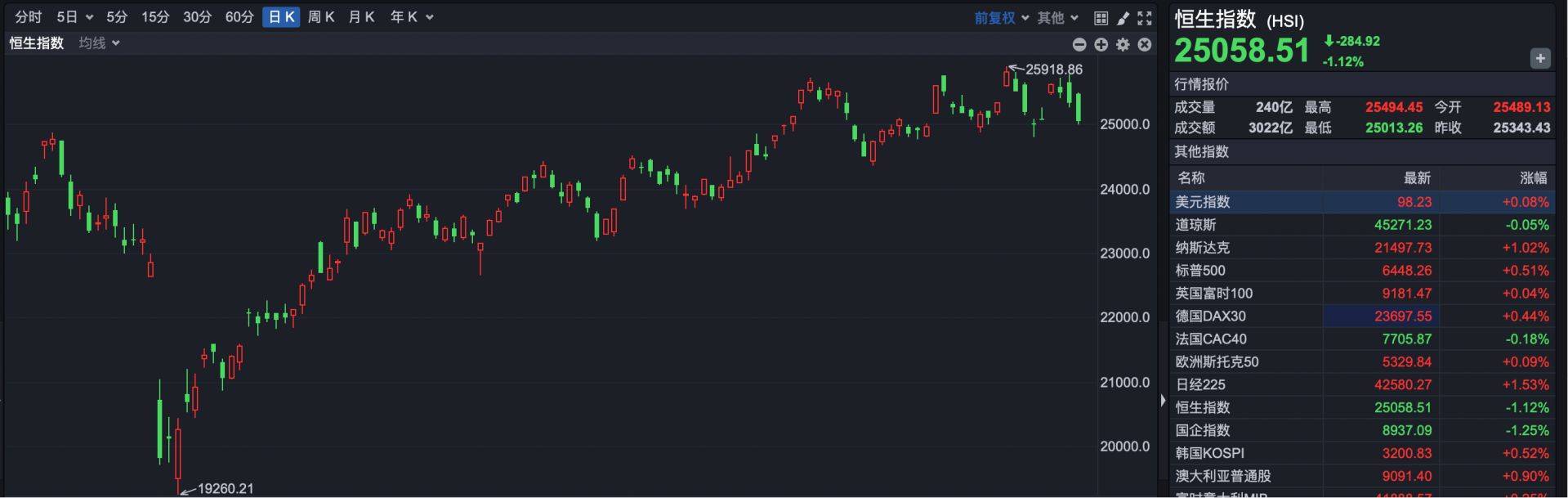
Market Overview - The Hong Kong stock market experienced a broad decline on September 4, with the Hang Seng Index closing at 25,058.51 points, down 284.92 points, a decrease of 1.12% [1] - The Hang Seng Tech Index also fell, closing at 5,578.86 points, down 104.88 points, a decline of 1.85% [1] Sector Performance - The Wind Hong Kong secondary industry indices showed mixed results, with sectors like daily consumer retail and utilities seeing slight gains of 0.77% and 0.49% respectively [2] - Conversely, the pharmaceutical and semiconductor sectors faced significant declines, with the pharmaceutical sector dropping by 4.71% and semiconductors by 6.16% [2][4] Individual Stock Movements - In the banking sector, several banks such as Tianjin Bank and Agricultural Bank of China saw gains exceeding 2%, while other banks like Standard Chartered and China Everbright Bank rose over 1% [2] - The pharmaceutical sector saw notable declines, with stocks like Jiahua Bio-B and Singlomics falling over 10%, while WuXi Biologics also experienced a drop of over 9% [3] - In the tech sector, Baidu rose over 2%, while Alibaba fell over 3%, and other tech stocks like Xiaomi and Kuaishou also saw declines [5] Capital Flow - Southbound capital showed a net selling trend for most of the day, but there was a noticeable inflow towards the end, with a net buying amount of HKD 1.386 billion from the Shanghai-Hong Kong Stock Connect [5] Future Outlook - Analysts from Guotai Junan believe that the potential for foreign capital to return to Hong Kong stocks is high, especially in the technology and financial sectors, as negative factors affecting tech stocks show signs of improvement [7] - According to Everbright Securities, the anticipated Fed rate cut cycle could lead to continued upward movement in the Hong Kong market, with a focus on technology growth and high dividend strategies [9]
冶钢原料板块9月4日跌0.33%,广东明珠领跌,主力资金净流出1亿元
Zheng Xing Xing Ye Ri Bao· 2025-09-04 08:50
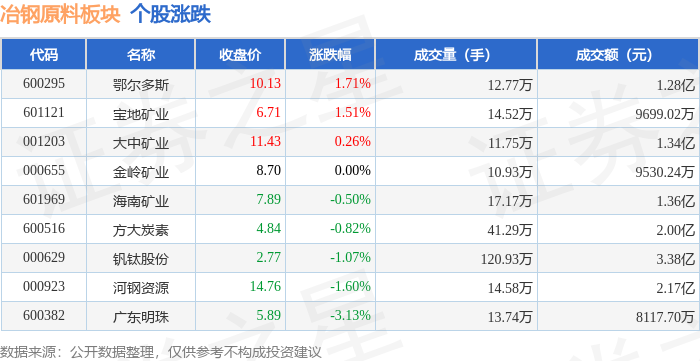
Market Overview - On September 4, the steel raw materials sector declined by 0.33% compared to the previous trading day, with Guangdong Mingzhu leading the decline [1] - The Shanghai Composite Index closed at 3765.88, down 1.25%, while the Shenzhen Component Index closed at 12118.7, down 2.83% [1] Stock Performance - Key stocks in the steel raw materials sector showed varied performance, with Erdos (600295) increasing by 1.71% to close at 10.13, while Guangdong Mingzhu (600382) fell by 3.13% to close at 5.89 [1] - The trading volume and turnover for major stocks included: - Erdos: 127,700 shares, turnover of 128 million yuan - Guangdong Mingzhu: 137,400 shares, turnover of 8.12 million yuan [1] Capital Flow - The steel raw materials sector experienced a net outflow of 100 million yuan from main funds, while retail investors saw a net inflow of 108 million yuan [1] - Detailed capital flow for selected stocks indicated significant outflows from major players, with Guangdong Mingzhu seeing a net outflow of 2.50 million yuan from main funds [2]