lululemon athletica inc.

Search documents
lululemon打下的江山,要被“男版lulu”摘桃子了
阿尔法工场研究院· 2025-07-13 05:29
Core Viewpoint - The yoga apparel market is becoming increasingly competitive, with both international and domestic brands vying for market share, particularly in China [2][3]. Group 1: Market Dynamics - The British yoga brand Sweaty Betty has been acquired by the Chinese e-commerce company Baozun, indicating a shift towards local management for better market adaptation [4][15]. - Alo Yoga, another prominent American brand, is expanding its presence in Asia, with plans to open its first store in China by 2025, following successful launches in other Asian countries [5][22]. - Lululemon, currently the market leader, is facing challenges as its revenue growth in China has been declining, prompting a strategic shift to focus on lower-tier cities [6][40]. Group 2: Financial Performance - Sweaty Betty's parent company, Wolverine Worldwide, has reported a significant decline in revenue and gross profit over the past three years, with a drop of approximately $1 billion in revenue [11][12]. - In contrast, Alo Yoga has seen substantial growth, with sales exceeding $1 billion in 2022, marking a nearly 100% year-over-year increase [21]. - Lululemon's revenue growth in China has shown a downward trend, with quarterly growth rates fluctuating and expected to stabilize between 25% to 30% moving forward [38][39]. Group 3: Competitive Strategies - Sweaty Betty's previous failure in China was attributed to a lack of localized marketing and consumer engagement, which the brand aims to rectify through its partnership with Baozun [25][32]. - Alo Yoga differentiates itself by positioning as a lifestyle brand, offering a broader range of products beyond apparel, which may enhance its appeal in the competitive landscape [17][21]. - Lululemon is adapting its strategy by expanding into lower-tier cities, where consumer spending power is rising, while also facing the risk of diluting its brand image [41][45].



3 Growth Stocks Down 52% to 82% to Buy Right Now
The Motley Fool· 2025-07-12 12:00
Group 1: Lululemon Athletica - Lululemon is experiencing a significant decline in stock price, down 54% from a high of $516 to $235, despite a 19% annualized revenue growth over the last decade [5][6] - The stock is currently trading at 16 times forward earnings estimates, indicating a potential undervaluation given the brand's future growth prospects [6][9] - Lululemon's trailing-12-month revenue stands at $10.8 billion, which is considerably lower than competitors Nike and Adidas, who collectively generate $72 billion in annual sales [6][7] - The company has shown resilience with a 7% year-over-year revenue increase in the most recent quarter, contrasting with declines at Nike [7] - Increased search interest for Lululemon on Google suggests that the market may be underestimating its long-term growth potential, particularly in international markets [8] Group 2: Deckers Outdoor - Deckers Outdoor, known for brands like Hoka and Ugg, has seen its stock drop 52% from its peak earlier this year, attributed to slowing growth and market uncertainties [10][11] - The company anticipates a $150 million increase in costs due to tariffs, impacting its projected revenue of around $5 billion [12] - Despite short-term challenges, Deckers expects 9% revenue growth in the first quarter and double-digit growth for Hoka throughout the year [13] - The stock is currently trading at a price-to-earnings ratio of 16, suggesting it may be oversold and could rebound if growth resumes [14] Group 3: Roku - Roku has faced challenges post-pandemic, leading to slowing growth and losses, but maintains a dominant position in ad-supported streaming [15] - In the first quarter of 2025, Roku reported a 16% year-over-year revenue increase, primarily driven by its advertising segment, which constitutes 86% of total revenue [16] - The company has enhanced user engagement through its Roku channel, which became the second-most watched channel in the U.S., with an 84% increase in viewing hours year-over-year [17] - A partnership with Amazon aims to expand advertising reach, leveraging AI for targeted exposure, while Roku's stock is currently 82% off its all-time highs but has risen 40% over the past year [19]



Snap-on Gears Up for Q2 Earnings: What Lies Ahead for the Stock?
ZACKS· 2025-07-11 17:31
Core Viewpoint - Snap-on Incorporated (SNA) is expected to report declines in both revenue and earnings for the second quarter of 2025, with a revenue estimate of $1.2 billion, reflecting a 2.2% decrease from the previous year [1] Financial Performance - The consensus estimate for quarterly earnings is stable at $4.61 per share, indicating a 6.1% decline from the same quarter last year [2] - Snap-on has experienced a negative trailing four-quarter earnings surprise of nearly 1% on average, with a notable negative surprise of 6.2% in the last reported quarter [2] Influencing Factors - The company is focusing on enhancing value creation through initiatives in safety, service quality, customer satisfaction, and innovation, including expanding its franchise network and increasing its presence in emerging markets [3] - Snap-on's innovation pipeline remains strong, with ongoing investments in product development and global brand expansion [3] Challenges - External challenges include macroeconomic headwinds, geographic pressures in key industries, and geopolitical disruptions, which are likely impacting performance [4] - The Tools Group unit has been sluggish due to lower activity in U.S. operations and adverse foreign currency translations, with an estimated 4% decline expected in the second quarter [5] - Rising raw material and operational costs continue to pose risks to profitability [4][9] Market Position - Despite challenges, Snap-on's manufacturing strategy allows for quick adjustments to evolving production landscapes, with expected resilience in the automotive repair sector due to increased household spending on repairs [6] - The Repair Systems & Information Group is predicted to see a 3% rise in the second quarter [6] Valuation - Snap-on's stock is trading at a forward 12-month price-to-earnings ratio of 16.54x, which is below its five-year high of 18.63x and the industry average of 17.50x, presenting an attractive investment opportunity [8] Recent Performance - Over the past three months, Snap-on's shares have decreased by 4.8%, compared to a 0.8% drop in the industry [10]


宝胜国际一季度营收51.07亿元下滑5.4%:线上增长难掩线下疲软
Jin Rong Jie· 2025-07-11 15:01
Core Viewpoint - Baosheng International's Q1 2025 financial report indicates a significant decline in revenue and profit, reflecting the severe challenges faced by the traditional sports retail industry in China [1][4]. Financial Performance - The company's revenue for Q1 2025 was approximately 5.107 billion yuan, a decrease of 5.4% compared to the same period last year [1]. - Profit attributable to equity holders fell by 18.2% to about 138 million yuan [1]. - The gross profit margin was reported at 32.74%, while the net profit margin was only 2.91%, indicating limited profitability [6]. - The decline in profit was more pronounced than the revenue drop, with a year-on-year decrease of 20.65% in profit attributable to equity holders [6]. - As of December 31, 2024, the company's inventory reached 4.946 billion yuan, accounting for 52.6% of current assets, highlighting increased operational risks due to high inventory levels [6]. Market Dynamics - Online sales continue to outperform offline retail, driven by the company's commitment to enhancing its omnichannel capabilities [4]. - Despite the strong performance of online channels, foot traffic in physical stores remains volatile due to changing consumer behaviors and intense promotional environments [3][4]. - The number of stores in Greater China has decreased from 5,883 at the end of 2019 to 3,448 by December 31, 2024, reflecting a net reduction of 2,435 stores over five years [4]. Competitive Landscape - The shift towards direct-to-consumer (DTC) models by brands like Nike and Adidas poses a direct threat to traditional agents like Baosheng International [4][5]. - Brands are increasingly opening large flagship stores in prime locations, which diverts customers from traditional agents and pressures their pricing power [5]. - The expansion of self-operated channels allows brands to better control product pricing and marketing strategies, further squeezing the bargaining power and profit margins of agents [5]. Strategic Challenges - The company faces significant challenges in adapting to the evolving retail landscape and the pressures from brand direct sales strategies [4][6]. - Maintaining a strong financial position amidst declining revenues and profitability will require the company to seek new growth drivers and business models [6].

比lululemon还贵的Alo Yoga,马上要来收割中国中产
36氪· 2025-07-11 07:35
Core Viewpoint - The yoga apparel market is experiencing significant competition, with established brands facing challenges from new entrants and local players, leading to a dynamic shift in market strategies and consumer engagement [4][7][36]. Group 1: Market Developments - The UK yoga brand Sweaty Betty has been acquired by Chinese e-commerce company Baozun, indicating a strategic shift towards local operations to enhance brand performance in China [5][14]. - Alo Yoga has opened its first flagship store in Seoul, marking its expansion into Asia, with plans for a potential entry into the Chinese market by 2025 [6][17]. - Vuori, an American brand, is rapidly expanding in China, aiming to become a major player in the market [6][35]. Group 2: Financial Performance - Wolverine Worldwide, the parent company of Sweaty Betty, has reported declining revenues and gross profits over the past three years, with a significant drop of approximately $1 billion in revenue [11][12]. - Sweaty Betty's revenue for FY24 was $199 million, reflecting a year-over-year decline of 2.4%, while its Q1 FY25 revenue fell to $38 million, down 15.9% year-over-year [13][12]. - Alo Yoga's sales exceeded $1 billion in 2022, with a growth rate of nearly 100%, and the brand is currently valued at around $10 billion [17]. Group 3: Competitive Landscape - Lululemon, the leading brand in the yoga apparel market, is facing increased competition from both new entrants like Alo and Vuori, as well as local brands like MAIA ACTIVE [6][36]. - Lululemon's revenue growth in China has shown a declining trend, with quarterly growth rates fluctuating from 45% to 21% over the past year [31][32]. - The brand is shifting its strategy to focus on lower-tier cities in China, planning to open 30 new stores in these areas by 2025, while also enhancing its e-commerce presence [33][34]. Group 4: Brand Positioning and Strategy - Sweaty Betty's previous attempts to enter the Chinese market failed due to a lack of localized marketing and consumer engagement, highlighting the importance of understanding local consumer habits [20][26]. - Alo Yoga differentiates itself by positioning as a lifestyle brand, offering a broader range of products beyond apparel, which may enhance its appeal in the competitive landscape [15][17]. - Lululemon's strategy to penetrate lower-tier cities may risk diluting its brand image and value, as it navigates the challenges of maintaining brand allure while expanding its market reach [34][36].

The Economist-05.7.2025
2025-07-11 02:22
Summary of Key Points from the Conference Call Industry or Company Involved - The conference call discusses various aspects of the **American economy**, particularly focusing on the implications of **Donald Trump's "big, beautiful bill"** and its effects on fiscal policy and economic growth. Core Points and Arguments 1. **Impact of Trump's Legislation**: The "big, beautiful bill" passed by the Senate includes trillions in tax reductions and significant spending cuts, which could add $3.4 trillion to budget deficits over the next decade [60][68][90]. 2. **Economic Growth vs. Debt**: While some optimists believe that economic growth will alleviate concerns about rising debt, the bill is unlikely to create a growth boom, as existing tax cuts offer little new stimulus [95][96]. 3. **Long-term Economic Damage**: The bill may have long-term negative effects on the foundations of the American economy, with the debt-to-GDP ratio projected to exceed 106% in about two years [92][100]. 4. **Public Sentiment and Political Dynamics**: The political landscape is shifting, with rising discontent among voters regarding economic management, which could lead to challenges for the current administration [102][105]. 5. **Labour Party's Struggles**: The Labour Party in Britain is facing significant challenges, with polling showing a decline in support and internal rebellions affecting its credibility [102][103][104]. Other Important but Possibly Overlooked Content 1. **China's Data Management**: The discussion touches on China's approach to data as a production factor, which could have implications for international competition and economic strategy [109][110][111]. 2. **Celebrity Brands**: The rise of celebrity brands as a source of business innovation is highlighted, with examples of successful ventures by figures like Kim Kardashian and Hailey Bieber [126][128][130]. 3. **Global Economic Context**: The broader implications of fiscal policies and trade negotiations are discussed, particularly in relation to the potential for new tariffs and their impact on international markets [86][89][90]. This summary encapsulates the key themes and insights from the conference call, providing a comprehensive overview of the current economic landscape and its implications for various stakeholders.



FILA“盯”上了年轻人
3 6 Ke· 2025-07-10 08:37
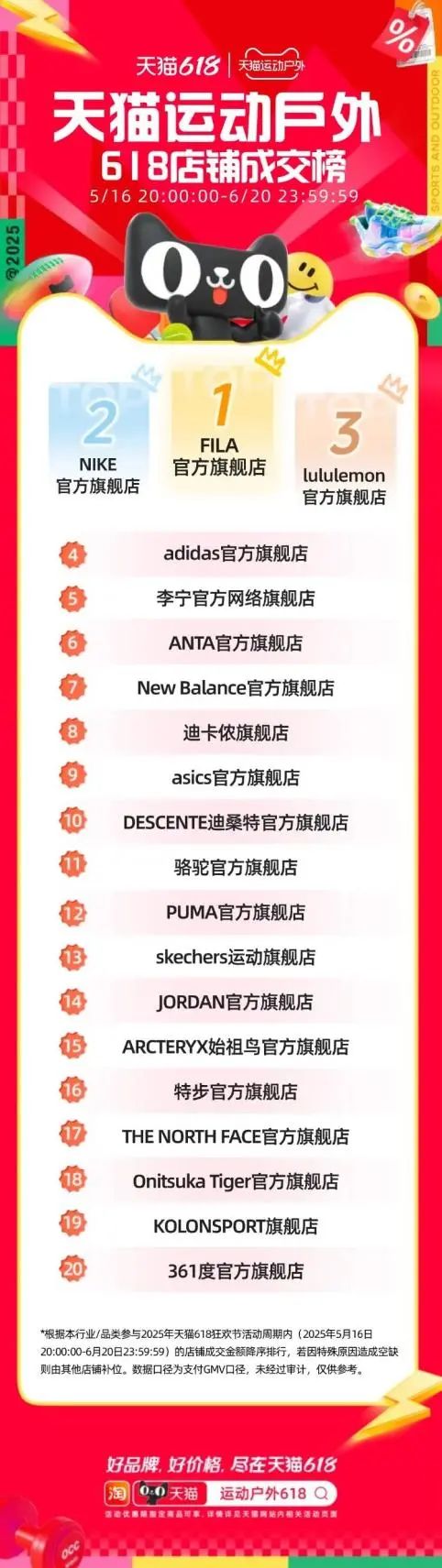
Core Insights - FILA has achieved significant success during the 2025 618 shopping festival, marking a milestone in its "second entrepreneurship" strategy, with a focus on capturing consumer emotional needs rather than competing solely on price [1][2][10] - The brand's sales during the event indicate a strong market position, with FILA's GMV showing high double-digit growth and accounting for approximately 14% of the sports category's total sales [2][10] Company Strategy - FILA's transformation began after being acquired by Anta Group in 2009, which implemented a 100% direct sales model and enhanced customer experience through immersive flagship stores, raising the average transaction value from 600-1000 RMB to 800-1200 RMB [5] - The brand has developed a comprehensive sub-brand matrix, including FILAKids, FILAFUSION, and FILAAthletics, to cover all age groups and market segments [7][15] Market Position - By 2024, FILA's revenue reached 26.626 billion RMB, with a year-on-year growth of 6.1%, making it a significant contributor to Anta Group's overall revenue [8] - Despite this growth, FILA faces challenges such as declining revenue growth rates and increased competition from niche brands like Lululemon and Arc'teryx [8][11] Consumer Targeting - FILA is strategically targeting the younger demographic (ages 18-30), recognizing them as a key consumer group for driving growth in the evolving sportswear market [11][13] - The brand's product design incorporates elements that resonate with young consumers, such as retro styles and elite sports aesthetics, focusing on tennis and golf as core growth areas [13][15] Emotional Marketing - The shift in consumer behavior towards emotional consumption has led FILA to emphasize emotional value in its marketing, although there are concerns about the sustainability of this approach without strong product functionality [18][20] - FILA's emotional narratives, while initially effective, face risks of homogenization and may require deeper emotional engagement to maintain consumer interest [23][25] Future Challenges - The brand must balance its focus on fashion with the essential functional performance of its products to avoid consumer perception of inflated pricing without adequate value [20][21] - FILA's current market strategy may not adequately address the emotional needs of consumers in lower-tier cities, indicating a need for localized marketing strategies to expand its reach [25][26]
Federal Realty Completes Johnson County, KS Acquisition; Advances Capital Allocation Strategy
Prnewswire· 2025-07-09 20:05
Core Viewpoint - Federal Realty Investment Trust is actively engaging in strategic transactions to enhance portfolio quality and drive long-term value creation through capital allocation and recycling mature assets [1][3]. Group 1: Recent Transactions - The company acquired Town Center Plaza and Town Center Crossing in Leawood, Kansas, for $289 million, totaling 550,000 square feet [4][10]. - The acquisition targets affluent and fast-growing markets, with the centers serving over 600,000 residents and featuring top retailers like Trader Joe's and Apple [5][6]. - Federal Realty has identified over $1 billion in potential dispositions across various stabilized retail properties and residential assets [9]. Group 2: Capital Recycling Strategy - The company is focused on disciplined capital recycling, selling mature assets to unlock significant embedded value [8]. - Recent sales include the Hollywood Boulevard retail portfolio in Los Angeles for $69 million and Levare at Santana Row for $74 million [11][10]. Group 3: Development Initiatives - Construction has commenced on Lot 12, a 258-unit residential project at Santana Row, with an expected investment of approximately $145 million [12]. - The company is advancing high-value development projects that align with demand and long-term economic potential [12]. - A new residential building with ground-floor retail is under construction in Hoboken, NJ, expected to deliver in 2027 [15]. Group 4: Company Overview - Federal Realty is a leader in the ownership and redevelopment of high-quality retail properties, primarily in major coastal markets [13]. - The company has a portfolio of 103 properties, including approximately 3,500 tenants across 27 million commercial square feet and about 3,100 residential units [13]. - Federal Realty has increased its quarterly dividends for 57 consecutive years, the longest record in the REIT industry [14].

宝尊豪赌Sweaty Betty:中国瑜伽红海中的第三条道路与生死时速
Xin Lang Zheng Quan· 2025-07-09 08:16
Core Viewpoint - Baozun E-commerce is making a strategic gamble to transform its business model amid ongoing losses, focusing on acquiring international brands to enhance its brand management capabilities [1][2][3]. Group 1: Financial Performance and Strategic Shift - Baozun reported losses of 220 million RMB in 2021, which expanded to 653 million RMB in 2022, with continued losses expected in 2023 and 2024 [2]. - The company initiated a strategic restructuring in March 2023, dividing its operations into three segments: Baozun E-commerce (BEC), Baozun Brand Management (BBM), and Baozun International (BZI) [2]. - The BBM segment showed a 23.4% year-on-year revenue increase to 390 million RMB in Q1 2025, with adjusted operating losses narrowing by 28.1% to 21 million RMB, attributed to the strong performance of GAP and Hunter brands [2][3]. Group 2: Acquisition of Sweaty Betty - The acquisition of Sweaty Betty, a high-end women's activewear brand, is valued between 40 million to 50 million USD and marks Baozun's third significant acquisition in brand management [1][3]. - Sweaty Betty has faced challenges in the Chinese market, including a failed initial entry and declining global revenues, with 2023 revenue at 203 million USD, down 3.6% [3][4]. - Baozun aims to leverage Sweaty Betty's brand potential and replicate the recovery path seen with GAP in China [3]. Group 3: Competitive Landscape - The high-end yoga market in China is highly competitive, dominated by lululemon, which reported a 21% revenue increase in Q1 2025 in the Chinese market [4]. - New entrants like Anta's MAIA ACTIVE and Alo Yoga are reshaping the competitive dynamics, with strategies targeting different market segments [4][5]. - Sweaty Betty's previous market entry failures highlighted issues such as imbalanced channel strategies, lack of product localization, and insufficient investment from its parent company [5]. Group 4: Operational Strategy and Challenges - Baozun's strategy for Sweaty Betty includes cost control and local adaptation, integrating the brand's team into the GAP China structure to reduce management costs [5][6]. - The operational model aims to utilize shared resources across brands, enhancing efficiency and market responsiveness [7]. - Despite the potential for synergy, the BBM segment remains in a loss-making state, with a need to establish a strong brand narrative to resonate with Chinese consumers [8]. Group 5: Future Outlook - Baozun's management has set a target for the BBM segment to achieve breakeven by 2025, with Sweaty Betty's success being critical to this goal [8]. - Initial strategies may focus on differentiating from lululemon by targeting emerging fitness trends and enhancing the brand's British fashion identity [8].

瑜伽服赛道 本土新势力崛起
Guang Zhou Ri Bao· 2025-07-09 08:11
Group 1 - The Chinese sportswear market, particularly the yoga apparel segment, is experiencing intense competition, with significant market entries and acquisitions, such as the acquisition of Sweaty Betty by Baozun [1] - The yoga apparel market in China is projected to exceed 80 billion yuan by the end of 2024, with a compound annual growth rate (CAGR) of over 15% [1] - Lululemon reported a global net revenue of $2.4 billion for Q3 of fiscal year 2024, with a nearly 40% year-on-year growth in the Chinese market, reaching $318 million [1] Group 2 - Domestic brands like Anta, Li Ning, and Xtep are emerging as new forces in the yoga apparel market, focusing on multi-scenario designs and gaining market share [1] - MAIA ACTIVE, acquired by Anta, is concentrating on yoga products and has seen significant growth in its young consumer base, with 68% of sales coming from the 25-35 age group [2] - The future of the yoga market will hinge on understanding female consumer needs, as brands that can effectively cater to these demands will gain a competitive edge [2]