
Apple Inc.

Search documents
Growth Investors Face a Dilemma With SPYG's 56.8% Tech Concentration After Recent Losses
247Wallst· 2026-02-16 13:08
Core Insights - SPDR S&P 500 Growth ETF (SPYG) has a significant tech concentration of 56.8%, which has led to recent performance challenges, including a 3.05% decline year-to-date while the broader S&P 500 remained flat [1] - The fund has delivered a remarkable 411% return over the past decade, outperforming the S&P 500's 265% gain, primarily due to its heavy allocation in technology and communication services [1] - The top five holdings, including NVIDIA, Apple, Microsoft, Alphabet, and Broadcom, account for approximately 36% of the fund's returns, indicating a high concentration risk [1] Performance Metrics - SPYG's expense ratio is 0.04%, with total assets amounting to $45.7 billion [1] - The fund's dividend yield is 0.46%, emphasizing its focus on capital appreciation rather than income generation [1] - Over the past month, SPYG has experienced a 4.3% decline, reflecting the volatility associated with its tech-heavy portfolio [1] Investment Strategy - SPYG targets growth-oriented companies that reinvest profits into expansion, rather than distributing income through dividends [1] - The fund's strategy is designed for investors seeking large-cap growth exposure without the need for individual stock selection, accepting higher volatility as a trade-off [1] - The fund's concentration in the top ten holdings, which make up nearly 53% of the portfolio, poses risks if market conditions shift, particularly in the semiconductor and advertising sectors [1]


Stock Market Today: Dow Jones, S&P 500 Futures Slip As Investors Brace For Mega-Cap Earnings—Brand Engagement, Nucor In Focus - SPDR S&P 500 (ARCA:SPY)
Benzinga· 2026-01-26 10:36
Market Overview - U.S. stock futures declined on Monday following a mixed close on Friday, with major benchmark indices showing lower futures [1] - Investors are focused on upcoming earnings reports from companies such as UnitedHealth Group, General Motors, Microsoft, Meta Platforms, Tesla, and Starbucks [1] - The Federal Open Market Committee's interest rate decision is anticipated on Wednesday [1] Treasury Yields - The 10-year Treasury bond yield is at 4.21%, while the two-year bond yield stands at 3.59% [2] - Market projections indicate a 97.2% likelihood that the Federal Reserve will keep interest rates unchanged in January [2] Index Performance - Dow Jones decreased by 0.12%, S&P 500 by 0.24%, Nasdaq 100 by 0.44%, and Russell 2000 by 0.29% [3] - SPDR S&P 500 ETF Trust (SPY) fell by 0.22% to $687.69, and Invesco QQQ Trust ETF (QQQ) declined by 0.43% to $620.04 [3] Stocks in Focus - Baker Hughes Co. reported a 3.74% increase in premarket trading after posting adjusted earnings of 78 cents per share, exceeding estimates of 67 cents [7] - Sarepta Therapeutics Inc. saw a 6.72% rise following the completion of a confirmatory trial for its PMO therapies and third-quarter results [7] - Nucor Corp. is projected to report quarterly earnings of $1.91 per share on revenue of $7.87 billion [7] - WR Berkley Corp. is expected to report earnings of $1.13 per share on revenue of $3.66 billion [15] - Brand Engagement Network Inc. surged by 221.60% due to a strategic partnership with Valio Technologies [15] Analyst Insights - Mohamed El-Erian notes a "2025 Paradox" where financial markets remain resilient despite geopolitical tensions, with U.S. economic activity appearing robust [11] - El-Erian anticipates the Federal Reserve will maintain interest rates, with a focus on corporate earnings from tech giants and political issues surrounding trade tariffs [12] - The stock market has retraced losses from geopolitical tensions, but there is a notable surge in precious metals as a counter-narrative [11] Upcoming Economic Data - Key economic data releases include durable-goods orders, consumer confidence, and the Federal Reserve's interest rate decision [17]


Product roundup: Global X’s new ETF seeks to capitalize on growth of tokenized finance
Investment Executive· 2026-01-23 20:04
Tokenized Financial Infrastructure - The index provides exposure to companies involved in tokenized financial infrastructure, including stablecoin issuers and tokenization platforms, with top holdings such as Nu Holdings Ltd. and Coinbase Global, Inc. [1] - Tokenized U.S. Treasuries have grown into a multi-billion-dollar market, with nearly US$10 billion issued on-chain, indicating significant potential for long-term growth [2] Regulatory Developments - The Canadian government is introducing new legislation to regulate fiat-backed stablecoins, requiring issuers to maintain adequate reserves and implement risk management frameworks [3] - Stablecorp Digital Currencies Inc. announced that its QCAD digital token is the first Canadian dollar-linked stablecoin to receive regulatory approval, highlighting the shift towards tokenization in financial technology [4] ETF Market Expansion - Harvest Portfolios Group Inc. has expanded its U.S. single-stock ETF lineup with six new funds, employing an active covered call writing strategy and leveraging around 25%, bringing its total to 25 U.S. single-stock ETFs [6][7] - Hamilton Capital Partners Inc. launched two new ETFs, including the HAMILTON CHAMPIONS U.S. Technology Index ETF, which aims to replicate the performance of a specific technology index with top holdings like Alphabet Inc. and Apple Inc. [8] Fund Closures - RPIA is closing its RP Target 2026 Discount Bond Fund, with liquidation expected to occur in an orderly fashion by March 24 [11] - Existing unitholders have the option to switch to another RPIA mutual fund or redeem their units until March 20, with waived short-term trading fees [12]

Wow, iShares OEF ETF Holds 11% in One Single Stock
247Wallst· 2026-01-23 13:45
Core Idea - The iShares S&P 100 ETF (OEF) provides concentrated exposure to the largest companies in America, particularly in the technology sector, appealing to investors who favor growth and are willing to accept the associated risks [1][2]. Performance and Structure - OEF tracks the S&P 100, focusing on capital appreciation from dominant businesses, with technology making up nearly 40% of the portfolio and communication services and consumer discretionary accounting for an additional 25% [2]. - Over the past five years, OEF's heavy allocation to mega-cap technology has resulted in substantial gains, effectively doubling the portfolio's value, with the top three holdings comprising 28% of total assets [3]. - The fund has a competitive expense ratio of 0.20% and a 25-year track record, making it a stable choice for long-term investors [4]. Portfolio Fit - OEF serves as a core holding for investors seeking large-cap U.S. equity exposure with a growth focus, providing modest income through a quarterly dividend structure with a current yield of 0.86% [4]. - It is suitable for tax-advantaged accounts due to its low 4% turnover rate, enhancing tax efficiency, but is less appropriate as a sole equity holding due to sector concentration [5]. Risks and Vulnerabilities - The concentration strategy that drives OEF's performance also introduces vulnerability; significant sell-offs in mega-cap tech can adversely affect returns, particularly given that NVIDIA alone represents nearly 11% of the fund's assets [6]. - OEF has minimal exposure to defensive sectors, with utilities and materials making up only 1.3% of the portfolio, which can exacerbate declines during market downturns [7]. - Although OEF has historically outperformed the S&P 500, it can lag during certain periods, as evidenced by a year-to-date decline of 2.2% compared to the SPDR S&P 500 ETF Trust's 0.4% decline [8].
‘This time is different’: How AI is redefining the memory market
BusinessLine· 2026-01-22 10:09
Core Viewpoint - Memory and storage stocks are currently the hottest trade in the market, driven by the transformative impact of artificial intelligence, leading to elevated valuations that investors are willing to accept despite historical comparisons being deemed irrelevant [1][2]. Group 1: Company Performance - Sandisk Corp., Western Digital Corp., Micron Technology Inc., and Seagate Technology Holdings Plc have been the best-performing shares in the S&P 500 Index since the end of 2024, with Sandisk shares gaining 111% in 2026 [2][3]. - Seagate's earnings multiple is around 24, while Micron is trading at less than 11 times estimated earnings, despite a 36% gain in January [3]. - Analysts have revised Sandisk's net 2026 earnings per share estimates up by 172% in the past three months, with revenue expectations increasing by over 21% [8]. Group 2: Market Dynamics - The memory chip market has historically been cyclical, heavily influenced by the computer and mobile phone industries, leading to periodic gluts and lower valuations [5][6]. - The emergence of AI is fundamentally changing the demand landscape, with significant investments from major companies in memory chips and storage components, suggesting a more sustainable valuation environment [6][7]. - The index of spot prices for DRAM chips has soared recently, indicating accelerated growth and rising memory prices, which analysts believe could persist for two to three years [7]. Group 3: Analyst Sentiment - BNP Paribas upgraded Seagate to outperform, citing robust data center storage demand that could drive a longer upcycle than previously expected [8]. - Despite the positive outlook, Wall Street does not expect significant further climbs for these stocks, with Sandisk trading 32% above its average analyst price target, indicating weaker return potential [9]. - Caution is advised in the near term, as the consensus view suggests that while memory prices will remain strong, the rapid gains may lead to potential market risks [10][11].


As Memory Chip Prices Soar On Relentless AI Demand, Consumer Electronics Makers Feel The Squeeze: Chip Stocks Soar - Samsung Electronics Co (OTC:SSNLF)
Benzinga· 2026-01-22 08:42
Core Insights - The demand from AI data centers is driving a significant increase in memory chip prices, negatively impacting sales and margins for major consumer electronics manufacturers [1][2]. Memory Chip Market - Global AI capital expenditure is projected to reach between $5 trillion and $8 trillion by 2030, putting pressure on memory chip supply [2]. - Major memory chip manufacturers, including Samsung, SK Hynix, and Micron, are struggling to meet demand despite rising prices and new capital expenditure plans [2]. - The memory market is in a "hyper-bull" phase, with prices expected to increase by 40% to 50% in Q1 2026, following a similar rise in Q4 2025 [3]. Consumer Electronics Impact - Consumer electronics companies like Dell, Lenovo, HP, Xiaomi, and Apple are facing challenges in maintaining margins due to high memory chip prices, which may lead to decreased consumer demand [4]. - IDC forecasts a 3% to 5% increase in the average selling price of smartphones, while the market may contract by 5.2% in 2026 [5]. - The PC segment is also under pressure, with only the Microsoft Windows 10 end-of-life refresh cycle providing some support for demand [5]. Stock Performance - Leading consumer electronics stocks have experienced significant declines, with Dell down 8.90%, Lenovo down 14.02%, HP down 23.14%, and Xiaomi down 38.69% [6]. - In contrast, memory chip manufacturers have seen substantial stock price increases, with Samsung up 60.62%, SK Hynix up 181.19%, and Micron up 256.26% over the past six months [8]. - The VanEck Semiconductor ETF, which tracks semiconductor and memory stocks, has also performed well, increasing by 40.85% [8][9].


OpenAI Seeks US-Based Suppliers for Planned Robotics, AI Device Push
Yahoo Finance· 2026-01-15 16:36
Core Viewpoint - OpenAI is expanding its hardware supply chain in the US and seeking partners for consumer devices, robotics, and cloud data centers, indicating a significant product expansion in the coming years [1][4]. Group 1: Hardware Supply Chain and Partnerships - OpenAI has issued a request for proposals from US manufacturers for components like silicon, motors, packaging materials, and cooling gear for data centers, although spending details and timelines are not disclosed [2]. - The company plans to invest trillions of dollars in data center expansions, linking this strategy to revenue growth [4]. - OpenAI has acquired an AI device startup co-founded by Jony Ive, aiming to enter the consumer device market, and has partnered with Foxconn to design and manufacture hardware for US data centers [4]. Group 2: Robotics and AI Development - OpenAI's interest in robotics partners indicates a more aggressive move into this sector, with expectations that the robotics industry will grow rapidly [6]. - The company believes that while China currently has hardware advantages, the US may excel in developing the AI capabilities of machines [6]. Group 3: Data Center Innovations - The request for proposals includes ideas for preventing AI chips from overheating, a concern for startups and industrial firms [7]. - Nvidia's upcoming chip generation may reduce the need for traditional cooling equipment, potentially impacting companies that manufacture such products [7].
iShares ETF Has A ‘Set And Forget’ Investment For Retirees You Don’t Need To Overthink
Yahoo Finance· 2026-01-12 15:20
Core Insights - The iShares Core S&P Total U.S. Stock Market ETF (ITOT) provides a comprehensive exposure to the U.S. equity market with a low expense ratio of 0.03% annually, making it suitable for retirement investing without the need for constant decision-making [1][2]. Investment Strategy - ITOT tracks approximately 3,000 U.S. stocks across various market capitalizations, ensuring automatic diversification across sectors and company sizes, which is beneficial for retirees [2][3]. - The fund's sector allocation includes 33% in information technology and 11% in financials, with significant holdings in major companies like NVIDIA (7.3%), Apple (6%), and Microsoft (5.7%) [3]. Performance Metrics - ITOT has delivered a total return of approximately 285% over the past decade, effectively turning an initial investment of $10,000 into about $38,500, with an annualized return in the mid-teens [5]. - The fund has maintained a dividend yield of around 1%, with distributions growing at an annual rate of 6% to 7% [4][7]. Market Resilience - ITOT has demonstrated resilience during market disruptions, including the COVID-19 crash in 2020 and the bear market in 2022, where it fell roughly 34% before rebounding [6]. Considerations for Retirees - The effectiveness of ITOT for retirees depends on their equity allocation and time horizon, as different age groups with varying equity exposure will experience different outcomes [8].
四季度行情,选好工具更重要
Sou Hu Cai Jing· 2025-11-10 06:00
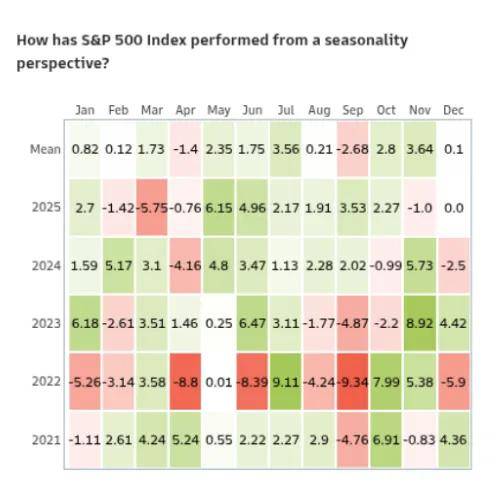
Group 1 - Recent pullbacks in Hong Kong and US stock markets are driven by three main concerns: US-China negotiations, the uncertainty surrounding the US government shutdown, and profit-taking by institutions [1][2] - Trump's statement about the imminent end of the US government shutdown is alleviating market concerns, and historical data suggests that November and December are typically strong months for US stocks [2][4] - The potential end of the government shutdown could lead to a resumption of macroeconomic data releases and liquidity improvements in the market [5] Group 2 - The likelihood of a Federal Reserve rate cut in December is increasing, with current market expectations suggesting a probability above 60% [4] - Recent data indicates a significant rise in layoffs in the US, particularly in the technology, retail, and service sectors, which may contribute to a weaker employment outlook [4] - The SOFR rate surged to 4.22%, the highest increase in a year, indicating liquidity issues in the repurchase market due to the government shutdown [5] Group 3 - The focus for investment opportunities in both Hong Kong and US markets should be on AI technology, with current valuations of tech companies remaining reasonable compared to historical levels [7] - The Southbound Hong Kong Stock Connect ETF, specifically the Hang Seng Tech ETF (3442.HK), offers a diversified investment in both US and Hong Kong tech stocks, providing a strategic allocation opportunity [10][11] - The Southbound ETF products are advantageous due to their ample daily quotas and extended trading hours, making them more accessible for investors [10][19] Group 4 - The Southbound ETF market is seeing strong demand, with the Southern Eastern ETF holding a significant market share among Southbound ETFs [17][19] - The Southern Eastern FTSE East-West Stock Select ETF (3441.HK) has achieved a 31% return since its launch, demonstrating the potential for stable growth through high free cash flow companies [15][19] - The combination of Hong Kong internet stocks and US tech giants provides a unique investment strategy that is not commonly available in the market [11][19]
This 'Big Short' Investor Owns Every Magnificent 7 Stock Except The One He Thinks Has A Cult-like Following
Yahoo Finance· 2025-11-06 15:16
Core Insights - Steve Eisman, a notable investor known for his role in "The Big Short," holds a portfolio that includes all stocks in the Magnificent 7 except Tesla, which he criticizes for its shareholders' unwavering belief in its long-term prospects [1][4] Group 1: Magnificent 7 Overview - The Magnificent 7 consists of Nvidia Corp., Microsoft Corp., Apple Inc., Alphabet Inc., Amazon.com, Inc., Meta Platforms Inc., and Tesla Inc., recognized as top-performing tech stocks over the past decade [2] Group 2: Tesla's Financial Performance - Eisman expresses skepticism about Tesla, noting that its earnings have been declining over the past few years, with peak earnings of $4.30 per share in 2023, expected to drop to $2.04 per share in 2024, indicating a decline of over 50% [5] - Despite the decline in earnings, Tesla's stock price remains slightly higher, which Eisman finds concerning [5]
