
Google DeepMind

Search documents
CNBC Daily Open: U.S. markets rocked by private credit worries and potential strike on Iran
CNBC· 2026-02-20 07:30
Market Overview - U.S. markets experienced volatility due to escalating tensions with Iran and concerns over private credit, leading to a decline in major indices [1][3] - The S&P 500 decreased by 0.28%, the Dow Jones Industrial Average fell by 0.54%, and the Nasdaq Composite closed down by 0.31% [3] Oil Market - Oil prices increased by nearly 2% in U.S. trading amid fears of supply disruptions due to potential military action in Iran [1] Private Credit Market - Blue Owl Capital sold $1.4 billion in loan assets, raising concerns about liquidity and stability in the private credit market, resulting in a nearly 6% drop in its stock [2] - Other asset managers, including Blackstone and Apollo Global Management, also saw declines in their stock prices [2] Aerospace Industry - Airbus stock fell by 6% after the company announced that its deliveries for the year would be below analyst expectations, citing supplier-driven engine shortages as "unsatisfactory" [3] Artificial Intelligence Sector - Positive sentiment was noted at India's AI Impact Summit, with discussions involving leaders from Microsoft, OpenAI, and Qualcomm on the AI industry and semiconductor manufacturing [3] - Google DeepMind's CEO highlighted that the memory chip shortage remains a limiting factor for agentic AI [4] - Nvidia plans to invest up to $30 billion in OpenAI, which would value the startup at $730 billion pre-money [4]


Alibaba Group unveils Qwen3.5 as China's chatbot race shifts to AI agents
CNBC· 2026-02-17 03:11
Core Insights - Alibaba has launched its latest AI model series, Qwen3, which integrates traditional large language model capabilities with advanced dynamic reasoning to enhance its competitive edge in the Chinese AI market [1] Model Features - The Qwen3.5 AI model is available in an open-weight version for users to download, run, fine-tune, and deploy on their own infrastructure, alongside a hosted version on Alibaba's servers [2] - Qwen3.5 features improvements in performance and cost, with native multimodal capabilities that allow it to process text, images, and video simultaneously [3] - The model supports new coding and agentic capabilities, compatible with popular open-source AI agents like those from OpenClaw [3] Competitive Landscape - Local competitors such as ByteDance and Zhipu AI have also released upgraded models aimed at enhancing agent capabilities [5] - Qwen3.5 has 397 billion parameters, which is fewer than its predecessor, but it has shown significant performance improvements based on self-reported benchmarks [5] - Benchmark tests indicate that Qwen3.5's performance is comparable to leading models from OpenAI, Anthropic, and Google DeepMind, although these comparisons are self-reported [6] Language Support and Future Developments - The new Qwen3.5 models support 201 languages and dialects, an increase from the previous generation's 82 [7] - Alibaba is expected to release more open-weight models during the Chinese New Year, as indicated by the technical lead of Alibaba Cloud's Qwen team [7] Industry Trends - The release of Anthropic's Claude AI agent tools has prompted other American AI companies to accelerate the development of agentic capabilities [8] - Industry leaders, including OpenAI and Google DeepMind, acknowledge that Chinese AI models are rapidly advancing and are only months behind their Western counterparts [8]

阿尔特曼、皮查伊等科技巨头CEO将赴印度,出席关键市场AI峰会
Xin Lang Cai Jing· 2026-02-16 13:47
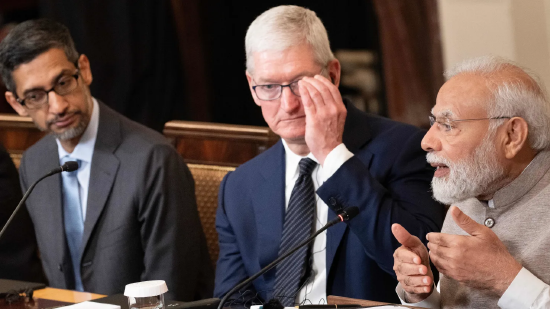
Group 1 - Global tech executives will gather in New Delhi, India, for an AI summit, highlighting the importance of the Indian market for growth [3][20] - The summit will feature key attendees such as OpenAI CEO Sam Altman and Alphabet CEO Sundar Pichai, with Indian Prime Minister Narendra Modi hosting the event [4][6][24] - The summit underscores India's potential as a critical player in AI development, with a large, tech-savvy consumer base and abundant talent [4][21] Group 2 - The Indian government aims to position the country as a global tech superpower, having approved a $18 billion semiconductor project to build a local supply chain [5][22] - Major tech companies, including Apple, are expanding their production in India, supported by government initiatives [8][22] - Venture capital is increasingly investing in Indian startups, with a significant rise in IPOs on Indian exchanges [9][23] Group 3 - The summit will focus on three main AI areas: infrastructure, users, and talent, with expectations for announcements regarding AI data center investments [10][26] - India is a top market for OpenAI's ChatGPT, which competes with other platforms for user acquisition and valuable data for model training [10][27] - The country is emerging as a hub for global capability centers (GCCs), with over 60% of newly established GCCs focusing on AI and data [12][31] Group 4 - The demand for AI talent in India is growing, with positions like "Chief AI Officer" becoming more common [11][29] - The establishment of GCCs is facilitating the recruitment of engineering talent and executives in India [13][28] - The trend indicates that over 80% of GCCs planned in the next 6-8 months will be AI-focused [31]


China's tech shock threatens the U.S. AI monopoly and is 'just getting started'
CNBC· 2026-02-16 12:30
Core Insights - China's rapid advancements in AI are challenging U.S. dominance, with analysts predicting a significant tech shock is underway [1][2] - The emergence of a "China tech sphere" could attract developing economies due to lower costs compared to U.S. and European alternatives [7][8] Industry Developments - China has launched a national AI fund worth 60.06 billion yuan ($8.69 billion) and an initiative called "AI+" to integrate AI across various sectors [4] - The country is leveraging its supply chain and low production costs to enhance its tech capabilities, particularly in AI and electric vehicles [3][6] Competitive Landscape - Huawei is narrowing the gap with U.S. chipmakers like Nvidia by utilizing homegrown chips and cheaper energy sources for AI model training [6] - U.S. hyperscalers, including Amazon and Microsoft, are projected to spend up to $700 billion on AI this year, raising concerns about the return on investment [10][12] Market Implications - The choice for developing economies may lean towards affordable Chinese technology, potentially leading to a global shift towards a Chinese tech ecosystem in the next 5 to 10 years [8][9] - There is growing nervousness regarding U.S. tech exceptionalism, especially following significant market cap losses in the U.S. software sector [11][12]

From OpenAI to Google, India hosts global AI summit
Reuters· 2026-02-16 08:23
Core Insights - India is hosting the first AI summit in the developing world, aiming to attract more investment in the AI sector and amplify the voices of developing nations in global AI governance [1][1][1] - Major global AI companies, including Google, Microsoft, and Amazon, have committed a total of $68 billion in AI and cloud infrastructure investments in India by 2030 [1][1][1] - The summit is expected to attract over 250,000 delegates and features prominent speakers such as Sundar Pichai, Sam Altman, and Mukesh Ambani [1][1][1] Investment and Economic Impact - India's strategy focuses on "application-led innovation" rather than developing frontier-scale AI models, with significant domestic adoption already evident [1][1] - The country has become OpenAI's largest user market, with over 72 million daily ChatGPT users projected by late 2025 [1][1] - The rapid adoption of AI technologies poses potential threats to jobs in India's $283 billion IT sector, with predictions of a 50% revenue hit for call centers by 2030 [1][1] Event Logistics and Public Response - The summit is being held at Bharat Mandapam, a $300 million convention complex, with over 300 exhibitors participating [1][1] - The influx of international delegates has led to a significant increase in hotel prices in Delhi, with luxury suites seeing prices rise from approximately $2,200 to over $33,000 per night [1][1] - India's Supreme Court has allowed advocates to appear via video conferencing during the summit week due to anticipated traffic congestion [1][1]
Huang and Pichai among tech CEOs heading to India for major AI summit in a key market
CNBC· 2026-02-15 23:15
Core Insights - The AI Impact Summit in India is attracting major technology executives, highlighting India's potential as a critical growth market for AI development [2][4] - India's government is actively promoting the country as a tech superpower, with significant investments in semiconductor projects and incentives for multinational companies to manufacture locally [5][6] Group 1: Market Potential - The summit is seen as a validation of India's market potential, with tech leaders recognizing the importance of establishing a presence in the country [4] - India is viewed as a lucrative market with a young, tech-savvy consumer base and a large pool of talent essential for AI development [3][8] Group 2: Investment and Infrastructure - Major infrastructure investments in AI data centers are anticipated, driven by increasing demand for computing power [7] - Venture capital is flowing into Indian startups, and the stock exchanges are experiencing a rise in initial public offerings, indicating a robust investment climate [6] Group 3: Talent and Leadership - India is emerging as a hub for AI talent, with a significant number of Global Capability Centers (GCCs) focusing on AI and related fields [10] - The creation of senior leadership roles, such as "chief AI officer," is becoming more common in India, reflecting the growing importance of AI expertise [11]
xAI 关键人物跑路,马斯克 AI 野心遭重创
投中网· 2026-02-12 06:31
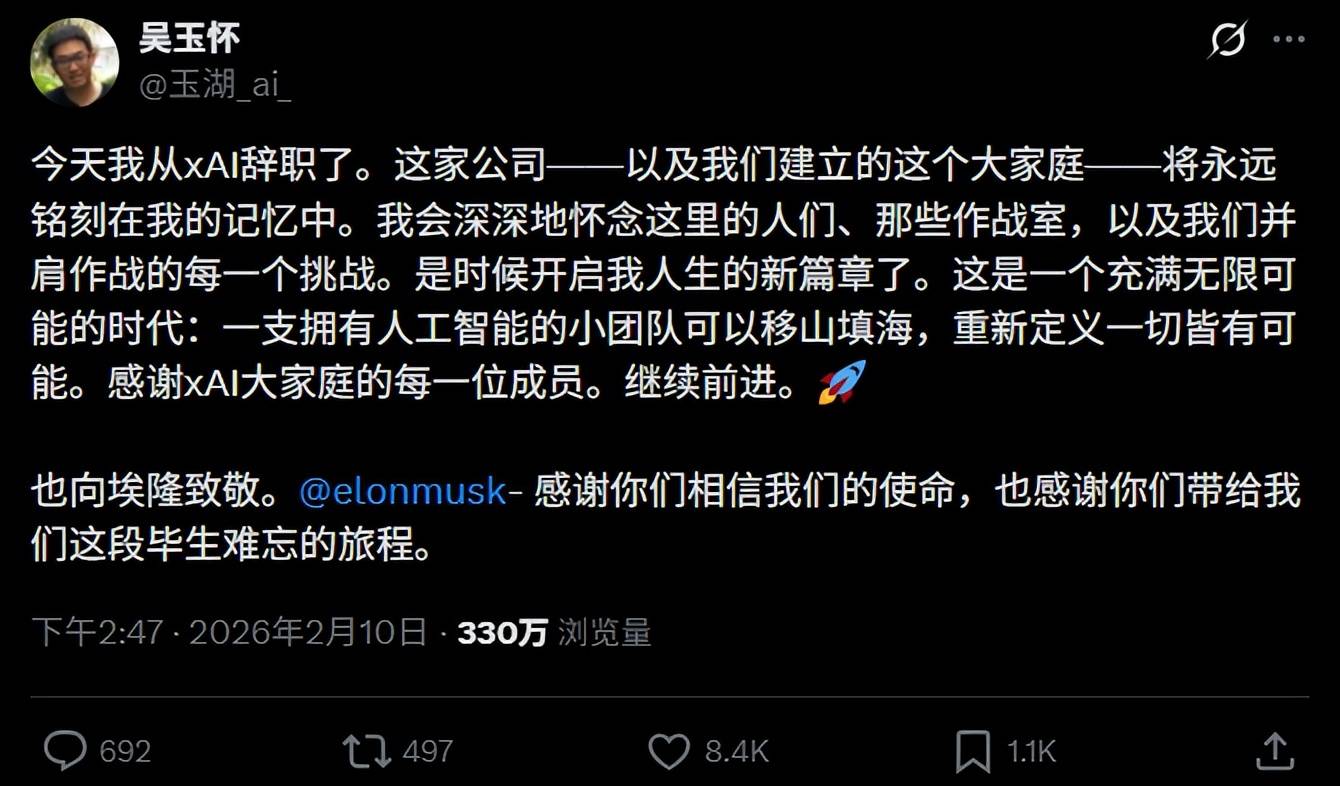
Core Viewpoint - The article discusses the recent departures of key personnel from xAI, highlighting the potential impact on the company's future in the competitive AI landscape, particularly in the area of AI reasoning capabilities. Group 1: Key Departures - Tony Wu, a co-founder of xAI and responsible for AI reasoning, announced his departure, marking the second co-founder to leave within a year, raising concerns about the company's stability and future innovation [6][9]. - The loss of Wu is particularly critical as reasoning capabilities are seen as a bridge between current AI models and true general artificial intelligence [8]. Group 2: Management Style Concerns - The article suggests that the management style of Elon Musk, characterized by extreme pressure and a lack of creative freedom, may be a significant factor in the high turnover of talent at xAI [10]. - Musk's approach, which emphasizes rapid execution, may not align with the needs of AI research, which often requires time for reflection and experimentation [10]. Group 3: Industry Context - The talent exodus at xAI reflects a broader trend in the AI industry, where top talent is in high demand and can command salaries exceeding $500,000, along with substantial equity [12]. - Companies like OpenAI and Anthropic, which are led by researchers and offer a more conducive environment for innovation, are seen as more attractive to AI professionals compared to xAI's CEO-driven model [12][13].
创始团队出走一半,马斯克连夜调整xAI愿景,用百万GPU追平推理短板
Sou Hu Cai Jing· 2026-02-12 02:12
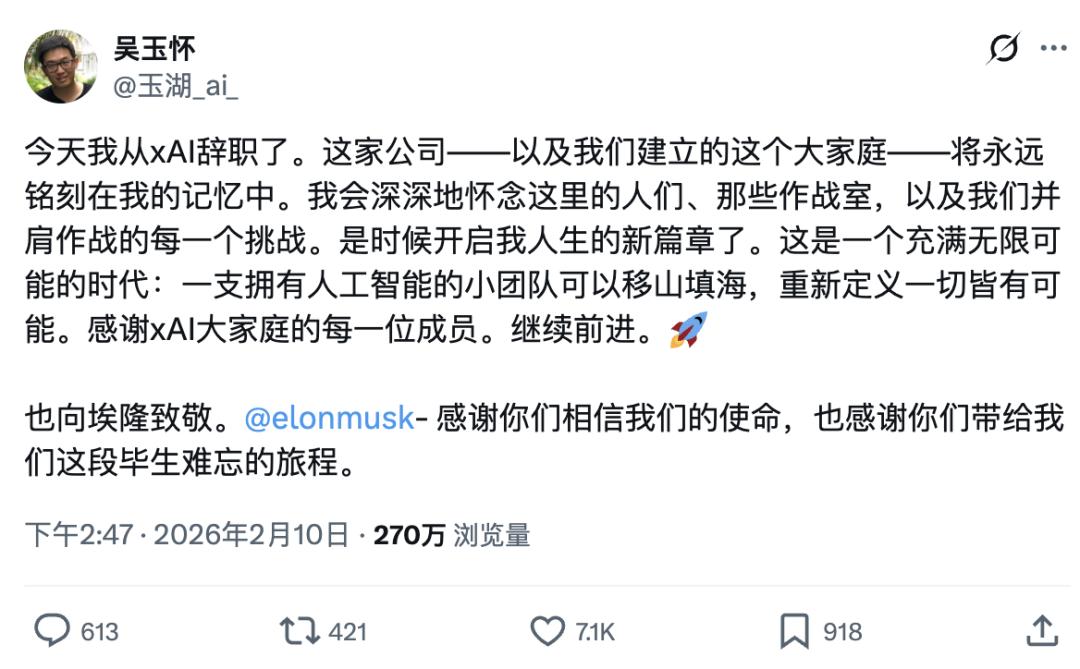
Core Insights - The recent departures of xAI co-founders Tony Wu and Jimmy Ba mark a significant shift in the company's leadership, with six out of the original twelve founders having left within three years [1][5][7] - Elon Musk emphasized that the company will continue to move forward despite these departures, indicating a restructuring aimed at improving execution speed and adapting to rapid growth [4][6] - The departures are part of a broader trend of high talent mobility within the AI industry, driven by competitive offers and ideological differences regarding safety and commercialization [8][10] Company Developments - xAI was founded in July 2023 by Musk and eleven AI experts from top tech companies, with a mission to understand the universe's true nature through advanced AI [5] - The company is currently focused on its Grok series of conversational models, which have been integrated into Musk's broader corporate ecosystem [5][14] - xAI's financial situation is concerning, with a burn rate of approximately $1 billion per month and revenues of only $107 million in the first three quarters of 2025, leading to speculation that the recent merger with SpaceX is a "lifeline" for the company [13][16] Talent Dynamics - The departures of Wu and Ba may be linked to internal restructuring and disagreements within the technical team regarding AI model performance [7][11] - The high turnover rate at xAI reflects a common trend in Silicon Valley, where top AI researchers are frequently lured away by lucrative offers and the desire for alignment with their technical philosophies [8][10] - The loss of key personnel like Wu, who led the reasoning team, could slow down the development of the Grok model and create potential weaknesses in specific areas of AI performance [16][18] Strategic Shifts - xAI is transitioning from a focus on algorithmic breakthroughs to a more resource-driven approach, emphasizing large-scale computational power [11][15] - The merger with SpaceX is expected to enhance xAI's capabilities, providing access to unique resources such as a "space data center" and significant computational power [13][14] - This shift in focus may blur the lines between Musk's various enterprises, posing challenges for xAI's core team as they adapt to new technological directions [15][18]
xAI 关键人物跑路,马斯克 AI 野心遭重创
3 6 Ke· 2026-02-11 06:13
Core Insights - The departure of Tony Wu, a co-founder of xAI, marks a significant loss for the company, especially in the critical area of AI reasoning capabilities, which is essential for advancing towards general artificial intelligence [1][2][3] - xAI has experienced a high turnover rate, with nearly half of its founding team leaving within a year, raising concerns about its stability and future prospects in a competitive AI landscape [5] Group 1: Impact of Departures - Tony Wu's role was crucial as he was responsible for AI reasoning, a key technology that differentiates advanced models like GPT-4 from true general AI [2][4] - The loss of Wu is particularly detrimental given the rapid pace of AI development, where losing a key technical leader can lead to significant delays in research and development [4][14] - The departure of Wu follows that of Igor Babuschkin, indicating potential underlying issues within xAI that could hinder its progress [1][5] Group 2: Management Style and Talent Retention - The management style of Elon Musk, characterized by extreme pressure and a focus on rapid execution, may not align well with the creative and iterative nature of AI research [8][9] - There is a growing sentiment that top AI talent prefers environments that allow for focused research and decision-making autonomy, which may not be present at xAI [11][13] - Comparatively, companies like OpenAI and Anthropic, which are led by AI researchers, provide a more conducive atmosphere for talent retention [13][14] Group 3: Industry Context - The AI industry is currently experiencing a "talent war," with top researchers in high demand and lucrative offers from multiple leading firms [11][12] - The scarcity of skilled AI professionals is likened to the demand for nuclear physicists in the past, emphasizing the competitive landscape for talent [12] - The ability to attract and retain talent is critical, as the most valuable resource in AI development is individuals who can innovate and advance machine reasoning capabilities [15]
2025年AIGC发展研究报告4.0版
Sou Hu Cai Jing· 2026-02-05 07:38
Core Insights - The report focuses on the current state of AIGC and AGI development, highlighting a competitive landscape dominated by the US and China, with a shift towards multimodal integration and autonomous agents, making human-machine coexistence inevitable [1] Group 1: Technological Developments - Key breakthroughs in AGI are concentrated in four areas: long-term memory and controllable personality, physical interface integration, autonomous scientific hypothesis validation, and institutional restructuring [2] - Core technological trends include the emergence of text generation intelligence, 3D world simulation, and video generation spatiotemporal modeling [2] - The competition among large models has led to a dual-track system of open-source and closed-source models, with China's open-source ecosystem leading and the US's closed-source models outperforming by approximately 9 months [2] Group 2: Global Competition and Industry Landscape - In 50 key AI fields, the US leads in 26 areas focusing on foundational breakthroughs and principle innovation, while China leads in 13 areas excelling in application implementation and industry integration [3] - Eleven core companies dominate the market, with OpenAI and Google DeepMind leading the closed-source camp, while DeepSeek, Alibaba, and ByteDance drive the open-source ecosystem and application scenarios [3] - The development of models is shifting towards "personalization + specialization," with agentification and ecological embedding becoming mainstream [3] Group 3: Application Scenarios - In content production, AIGK achieves knowledge self-organization, with AI in literature, art, music, and video realizing large-scale creation [4] - Industry applications span education, healthcare, government, energy, and agriculture, with AI + education promoting personalized learning and AI + healthcare constructing multimodal models for cancer diagnosis [4] - The intelligent internet is accelerating, with social AI integration and AI socialization reshaping information retrieval logic, leading to a subtle integration of AI into daily life [4] Group 4: Challenges and Future Outlook - Current challenges include cumulative errors, long-term memory drift, and accountability attribution among nine technical challenges, with a gap between capital enthusiasm and technological reality [5] - Over the next decade, AGI will undergo four stages: toolification, scenario-based application, theoretical development, and embodiment, transitioning human-machine relationships from collaboration to coexistence [5] - The focus of human value will shift towards creativity, emotionality, and reflective value, with the economy moving from "scarcity economics" to "meaning economics," making intelligent capital a core production factor [5]
