
Tower Semiconductor

Search documents
Wed: TASE mixed as El Al falls
En.Globes.Co.Il· 2026-02-25 16:37
The Tel Aviv Stock Exchange was mixed today. The Tel Aviv 35 Index fell 0.15% to 4,162.90 points, the Tel Aviv 125 Index rose 0.73% to 4,146.46 points; and the BlueTech Global Index rose 1.41% to 673.74 points. The All Bond corporate bond index fell 0.07% to 423.32 points. Turnover totaled NIS 5.02 billion in equities and NIS 5.82 billion in bonds. On the foreign exchange market, the representative shekel-dollar rate was set 0.45% lower from Tuesday, at NIS 3.10/$, and the representative shekel-euro rate ...






Salience Labs and Tower Semiconductor Partner to Manufacture At-Scale Optical Circuit Switches for Next-Generation Data Centers
Globenewswire· 2026-02-25 11:00
Salience Lab’s Innovative Architecture leverages Tower’s differentiated Silicon Photonics platforms to deliver ultra-low latency, high-bandwidth and lower-power optical connectivity for AI clusters MIGDAL HAEMEK, Israel, and OXFORD, England, February 25, 2026 — Tower Semiconductor, the leading foundry of high-value analog semiconductor solutions, and Salience Labs Limited, a leader in photonic solutions targeting connectivity for AI datacenter infrastructure, today announced a partnership to manufacture Pho ...

万卡级算力时代,CPO如何突破AI数据中心“堵点”?
Sou Hu Cai Jing· 2026-02-25 05:40
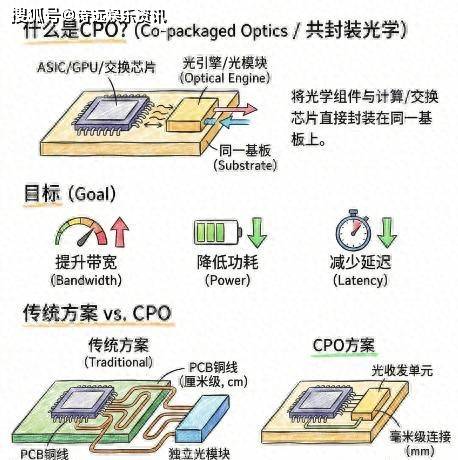
大数据、人工智能、云平台的狂飙发展让数据中心内部的"堵点"日渐突出,不再是芯片工艺本身,而是芯片之间的传输连线成了真正的瓶颈。算力集群规 模逐步攀升,铜缆的物理极限不断试探,带宽和耗电的压力像一堵看不见的墙横亘在技术升级面前。就在行业面临瓶颈时,共封装光学(CPO)从理论走 进产业中心,在2026年终于迎来商用爆发信号。 芯片通信的传送带正在重构。CPO通过2.5D/3D封装技术把光模块和AI交换芯片集成在同一底板,将电信号短距离传输(毫米级)交给电路,远距离则光 纤完成,目的就是把传统模块交换的高功耗、信号衰减、带宽瓶颈一切短板砍掉。硅光子集成进一步压缩体积和损耗,让功耗下降40%,带宽提高三倍, 延迟减少近一半,这种彻底刷新方案在万卡级AI训练集群面前尤为重要。 产业链底层,Tower Semiconductor同样打响扩产号角。2025年第四季度营收4.4亿美元,同比增长14%,净利润8000万美元。硅光与硅锗平台总投资从6.5 亿美元增至9.2亿美元,到2026年第四季度硅光晶圆月产能将提升至2025年同期的五倍。更关键的是,2028年之前70%硅光产能都被客户预订甚至预付款 锁定。Tower与英伟达 ...

Xanadu and Tower Semiconductor Deepen Strategic Collaboration to Accelerate Photonic Quantum Hardware Innovation
Globenewswire· 2026-02-19 11:00
Core Insights - Tower Semiconductor and Xanadu are expanding their collaboration to develop advanced silicon photonics for fault-tolerant quantum computers, leveraging Tower's high-volume silicon photonics platform [1][3] - The partnership aims to create a manufacturing-aligned platform for next-generation photonic quantum hardware, focusing on scalability and performance for large-scale quantum information processing [2][4] Company Developments - Xanadu's CEO highlighted the importance of the collaboration with Tower in transitioning their hardware from concept to prototype, emphasizing the combination of architectural breakthroughs and manufacturing expertise [3] - Tower Semiconductor's Vice President noted the broad applicability of their platform across various advanced domains, including quantum computing, data centers, telecom, and automotive applications [3] Technical Focus - Current efforts are directed at optimizing critical components using standard product flows for ultra-low loss silicon nitride (SiN) and integrated photodiodes, validating Xanadu's photonic circuit designs on a high-volume manufacturing platform [4]
Tower Semiconductor and Scintil Photonics Announce Availability of World's First Heterogeneously Integrated DWDM Lasers for AI Infrastructure
Globenewswire· 2026-02-17 11:00
Combined with Tower’s multi-site global footprint, Scintil’s unique SHIP™ platform is ready to take on the challenging requirements of the next generation Hyperscale AI Infrastructure MIGDAL HAEMEK, Israel, and GRENOBLE, France, February 17, 2026 - Tower Semiconductor (NASDAQ/TASE: TSEM), the leading foundry for high-value analog semiconductor solutions, and Scintil Photonics, the technology leader in Heterogeneous Integrated Photonics for next-generation AI infrastructure, today announced availability of t ...

Tower Semiconductor and Scintil Photonics Announce Availability of World's First Heterogeneously Integrated DWDM Lasers for AI Infrastructure
Globenewswire· 2026-02-17 11:00
MIGDAL HAEMEK, Israel and GRENOBLE, France, Feb. 17, 2026 (GLOBE NEWSWIRE) -- Tower Semiconductor (NASDAQ/TASE: TSEM), the leading foundry for high-value analog semiconductor solutions, and Scintil Photonics, the technology leader in Heterogeneous Integrated Photonics for next-generation AI infrastructure, today announced availability of the world’s first heterogeneously integrated Dense Wavelength Division Multiplexing (DWDM) laser sources for AI infrastructure using Scintil’s SHIP™ (Scintil Heterogeneous ...

硅光推动,Tower营收创历史新高
半导体行业观察· 2026-02-12 00:56
Core Viewpoint - Tower Semiconductor reported strong financial performance for Q4 2025, with all key financial metrics showing comprehensive growth, indicating a continuation of the upward trend seen since the beginning of the year [2][3]. Financial Performance - Q4 revenue reached $440 million, a 14% increase compared to the same period in 2024 [2]. - Gross profit grew by 27% to $118 million, while operating profit increased by 39% to $71 million [2]. - Net profit totaled $80 million, marking a 48% year-over-year increase, with earnings per share at $0.71 [2]. - For the full year, revenue rose by 9% to $1.6 billion, and net profit increased by 6% to $220 million [2]. Future Guidance - For Q1 2026, Tower expects revenue of $412 million, projecting a 15% year-over-year growth with a fluctuation range of 5% [2]. Capital Expenditure and Investments - Tower announced a $650 million capital expenditure plan, with an additional $270 million investment aimed at expanding infrastructure for silicon photonics component production [2][3]. - The total investment of $920 million aims to significantly increase the production capacity of silicon photonics wafers by over five times the actual monthly shipment volume in Q4 2025 by December 2026 [3]. Strategic Partnerships - Tower has entered into a collaboration with NVIDIA to supply silicon photonics components for their products [2]. - However, the partnership with Intel is set to end, as Intel intends to withdraw from a 2023 agreement to produce 300mm wafers for Tower's customers [4][5]. Context of Intel Partnership - The agreement was established shortly after Intel's failed $5.4 billion acquisition of Tower, which was intended to solidify their business relationship [5][6]. - The contract envisioned a $300 million investment from Tower to support the production of next-generation 300mm chips at Intel's facility [5].

Tower Semiconductor Q4: Capitalized On The AI Demand, Hold (NASDAQ:TSEM)
Seeking Alpha· 2026-02-11 20:17
Core Viewpoint - Tower Semiconductor Ltd. (TSEM) reported mixed Q4 and full-year results, which did not meet investor expectations for continued momentum [1] Financial Performance - The financial results for Q4 and the full year were not aligned with investor anticipations, indicating potential challenges ahead for the company [1]

Tower Semiconductor(TSEM) - 2025 Q4 - Earnings Call Transcript
2026-02-11 16:02
Financial Data and Key Metrics Changes - The company reported Q4 2025 revenue of $440 million, reflecting an 11% quarter-over-quarter growth and a 14% year-over-year growth, meeting the target for sequential growth [6][36] - Full year revenue for 2025 was $1.566 billion, a $130 million or 9% increase compared to 2024 [7][39] - Q4 net profit was $80 million, representing an 18% net margin, up from 11% in Q1 2025, 13% in Q2 2025, and 14% in Q3 2025 [6][37] - Full year net profit for 2025 was $220 million, or $1.97 basic and $1.94 diluted earnings per share, compared to $208 million in 2024 [39] Business Line Data and Key Metrics Changes - RF infrastructure revenue increased by 75% year-over-year, driven by the adoption of silicon photonics in 800G and 1.6T pluggable transceivers [9] - Silicon germanium and silicon photonics revenues accounted for 27% of corporate revenues, totaling $421 million, up from $241 million in 2024 [10] - Power Management grew by 20% year-over-year, representing 16% of corporate revenues in 2025 [22] - Sensors and displays grew by 10% year-over-year, also representing 16% of corporate revenue [24] Market Data and Key Metrics Changes - RF mobile represented 23% of corporate revenue in 2025, with a 15% year-over-year decline due to a strategic shift towards higher value offerings [19] - The company noted strong demand for silicon photonics, with over 70% of total capacity reserved or in the process of being reserved through 2028 [27] Company Strategy and Development Direction - The company is focusing on expanding its silicon photonics and silicon germanium capacity, with a total CapEx plan of $920 million, including an additional $270 million announced for 2026 [45][27] - The updated financial model targets $2.84 billion in annual revenue by 2028, reflecting a significant increase from 2025 levels [50] - The company aims to achieve a gross margin of approximately 40% and a net profit of $750 million by 2028 [52] Management's Comments on Operating Environment and Future Outlook - Management expressed confidence in meeting future demand, citing strong customer partnerships and a robust operational execution plan [78][85] - The company acknowledged potential concerns regarding memory shortages in the mobile market but emphasized proactive planning to mitigate risks [90][92] - Management highlighted the importance of maintaining strong relationships with both customers and suppliers to ensure operational success [86] Other Important Information - The company has successfully ramped silicon photonics production in multiple fabs and is on track for significant capacity increases [12][27] - Utilization rates for various fabs were reported, with Fab 3 at 85% and Fab 7 fully utilized, indicating strong operational efficiency [28] Q&A Session Summary Question: Clarification on NVIDIA collaboration - Management clarified that the partnership with NVIDIA involves output parameters for photonics and drivers, not direct shipping to NVIDIA [56] Question: Impact of increased silicon photonics capacity - Management confirmed that the 5x capacity increase is in response to total demand, including from NVIDIA [57] Question: Concerns about high voltage capabilities for AI servers - Management stated that while they do not currently have an 800-volt platform on an IC, they have higher voltage IC capabilities [61] Question: Clarification on shipping to NVIDIA - Management confirmed that they do not ship directly to NVIDIA but through module makers [64] Question: Timeline for CapEx rollout - Management indicated that the majority of the $920 million CapEx should be online by the third quarter of 2026, with qualification processes ongoing [70] Question: Expectations for silicon photonics contribution - Management expressed confidence in meeting demand and operational execution for silicon photonics in 2026 and 2027 [78][85] Question: Concerns about memory shortages - Management acknowledged concerns regarding memory shortages but emphasized proactive planning to mitigate potential impacts [90][92]
Tower Semiconductor(TSEM) - 2025 Q4 - Earnings Call Transcript
2026-02-11 16:02
Financial Data and Key Metrics Changes - The company reported Q4 2025 revenue of $440 million, reflecting an 11% quarter-over-quarter growth and a 14% year-over-year growth, meeting the target for sequential growth [6][37] - Q4 net profit was $80 million, representing an 18% net margin, up from 11% in Q1 2025, 13% in Q2 2025, and 14% in Q3 2025, indicating value-based growth driven by technology mix enrichment [6][38] - Full year 2025 revenue reached $1.566 billion, a $130 million or 9% increase compared to 2024 [7][40] Business Line Data and Key Metrics Changes - RF infrastructure revenue increased by 75% year-over-year, driven by hyperscaler adoption of silicon photonics in 800G and 1.6T pluggable transceivers [9] - Silicon germanium and silicon photonics revenues accounted for 27% of corporate revenues, totaling $421 million, up from $241 million in 2024 [10] - Power Management grew 20% year-over-year, representing 16% of corporate revenues in 2025 [23] - Sensors and displays grew 10% year-over-year, also representing 16% of corporate revenue [25] Market Data and Key Metrics Changes - RF mobile represented 23% of corporate revenue in 2025, with a 15% year-over-year decline due to a strategic shift towards higher value optical and RF offerings [20] - The company is experiencing strong demand for silicon photonics, with over 70% of total SiPho capacity reserved or in the process of being reserved through 2028 [28] Company Strategy and Development Direction - The company is increasing its CapEx plan for 2026 to accommodate stronger customer demand, with a total investment of $920 million aimed at expanding capacity [28][46] - The updated financial model targets $2.84 billion in annual revenue by 2028, reflecting a significant increase from 2025 levels [34][51] - The company is focusing on partnerships with leading customers, such as NVIDIA, to enhance technology offerings and manufacturing agility [12] Management's Comments on Operating Environment and Future Outlook - Management expressed confidence in achieving the updated financial model by 2028, citing strong customer demand and operational execution as key factors [80][87] - Concerns were raised regarding potential memory shortages impacting the mobile market, but management emphasized proactive planning and flexibility in production [92] Other Important Information - The company achieved a gross profit of $118 million in Q4 2025, a 26% increase from the previous quarter [38] - The effective tax rate for Q4 2025 was exceptionally low at 2% due to a non-recurring tax benefit [39] Q&A Session Summary Question: Clarification on NVIDIA collaboration - The company clarified that its role involves output parameters for photonics and alignment of supply needs, rather than direct shipping to NVIDIA [57] Question: Capacity increase related to NVIDIA demand - Management confirmed that the planned capacity increase is in response to total demand, including from NVIDIA [58] Question: Power business capabilities for high voltage - The company indicated it does not currently have an 800-volt platform on an IC but has higher voltage IC capabilities [63] Question: Shipping through resellers to NVIDIA - It was confirmed that the company ships through module makers or integrators rather than directly to NVIDIA [66] Question: CPO and end-to-end offerings - The company is working on multiple architectures for co-packaged optics but is not directly packaging CPUs [69] Question: Timeline for CapEx rollout - Management expects the majority of the $920 million CapEx to be online by Q3 2026, with full qualification targeted by December [72] Question: Silicon photonics contribution visibility - Management expressed confidence in the demand for silicon photonics and the operational execution needed to meet it [80][87] Question: Concerns about memory shortages - Management acknowledged concerns about memory shortages but emphasized close collaboration with customers to mitigate risks [92]