300毫米晶圆

Search documents
硅光推动,Tower营收创历史新高
半导体行业观察· 2026-02-12 00:56
Core Viewpoint - Tower Semiconductor reported strong financial performance for Q4 2025, with all key financial metrics showing comprehensive growth, indicating a continuation of the upward trend seen since the beginning of the year [2][3]. Financial Performance - Q4 revenue reached $440 million, a 14% increase compared to the same period in 2024 [2]. - Gross profit grew by 27% to $118 million, while operating profit increased by 39% to $71 million [2]. - Net profit totaled $80 million, marking a 48% year-over-year increase, with earnings per share at $0.71 [2]. - For the full year, revenue rose by 9% to $1.6 billion, and net profit increased by 6% to $220 million [2]. Future Guidance - For Q1 2026, Tower expects revenue of $412 million, projecting a 15% year-over-year growth with a fluctuation range of 5% [2]. Capital Expenditure and Investments - Tower announced a $650 million capital expenditure plan, with an additional $270 million investment aimed at expanding infrastructure for silicon photonics component production [2][3]. - The total investment of $920 million aims to significantly increase the production capacity of silicon photonics wafers by over five times the actual monthly shipment volume in Q4 2025 by December 2026 [3]. Strategic Partnerships - Tower has entered into a collaboration with NVIDIA to supply silicon photonics components for their products [2]. - However, the partnership with Intel is set to end, as Intel intends to withdraw from a 2023 agreement to produce 300mm wafers for Tower's customers [4][5]. Context of Intel Partnership - The agreement was established shortly after Intel's failed $5.4 billion acquisition of Tower, which was intended to solidify their business relationship [5][6]. - The contract envisioned a $300 million investment from Tower to support the production of next-generation 300mm chips at Intel's facility [5].


世创电子初步业绩超预期 预警2026年市场表现疲软
Xin Lang Cai Jing· 2026-02-03 09:22
Core Insights - The company reported preliminary fourth-quarter results on February 3, exceeding market expectations for both core profit and revenue [1][4] - The strong revenue performance was attributed to the deferral of third-quarter orders to the fourth quarter and the early completion of some orders scheduled for early 2026 [1][4] - The company's CEO highlighted that demand in multiple end markets, particularly in the artificial intelligence sector, supported performance, although pricing factors and product mix issues continued to weigh on the operating environment [1][4] Financial Performance - The company disclosed an EBITDA of €86 million (approximately $102 million) and revenue of €372 million for the quarter, surpassing analyst expectations of €75.8 million and €333.7 million respectively [1][4] - The CEO noted that without the recent shutdown of a 150mm wafer factory and the impact of a weaker dollar, revenue for 2026 could have remained flat compared to the previous year [1][4] Market Outlook - Investors are closely monitoring whether the long-term downturn in the chip manufacturing industry is showing signs of recovery, with particular attention on the European market [1][4] - The European chip market, primarily driven by automotive manufacturers and industrial suppliers, has faced dual pressures from weak demand and high costs in the post-pandemic years [1][4] - The company stated that it is too early to provide guidance for 2026, indicating that while demand for the new generation of 300mm wafers is growing, demand for the more mature 200mm silicon wafers will continue to remain weak [5][6] - The company anticipates that the market environment in 2026 will remain challenging, with the impact of factory shutdowns first reflected in its performance [6]
法国半导体,十分焦虑
半导体行业观察· 2025-12-28 02:49
Core Viewpoint - The article discusses the restructuring and layoffs at STMicroelectronics, highlighting the challenges faced by the semiconductor industry amid a market downturn and the company's strategic shift towards new business areas while managing employee concerns and project delays [1][2][4]. Group 1: Layoffs and Restructuring - STMicroelectronics announced a global layoff of 2,800 employees, with 1,000 planned layoffs in France by the end of 2027, amidst a restructuring effort [1]. - As of now, 370 employees have already left through placement and career planning programs [1]. - The closure of the 200mm wafer production line at the Crolles facility is a significant part of this restructuring [2]. Group 2: Market Conditions and Financial Performance - The microelectronics market is experiencing cyclical fluctuations, with STMicroelectronics facing a revenue decline of 23.2% year-on-year in 2024 and a further 15% drop in the first three quarters of 2025 [2]. - The company’s products cater to various industrial sectors, including energy, healthcare, automation, and electric vehicles [2]. Group 3: New Business Initiatives and Challenges - STMicroelectronics is venturing into new business areas such as chip packaging and wafer electrical testing, but these areas are more automated than the 200mm wafer production line [4]. - The "Liberty" expansion project aims to double the capacity of the 300mm wafer production but has faced delays due to issues in the public consultation phase [4][5]. Group 4: Project Delays and Investment Issues - Of the six planned production facilities for the expansion project, three are completed, but equipment delivery is significantly delayed [5]. - The project has received 70% of its planned investment, with production expected to start in 2024, although specific capacity details remain undisclosed [5]. - The partner, GlobalFoundries, has not fulfilled its investment commitments, causing further delays [5]. Group 5: Employee Concerns and Government Support - Recent announcements from GlobalFoundries regarding investments in Germany and the U.S. have heightened employee anxiety about job security at STMicroelectronics [7]. - The project was initially expected to create 1,000 jobs, but only about 250 have been created so far [7]. - The French government has begun disbursing subsidies, with a total potential of €1.05 billion, but delays in project progress have affected the release of funds [8].

丹麦第一家12英寸晶圆厂落成
半导体行业观察· 2025-11-21 00:58
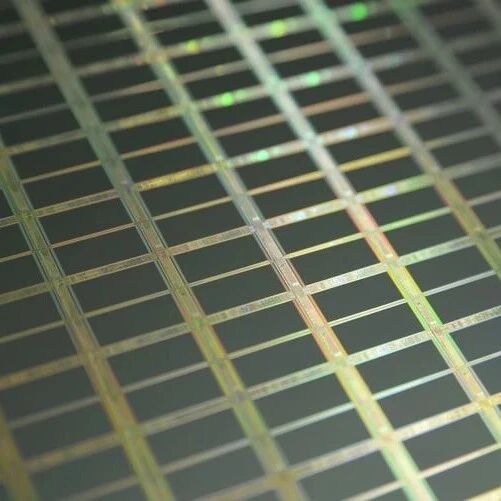
Core Insights - The establishment of Denmark's first 300mm wafer manufacturing facility, the POEM Technology Center, marks a significant step towards technological autonomy in Europe [1][3] - The center aims to accelerate breakthroughs in photonic and quantum chip manufacturing, enhancing Denmark's and Europe's semiconductor ecosystem [1][2] Group 1: Facility Overview - The POEM Technology Center is a collaboration between the Novo Nordisk Foundation's Quantum Chip Project (NQCP) and French company Riber, located at the Niels Bohr Institute of the University of Copenhagen [1] - The center will utilize advanced techniques such as molecular beam epitaxy to produce silicon and silicon-on-insulator wafers, with plans to be fully operational within a year [1][2] Group 2: Production and Research Focus - Initial materials for research are expected to be ready by the end of the year, with ongoing development of chip production infrastructure [2] - The center will serve as a pilot production line and prototype center, focusing on developing components necessary for quantum computing [2] Group 3: Strategic Importance - The POEM Technology Center aligns with Europe's efforts to reduce dependence on US and Asian chip manufacturing, supported by initiatives like the EU Chip Act [3] - The NQCP aims to create a national ecosystem for advanced quantum and photonic chips, collaborating with various stakeholders in the semiconductor industry [4]
台积电退出六英寸代工
半导体行业观察· 2025-08-13 01:38
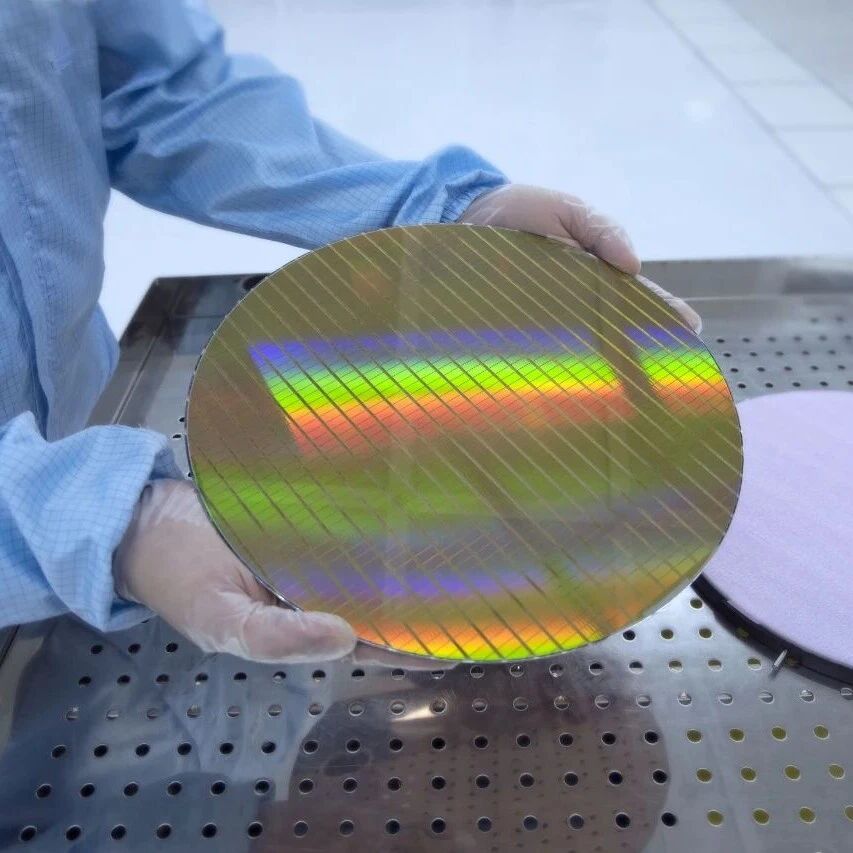
Core Viewpoint - TSMC plans to gradually exit 6-inch wafer manufacturing by 2027, reallocating resources to advanced packaging, which reflects a strategic shift towards higher-margin businesses [2][3]. Group 1: TSMC's Strategic Shift - TSMC has verbally informed downstream clients about the closure of its last 6-inch plant by the end of 2027, transitioning production lines to advanced packaging [2]. - The decision to exit the 6-inch wafer business is based on market demand and TSMC's long-term business strategy, ensuring a smooth transition for clients [2][3]. - TSMC's stock price remained stable, unaffected by external news regarding the closure [2]. Group 2: Market Impact - The closure of TSMC's 6-inch plant is expected to trigger a shift in orders for power management ICs (PMICs) and other mature process ICs, potentially benefiting companies like World Advanced [2]. - The trend of major manufacturers moving away from 6-inch wafers is evident, as TSMC's decision follows its previous exit from the GaN market [3]. Group 3: Industry Trends - Siltronic AG plans to cease production of small-diameter wafers by July 2025, reflecting a broader industry trend towards larger, more efficient wafers [5][6]. - SUMCO has announced a restructuring plan to end production of 200mm and smaller wafers by 2026, indicating a shift in focus to larger wafer production [6][10]. - The semiconductor industry is witnessing a decline in demand for smaller diameter wafers, with a significant shift towards 300mm wafers for improved production efficiency [9][10].