
以史为鉴

Search documents
如果徐光启引进西班牙方阵成功,明朝还会被游猎民族灭亡吗
Di Yi Cai Jing· 2026-01-30 02:47
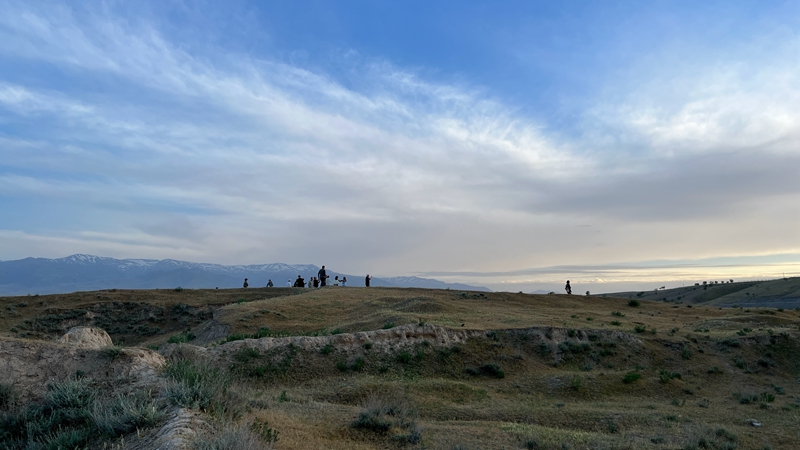
在中亚考察时,侯杨方接触到大量东西方文明交融后产生的技术,这促使他形成自己的"技术地理学"研究视角, 相比之下,仅靠文献考证和史料爬梳的传统史学缺乏跨学科视角,有很大的局限。 研究明亡清兴历史时,"技术控"侯杨方尤其关注当时第三方留下的史料,包括朝鲜王朝的秘密情报记录、西方传 教士的书信和记载,他从中看到珍稀的细节,说明技术更新对历史改变的影响。 侯杨方也走过唐朝高仙芝远征怛罗斯时的行军线路,还实地考察了他战败后的撤退路线。千百年来,骑兵都是中 亚战场上的重要作战力量,1618年努尔哈赤率领满洲铁骑正式与明朝开战时,依靠的也是在东北亚恶劣环境下锻 炼出来的精锐骑兵力量。侯杨方的观点是:明朝亡于军事力量的差距。 "一个失去了自我更新能力的文明,无论曾经多么辉煌,都难逃衰落的命运;而一个充满活力、善于学习的新兴力 量,即使起点较低,也终将后来居上。这个规律不仅适用于明清之际,也适用于人类历史上的其他重大转折。"侯 杨方总结说。 侯杨方认为,明朝是唯一一个被最后一拨游猎民族灭亡的定居帝国,这证明明朝确实落后了。 在哈萨克草原上策马奔驰,风驰电掣的感觉可以让人理解游牧民族的世界观;在暴风雪中艰难前行,才能体会到 古人 ...

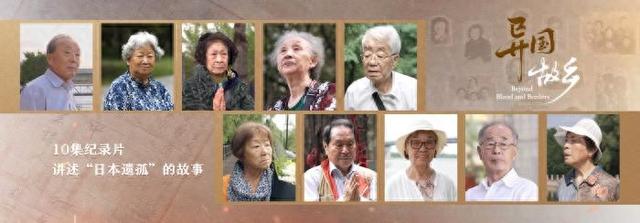
历史的棱镜——我看《异国“故乡”》
Xin Lang Cai Jing· 2025-12-30 04:38
Core Perspective - The documentary series "Exotic 'Hometown'" by China News Service focuses on the unique group of "Japanese orphans," revealing hidden historical memories and serving as a tribute to the 80th anniversary of the victory in the Chinese People's War of Resistance Against Japanese Aggression and the World Anti-Fascist War [1][4] Group 1: Documentary Content - The series presents the real stories of 10 Japanese orphans, representing over 4,000 abandoned Japanese children in China during the war [1] - It highlights the theme of gratitude and compassion from Chinese foster parents, who provided care and support to these orphans despite their own hardships [1][3] - The term "hometown" carries a complex duality, where Japan is seen as the land of blood ties, while China represents the "spiritual homeland" that nurtured them [3] Group 2: Emotional and Historical Impact - The documentary reflects the deep emotional scars left by war, showcasing the internal conflict of identity and belonging experienced by the orphans [3] - It emphasizes the importance of confronting historical wounds to foster peace and understanding among humanity [3] Group 3: Professional Quality - The documentary is noted for its high professional standards in narrative construction, combining historical footage with contemporary scenes to create emotional resonance [3][4] - It achieves international standards in historical documentation, making it suitable for global dissemination, particularly in Japan [4]
“《阿房宫赋》原来是唐朝人造秦朝人的谣”阿房宫考古结果反转后我们能这样理解《阿房宫赋》吗?
Xin Lang Cai Jing· 2025-12-27 06:21
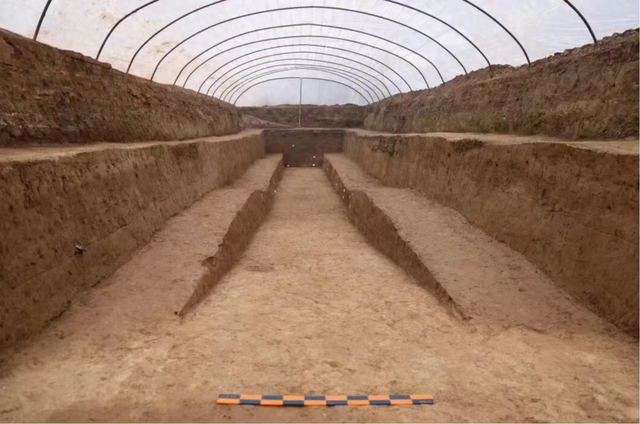
Core Viewpoint - The recent archaeological findings at the A Fang Palace site reveal that the palace's earthen foundation was built on drained lake sediment, overturning previous beliefs that it was constructed on solid land. It has been confirmed that the A Fang Palace was never completed and was not burned down [1][3]. Group 1: Archaeological Findings - The excavation results confirm that the A Fang Palace's foundation was built on drained lake sediment, not on solid ground [1]. - The findings provide a clear process of how the foundation was constructed, challenging long-held perceptions about the palace's location and construction [1]. Group 2: Historical Context and Literary Analysis - The findings contrast sharply with the descriptions in Du Mu's "A Fang Palace Fu," leading to humorous discussions online about the accuracy of historical narratives [3]. - Scholars have long recognized that the content of "A Fang Palace Fu" is not a factual account, as it reflects the author's critique of the ruling class during the Tang Dynasty rather than an accurate depiction of the Qin Dynasty [3][4]. - Du Mu's work serves as a metaphor for the decline of the Tang Dynasty, using the historical context of the Qin to comment on contemporary issues [5][6].
前事不忘,后事之师:村山历史省思的价值越发凸显
Xin Lang Cai Jing· 2025-12-20 22:07
Core Viewpoint - The article discusses the increasing rightward shift in Japan's politics and the significance of former Prime Minister Tomiichi Murayama's legacy in addressing historical issues related to Japan's wartime actions [1][2]. Group 1: Historical Context - The rise of right-wing political forces in Japan is attempting to downplay war responsibilities and revise historical narratives, with current Prime Minister Sanae Takaichi making controversial statements regarding historical issues [1]. - Murayama's 1995 statement, which acknowledged Japan's wartime aggression and colonial rule, is highlighted as a critical moment in Japan's historical reckoning [1][2]. Group 2: Murayama's Contributions - Murayama's 1995 speech marked a paradigm shift in Japan's official historical narrative, moving from a victim-centric view to acknowledging the suffering caused to other nations [2]. - His commitment to Japan's pacifist constitution and the institutionalization of historical reflection through cabinet resolutions established a bipartisan baseline for Japan's historical stance [2][3]. Group 3: Legacy and Impact - Murayama's lifelong dedication to peace and reconciliation is emphasized, showcasing his efforts to foster Sino-Japanese friendship and historical understanding [3][4]. - His actions, including visiting memorials and advocating for historical awareness among younger generations, reflect his belief that understanding history is essential for peace [4]. Group 4: Current Political Climate - The article critiques the current political climate under Takaichi, who embodies a revisionist approach to history, contrasting sharply with Murayama's legacy [2][5]. - It argues that a nation unwilling to confront its historical truths cannot earn respect and trust on the global stage, urging current leaders to reflect on their historical narratives [5].
为了不应被遗忘的生命
Xin Hua She· 2025-12-12 13:22
Group 1 - The core message emphasizes the importance of preserving historical sites and remains from the Nanjing Massacre and other atrocities committed during the Japanese invasion, highlighting their role in safeguarding historical truth and promoting peace [1][2] - The Liao Yuan Miners' Cemetery serves as a significant example, where over 1.5 million tons of coal were extracted under brutal conditions, leaving behind mass graves of Chinese miners, which underscores the violent history of exploitation during the invasion [1] - Since 2015, a biological archaeology team from Jilin University has been monitoring and protecting the remains at the Liao Yuan Miners' Cemetery, developing differentiated preservation strategies that could serve as a model for protecting other similar sites [1] Group 2 - The efforts to protect these remains are not merely about artifact restoration but are crucial for historical transmission and the promotion of peace, with millions of visitors each year learning about patriotism through these sites [2] - In the context of a complex international landscape, the protection of the remains is a firm defense of historical truth and a strong rebuttal against the denial of invasion history, reinforcing China's commitment to peace and historical reflection [2] - Each preserved remains represents a life that should not be forgotten, and the commitment to safeguarding history is seen as a powerful force for maintaining global peace and preventing the recurrence of war tragedies [2]
新加坡学者向中国捐赠日本侵略战争史料
Xin Hua She· 2025-09-20 13:39
Core Points - A Singaporean historian, Lin Shaobin, donated 64 historical materials related to Japan's invasion of China to the Chinese Historical Research Institute's library in Singapore, highlighting Japan's expansionist ambitions and wartime propaganda [1][2] - The donated materials include nearly 4,000 photographs, illustrations, maps, and military postcards, revealing lesser-known conspiracies of the Japanese army during the invasion [1] - The materials are considered valuable academic resources and first-hand accounts of Japan's wartime actions, with plans for proper cataloging and public utilization [2] Group 1 - The donation ceremony took place on September 18, with the Chinese Ambassador to Singapore, Cao Zhongming, presenting a certificate of donation to Lin Shaobin [1] - The materials include various formats such as scrolls, picture albums, and postcard sets, which are expected to help restore historical truths and promote peace through digital technology [1] - The significance of the donation was emphasized by attendees, including a Singaporean dancer whose father was killed by Japanese forces, underscoring the emotional impact of the historical materials [2] Group 2 - The donated materials include a resource map depicting Japan's planned territorial expansion, indicating Japan's long-standing intentions for invasion [2] - Lin Shaobin has been collecting Japanese historical materials since the 1980s, focusing on Japan's biological warfare units in Southeast Asia in recent years [2] - A book co-authored by Lin Shaobin and Chinese scholar Wang Xuan, titled "The Japanese Army's Unit 9420," was published this year, further contributing to the academic discourse on this topic [2]
《南京照相馆》东京放映 中日人士共呼以史为鉴
Xin Hua Wang· 2025-09-18 02:53
Core Viewpoint - The film "Nanjing Photo Studio" screening in Japan emphasizes the importance of acknowledging historical events to foster better Sino-Japanese relations, urging both nations to learn from the past and look towards the future [1] Group 1: Historical Reflection - The film's content evokes a heavy sentiment, highlighting Japan's tendency to discuss victimhood while avoiding discussions on perpetration, which is crucial for genuine friendship between China and Japan [1] - A former Japanese military journalist expressed pain from learning the truth about the Nanjing Massacre, noting the difficulty in openly discussing such facts in contemporary Japan [1] Group 2: Youth Engagement - The vice president of the Tokyo Japan-China Friendship Association stressed the need for young people to understand history to advance Sino-Japanese relations, advocating for discussions before and after the film screening to foster dialogue [1] Group 3: Diplomatic Perspective - The Chinese ambassador to Japan emphasized that history serves as both a textbook and a wake-up call, asserting that avoiding or denying historical events hinders true reconciliation and the prevention of future tragedies [1]
从“上合”到“九三”,习近平鲜明宣示这8个字
Yang Shi Xin Wen Ke Hu Duan· 2025-09-05 08:36
Group 1 - The core theme of the events is to reflect on history and promote peace, as emphasized by President Xi Jinping during the 80th anniversary of the victory in the Chinese People's War of Resistance against Japanese Aggression and the World Anti-Fascist War [3][41] - President Xi held multiple bilateral meetings with over 30 foreign leaders, reinforcing the importance of historical memory and international cooperation [5][31] - The meetings highlighted the significance of maintaining the achievements of World War II and promoting international justice [9][32] Group 2 - Strengthening political mutual trust among socialist countries was a key focus, with Xi emphasizing the exchange of governance experiences to guide bilateral relations [11] - Practical cooperation in emerging sectors like artificial intelligence and renewable energy was discussed, aiming to enhance collaboration in these critical areas [13] - The bilateral relations with Zimbabwe and Congo were elevated to a "high-level community of shared destiny," indicating a commitment to deeper ties and mutual prosperity [15][18] Group 3 - The meeting with North Korean leader Kim Jong-un marked a significant moment, emphasizing the enduring friendship and cooperation between China and North Korea [16][20] - Both leaders reaffirmed their commitment to maintaining strong ties regardless of changing international circumstances [21] - The discussions included enhancing strategic communication and cooperation in governance, aiming to promote regional peace and stability [23][25] Group 4 - The Shanghai Cooperation Organization summit and the commemoration of the anti-fascist victory were highlighted as major diplomatic events for China this year [26][28] - Xi's global governance initiative was a focal point, aiming to promote a fairer and more effective international governance system [37][39] - Leaders from various countries expressed strong support for Xi's governance initiative, recognizing its significance in addressing current global challenges [39]
日本前首相:我怀着反省和谢罪的心情参加了纪念大会
Yang Shi Xin Wen· 2025-09-04 12:49
Core Viewpoint - The former Japanese Prime Minister Yukio Hatoyama emphasizes the importance of acknowledging historical events and learning from them, particularly in the context of Japan's past actions during the war [1]. Group 1 - Yukio Hatoyama expresses gratitude for being invited to the 80th anniversary commemorative event of the victory in the Chinese People's Anti-Japanese War and the World Anti-Fascist War [1]. - He participates in the event with a serious mindset, reflecting on the need for Japan to confront its historical actions [1]. - Hatoyama conveys a sense of reflection and apology as a Japanese individual and former Prime Minister while attending the commemorative event [1]. Group 2 - He highlights the profound historical significance and contemporary relevance of President Xi Jinping's speech during the commemorative event [1].
高端访谈丨80年前的胜利为何仍需铭记?上合秘书长引用这句中国古语作答
Yang Shi Xin Wen· 2025-09-03 08:01
Core Viewpoint - The year is significant as it marks the 80th anniversary of the victory in World War II, the establishment of the United Nations, and the defeat of Japanese militarism on the Eastern front [1] Group 1 - The Secretary-General of the Shanghai Cooperation Organization, Yermekbayev, emphasizes the importance of remembering history to prevent future conflicts [1] - The founding of the United Nations was aimed at preventing the recurrence of global conflicts [1] - The member states of the Shanghai Cooperation Organization agree on the necessity of learning from history to shape a better future [1]